
PRIJSGIDS
Mineraalspecimen prijsgids: wat specimens echt kosten
Wat kosten mineraalspecimens eigenlijk, en wat bepaalt de prijs? Een heldere gids over prijsklassen van specimens — van miniaturen van 10 dollar tot vitrinestukken in de duizenden — de zeven factoren die de waarde bepalen, hoe de vindplaats de prijs verandert, en hoe je vermijdt te veel te betalen.
Het korte antwoord: typische prijsklassen
Instap-specimens — kleine maar echte kristallen met eerlijke etikettering — beginnen rond 10–25 $. Solide verzamelstukken, de kern van de voorraad van de meeste handelaren, liggen rond 30–200 $; in ons eigen assortiment ligt het beschikbare mediane specimen onder 100 $. Fraaie vitrinestukken met scherpe, onbeschadigde kristallen, sterke kleur en goede compositie kosten doorgaans 200–1.000 $. Daarboven ligt de vitrine- en wedstrijdklasse, waar uitzonderlijke stukken vier- en vijfcijferige bedragen bereiken.
Binnen elke klasse betaal je voor kwaliteit, niet voor grootte. Een miniatuur van 60 $ kan een veel beter mineraal zijn dan een vuistgrote steen van 60 $ — en zal doorgaans ook zijn waarde beter behouden.
De zeven factoren die de prijs van een specimen bepalen
- Conditie — onbeschadigde uiteinden en randen tellen het meest; zichtbare schade op het toonvlak kan de waarde met de helft of meer verlagen.
- Kristalkwaliteit — scherpe, goed gevormde kristallen met het voor de soort typische habitus overtreffen ruwe of afgeronde groei.
- Kleur — verzadiging, gelijkmatigheid en gewilde zonering (fantomen, kleurbanden) leveren premies op.
- Glans — heldere, glazige of metallische vlakken verhogen de waarde; doffe oppervlakken verlagen die.
- Esthetiek — hoe kristallen op de matrix staan: balans, contrast, een natuurlijke presentatiepositie.
- Vindplaats — dezelfde soort uit een klassieke of gesloten mijn kost meer, omdat het aanbod eindig is en het etiket geschiedenis draagt.
- Zeldzaamheid — zowel voor de soort in het algemeen (dioptaas kost meer dan kwarts) als voor de specifieke combinatie; een gewoon mineraal in een ongewone vorm kan het zeldzaamste stuk in de vitrine zijn.
Waarom de vindplaats de prijs van identiek ogende stukken verandert
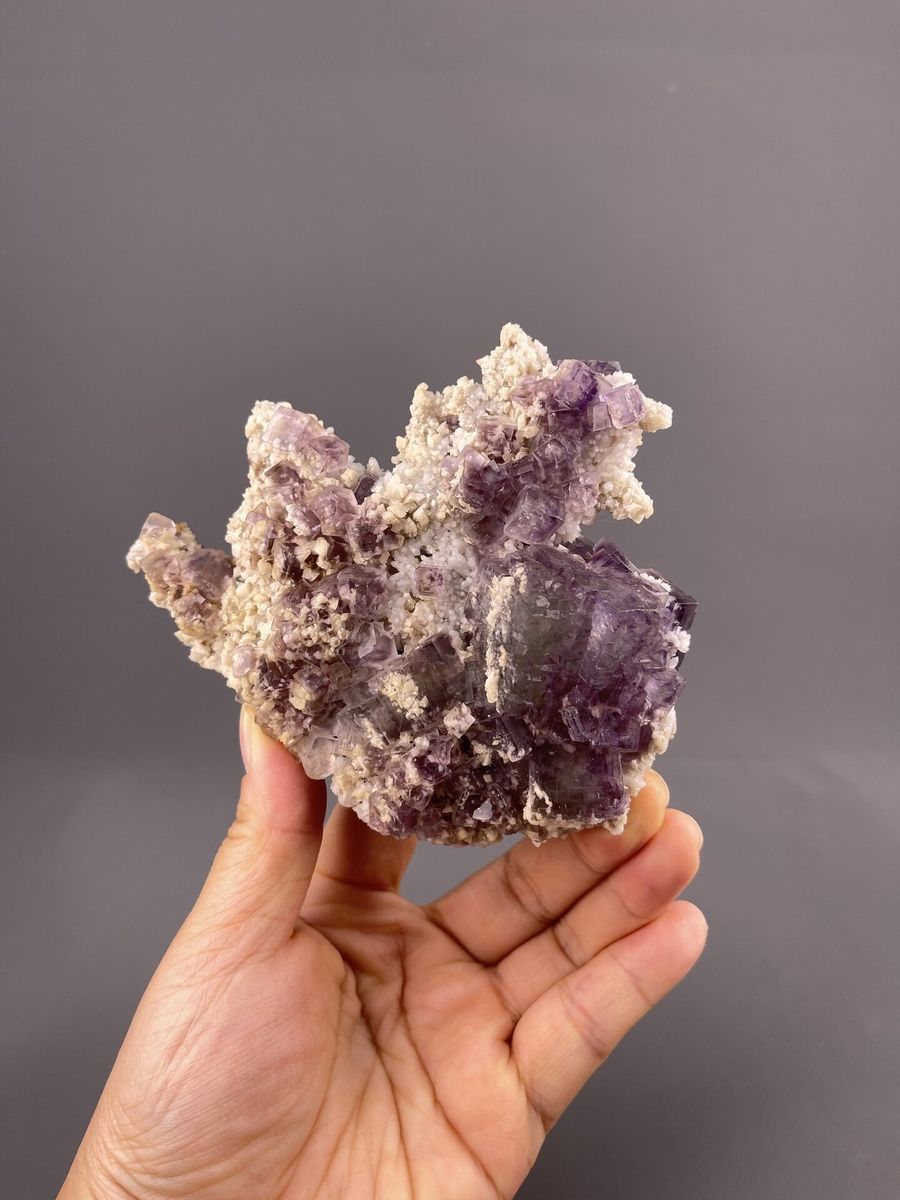
Verzamelaars kopen het verhaal en de wetenschap samen met de steen. Een fluoriet uit de Yaogangxian-mijn in Hunan — een vindplaats die al dertig jaar gedocumenteerd is in tijdschriften en collecties — brengt een meerprijs op ten opzichte van een visueel vergelijkbare fluoriet met slechts een landsetiket, omdat de specifieke vindplaats geverifieerd kan worden aan een bekende regionale stijl, wetenschappelijke betekenis toevoegt, en het stuk koppelt aan een eindig productievenster. Gesloten of uitgeputte vindplaatsen stijgen om dezelfde reden in waarde: er komt nooit meer materiaal bij.
Dit is ook de goedkoopste hefboom voor een nieuwe verzamelaar: een specifiek, verifieerbaar vindplaats-etiket kost de verkoper eerlijkheid in plaats van geld, dus goed geëtiketteerd materiaal tegen een bepaalde prijs is simpelweg een betere koop dan ongeëtiketteerd materiaal tegen dezelfde prijs.
Wat te verwachten bij elk budget
Onder 50 $: echte, aantrekkelijke soorten — kleine fluorieten, kwartsclusters, pyrietkubussen, gepolijste ammonieten. Let op onbeschadigde kristallen en genoemde vindplaatsen; sla alles over dat geverfd of vaag geëtiketteerd is.
50–250 $: de sweet spot van het verzamelen. Schadevrije miniaturen uit klassieke vindplaatsen, goede kleur, echte compositie. De meeste stukken in ons eigen assortiment vallen hierin.
250–1.000 $: fraaie vitrinemineralen — grotere onbeschadigde platen, verzadigde kleur, scherpe tweelingen, topvindplaatsen. Op dit niveau moet de conditie op het toonvlak vrijwel foutloos zijn.
Boven 1.000 $: vitrinestukken die net zozeer met het oog als met de portemonnee gekocht worden. Herkomst, oude etiketten en vindplaats-pedigree gaan hier net zoveel meetellen als het kristal zelf.
Hoe je vermijdt te veel te betalen
Vergelijk binnen een soort, niet over de hele markt: leer specifiek wat 100 $ koopt bij fluoriet voordat je 100 $ aan fluoriet uitgeeft. Verkoopsarchieven — inclusief het onze, dat openbaar blijft — zijn de snelste manier om te kalibreren, omdat ze echte prijzen op transactieniveau tonen in plaats van wensdenken-vraagprijzen.
Wees achterdochtig bij superlatieven, handelsnamen en metafysische prijsstelling: “zeldzaam” op een etiket maakt een gewoon mineraal niet zeldzaam, en healing-claims voegen niets toe aan de verzamelwaarde van een specimen. Controleer foto’s rand voor rand op schade, stel directe vragen over reparatie en behandeling, en beschouw de bereidheid van een verkoper om eerlijk te antwoorden als onderdeel van wat je koopt.
Zijn mineraalspecimens een investering?
Fraaie mineralen zijn de afgelopen drie decennia aanzienlijk in waarde gestegen, en stukken uit gesloten klassieke vindplaatsen hebben het bijzonder goed gedaan. Maar de markt is dun, verkopen kost tijd en connecties, en handelsmarges betekenen dat een specimen doorgaans flink in waarde moet stijgen voordat je break-even draait bij doorverkoop. De eerlijke framing: koop kwaliteit omdat kwaliteit waarde vasthoudt, maar koop mineralen omdat je ermee wilt leven.
Wat de waarde betrouwbaar beschermt: onbeschadigde conditie, specifieke vindplaats-etiketten die bij het stuk blijven, originele documentatie, en het kopen van het beste exemplaar dat je je kunt veroorloven in één gefocust gebied in plaats van hetzelfde budget te verspreiden over veel middelmatige stukken.
Veelgestelde vragen
Hoeveel kost een goed mineraalspecimen?
Echte instap-specimens beginnen rond 10–25 $. De meeste solide verzamelstukken kosten 30–200 $, fraaie vitrinespecimens 200–1.000 $, en uitzonderlijke vitrinestukken bereiken vier cijfers en meer. In elke prijsklasse tellen conditie en kwaliteit meer dan grootte.
Wat maakt het ene mineraalspecimen duurder dan het andere?
Zeven factoren: conditie, kristalkwaliteit, kleur, glans, esthetiek, vindplaats en zeldzaamheid. Schade op het toonvlak en vage vindplaats-etiketten zijn de twee grootste waardedoders; scherpe, onbeschadigde kristallen uit genoemde klassieke vindplaatsen leveren de premies op.
Zijn mineraalspecimens een goede investering?
Fraaie, onbeschadigde stukken uit klassieke vindplaatsen hebben hun waarde historisch behouden en laten groeien, maar de doorverkoopmarkt is dun en traag. Koop kwaliteit omdat het waarde beschermt, maar verzamel vooral voor het plezier in plaats van voor rendement.
Waarom kosten specimens uit beroemde mijnen meer?
Een specifieke, verifieerbare vindplaats voegt wetenschappelijke betekenis toe, maakt het mogelijk het stuk te toetsen aan een bekende regionale stijl, en koppelt het aan eindige productie — vooral zodra een mijn sluit. Verzamelaars betalen voor die documentatie en schaarste.