
Care & Cleaning
How to Clean Fluorite Specimens Safely
Fluorite is soft with perfect cleavage, so cleaning it wrong causes chips and cracks. Learn how to clean fluorite specimens safely, and the tools to avoid.
Why Fluorite Needs Gentle Handling
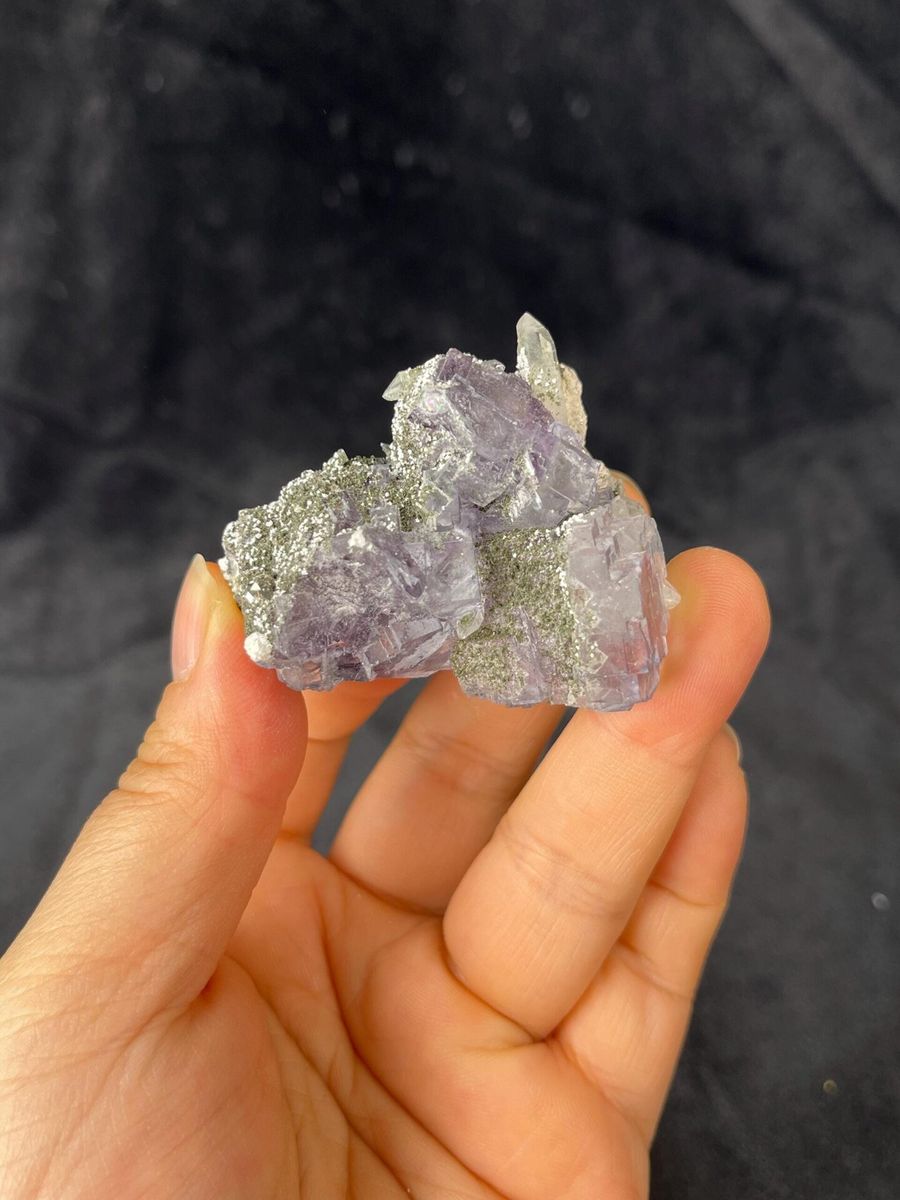
Two properties shape everything about cleaning fluorite. The first is hardness: at Mohs 4 it is softer than a steel blade and barely harder than window glass, so grit dragged across a face can leave fine scratches. The second is cleavage. Fluorite splits cleanly along four planes at once, forming octahedral fragments, and a knock or even a sharp change in temperature can pop a cleavage flake off an otherwise perfect crystal.
Many fluorites are also photosensitive — more on that below — and some carry a thin skin of clay, calcite, or iron staining from the pocket they grew in. Knowing which of these you are dealing with decides how far you should go. When in doubt, do less.
Everyday Cleaning: Just Remove the Dust
For a specimen sitting on a shelf, dust is the main enemy, and you rarely need water at all. We reach for these first:
- A soft, dry brush — a clean makeup brush or a soft artist's brush lifts dust from crystal faces and crevices without scratching. - A microfiber cloth for flat, solid surfaces. - A puff of air from a rubber blower (the kind used for camera lenses) to clear dust from deep vugs and fragile sprays.
Work over a folded towel so that if a piece slips, it lands on something soft. Avoid canned compressed air held close or on full blast, since the propellant can chill the stone and delicate crystals can snap under the pressure. For most collectors, a gentle monthly dusting is all a fluorite ever needs.
When You Need Water: Do It Carefully
If a specimen is genuinely dirty, a brief, careful wash is possible — fluorite is not water-soluble — but the real risks are thermal shock and water working into the cleavage, not dissolving. Follow a few rules:
- Use room-temperature water only. The stone and the water should be close in temperature; hot water, or a cold rinse on a warm stone, can spring a cleavage flake loose. - Keep it brief. A quick rinse with a drop of mild dish soap and a soft toothbrush at light pressure is plenty. Do not soak fluorite or leave it sitting in water. - Dry it immediately and completely with a soft cloth, then let it air-dry away from heat.
Skip water entirely on specimens with a clay matrix, on hollow or hair-like crystals, or on any piece with visible internal fractures — water finds those weaknesses.
Removing Coatings and Stains
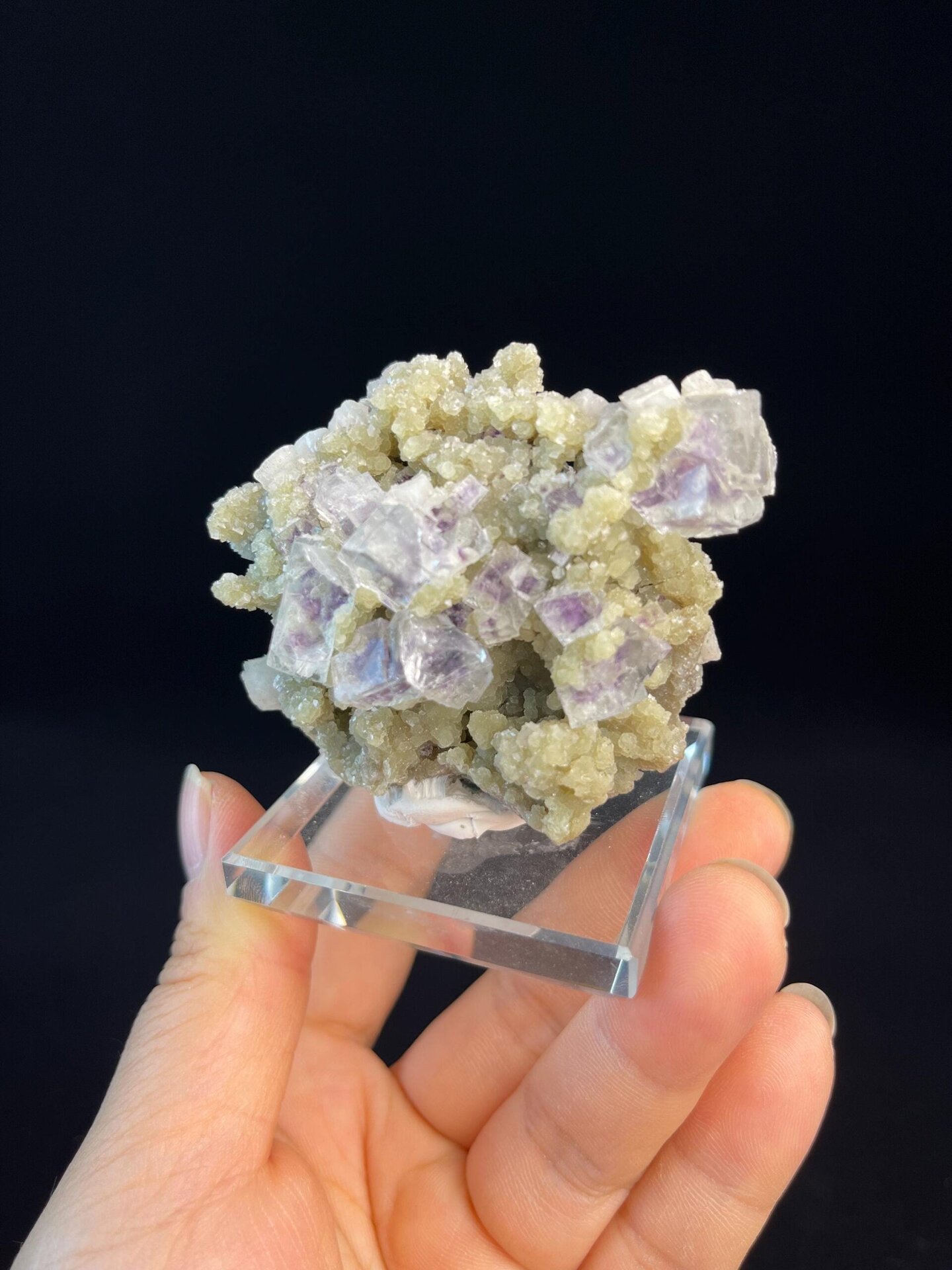
Sometimes a fluorite comes out of the ground under a carbonate crust or a rusty iron stain. These jobs carry more risk, so test any method on the back or on a low-grade piece first.
For a thin calcite or carbonate coating, a soak in dilute acetic acid — ordinary white vinegar — can loosen it. Keep it cold, never heat it, and watch closely. When the fizzing stops, rinse well and neutralize by soaking in a solution of baking soda and water so no acid lingers in the cleavage.
Avoid the harsher chemistry collectors sometimes use elsewhere. Strong acids and iron-stain removers such as oxalic acid can etch or cloud fluorite, and household bleach and abrasive pastes have no place here. If a stain is deep or the specimen is valuable, it is far better to leave it — or hand it to an experienced preparator — than to ruin it.
Cleaning Methods to Avoid
A short list of things that quietly wreck fluorite:
- **Ultrasonic cleaners.** The vibrations travel along cleavage planes and into any hidden inclusions, and can leave a crystal internally cracked or shattered. Keep fluorite out of them. - **Steam cleaners.** The heat and pressure are exactly the thermal shock fluorite cannot take. - **Hot water, boiling, or the freezer** — any quick, large swing in temperature. - **Wire brushes, scouring pads, or gritty compounds** that scratch a Mohs-4 surface. - **Long soaks of any kind,** which give water time to seep into the cleavage.
Protecting Color and Storing Fluorite
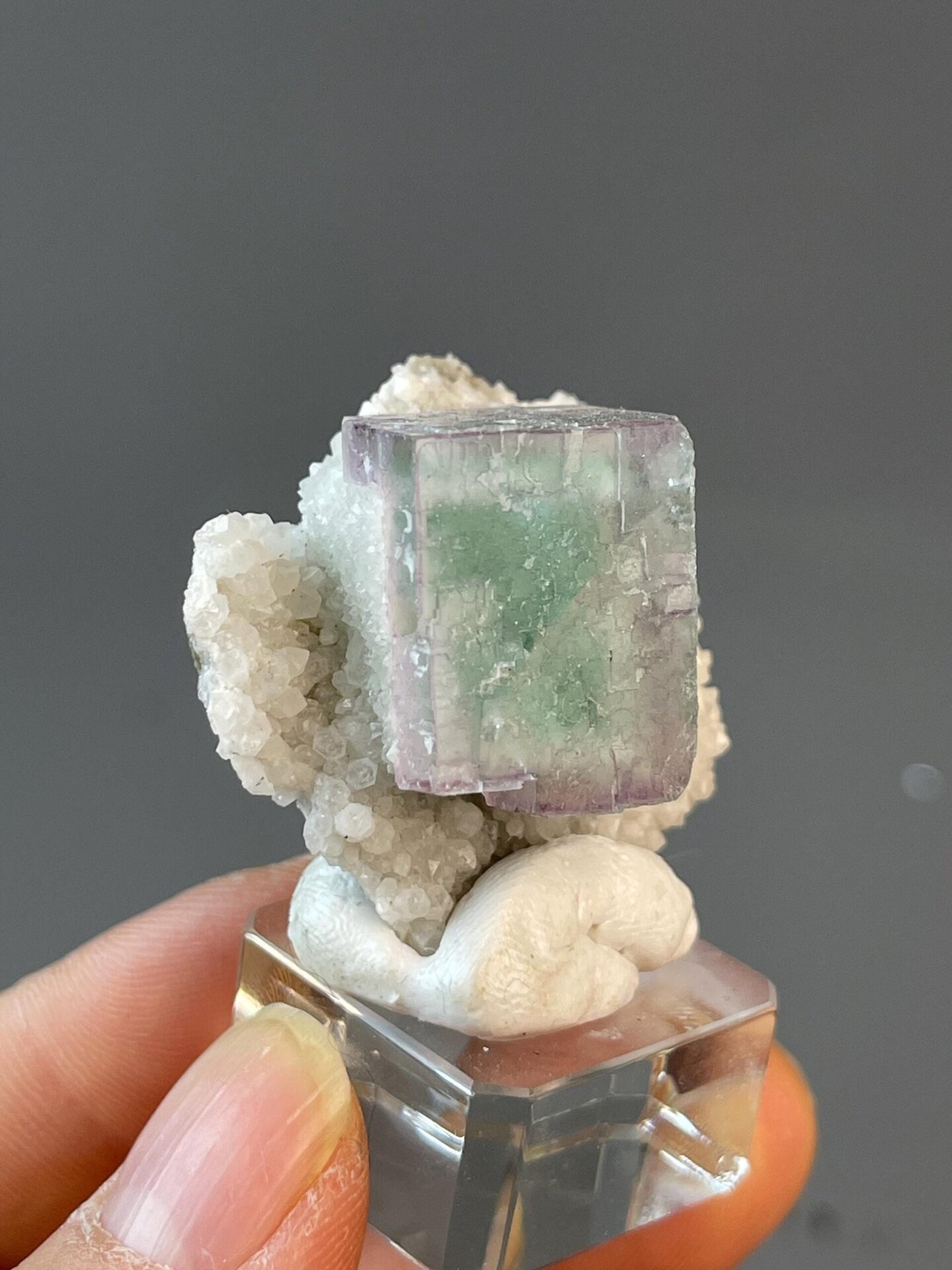
Cleaning is only half of caring for fluorite; light matters too. Many fluorites, especially purple and green ones, are photosensitive and slowly fade in direct sunlight or strong UV. Some pieces lose noticeable color within weeks of sitting in a sunny window. Display fluorite in indirect light, keep it out of hot cars and off bright windowsills, and give it a padded spot in a cabinet where it will not knock against harder minerals. Handled this way, a well-colored fluorite will stay vivid for decades.
الأسئلة الشائعة
Can fluorite get wet?
Briefly, yes — fluorite does not dissolve in water. But it should never be soaked. Water can work into its four cleavage planes, and a temperature difference between the stone and the water can pop off a cleavage flake. Use a quick room-temperature rinse and dry it at once.
Can I clean fluorite in an ultrasonic cleaner?
No. The vibrations travel along fluorite's cleavage and into any inclusions or micro-fractures, and can crack or shatter the crystal from the inside. Ultrasonic and steam cleaners are both best avoided for fluorite.
Does fluorite fade in sunlight?
Many fluorites are photosensitive, and purple and green stones in particular can lose color in direct sun or UV — sometimes within weeks. Keep fluorite in indirect light to preserve its color for the long term.
What is the safest way to clean a dusty fluorite?
Dry-dust it with a soft brush or a microfiber cloth, and use a rubber air blower for tight crevices. Most fluorite specimens never need more than this, and dry cleaning carries no risk of thermal shock or cleavage damage.