
Collecting Guide
Why Are Chinese Mineral Specimens So Cheap?
Chinese minerals are affordable because of huge supply, modern discoveries, and low mining costs — not because they are fake. What really drives the price, and when a low price is a red flag.
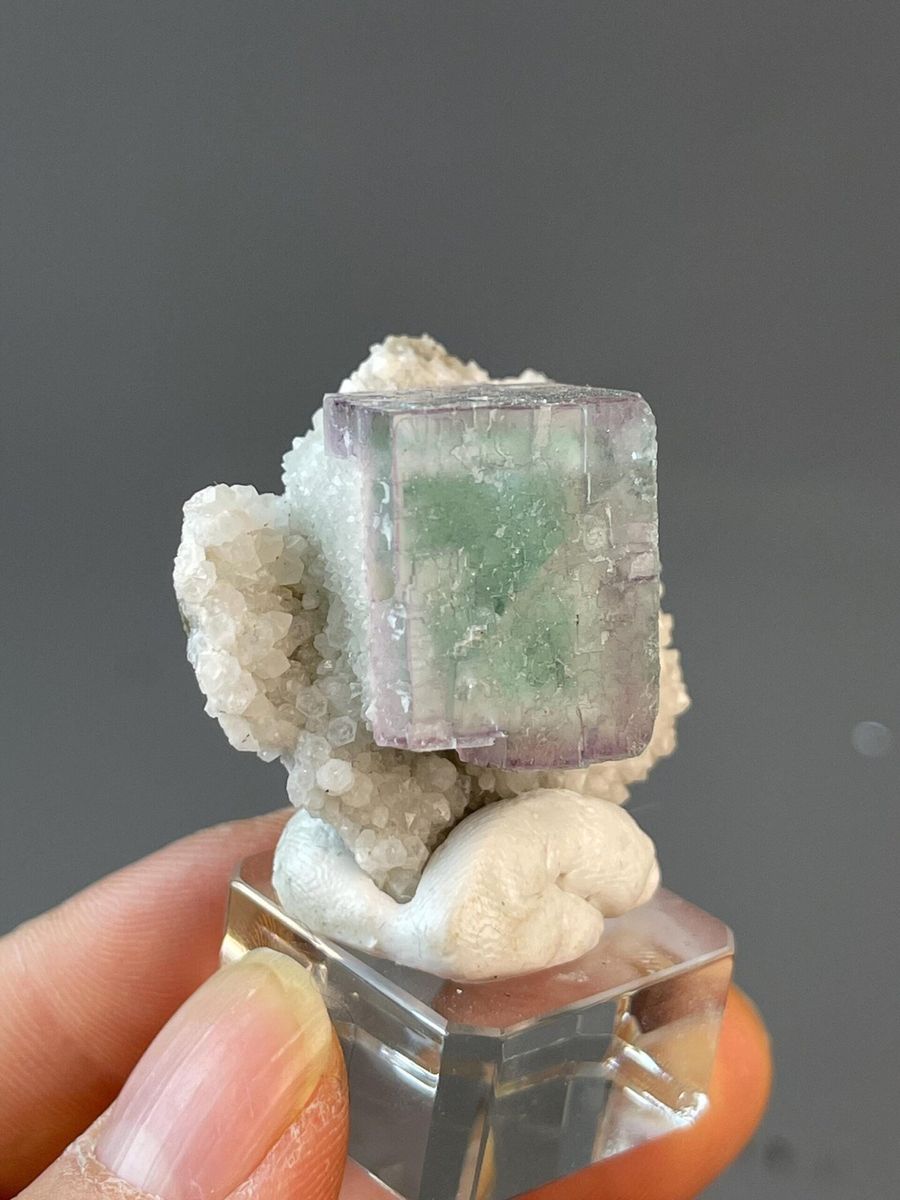
China is one of the world’s great mineral producers
China is the third-largest country on Earth by land area, and much of it is mountainous, mineral-rich terrain. It is one of the largest producers of fluorite in the world, and a major source of antimony, tungsten, lead, and mercury ores — the same deposits that yield the display specimens collectors love. When a country produces mineral material on an industrial scale, fine crystals emerge as a by-product in real quantity. Abundance, not inferior quality, is the first reason prices are low.
New discoveries reset old prices
Before China opened to the wider mineral market in the late 1970s and 1980s, several species were genuinely scarce and expensive. Cinnabar, stibnite, and aquamarine are good examples: decent specimens once commanded high prices simply because so few reached collectors. Then large, productive Chinese localities came online and flooded the market with excellent material, and prices fell — not because the new specimens were worse, but because supply finally met demand. A single major find can reset the pricing of a species almost overnight, and China has been responsible for more than its share of these resets.
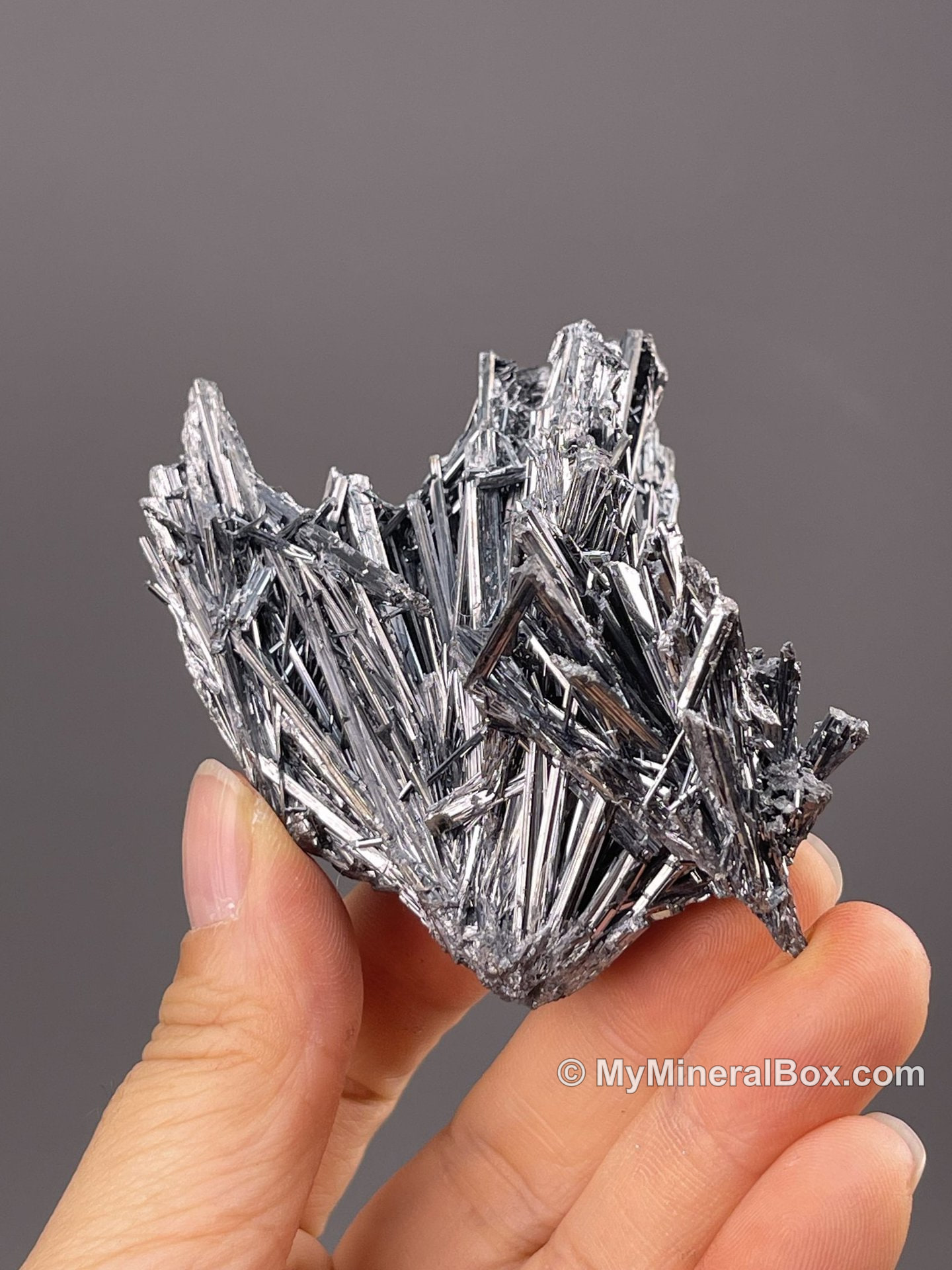
Photo: MyMineralBox
Old mines, still producing, at lower cost
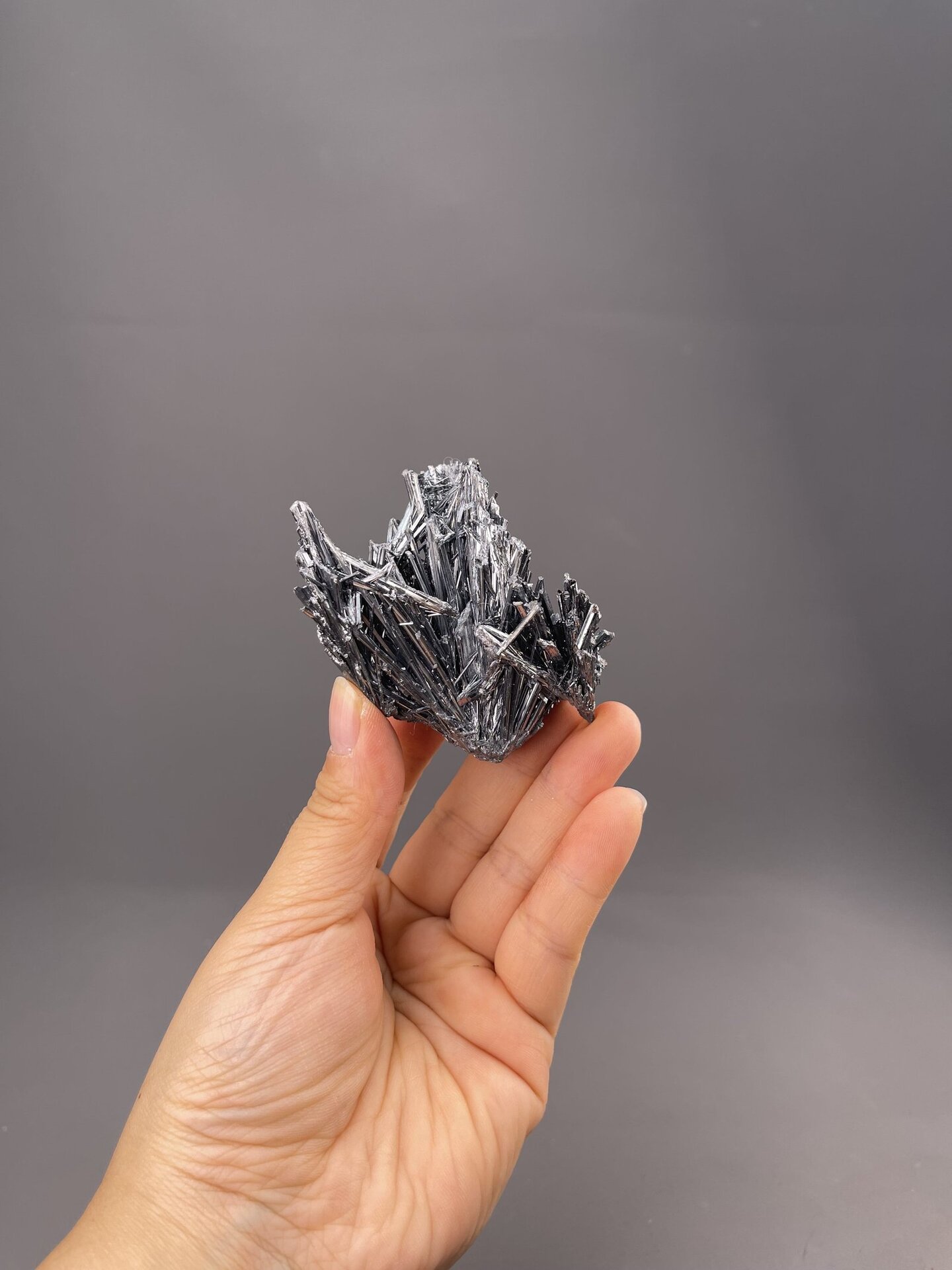
Many Chinese sources are not new at all — some cinnabar districts have been worked for more than a thousand years and are still producing today. Active mining plus lower labor and operating costs means a steady stream of specimens reaches the market at a fraction of what it would cost to recover comparable pieces from a long-closed Western mine. Stibnite is the clearest case: the Xikuangshan district in Hunan is the largest antimony source on Earth, and that sheer scale is exactly why good stibnite — once a prized rarity — is now attainable.
Common grade vs. fine: what the price reflects
It helps to separate two very different things: the ocean of pleasant, common-grade specimens, and the small number of truly fine pieces. Both come out of the same mines. To make this concrete, here is roughly how Yaogangxian fluorite is priced across grades in our own inventory:
- **Common** — a bright but ordinary phantom cube with minor edge wear: about $38–$60. - **Good** — sharp color zoning and clean glassy faces: about $95–$150. - **Fine** — a rarer color such as green, strong UV response, great form: about $195–$300. - **Top** — large, flawless, exceptional aesthetics: $1,000 to $2,500 and up.
The affordable cube everyone sees is real, natural, and perfectly nice — it is simply not rare. The same locality also produces pieces that sell for thousands. Price tracks quality, condition, and rarity, not the country stamped on the label.
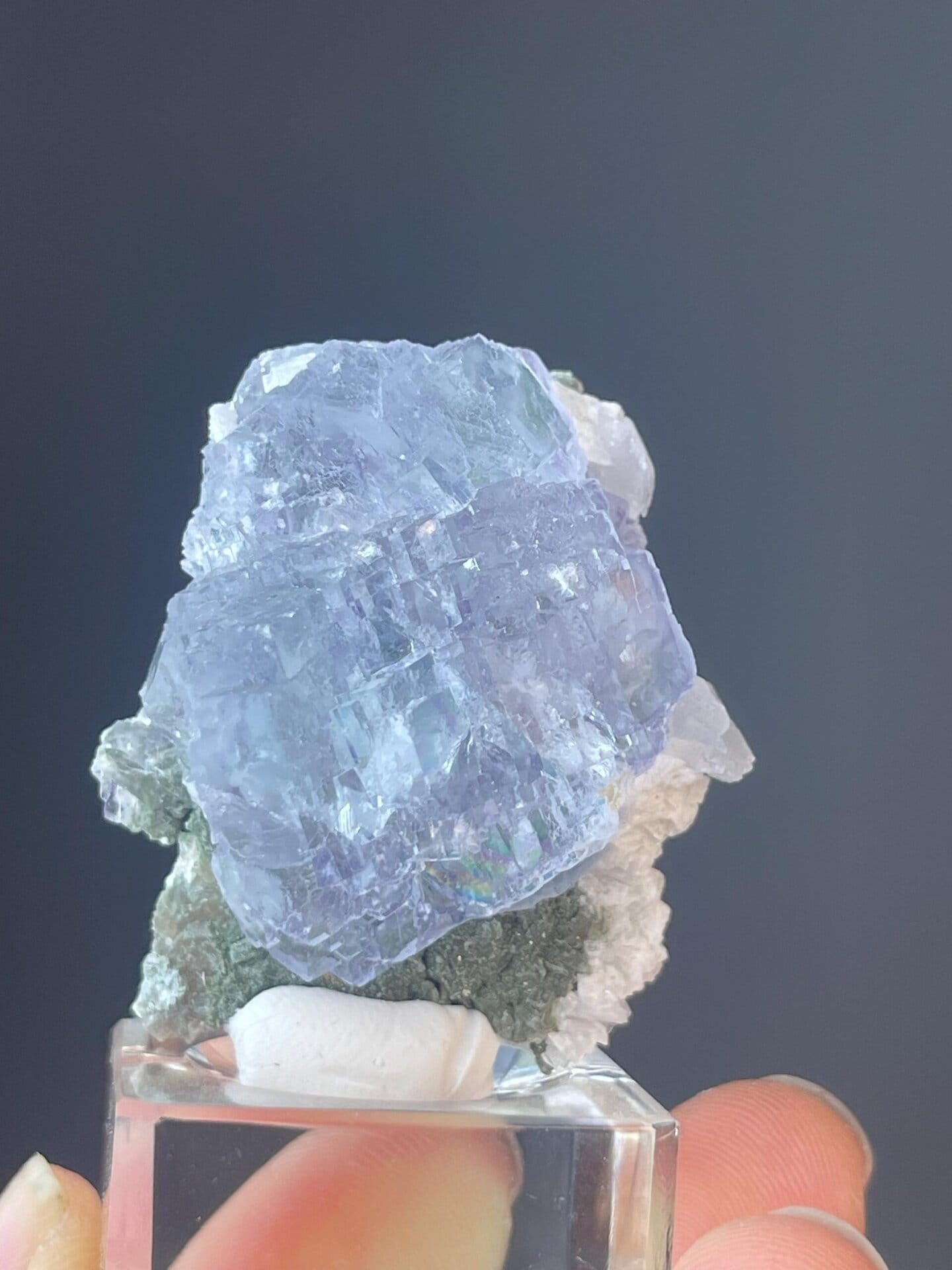
What you actually pay for at the top end
When a Chinese specimen is not cheap, it is usually for good reason. Yaogangxian fluorite with crisp color zoning and glassy cube faces, or the legendary apple-green Daoping pyromorphite, sell for real money because top quality from a benchmark locality is scarce anywhere in the world.
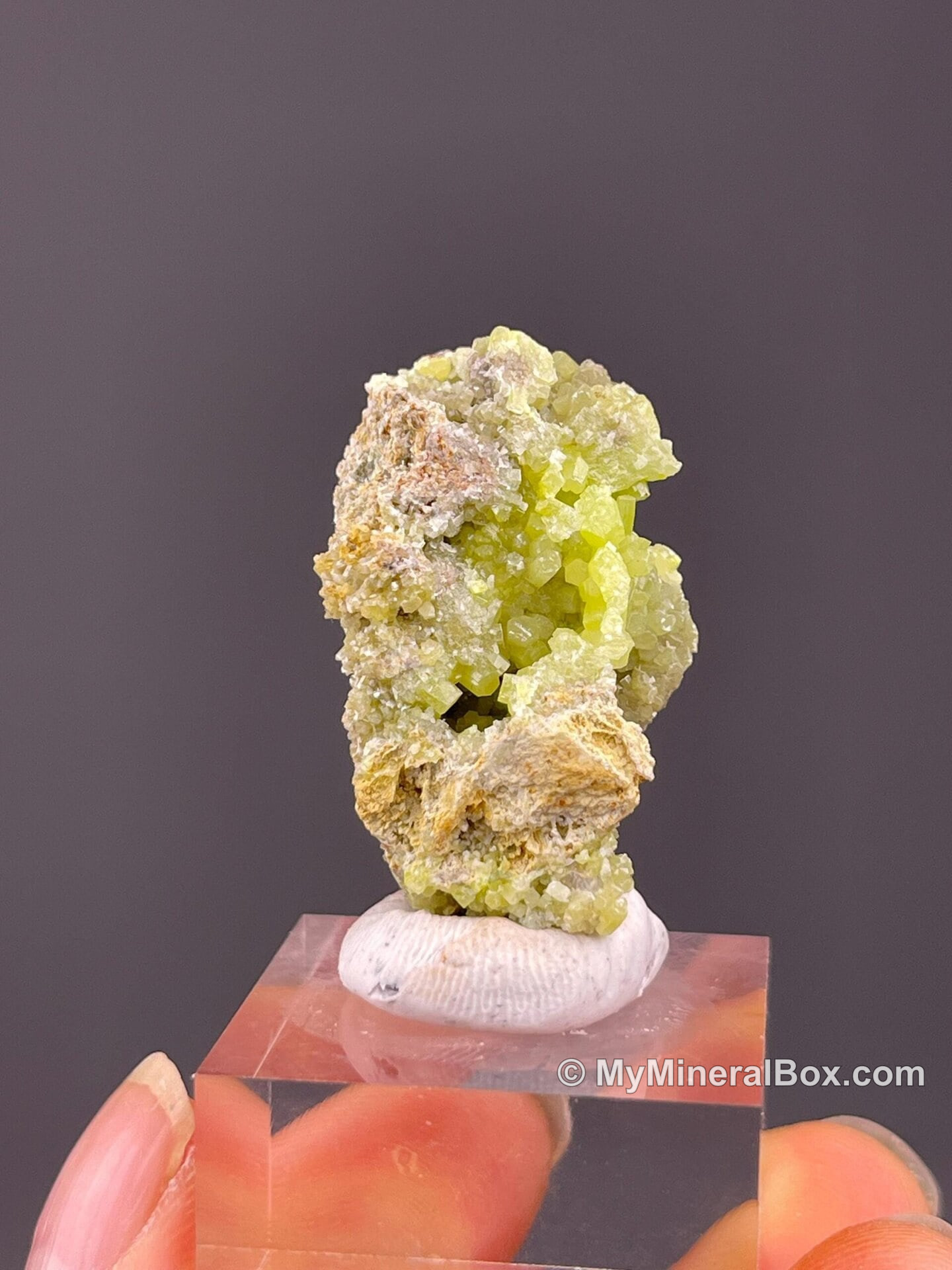
Photo: MyMineralBox
When a low price is a red flag
Affordable is normal; suspiciously cheap for the claimed quality is not. A price far below the going rate for the grade being described is worth a second look — and it usually points to a condition or disclosure problem, not the country of origin. The warning signs are the same everywhere:
- A price far below market for the quality and size claimed. - Only stock or borrowed photos, never the actual specimen. - Color that looks too uniform or “painted,” or trendy names like “candy” coloring. - Vague or dodged answers about repair, coating, or locality.
If you want to go deeper, our guide to natural vs treated Chinese minerals covers exactly what to ask before you buy.
Häufige Fragen
Are cheap Chinese minerals fake?
Usually not. Most affordable Chinese specimens are genuine, natural pieces that are simply common grade and produced in large quantity. Low price reflects abundance and low mining cost far more often than fakery. A price that is far below market for the claimed quality is the thing to question — not a modest price on ordinary material.
Why is Chinese fluorite so much cheaper than Illinois or UK fluorite?
China is one of the world’s largest fluorite producers with many active mines, so supply is high and common-grade cubes are inexpensive. Classic Western localities like Illinois are largely closed, which makes their fluorite scarce and costly. Top Chinese fluorite from famous mines such as Yaogangxian still sells for premium prices; size, condition, transparency, and locality documentation drive the upper end.
Does a low price mean poor quality?
Not necessarily. Common-grade specimens are cheap because they are plentiful, not because they are damaged. Quality is set by color, form, luster, size, and condition — judge the specimen in front of you, not the price tag alone.
When should I be suspicious of a cheap specimen?
When the price is far below the going rate for the size and quality described, when only stock photos are shown, when the color looks artificially uniform, or when the seller avoids direct questions about repair, coating, or locality. Those signals matter far more than the country of origin.