
CHEMISTRY
Sulfides — Galena, Pyrite, Sphalerite
Sulfide minerals are the world's main source of base metals. Compare galena, pyrite, and sphalerite by luster, cleavage, streak, and oxidation behavior.
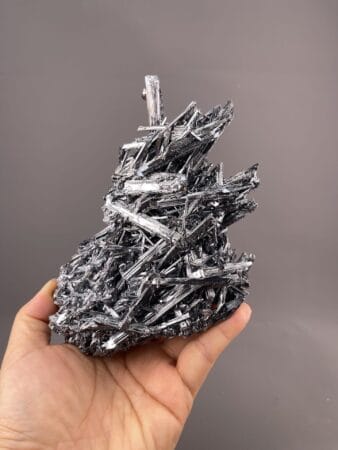
Galena
PbS, cubic. Perfect cubic crystals with three cleavages at right angles. Steel-grey metallic luster, dark grey streak. Specific gravity around 7.6 — galena feels unusually heavy because it is lead sulfide and lead contributes strongly to its density; it is not elemental lead. Famous localities: Tri-State (Missouri-Kansas-Oklahoma), Elmwood (Tennessee), Romania, Bulgaria, Sweden. Cabinet-size galena cubes are surprisingly heavy and very photogenic.
Pyrite
FeS₂, cubic. The 'fool's gold' — bright brassy yellow with metallic luster, but greenish-black streak (real gold streak is gold). Common habits: cubes (Spain's Navajún is famous for perfect striated cubes), pyritohedrons (12-sided 'soccer-ball' form), octahedrons. Daye-Hubei produces gleaming golden cubes with iridescent surface play. Pyrite oxidizes over decades — store dry to slow the reaction.
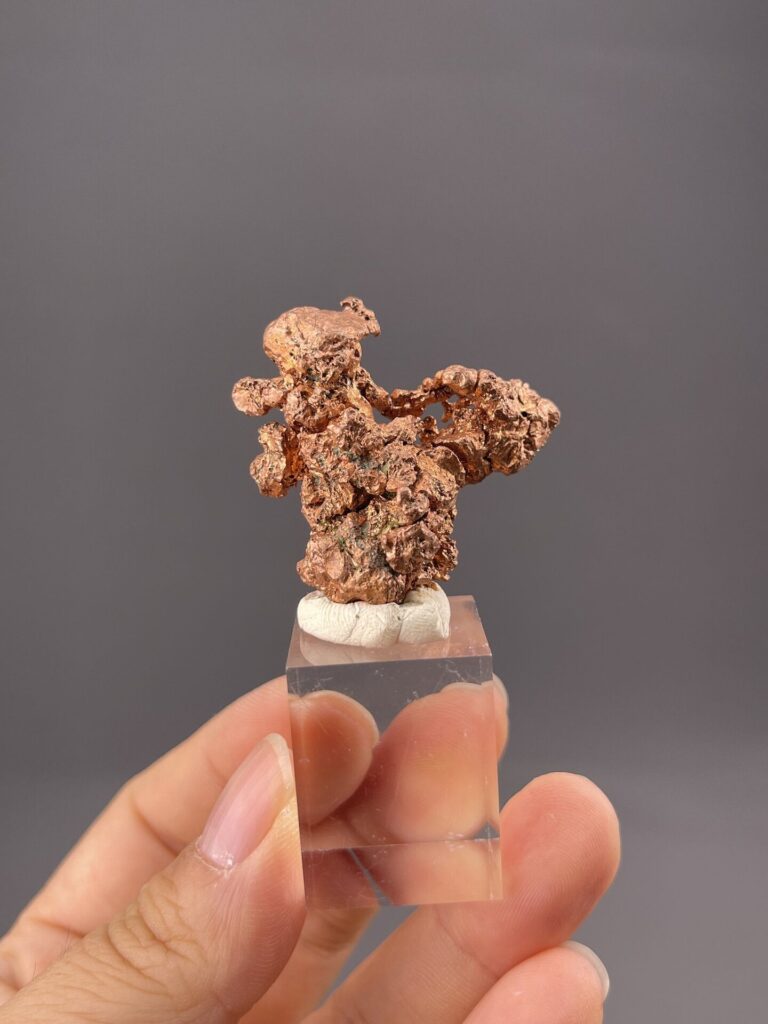
Sphalerite, chalcopyrite, stibnite
Sphalerite (ZnS) — resinous luster, six perfect cleavages produces a 'fire' from internal reflections in gem-quality pieces. Chalcopyrite (CuFeS₂) — brassier than pyrite, often heavily iridescent. Stibnite (Sb₂S₃) — orthorhombic acicular sword crystals, slate-grey metallic, soft (hardness 2). Lengshuijiang–Xikuangshan in Hunan is one of China's classic stibnite districts, documented for dramatic bladed crystals.
Telling the metallic look-alikes apart
Pyrite, chalcopyrite, and gold are confused so often that the streak plate is the collector's best friend here. Pyrite leaves a greenish-black streak and chalcopyrite a greenish-black to dark streak, while native gold streaks gold and smears rather than powders — a thirty-second test that ends the argument. Hardness helps too: pyrite is hard at 6–6.5 and will not be marked by a steel knife, whereas gold and chalcopyrite are soft enough to scratch easily.
Galena is harder to mistake once you lift it, because its specific gravity around 7.6 makes a fist-sized piece feel startlingly heavy. Its perfect cubic cleavage is the clincher: observe existing cleavage faces for little right-angled steps, but do not break, tap, grind, or abrade a specimen to create a test surface. When a grey metallic mineral is both very dense and already shows cubic cleavage, galena is a strong possibility, but an uncertain identification should be confirmed without damaging the specimen.
Galena is lead sulfide. Handle an intact display specimen carefully, wash your hands afterward, and keep it away from food surfaces and young children. Avoid any action that creates dust or fragments; proportionate handling precautions are different from claiming that every intact cabinet specimen is automatically hazardous.
Why sulfides oxidize — and how to store them
Sulfides are chemically reactive because sulfur readily gives up electrons, so in the presence of air and humidity their surfaces slowly oxidize. On pyrite this can progress to 'pyrite disease,' where the crystal develops a powdery, sulfurous, sometimes acidic crust that can damage labels and nearby specimens. The iridescent tarnish films prized on chalcopyrite and bornite are the gentle, early stage of this same oxidation process.
The practical defenses are simple: keep sulfides dry, cool, and away from strong light, ideally in a low-humidity cabinet with a desiccant. Avoid washing reactive sulfides in water, handle soft species like stibnite by the matrix rather than the blades, and isolate any specimen that begins to crumble before it affects its neighbors. A common misconception is that tarnish can always be polished off harmlessly — once oxidation has eaten into a crystal face, the damage is permanent.
China's great sulfide districts
China is a major modern source of sulfide specimens, and several districts are essential knowledge for collectors. The Lengshuijiang–Xikuangshan area in Hunan is one of China's classic stibnite localities; the Mineralogical Record documents the collector impact of its steely, deeply striated blades alongside Wuling material. For lead and zinc, the Fankou mine in Guangdong is known for galena and sphalerite in sharp, lustrous crystals on matrix.
Further sulfide-rich ground rounds out the picture: Inner Mongolia's polymetallic skarn deposits, such as the Huanggang area, produce galena, sphalerite, and associated minerals, while the long-worked iron and polymetallic district around Daye in Hubei is a noted source of golden pyrite. Assembling a Chinese sulfide suite — Hunan stibnite, Fankou galena and sphalerite, and Daye pyrite — gives you the metallic-luster, cleavage, and density lessons of the whole class in regional, traceable specimens.
常見問題
How do I tell pyrite from real gold?
Use streak and hardness. Pyrite leaves a greenish-black streak and is hard enough to resist a steel knife, whereas gold streaks gold, is soft, and smears rather than powdering. Gold is also much denser and never forms the sharp striated cubes pyrite favors.
Why is galena so heavy?
Galena is lead sulfide (PbS), and lead is a very dense element, giving the mineral a specific gravity around 7.6. A small piece feels far heavier than a same-size piece of quartz or calcite, which is itself a useful identification clue.
What is pyrite disease and can I stop it?
It is the progressive oxidation of pyrite in humid air, producing a powdery, sometimes acidic crust that can damage the specimen and its label. You cannot reverse it, but you can slow it dramatically by storing pyrite cool, dry, and with a desiccant, away from humidity.
Why is stibnite tricky to display?
Stibnite is very soft (hardness about 2) and grows as slender, brittle blades that bend, scratch, or snap easily. Handle it by the matrix, keep it out of direct heat and strong light, and avoid touching the crystal faces, which mark readily.