
BUYING GUIDE
Yaogangxian Fluorite Buying Guide
A focused buyer’s guide to Yaogangxian fluorite from Hunan, China: the green and purple cubes, fluorite-on-quartz aesthetics, color zoning and phantoms, what separates a good specimen from a great one, and how to judge condition on a soft, cleavable mineral before you buy.
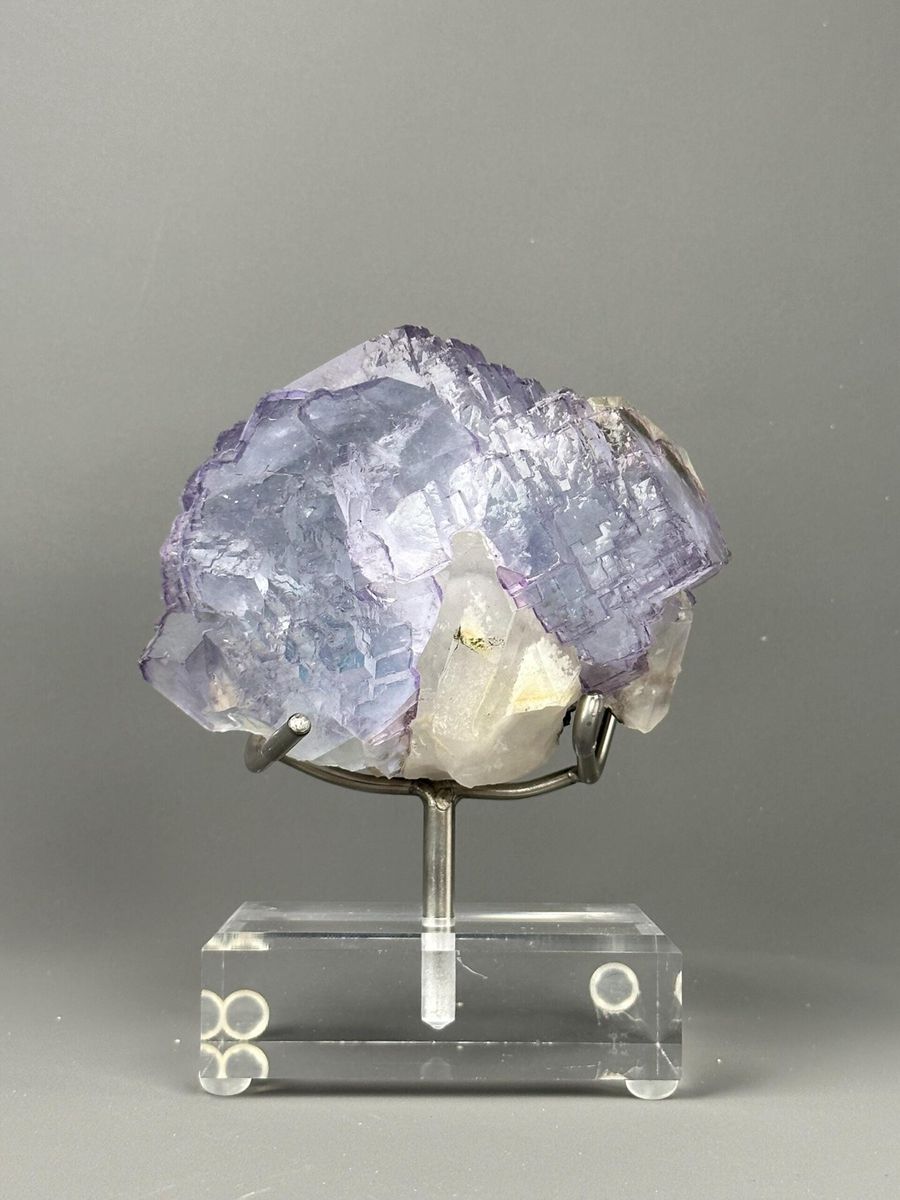
Why Yaogangxian fluorite is special
Yaogangxian (瑶岗仙) is a tungsten mine in southern Hunan that has also produced an outstanding run of fluorite specimens for the collector market. A dedicated Mineralogical Record monograph documents the locality. Its material includes vivid green and purple fluorite, often perched on or intergrown with quartz, and frequently showing color zoning and internal phantoms.
For collectors, Yaogangxian sits in a sweet spot: the material is genuinely beautiful and well-documented, the locality name is widely recognized, and specimens are available across a wide range of sizes and price points — from affordable thumbnails to large cabinet pieces.
What Yaogangxian fluorite looks like
The classic look is cubic fluorite crystals — sometimes modified by other faces — in greens ranging from pale to deep, and purples from lilac to rich violet. Many specimens combine colors, with green cores and purple edges or vice versa, and some show concentric phantoms where growth zones are visible inside the crystal.
Fluorite-on-quartz is a signature Yaogangxian aesthetic: glassy fluorite cubes sitting on a contrasting bed of white or smoky quartz crystals. Learning this regional "style" helps you recognize the material and judge whether a specimen’s appearance fits its stated locality.
What to look for — quality factors
Color: saturation and appeal matter most. Even, vivid color or attractive zoning/phantoms is more desirable than pale, washed-out material.
Transparency and luster: the best Yaogangxian fluorite is gemmy and glassy, letting light into the crystal. Tilt the specimen (or photo) to see how the faces shine.
Crystal form: look for sharp, complete cube edges and corners. Crisp geometry reads as quality.
Aesthetics: how the fluorite sits on the matrix or quartz. A well-balanced, naturally-positioned piece displays best.
Contrast: the most prized fluorite-on-quartz pieces have strong color contrast between the fluorite and its bed.
Condition — fluorite is soft, so check edges
Fluorite is only about 4 on the Mohs scale and has perfect octahedral cleavage, which means it chips and cleaves more easily than quartz or many other species. Condition is therefore a bigger factor than usual.
Check the crystal edges and corners closely for chips, bruises, or cleaved faces — especially on the front, display side. Ask the seller directly about any damage or repair a photo might hide. A small contact point on the back matters far less than a cleave across a front face. Because fluorite is fragile, also confirm the specimen is packed well for shipping.
Sizes and what drives price
Yaogangxian fluorite is available from thumbnail and miniature sizes up to large cabinet specimens. Price is driven by the combination of color quality, transparency, crystal sharpness, size, aesthetics, and condition — not by size alone.
A small, gemmy, vividly-colored, undamaged piece can be more desirable (and more expensive) than a larger but duller or chipped one. Decide what you value most — a single perfect crystal, a dramatic fluorite-on-quartz combination, or a large display piece — and buy the best condition you can within your budget.
Verifying locality and avoiding mislabels
Because Yaogangxian is a famous name, it is worth checking that a specimen’s appearance fits the locality’s known style. Other Hunan localities such as Shangbao and Xianghualing also produce fine fluorite with their own characteristics, and a good seller will distinguish them rather than labeling everything "Yaogangxian."
Look for a specific locality, photos of the actual specimen, and a seller who is transparent about how confident they are in the source. Where there is genuine uncertainty, honest disclosure is the right answer.
How to start buying
If you are new to the material, browse what’s currently available and compare a few pieces side by side — color, transparency, sharpness, and condition become much clearer in comparison. Read the locality page for context, keep the locality information with the specimen, and buy the best-condition piece you can afford rather than simply the largest.
The links below take you to the Yaogangxian locality page, the fluorite reference page, and the specimens we currently have in stock.
A provenance-first checklist
The full locality hierarchy is Yaogangxian Mine, Yaogangxian W–Sn ore field, Yizhang County, Chenzhou, Hunan, China — keep the complete version with the specimen even when a shorter display name appears on a card. Do not merge Yaogangxian with nearby mines, and do not treat “Hunan fluorite” as equivalent to a mine-level attribution.
When you buy, ask for:
- A photograph of the original label, kept associated with the exact specimen.
- Prior dealer or collection information, recorded without rewriting uncertainty as fact.
- Front, back, base, contacts, repairs and damage shown under neutral light.
- Associated minerals identified only when supported — otherwise described honestly as unidentified crystals or matrix.
- Dimensions, weight and condition that stay consistent across the listing, label and any video.
An association reported at the mine (quartz, muscovite, sulfides and others) is context, not an automatic identification of every crystal visible on a specimen.
常見問題
What colors does Yaogangxian fluorite come in?
Yaogangxian fluorite is best known for green and purple, ranging from pale to deep, and many specimens combine both colors with zoning or internal phantoms. It frequently occurs as cubic crystals, often on a bed of quartz.
Is Yaogangxian fluorite fragile?
Fluorite is relatively soft (about 4 on the Mohs scale) and has perfect octahedral cleavage, so it chips and cleaves more easily than quartz. Inspect crystal edges and corners for damage, ask about any repair, and make sure the specimen will be packed carefully for shipping.
What makes one Yaogangxian fluorite better than another?
Color quality, transparency and luster, crystal sharpness, aesthetics (including fluorite-on-quartz contrast), size, and condition together determine quality. A small, gemmy, undamaged, vividly-colored piece can outrank a larger but duller or chipped one.
How do I know a fluorite is really from Yaogangxian?
Check that the specimen’s appearance fits the locality’s known style, look for a specific locality and photos of the actual piece, and favor sellers who distinguish Yaogangxian from other Hunan fluorite localities such as Shangbao and Xianghualing rather than labeling everything the same.
Does a database occurrence prove a seller’s locality claim?
No. A locality database proves that a mineral has been reported from a place, not that an individual specimen came from it. Reliable attribution rests on the original label, ownership trail, and item-specific verification.
What is the most important buying evidence?
Start with the original locality label and ownership trail tied to the exact specimen. Then check that the mine hierarchy, product photographs, dimensions, condition and SKU remain consistent with each other.