矽孔雀石
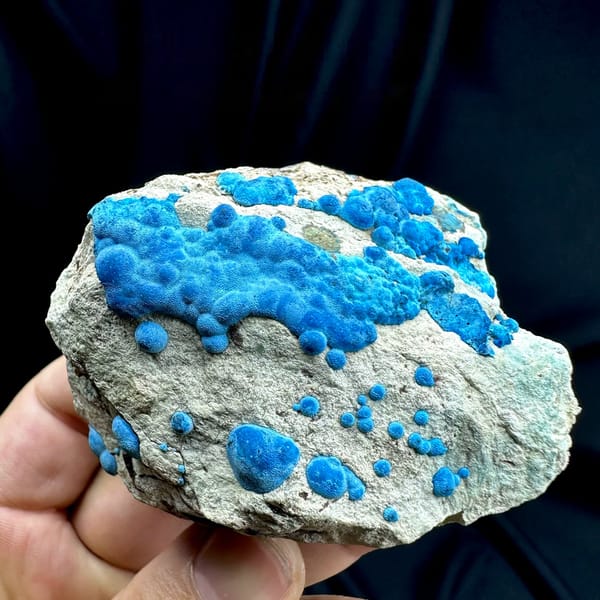
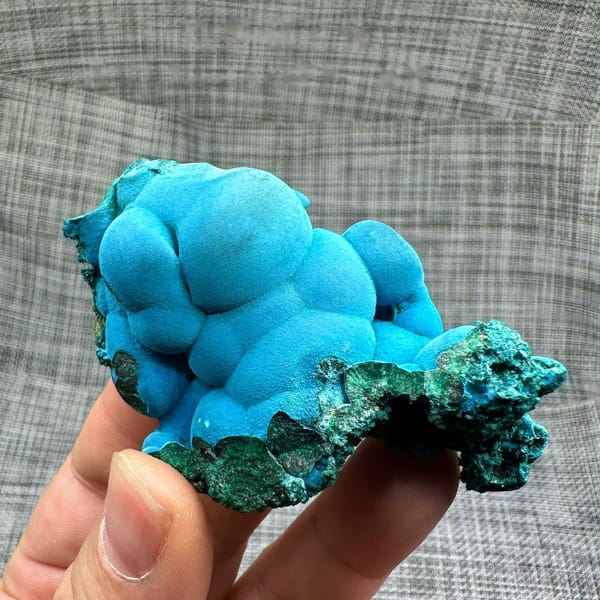
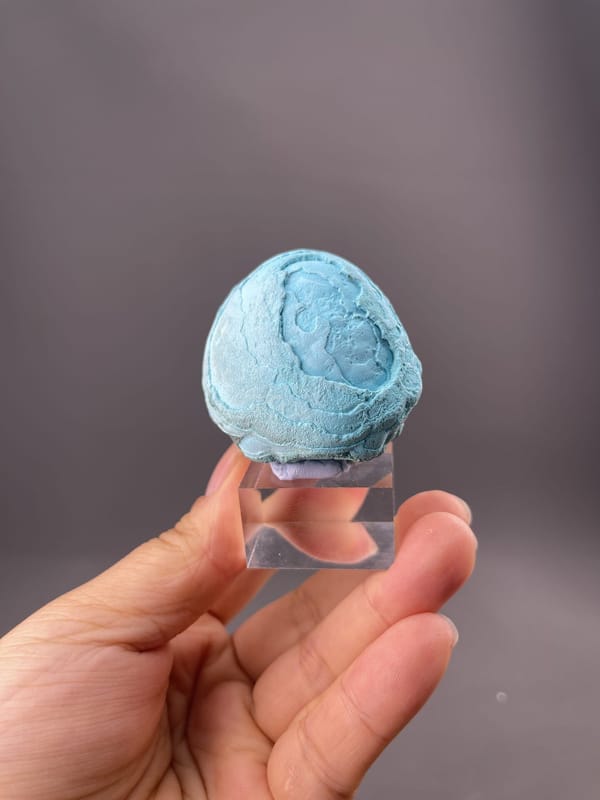
Chrysocolla is a silicate mineral prized by collectors for its exceptional color range, with notable Chinese occurrences.
基本資料
| 化學式 | Cu2-xAlx(H2-xSi2O5)(OH)4 · nH2O, x < 1 |
|---|---|
| 晶系 | 斜方晶系 |
Chrysocolla is a hydrous copper silicate, valued above all for its intense blue to blue-green colour. It forms in the oxidised zones of copper deposits, usually as botryoidal crusts, vein fillings and earthy masses rather than crystals, and is often intergrown with quartz, malachite and other copper minerals.
Identifying chrysocolla
Pure chrysocolla is soft (about 2–4) and can be chalky, but it is frequently hardened by intergrown silica. The most prized material is 'gem silica' or chrysocolla chalcedony — chrysocolla-coloured chalcedony that is hard, translucent and takes a brilliant polish. Its vivid cyan-to-green colour, often mottled with brown or black, is distinctive; it can resemble turquoise but is generally softer unless silicified.
Where it is found
Fine chrysocolla comes from oxidised copper orebodies worldwide — Bisbee and other Arizona mines, the Katanga Copperbelt in the DR Congo, Peru and Israel (Eilat stone, a chrysocolla-turquoise mix).
For collectors and lapidaries
Intense, even blue-green colour and translucency drive value; gem-silica chrysocolla and aesthetic botryoidal chrysocolla with malachite or azurite are the most sought-after. Soft, un-silicified material is best kept as a specimen rather than worn.