
Introduction
Mineral collecting is one of the most rewarding hobbies, combining science, beauty, and history. For beginners, starting a collection may feel overwhelming—there are thousands of minerals, endless localities, and countless shapes and colors. But the good news is, you don't need to be an expert to begin.
This guide provides a step-by-step checklist for anyone starting a mineral collection. Whether you are a student, hobbyist, or future serious collector, these tips will help you build a collection that is meaningful, organized, and enjoyable.
Step 1: Decide on Your Collecting Style
There are many ways to collect minerals, and knowing your focus will guide your choices.
- Beginner approach: Collect what you like—colorful or interesting pieces.
- Scientific approach: Collect systematically (e.g., by mineral species, crystal system, or locality).
- Aesthetic approach: Focus on display quality and beauty.
- Historical approach: Collect specimens from famous or exhausted mines.
👉 Tip: Start broad, then refine your collection style over time.

Step 2: Get Your First Specimens
You can begin with a small set of affordable minerals. Many shops sell beginner kits with common species like quartz, calcite, fluorite, and pyrite.
Places to get minerals:
- Rock shops and mineral shows
- Online dealers and marketplaces
- Directly from mines (field collecting)
Internal link suggestion: → Link to your Etsy/Shop "Beginner Mineral Kits" or "Affordable Specimens" page.

Step 3: Learn the Basics of Identification
Knowing what you own is important. Learn how to recognize common features like:
- Color and transparency
- Crystal habit (shape)
- Hardness (Mohs scale)
- Luster (metallic, glassy, earthy)
- Streak test
Internal link suggestion: → Link to your "How to Identify Minerals" article.

Step 4: Label Everything
Proper labeling is one of the most important parts of collecting. A good label should include:
- Mineral name
- Locality (mine, region, country)
- Date of acquisition
- Source (dealer, field trip, gift)
Well-labeled specimens keep your collection scientific and valuable.

Step 5: Organize and Store Your Minerals
How you store your specimens affects both their safety and display.
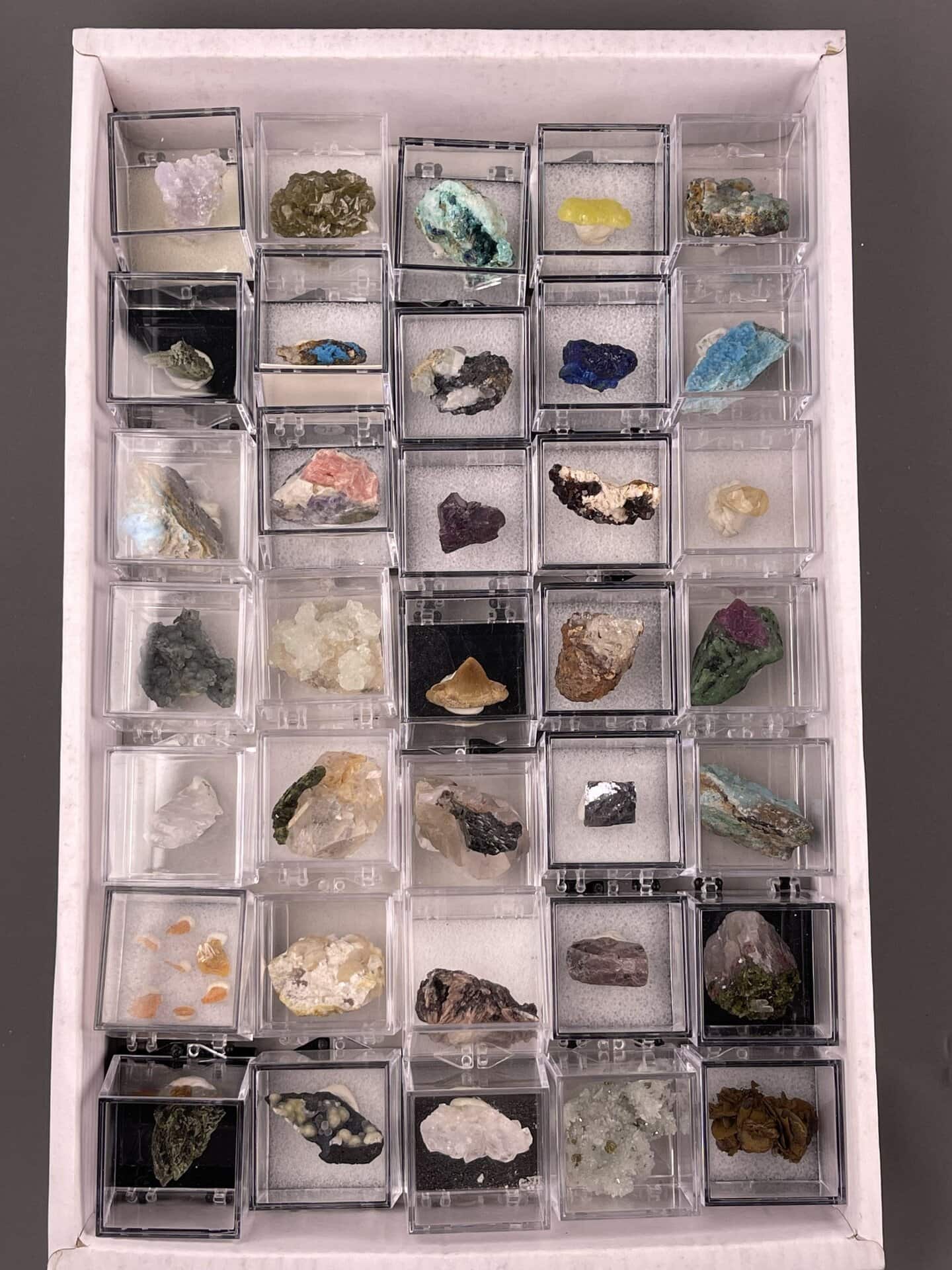
- Boxes or drawers: For small specimens.
- Display cases: For aesthetic pieces.
- Foam padding or tissue: To protect delicate crystals.
- Avoid sunlight: Some minerals (e.g., fluorite, amethyst) can fade.
Image alt text: Glass display case with mineral specimes arranged neatly.
Step 6: Keep Records
Many collectors keep a notebook or digital catalog. Record:
- Specimen number
- Species and variety
- Locality
- Price or trade details
- Notes about features
👉 Over time, this log becomes part of your collection's history.
Step 7: Join the Mineral Community
Collectors often share knowledge and trade specimens. Joining a group can accelerate your learning.
- Clubs and societies: Local mineral clubs, university geology groups.
- Mineral shows: Tucson (USA), Munich (Germany), Changsha (China).
- Online forums & social media: Great for sharing and asking questions.
Image alt text: Mineral collectors meeting at a gem and mineral show.
Step 8: Care for Your Collection
Minerals are natural, but some are fragile.
- Handle carefully: Hold by matrix, not fragile tips.
- Humidity control: Keep delicate specimens in stable conditions.
- Cleaning: Use soft brushes or water; avoid harsh chemicals unless you know the mineral.
Step 9: Upgrade Over Time
As you learn, you may want to replace common specimens with higher-quality examples. This is natural in collecting. Many experts started with basic quartz and calcite before moving to rare fluorite, stibnite, or rhodochrosite.
Internal link suggestion: → Link to "Collector Quality Minerals" product category.

Step 10: Enjoy the Journey
The most important part of mineral collecting is joy. Every specimen has a story—whether it came from a famous mine, a mountain hike, or a dealer's showcase. A collection is a personal journey of discovery and appreciation.
Image alt text: Collector admiring minerals displayed in a glass cabinet.
Conclusion
Starting a mineral collection doesn't require vast knowledge or a big budget. With this checklist—choosing your style, acquiring specimens, labeling, storing, and engaging with the community—you can build a collection that grows with you.
For beginners, the key is to stay curious and keep learning. Each mineral you add is not just a crystal, but a piece of Earth's story.
Explore Our Collection
Interested in adding exceptional specimens to your collection? Browse our hand-selected inventory of authentic minerals from world-renowned localities.
Fluorite Specimens | Calcite Specimens | Stibnite Specimens | Browse All Specimens
