
CHINA-MINERALENHUB
China's mineralische renaissance
Hoe Chinese kristallen in veertig jaar van mijnafval tot museumschatten werden — het verhaal van China's opkomst als 's werelds meest opwindende mineralenbron.
Een late start met diepe wortels
China is geen land dat het aan waardering voor steen ontbrak. Chinese koninklijke families verzamelden al rond 200 v.Chr. zeldzame en fraai gevormde rotsen, en de traditie van „kijkstenen" — natuurlijk gesculptuurde rotsen bewonderd om hun vorm en poëtische associaties — loopt door twee millennia Chinese kunst en filosofie. Wat China echter nooit ontwikkelde, was de Europese gewoonte om gekristalliseerde mineralen te verzamelen als objecten van wetenschap en natuurkunst.
De redenen waren deels historisch. Gedurende een groot deel van de twintigste eeuw waren kristallen die tijdens de mijnbouw werden aangetroffen simpelweg erts. Esthetisch verzamelen werd tijdens het Mao-tijdperk ontmoedigd, geowetenschappelijk onderwijs voor het publiek bestond nauwelijks, en vrijwel elk fraai kristal dat ondergronds werd gevonden ging naar de raffinagemolen of de afvalhoop. Westerse musea hadden ondertussen twee eeuwen lang zorgvuldig specimens uit hun eigen mijnen bewaard.
De deur gaat open
Alles veranderde na 1978, toen Deng Xiaopings hervormingen China opnieuw voor de wereld openden. In 1980 bracht het Geologisch Museum van Peking een baanbrekende tentoonstelling van Chinese specimens — cinnaber, auripigment, stibniet, azuriet — naar de Tucson Gem and Mineral Show. Veel stukken keerden nooit terug naar huis; ze werden ter plekke geruild tegen Amerikaanse klassiekers en contant geld, en westerse handelaren merkten het op.
Het eerste echte commerciële centrum ontstond bij het geologisch museum in Changsha, Hunan, waar conservator Zhou Xinkuang begin jaren 1980 begon te verkopen aan bezoekende verzamelaars. Tegen 1985 had het museum China's eerste echte mineralenwinkel geopend, met specimens uit nabijgelegen mijnen — vooral de legendarische wolfraammijn Yaogangxian, tot op vandaag een van de fijnste fluoriet-vindplaatsen ter wereld.
Wat volgde was een opmerkelijke onderwijscampagne, niet geleid door universiteiten maar door handelaren. Chinese groothandelaren moesten mijnwerkers een geheel nieuw vocabulaire bijbrengen: wat een „specimen" was, waarom een onbeschadigde kristalpunt belangrijk was, hoe je een fluoriet inpakt zodat het de reis uit de berg overleeft. De mijnwerkers — velen van hen boeren die tussen de oogsten door ondergronds werkten — leerden snel. Van het midden van de jaren 1980 tot begin jaren 2000, toen duizenden kleine, handmatig bewerkte mijnen zich over Zuid-China verspreidden, bereikte een vloedgolf van wereldklasse-specimens de internationale markt.

Foto: James St. John, CC BY 2.0, via Wikimedia Commons
De recordboeken herschreven
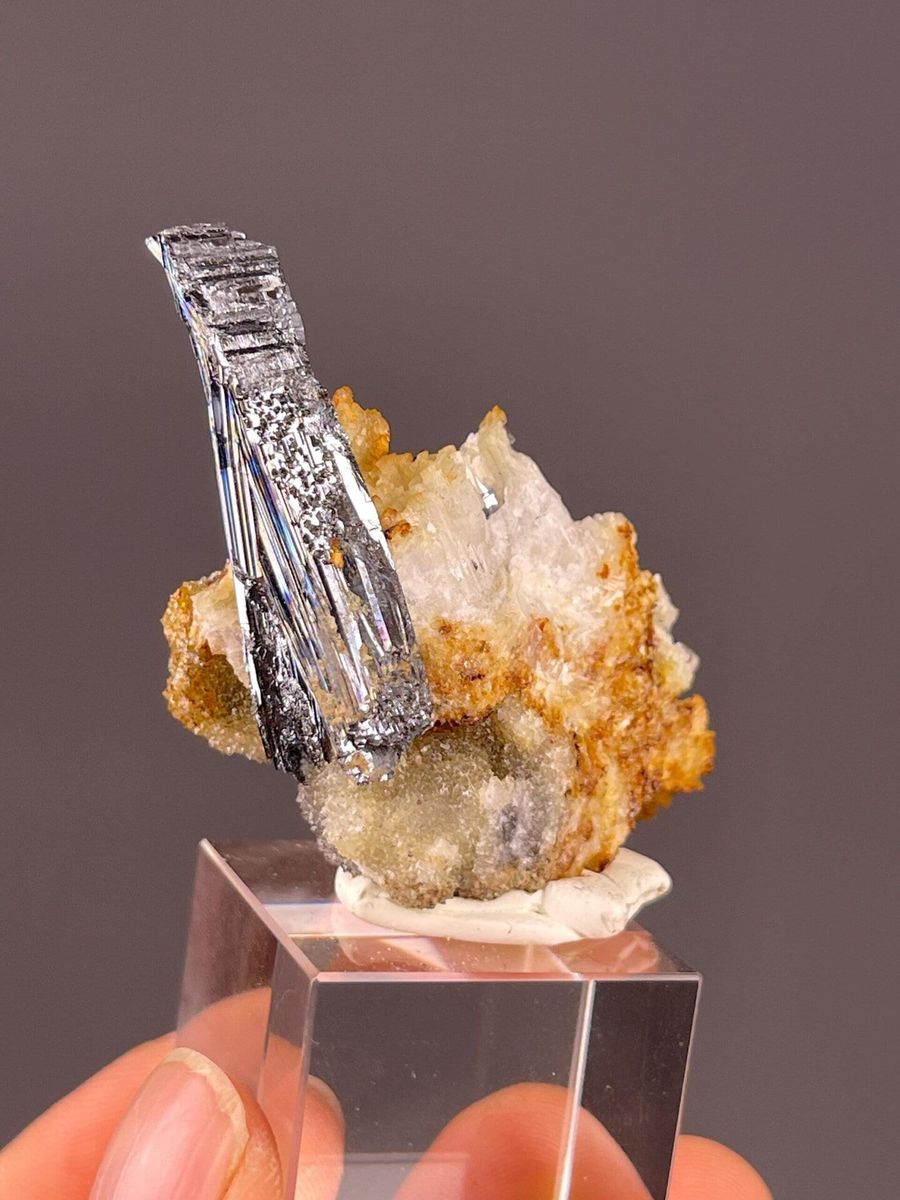
De resultaten deden sommige van 's werelds beroemdste klassieke vindplaatsen verbleken. Japans stibniet, meer dan een eeuw lang beschouwd als het beste ter wereld, werd onttroond door de kolossale metalige zwaarden uit Xikuangshan en de Wuling-mijn. Chinese fluoriet uit Yaogangxian, Shangbao en De'an kan zich nu meten met de klassiekers uit Illinois en Engeland. Pyromorfiet uit Daoping, rhodochrosiet uit Wutong, ilvaiet en roze fluoriet uit Huanggang, scheeliet uit Xuebaoding — elk heeft opnieuw gedefinieerd wat verzamelaars voor hun soort mogelijk achtten.
Ook nieuwe soorten zijn uit China voortgekomen: hsianghualiet, hubeiet, ottensiet en andere werden voor het eerst beschreven vanuit Chinese vindplaatsen — een herinnering dat dit evenzeer wetenschappelijk nieuw terrein als commerciële goudmijn is.
China verzamelt China
Het nieuwste hoofdstuk is misschien wel het belangrijkste. Een welvarende Chinese middenklasse heeft fijne mineralen ontdekt, en specimens die ooit bijna uitsluitend westwaarts stroomden, worden nu teruggekocht. Mineralenhandelscentra floreren in Changsha, Chenzhou, Huangshi en Guilin, waar jaarlijks honderden miljoenen dollars van eigenaar wisselen. De overheid heeft in een buitengewoon tempo moderne natuurhistorische musea gefinancierd, en internationale mineralenbeurzen in Changsha, Peking, Chenzhou en Shanghai trekken wereldwijde deelname aan.
Voor verzamelaars is de boodschap eenvoudig: we beleven de gouden eeuw van Chinese mineralen. Kleine mijnen blijven sluiten om veiligheids- en milieuredenen, en gemechaniseerde moderne mijnbouw redt veel minder kristallen dan een boer met een olielamp en een handhamer ooit deed. De specimens die tijdens dit korte historische venster — ruwweg 1985 tot vandaag — geborgen zijn, zullen wellicht nooit meer geëvenaard worden.
Bij MyMineralBox specialiseren we ons precies in dit materiaal: authentieke, vindplaats-gedocumenteerde Chinese specimens uit de klassieke mijnen. Ontdek onze China-mineralenhub voor gidsen per provincie.
---
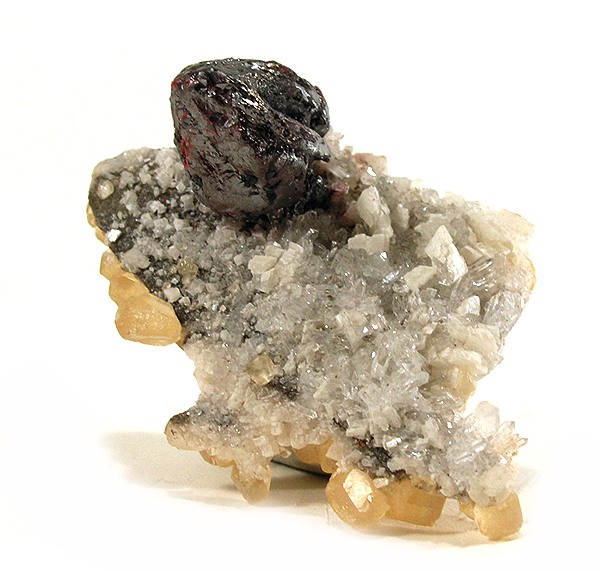
Foto: Robert M. Lavinsky, CC BY-SA 3.0, via Wikimedia Commons
De markt in 2026
Het verhaal wordt nog geschreven. China's eigen verzamelaars zijn een belangrijke kracht geworden: de 12e China (Hunan) International Mineral & Gem Expo in Changsha, gehouden in mei 2024, vulde 60.000 vierkante meter met ongeveer 1.200 stands en meer dan 600 exposanten — een toename van zeven procent ten opzichte van het voorgaande jaar — terwijl binnenlandse musea, instituten en particuliere kopers in toenemende mate concurreren om het beste materiaal. Tegelijkertijd blijven fijne Chinese stukken in het buitenland centraal staan: fluoriet was het hoofdthema van de Tucson Gem & Mineral Show 2026, met Chinese vindplaatsen prominent vertegenwoordigd.
Twee krachten verkrappen het aanbod. Ten eerste zijn veel van de kleine, handmatig bewerkte mijnen die de specimenvloed van de jaren 1990-2000 voortbrachten, gesloten of vertraagd, en raken hoogwaardige hulpbronnen uitgeput. Ten tweede raakt de politiek rond strategische metalen nu direct de specimenwereld: China voerde in 2024 exportvergunningen voor antimoon in, en stibniet — een antimoonerts — heeft daardoor prijsstijgingen en schaarste gezien. Voor verzamelaars blijft de les bij elke soort hetzelfde: de fijnste Chinese specimens worden in toenemende mate een eindige, in waarde stijgende hulpbron.
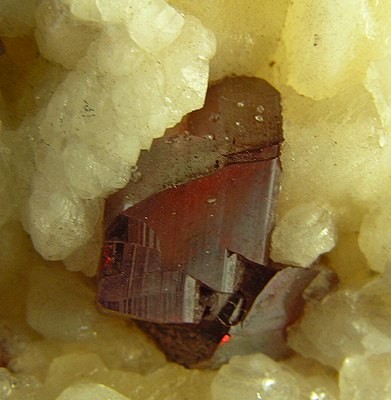
Foto: Robert M. Lavinsky, CC BY-SA 3.0, via Wikimedia Commons
Bronnen en verdere lectuur
De feitelijke achtergrond van dit artikel is gebaseerd op Liu, G., Lavinsky, R.M., Meieran, E.S., Schmitt, H.H., Moore, T.P. & Wilson, W.E. (2013), Crystalline Treasures: The Mineral Heritage of China, een supplement bij The Mineralogical Record, deel 44, nr. 1, samen met de vindplaatsnotities van MyMineralBox en standaard mineralogische naslagwerken. Feiten over recente ontwikkelingen zijn afkomstig uit de gedateerde bronnen die hierboven in het kader zijn gelinkt. Alle tekst is origineel van MyMineralBox.
Veelgestelde vragen
Wanneer werden Chinese mineralen populair bij verzamelaars?
Chinese specimens bereikten westerse verzamelaars nadat China zich eind jaren 1970 opnieuw openstelde. De Tucson Gem & Mineral Show van 1980, waar het Geologisch Museum van Peking cinnaber, stibniet en azuriet tentoonstelde, wordt algemeen gezien als het keerpunt, en de markt groeide vanaf het midden van de jaren 1980 snel.
Waarom worden Chinese mineraalspecimens als zo belangrijk beschouwd?
Chinese vindplaatsen hebben wereldklasse-voorbeelden van vele soorten voortgebracht — fluoriet uit Yaogangxian, stibniet uit Xikuangshan en de Wuling-mijn, scheeliet uit Xuebaoding, pyromorfiet uit Daoping — die zich meten met of de historische klassiekers uit Europa en Amerika overtreffen, vaak tegen toegankelijkere prijzen.
Zijn Chinese mineralen een goede investering?
De fijnste, onbeschadigde, vindplaats-gedocumenteerde Chinese specimens zijn in waarde gestegen naarmate de kleine handmatig bewerkte mijnen sluiten en het aanbod krapper wordt. Bulk- of beschadigd materiaal stijgt niet in waarde. Zoals bij elk verzamelobject bepalen conditie, zeldzaamheid en herkomst de langetermijnwaarde.