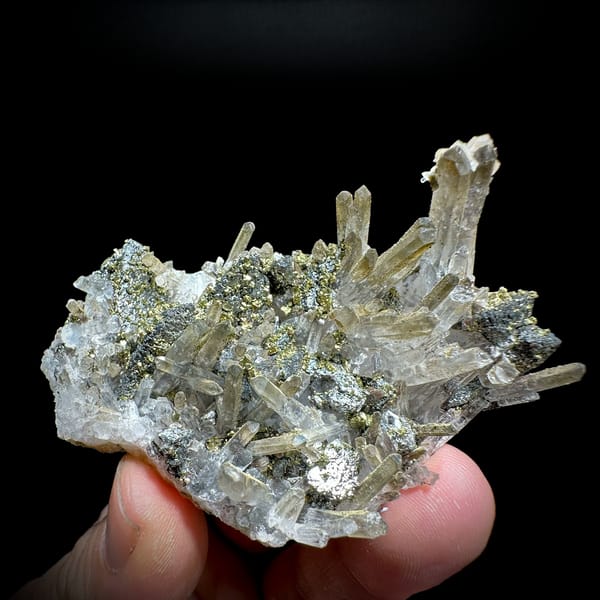
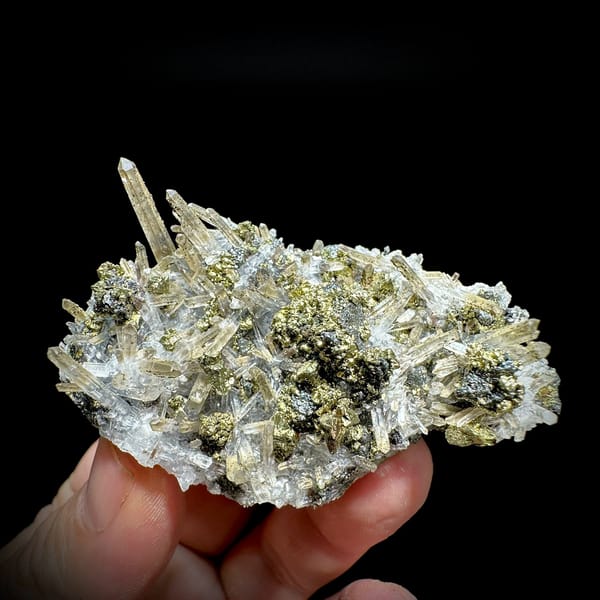
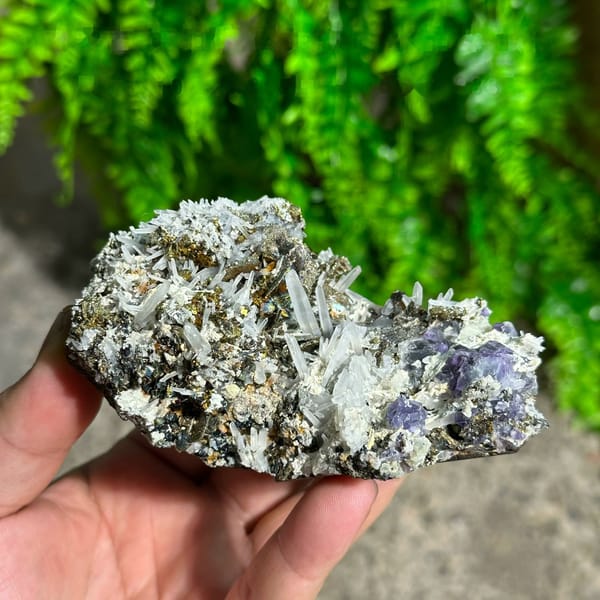
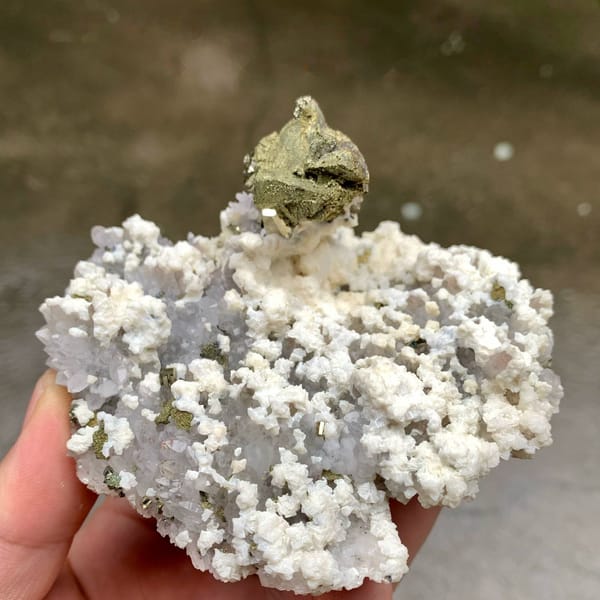
黃銅礦
Chalcopyrite is a sulfide mineral known for its striking metallic crystals, with several world-class Chinese localities.
基本資料
| 化學式 | CuFeS2 |
|---|---|
| IMA 代號 | Ccp |
| 施特龍茨分類 | 2.CB |
| 晶系 | 正方晶系 |
| 點群 | -42m |
| 收藏級別 | 適合陳列 |
| 模式產地 | (known since antiquity), Cornwall |
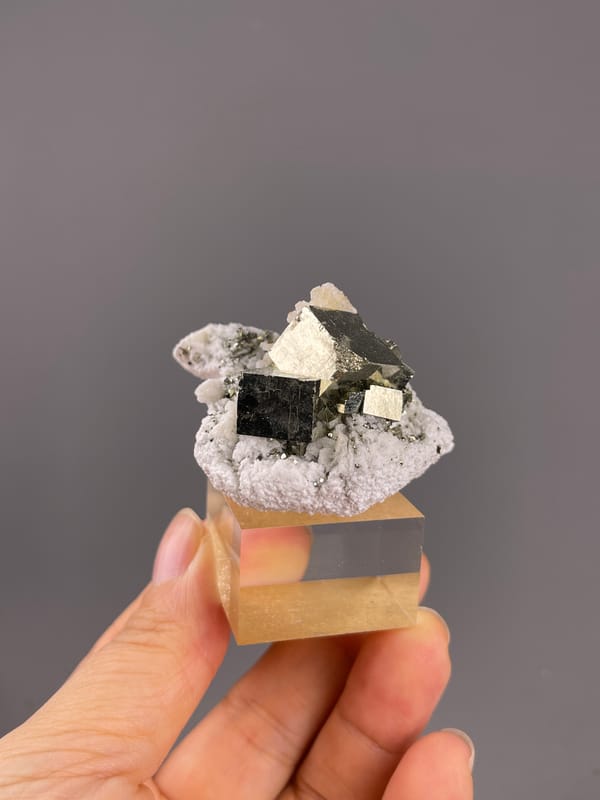
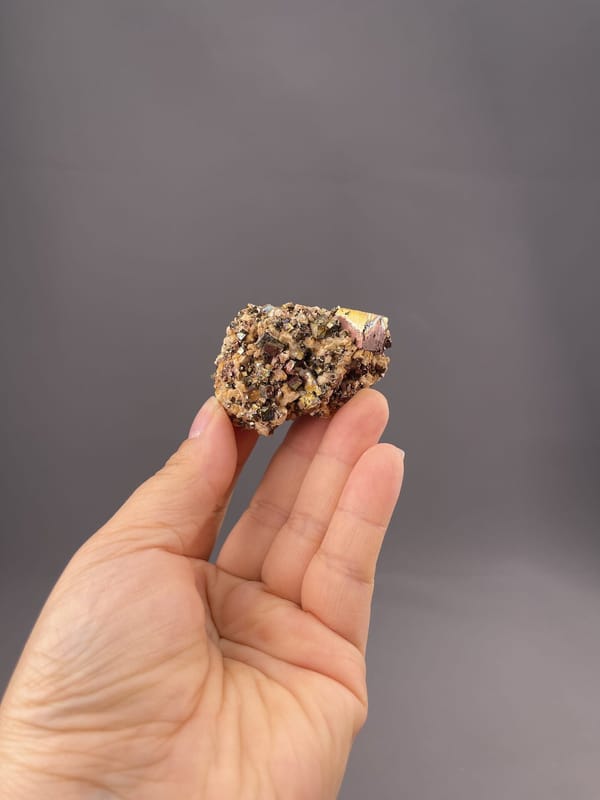
Chalcopyrite is a brassy gold-coloured sulfide and the world's principal source of copper. Freshly broken it resembles pyrite or gold, but it is softer and frequently develops a spectacular iridescent tarnish of blue, purple and gold that collectors know as peacock ore.
Identifying chalcopyrite
Chalcopyrite is soft (3.5–4) — easily scratched, unlike the harder, paler pyrite it is often confused with — and has a greenish-black streak. Its wedge-shaped (disphenoidal) crystals and brassy, iridescent surfaces are characteristic. It occurs in hydrothermal veins, porphyry copper systems and skarns, usually with other sulfides.
Where it is found
Chalcopyrite is mined for copper around the world. China is a major copper producer; the Daye iron-copper district in Hubei Province and other Chinese skarn and vein deposits yield chalcopyrite with sphalerite, galena, pyrite and quartz. Fine crystallised specimens also come from Spain, the French Alps, and the United States.
What collectors look for
Collectors seek bright, well-formed crystals and naturally iridescent 'peacock' surfaces, as well as aesthetic associations with sparkling quartz, sphalerite or galena. Natural untreated iridescence is valued over artificially tarnished material.