赤鐵礦
Hematite is an oxide mineral recognized among collectors for its crystal form and distribution, with several world-class Chinese localities.
基本資料
| 化學式 | Fe2O3 |
|---|---|
| IMA 代號 | Hem |
| 施特龍茨分類 | 4.CB |
| 晶系 | 三方晶系 |
| 點群 | -3m |
| 稀有度 | 常見 |
| 收藏級別 | 適合陳列 |
| 模式產地 | (ancient — Greek "haimatites"), Worldwide |
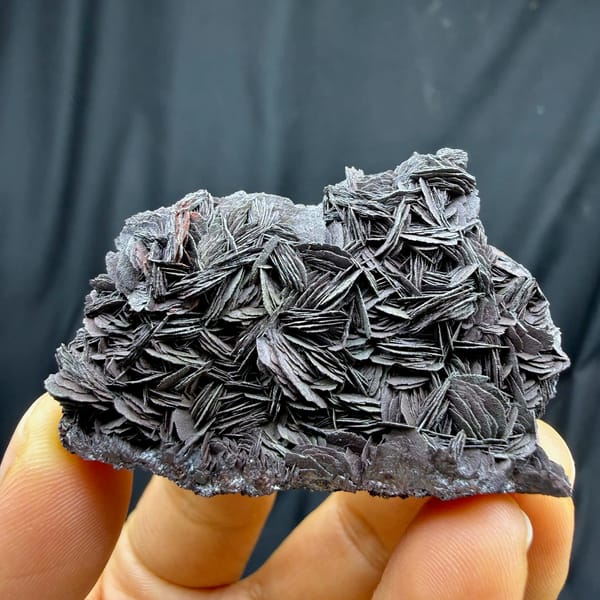
Hematite (Fe₂O₃) is the principal iron ore mineral worldwide and one of the most economically important minerals on Earth. Its blood-red streak (Greek “haima” = blood) is diagnostic. Specimen forms range from metallic “specularite” rosettes to “kidney ore” botryoidal aggregates and gem-grade octahedral crystals from Brazil and Switzerland.
Specimen forms
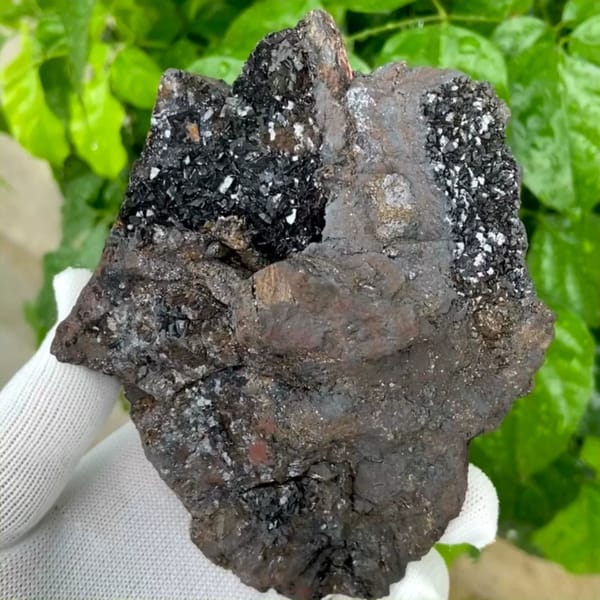
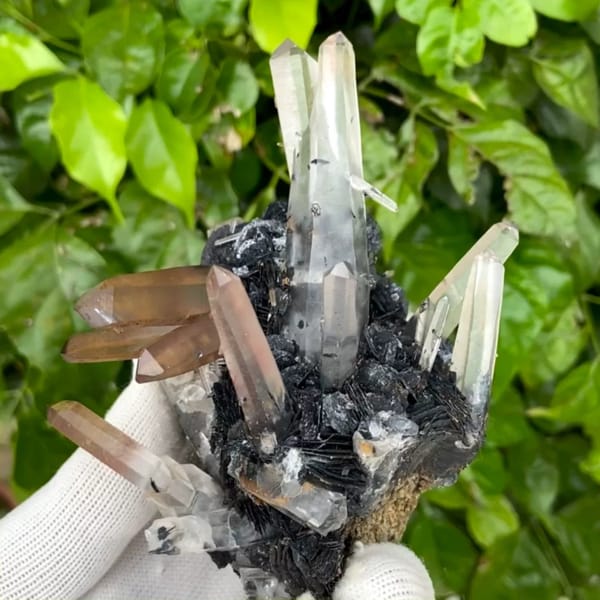
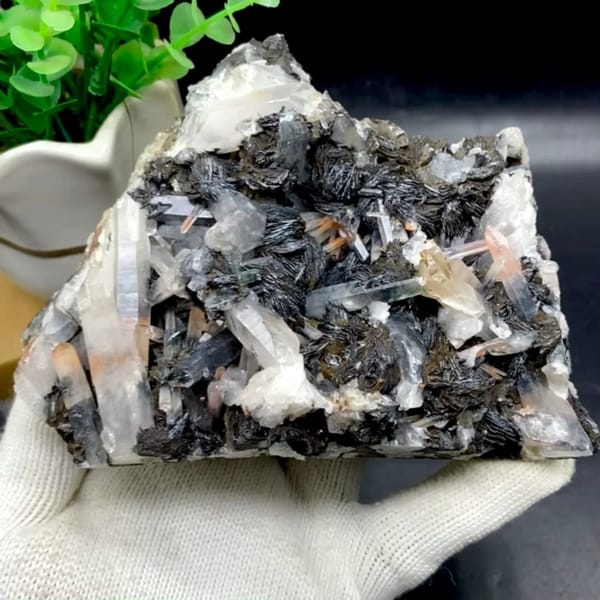
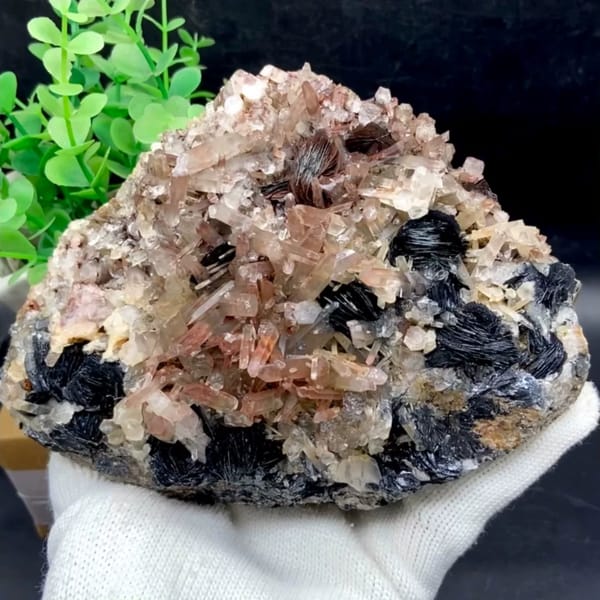
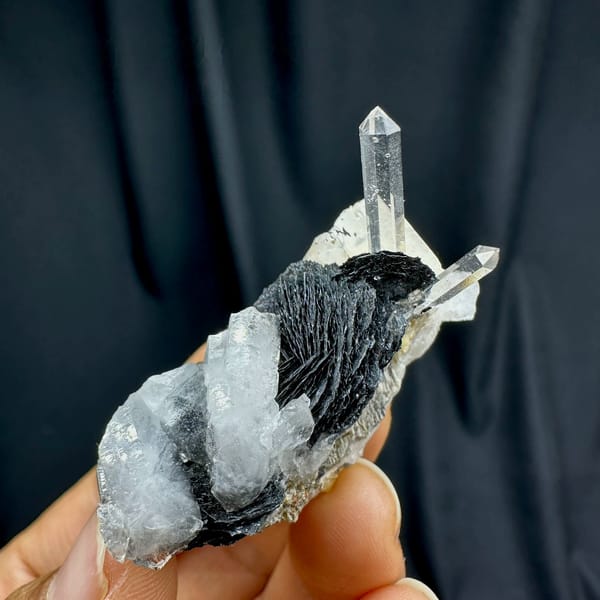
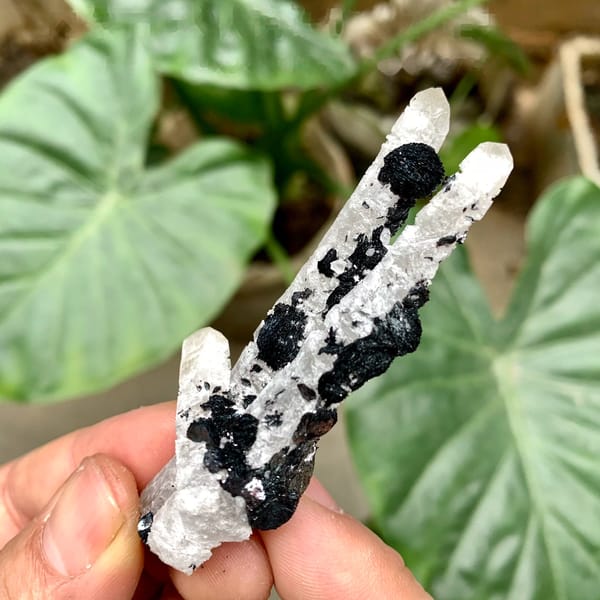
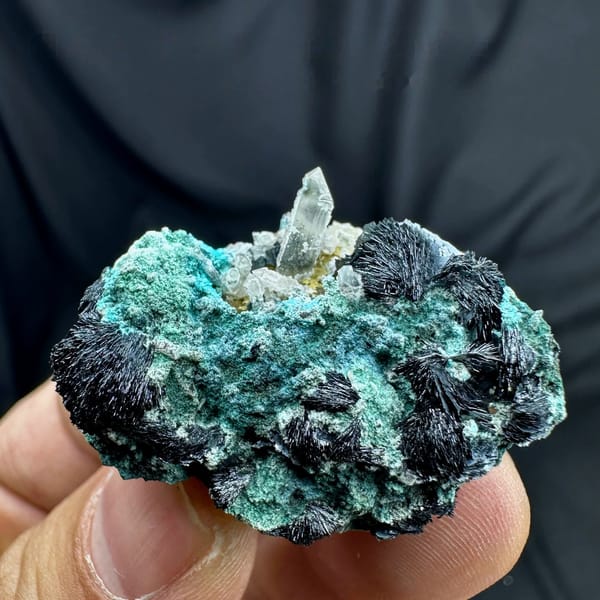
Collector hematite spans four looks: mirror-bright specular clusters of bladed crystals; martite — sharp octahedra where hematite has replaced earlier magnetite, keeping the shape while changing the species; botryoidal kidney ore; and iridescent surfaces where a thin oxide film splits the metallic luster into rainbow color. Unlike magnetite, hematite responds only weakly to a magnet — a quick bench test for the two.
Our sources
Our metallic material centers on Bayan Obo, Inner Mongolia — specular hematite from the famous Fe-REE deposit — plus Inner Mongolian martite octahedra and classic bright-luster crystals from Minas Gerais, Brazil.
What to look for
Luster is everything: the best specularite reads like polished steel. On martite, sharpness of the inherited octahedral form sets the grade.
From our inventory
See the Inner Mongolia locality page for the Bayan Obo material.
Hematite in China
One of China's most distinctive hematite occurrences is the giant Bayan Obo iron-and-rare-earth deposit in Inner Mongolia, a source of bright specular hematite — mirror-lustred plates and rosettes of metallic grey crystals — that reaches collectors alongside the deposit's many rare-earth and fluorite minerals.