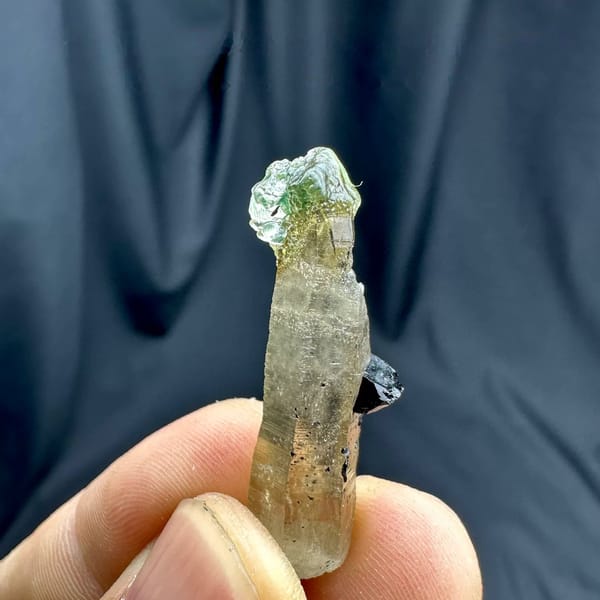
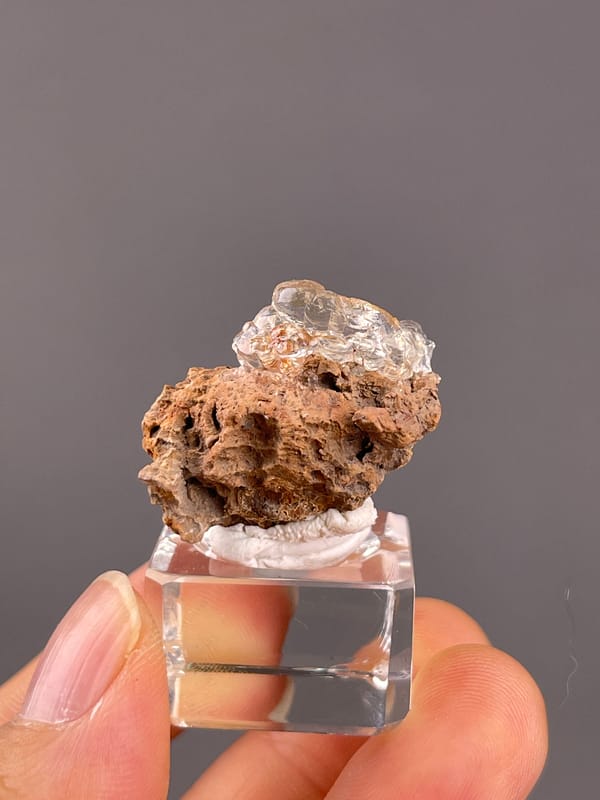
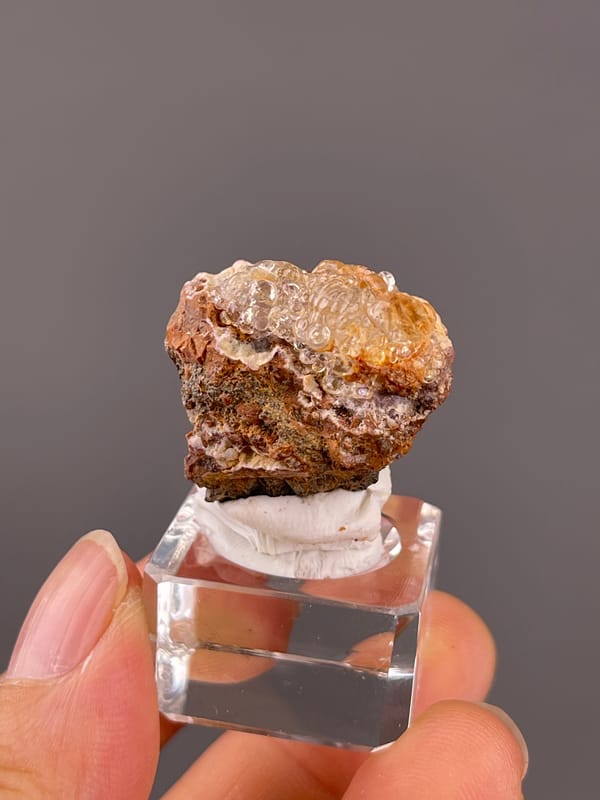
Amorphous
Opal is a hydrated, non-crystalline (“amorphous”) silica that ranks among the most popular gem materials on Earth. Precious opal’s spectral play of color comes from light diffraction off ordered arrays of microscopic silica spheres — a phenomenon unique to opal.
Occurrence in China
The undisputed source for premium precious opal is Lightning Ridge, Coober Pedy, Mintabie (Australia), providing >90% of world supply. Welo (Ethiopia) emerged in the 2010s as the second major source. China hosts only minor common-opal and hyalite occurrences in Liaoning and Sichuan basalt environments — not in commercial gem grade.
Identification
Play-of-color (in precious opal) + amorphous habit + lower density and hardness than quartz. Common opal is identified by waxy luster and conchoidal fracture. Hydrophane opal absorbs water and changes appearance.
Collector Notes
Black opal from Lightning Ridge with vivid play-of-color tops the gem market. Boulder opal from Queensland and Welo crystal opal are major collector targets. Common opal varieties — pink Andean, green Peruvian — are accessible and beautiful.
Name in other languages
Gemological optical data
- Refractive index
- 1.37–1.47
- Birefringence
- none (amorphous)
- Dispersion
- —