黃鐵礦
Pyrite is a sulfide mineral known for its striking metallic crystals, with several world-class Chinese localities.
基本資料
| 化學式 | FeS₂ |
|---|---|
| IMA 代號 | Py |
| 施特龍茨分類 | 2.EB |
| 晶系 | 等軸晶系 |
| 點群 | 2/m-3 |
| 稀有度 | 常見 |
| 收藏級別 | 櫃藏經典 |
| 模式產地 | (ancient — Greek "pyrites lithos"), Worldwide |
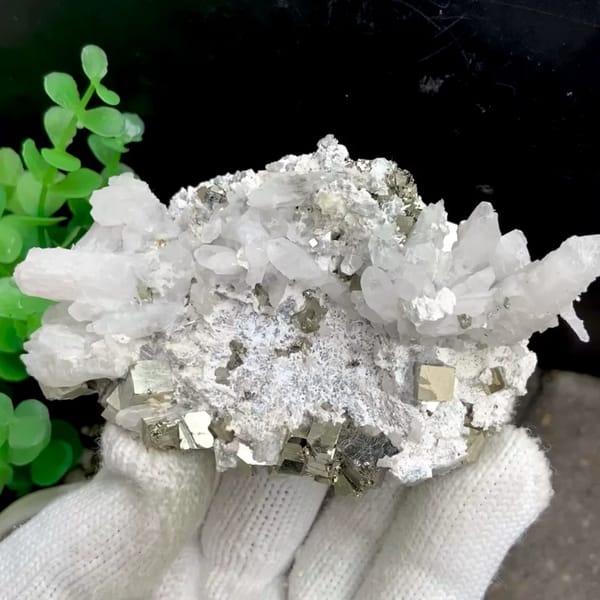
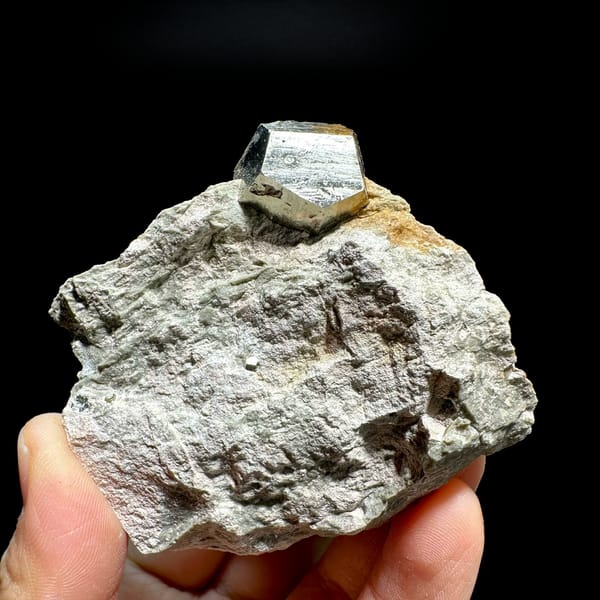
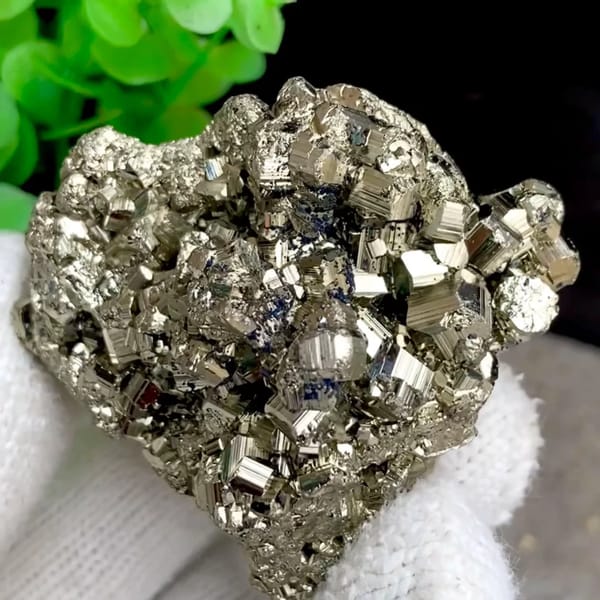
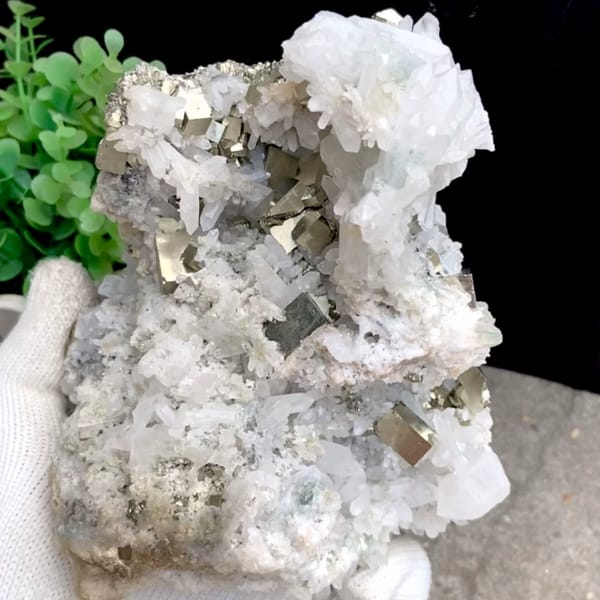
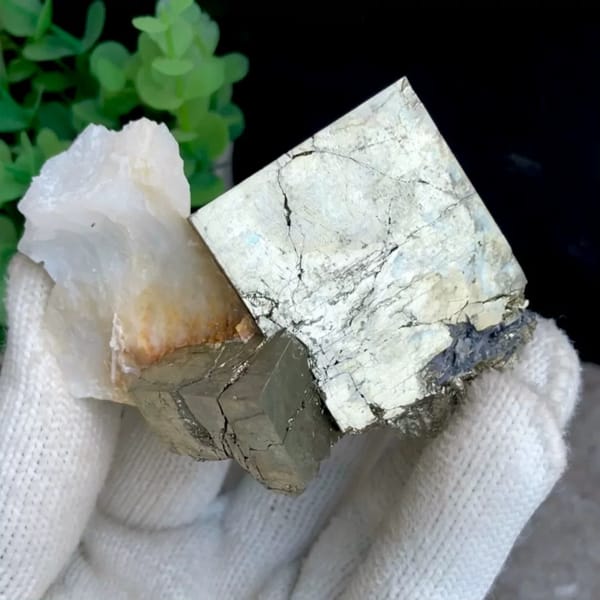
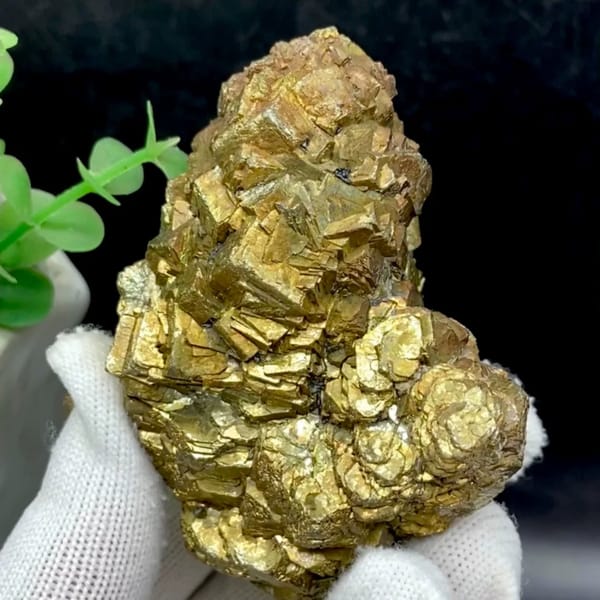
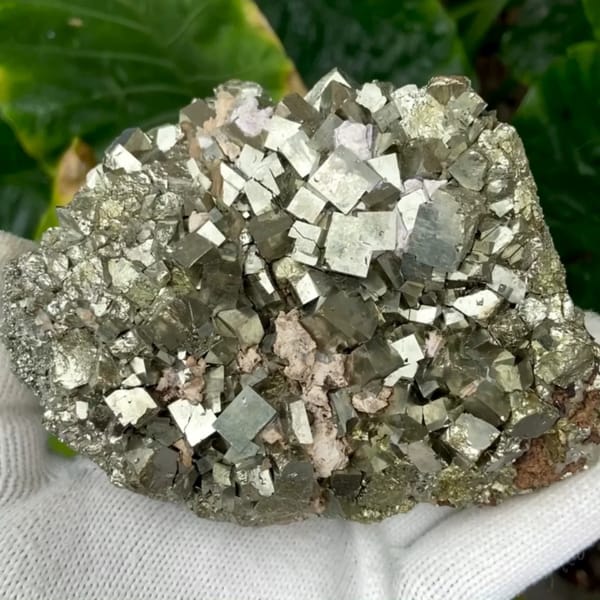
Pyrite is the most common sulfide mineral and a minor ore of iron and sulfur. Its pale brass-yellow colour and bright metallic lustre earned it the nickname 'fool's gold', but its crisp geometric crystals — cubes, pyritohedra and octahedra, often with striated faces — make it one of the most recognisable and collectable of all minerals.
Identifying pyrite
Pyrite is hard (6–6.5), brittle, and brass-yellow with a greenish-black streak — harder and paler than real gold, which is soft and yellow-streaked. The cube faces typically carry fine parallel striations that rotate 90° from face to face, a diagnostic feature. It forms in an enormous range of settings, from sedimentary rocks to hydrothermal veins.
Where it is found
Pyrite is found worldwide; Spain (Navajún) is celebrated for perfect free-floating cubes and Peru for complex bright crystals. In China, pyrite is abundant in many sulfide deposits, and the Shangbao mine in Hunan Province is internationally known among collectors for lustrous striated cubes and disc-like crystals, some with a colourful iridescent tarnish.
What collectors look for
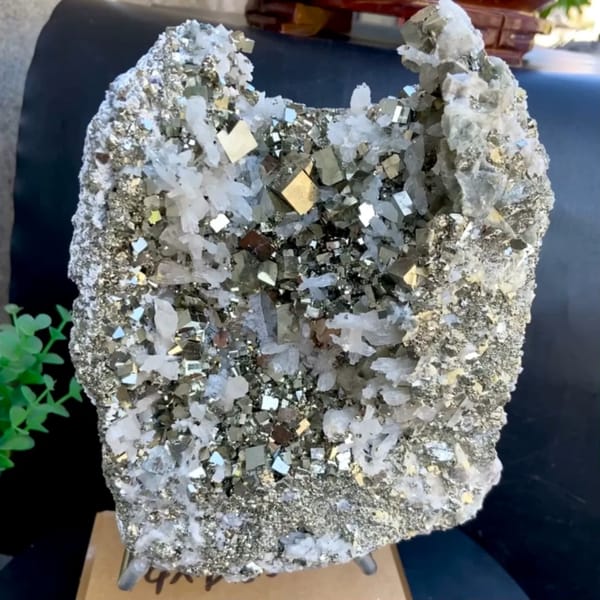
Sharp, undamaged crystals with bright untarnished faces are the prize. Chinese Shangbao iridescent pyrite, Spanish perfect cubes, and aesthetic pyrite associations with quartz or fluorite command the most interest.