
HISTORIA MINERA
Cinco Mil Años Bajo Tierra: Una Breve Historia de la Minería en China
Desde tallas neolíticas en carbón y minas de cobre de la Edad del Bronce hasta el auge actual de los especímenes — la extraordinaria historia de la minería china a través de cinco milenios.
Comienzos en la Edad del Bronce
La prospección china es anterior a la historia escrita. Se han datado tallas hechas en carbón, halladas en las ruinas de la cuenca carbonífera de Fushun, en la provincia de Liaoning, en más de 6.000 años. El cobre se trabajó en el norte de China en tiempos neolíticos, y para la dinastía Shang (siglos XVI–XI a.C.) la fundición de bronce había alcanzado una sofisticación asombrosa. El gran Simuwu Ding, una vasija ritual de bronce procedente de las ruinas de Yin en Anyang, contiene aproximadamente un 85% de cobre, un 12% de estaño y un 3% de plomo — casi exactamente las proporciones que la metalurgia moderna identifica como la aleación de bronce más dura. Quienquiera que mezclara esa fundición hace tres mil años sabía exactamente lo que hacía.
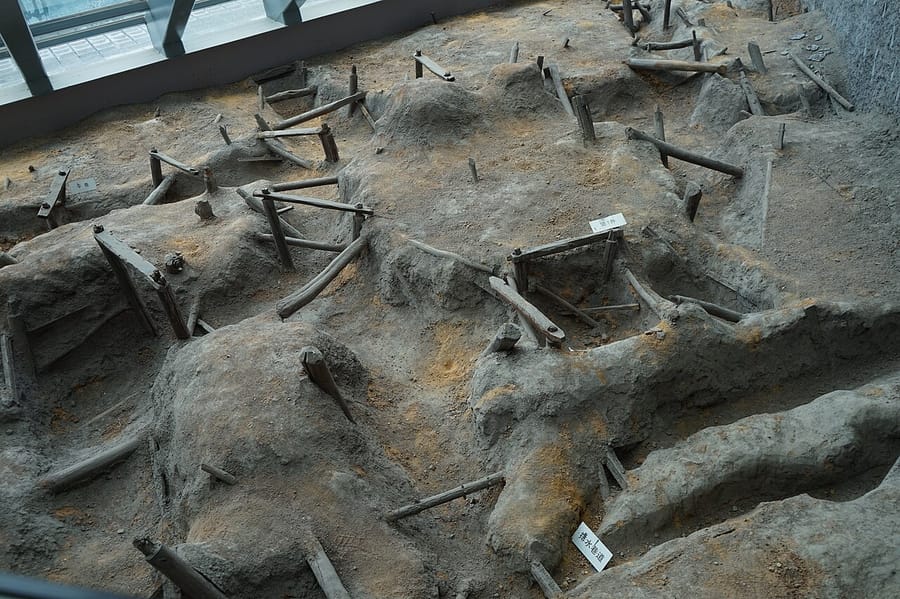
En 1973, los arqueólogos descubrieron la mina de Tonglushan en el Monte Verdín, en el condado de Daye: una mina de cobre de 3.000 años con instalaciones de fundición completas, cuyas antiguas trincheras y pozos suman un estimado de ocho kilómetros. Una mina a cielo abierto moderna todavía opera junto a las labores antiguas — y produce hasta hoy hermosos especímenes de malaquita, azurita y calcita.
Estudiosos de la piedra
China también produjo parte de la literatura mineralógica más antigua del mundo. El Shan Hai Jing ("Clásico de las Montañas y los Mares", siglos III–I a.C.) describe 89 tipos de minerales y rocas procedentes de 309 localidades, tratando la dureza, el color, el brillo, la transparencia — incluso el uso de plantas indicadoras para localizar mena enterrada, una técnica que la geobotánica occidental no formalizaría hasta dos mil años después.
El polímata de la dinastía Song, Shen Kuo (1031–1095), describió la geometría cristalina y la exfoliación del yeso en términos que reconocería un libro de texto moderno, entendió que la calcantita podía refinarse en cobre, y predijo que "el aceite que viene de las rocas" — el petróleo — se usaría ampliamente algún día. Merece su reputación como padre de la mineralogía china. En 1637, la obra de Song Yingxing La Explotación de las Obras de la Naturaleza documentó técnicas mineras, herramientas y yacimientos; el De Re Metallica de Agrícola se tradujo al chino apenas tres años después, en 1640.
Sin embargo, a pesar de estos logros, China nunca desarrolló las academias universitarias de minería, las comunidades mineras hereditarias o la "cultura minera" que surgió en distritos europeos como Sajonia y Cornualles. Las minas eran en su mayoría operaciones pequeñas, dispersas y estacionales trabajadas por campesinos — una razón por la que una tradición de conservación de especímenes cristalinos nunca arraigó, aunque minas como Yaogangxian y Xianghualing ya estaban operando al final de la dinastía Ming, en 1644.
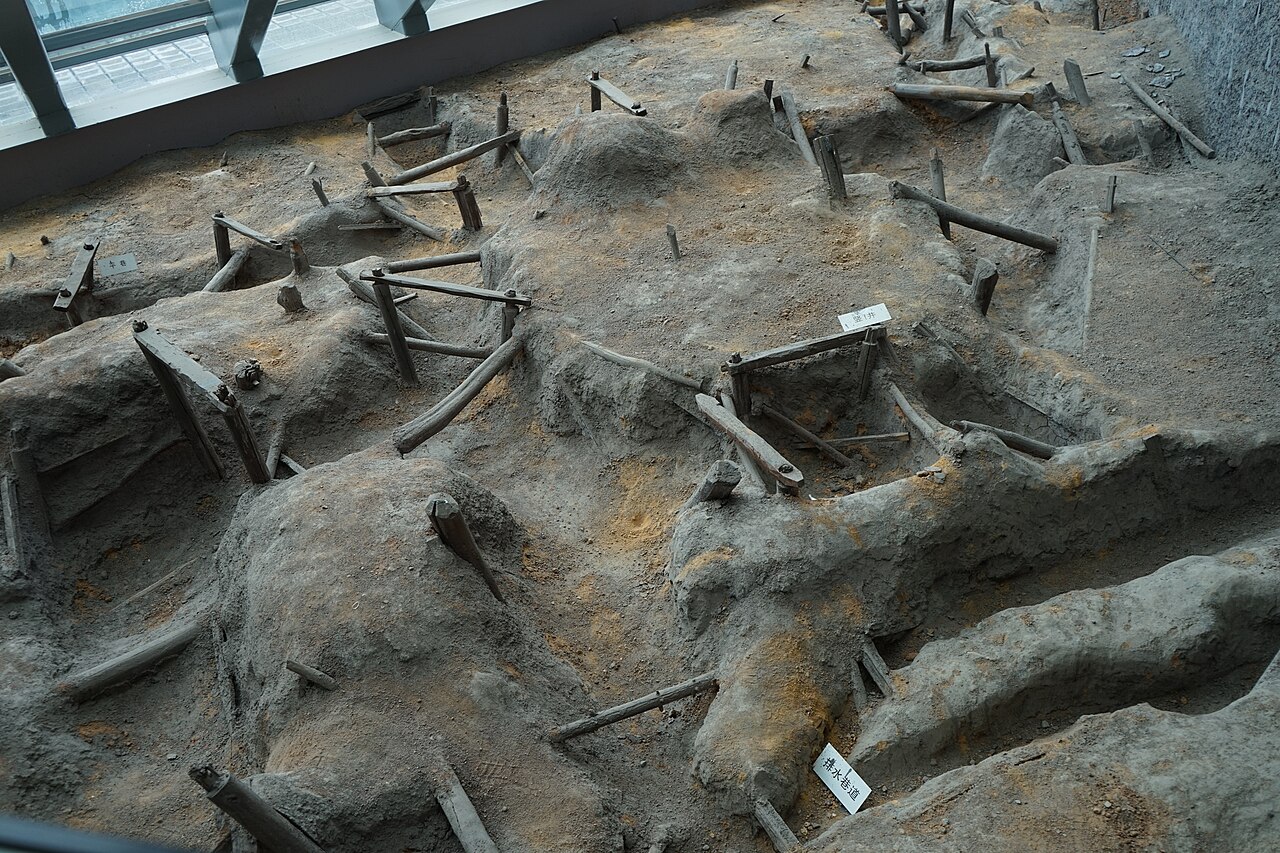
Foto: Amarespeco, CC BY-SA 4.0, vía Wikimedia Commons
La era moderna
Después de las Guerras del Opio, los ingenieros occidentales introdujeron tecnología minera moderna en las operaciones más grandes de China. Entre 1911 y la Segunda Guerra Mundial, extranjeros dirigieron muchas minas chinas importantes — incluida la mina de antimonio más grande del mundo en Xikuangshan, Hunan, y las minas de mercurio de Wanshan, en Guizhou. Las primeras escuelas de minería de China se fundaron en 1909, semillas de la actual Universidad de Minería y Tecnología de China.
La República Popular reconstruyó la industria en oleadas: expansión rápida en los años cincuenta y sesenta, estancamiento durante la Revolución Cultural, luego un crecimiento explosivo tras las reformas de 1978. A finales de la década de 1990, China extraía 168 productos minerales distintos de más de 20.000 yacimientos, empleando a más de siete millones de personas, y dominaba la producción mundial de wolframio, antimonio y los elementos de tierras raras esenciales para la electrónica moderna.
Por qué esta historia importa a los coleccionistas
Aquí está la paradoja del coleccionista: fueron precisamente las minas pequeñas y de baja tecnología — lámparas de aceite, martillos de mano, malacates de cuerda — las que produjeron la mayoría de los hermosos especímenes chinos del mercado mundial. Un minero que trabaja a mano puede ver una bolsa de cristales y salvarla; una excavadora no puede. Cuando miles de minas pequeñas cerraron por razones de seguridad y medioambientales después de principios de la década de 2000, y las grandes operaciones mecanizadas tomaron el relevo, el flujo de especímenes de calidad se estrechó drásticamente.
Cada espécimen de Shimen, Shangbao o Xikuangshan es, por lo tanto, un pequeño superviviente de una era que desaparece — recuperado a mano, de la manera en que los minerales se han arrancado de la roca china durante cinco mil años.
---
Foto: Huanokinhejo, CC BY-SA 4.0, vía Wikimedia Commons
Fuentes y lecturas adicionales
El trasfondo factual de este artículo se basa en Liu, G., Lavinsky, R.M., Meieran, E.S., Schmitt, H.H., Moore, T.P. y Wilson, W.E. (2013), Crystalline Treasures: The Mineral Heritage of China, un suplemento de The Mineralogical Record vol. 44 n.º 1, junto con las notas de localidad de MyMineralBox y las referencias mineralógicas estándar. Los datos sobre desarrollos recientes proceden de las fuentes fechadas enlazadas en el panel de arriba. Todo el texto es original de MyMineralBox.
Imagen principal: foto de Amarespeco, CC BY-SA 4.0 vía Wikimedia Commons.
Preguntas frecuentes
¿Cuán antigua es la minería en China?
La minería china se remonta a más de 5.000 años. El carbón se tallaba ya en tiempos neolíticos, y la mina de cobre de Tonglushan, en Hubei, se ha trabajado durante unos 2.800 años — uno de los distritos mineros continuos más antiguos de la Tierra.
¿Por qué las minas pequeñas producían los mejores especímenes?
Las minas pequeñas trabajadas a mano, con herramientas simples, permitían a los mineros ver y salvar intactas las bolsas de cristales. Las grandes operaciones mecanizadas destruyen muchos más especímenes, así que el cierre de las minas pequeñas desde principios de la década de 2000 ha reducido el flujo de material chino fino.