
PRICE GUIDE
Smithsonite Price Guide: How Much Is Smithsonite Worth?
How much is smithsonite worth? Real price bands for smithsonite specimens — from $20 druzy crusts to four-figure Kelly Mine and Tsumeb classics — and the factors that move the price: color, luster, locality, and condition.
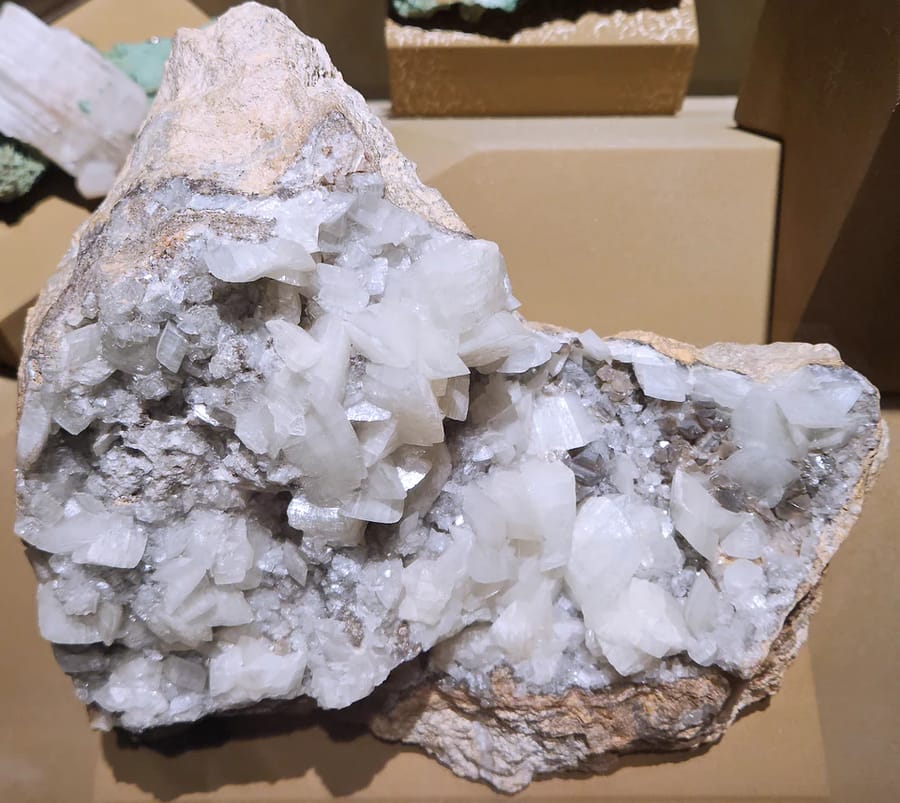
Smithsonite price bands at a glance
| Grade | Price band | What you get | | --- | --- | --- | | Massive / ornamental | Under $20 | Cut or tumbled zinc carbonate — décor, not specimens | | **Starter druzy** | **$20–$80** | Sparkling mint-green or grey-blue druzy crusts, small cabinet sizes, honest localities | | **Core collection grade** | **$80–$400** | Saturated color, thick botryoidal banks, clean unbroken crusts, specific mine-level labels | | **Classic-locality premium** | **$400–$2,000** | Kelly Mine blue-green with full coverage, fine Tsumeb botryoidal, top Mexican material | | Museum / competition | $2,000+ | Tsumeb crystallized or cobalt-pink pieces, exceptional old Kelly banks — auction territory |
The factors that actually move the price
Color saturation leads. Smithsonite’s market runs on its blues, greens and pinks: the deeper and more even the color, the steeper the price curve. A pale grey-green crust and a saturated robin’s-egg bank from the same mine can differ in value by ten times.
Luster is the second lever. The species’ signature is a silky, almost wet-looking pearly sheen rolling over botryoidal surfaces — collectors call it “the glow.” Dull, dry-looking material sits at the bottom of every band regardless of color.
Condition matters more than most species because the display face is one continuous crust: a single ding exposes white interior and is impossible to hide. Finally, locality: the same visual quality carries a premium under a famous label, because smithsonite is one of the great locality-collector species.
The famous names, briefly
Kelly Mine (Magdalena, New Mexico) defines blue-green smithsonite for American collectors; genuine old Kelly banks with full crust coverage now trade in the hundreds to low thousands, and the searches asking “Kelly Mine smithsonite price” have a simple answer: more every year, because the mine is long closed.
Tsumeb (Namibia) produced the species’ aristocracy — gemmy crystallized smithsonite and the famous cobalt-pink material — and prices reflect its closed-mine status.
On the affordable end, Mexican (Refugio/Choix) and Chinese zinc-belt material supplies most of today’s starter and mid-market: honest, often beautifully colored, and the best value-per-dollar entry into the species.
Smithsonite vs. hemimorphite: the zinc twins
The two zinc minerals form in the same oxidized ore zones, both do botryoidal blue, and they are constantly confused in listings. Smithsonite is a carbonate (it will fizz gently in dilute acid — not a test to run on a good specimen), typically with the rounded, silky-lustered crust habit; hemimorphite is a silicate, more often in glassy fan-shaped crystal sprays. Neither is “better” — but mislabeled pieces are common enough that knowing the difference protects your budget. See our hemimorphite guide for the other half of the story.
Buying smithsonite without overpaying
Judge in this order: luster first (the silky glow), then color saturation and evenness, then crust continuity under a raking light, then the label — a specific mine beats a bare country name. Be skeptical of vivid uniform colors at bargain prices; dyed carbonate exists. And weigh the piece in hand if you can: smithsonite is noticeably heavy for its size, one honest clue that’s hard to fake.
Page photo: “Smithsonite on cerussite” by Eric Polk, CC BY-SA 4.0, via Wikimedia Commons.
Questions fréquentes
How much is smithsonite worth?
Ornamental material sells under $20, honest starter druzy runs $20–$80, quality colored botryoidal specimens $80–$400, and classic-locality pieces from Kelly Mine or Tsumeb range from several hundred dollars into the thousands. Color saturation, silky luster, crust condition and locality set the price.
What is a piece of mint green druzy smithsonite worth?
Typical small mint-green druzy specimens sell for roughly $20–$80; larger plates with even sparkle and no crust damage reach $100–$250. Exceptional saturated pieces from famous mines go higher.
Why is Kelly Mine smithsonite so expensive?
The Kelly Mine in Magdalena, New Mexico is long closed, so its signature blue-green smithsonite exists in fixed supply while demand from American collectors keeps rising. Genuine old Kelly banks with full crust coverage now trade from several hundred dollars up.
Is smithsonite the same as hemimorphite?
No — they are the “zinc twins” from the same ore zones. Smithsonite is a zinc carbonate with silky botryoidal crusts; hemimorphite is a zinc silicate that more often forms glassy crystal fans. They are frequently confused in listings.