
Collector Safety
Toxic Minerals: Which Are Safe to Keep at Home?
Which toxic minerals are safe to keep at home? A collector's guide to cinnabar, realgar, lead and copper minerals — safe handling, storage, and what to avoid.
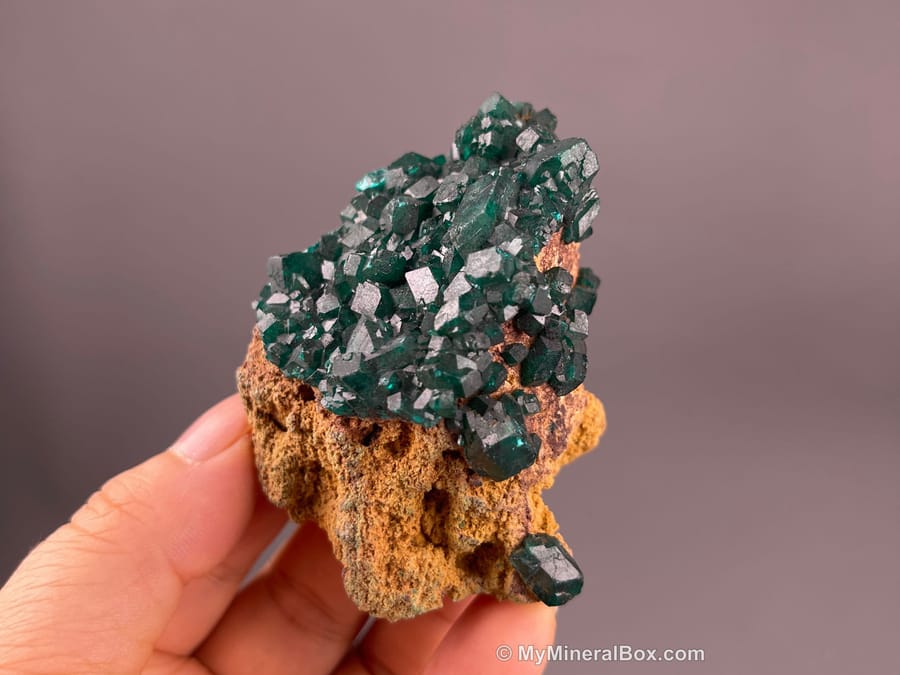
Why “toxic” rarely means “dangerous to own”
It is easy to be spooked by lists of “deadly crystals,” but the mineralogy is more reassuring than the headlines. A mineral’s toxicity depends almost entirely on whether its harmful elements can actually get into your body — and for most heavy-metal minerals sitting on a shelf, they can’t.
Two things protect you. The first is solubility. Cinnabar, for example, is mercury sulfide, and mercury sounds terrifying — yet cinnabar is so insoluble and chemically stable that it is far safer to handle than almost any other mercury compound. The second is physical form: a solid, intact crystal keeps its toxic elements locked in place. Trouble only starts when a specimen is turned into dust or fumes — by grinding, cutting, sanding, heating, or being licked or eaten.
So the working rule for almost every toxic mineral is simple: display it, don’t process it. Keep it dry, keep it whole, wash your hands, and keep it away from anyone likely to put it in their mouth.
The famous toxic minerals — and how risky they really are
Here are the species collectors ask about most, running roughly from “handle with normal care” to “handle with real caution.”
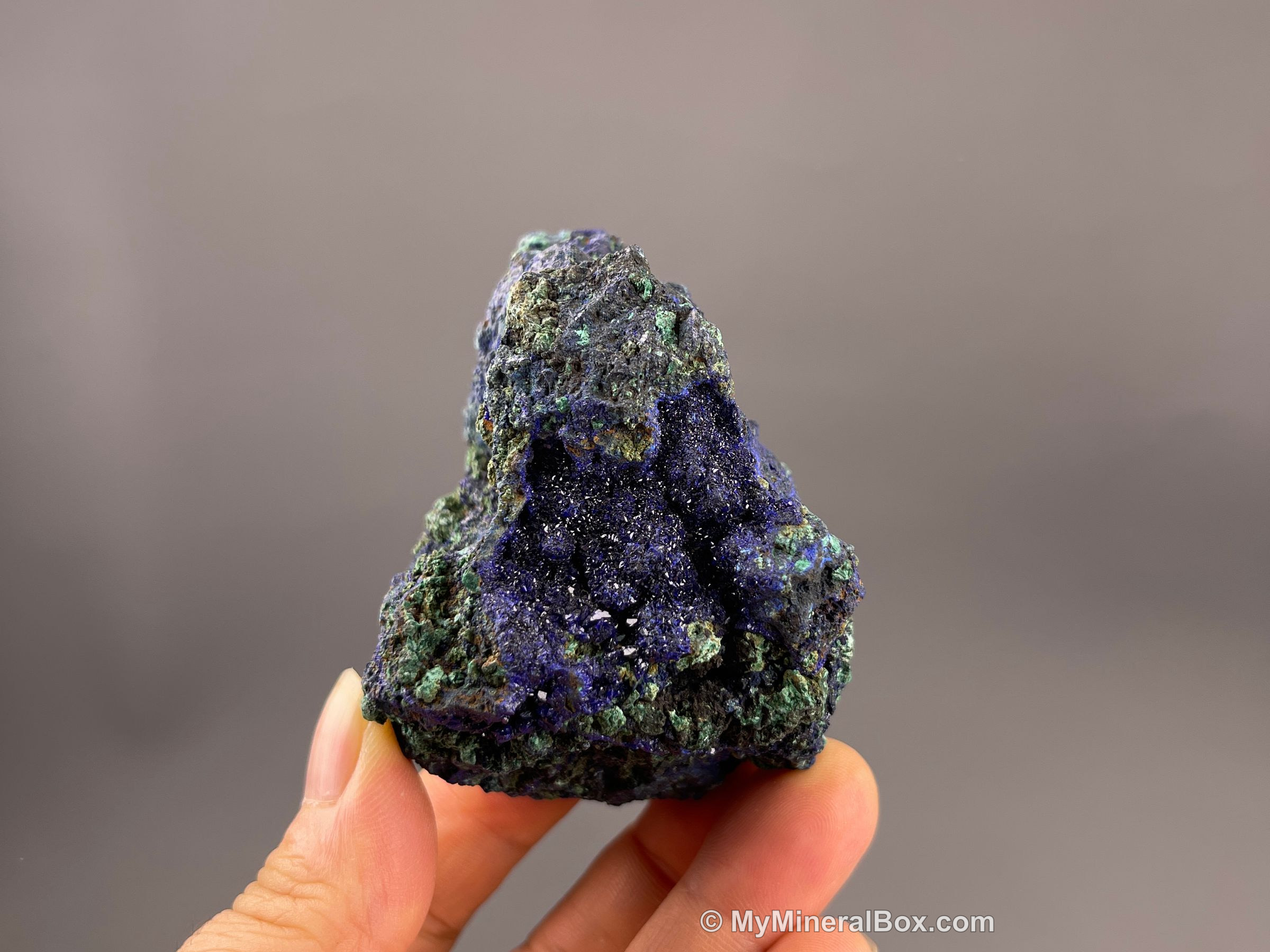
- **Malachite and azurite (copper).** These beloved green and blue copper carbonates are safe to own and display. They are only a concern as dust or if ingested, so never grind them, never make “crystal-infused” water with them, and wash your hands after handling rough pieces. - **Galena and pyromorphite (lead).** Lead accumulates in the body, so these deserve respect. Both are soft enough to shed fine particles, so handle them as little as possible, keep them away from surfaces where food is prepared, and wash your hands afterward. Displayed and left alone, they are fine. - **Stibnite (antimony).** Stibnite’s spectacular steel-grey blades are a Chinese classic. Antimony is toxic with prolonged ingestion or inhalation, but an intact specimen behind glass is not a daily hazard. Avoid handling the fragile crystals more than necessary — as much to protect the specimen as yourself. - **Cinnabar (mercury).** Bright-red cinnabar is the mineral that worries people most, and yet its extreme insolubility makes a solid piece surprisingly safe. Treat it as display-only: no cutting, no heating, no dust, and keep it away from children and pets. - **Realgar and orpiment (arsenic).** These are the ones we would flag hardest among the sulfides. Both are arsenic sulfides, both are very soft, and realgar also degrades in light into a powder over time. That powder is the problem. Store them in a closed box away from strong light, handle them minimally, and never cut or polish them.
The truly hazardous group: fibrous and asbestos-type minerals
If there is a category to genuinely avoid keeping loose in your home, it is the fibrous minerals. Crocidolite (blue asbestos), the asbestos forms of tremolite and actinolite, chrysotile, and the zeolite erionite all share the same danger: they break into microscopic fibres that float in the air and lodge in the lungs, where they are linked to asbestosis, lung cancer, and mesothelioma. Erionite is classed as a Group 1 carcinogen and is considered even more potent than the regulated asbestos minerals.
Unlike a heavy-metal crystal, these cannot be made safe simply by not licking them — the risk is airborne fibres, which any disturbance can release. If you own matrix specimens that contain fibrous amphiboles, keep them sealed in a closed display case, never brush or scrape them, and think hard about whether they belong in a living space at all. Many experienced collectors simply pass on them.
Radioactive minerals: a special case
Uranium and thorium minerals — autunite, torbernite, uraninite, and their relatives — are collectible, and a single small specimen among ordinary minerals presents very little risk. The precautions are about dose and dust rather than panic.
The sensible approach: store radioactive specimens in a sealed, sturdy container of plastic, acrylic, or glass, kept away from bedrooms and other spots where you spend long hours. Distance is your friend — even a foot or two sharply reduces exposure — and glass or acrylic adds a little shielding. Some micas such as torbernite and autunite shed fine radioactive flakes, so never break or grind them, and air the case out occasionally so radon gas does not build up. If you collect these seriously, a small Geiger counter is a worthwhile investment for checking what you actually have.
A simple safe-handling checklist
None of this needs to be intimidating. A handful of habits covers almost every toxic mineral in a home collection:
- **Display, don’t process.** Never cut, grind, sand, tumble, or heat toxic specimens, and never lick or taste them. - **Handle minimally, then wash your hands** — especially with soft lead, arsenic, and mercury minerals. - **Never make “crystal water.”** Do not soak toxic minerals in water you intend to drink or bathe in. - **Keep them out of reach of children and pets,** who are far more vulnerable to small doses. - **Label the risky pieces** so anyone else in the household knows to leave them alone. - **Store fibrous and radioactive specimens in sealed cases,** and avoid loose fibrous material altogether.
Every specimen we ship is a solid, display-ready piece, and treated with these ordinary precautions a toxic mineral is no more dangerous than the paint or cleaning products already under your sink.
Questions fréquentes
Is it safe to have cinnabar in the house?
Yes, as a solid specimen. Cinnabar is mercury sulfide, but it is extremely insoluble and chemically stable, so a dry, intact piece on a shelf poses little risk. Do not grind, cut, heat, or lick it, keep it out of reach of children and pets, and wash your hands after handling. The danger is mercury-bearing dust or fumes, not a brief touch.
Which minerals should you never keep at home?
The ones worth avoiding are the fibrous, asbestos-type species — crocidolite (blue asbestos), tremolite and actinolite asbestos, chrysotile, and the zeolite erionite. Their microscopic fibres can become airborne and are linked to lung disease and mesothelioma. Unlike heavy-metal minerals, there is no safe way to display loose fibrous material in a living space.
Is malachite toxic to touch?
Handling a solid, natural or polished malachite specimen is safe. Malachite is a copper carbonate that is only hazardous as dust or if ingested, so never grind it, never put it in your mouth or make “crystal water” with it, and wash your hands after handling raw pieces.
Do I need a Geiger counter for radioactive minerals?
If you collect uranium minerals such as autunite, torbernite, or uraninite, a Geiger counter is a sensible investment. Store them in sealed cases away from where you sleep or spend long hours, keep your distance, air the case out occasionally to release radon, and never break or grind them.