藍銅礦
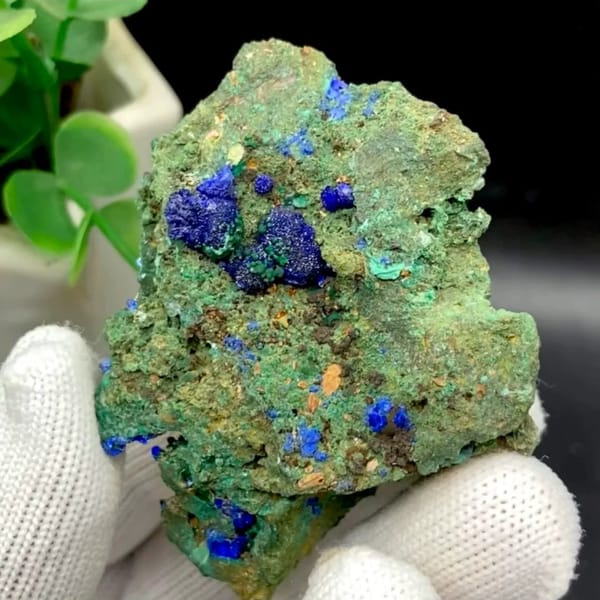
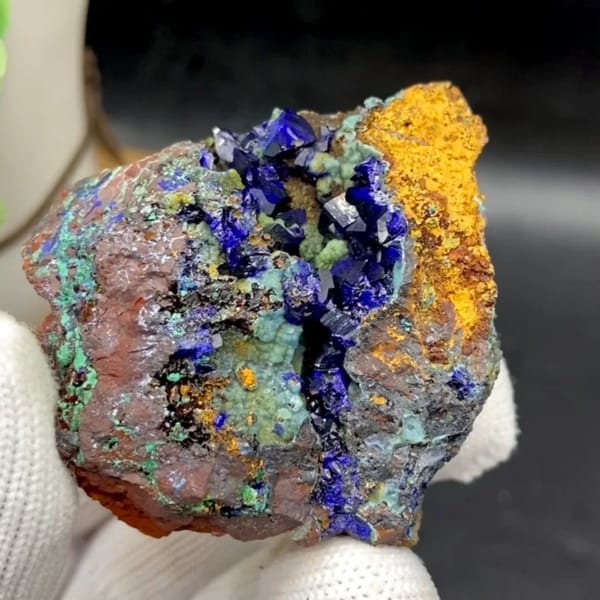
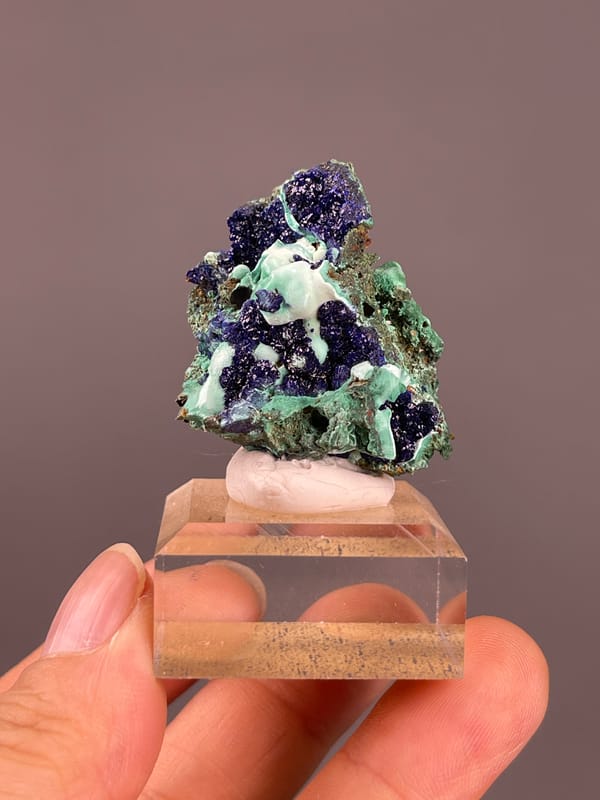
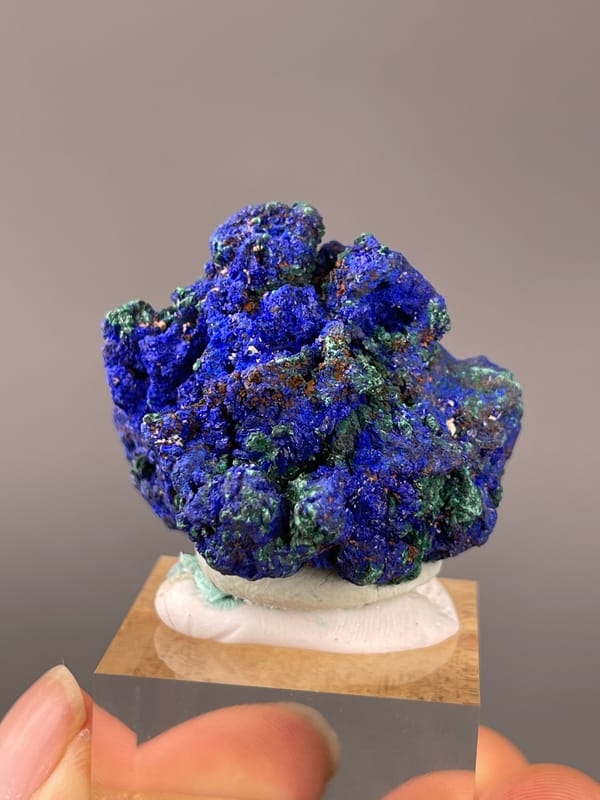
Azurite is a carbonate mineral recognized among collectors for its crystal form and distribution, with several world-class Chinese localities.
基本資料
| 化學式 | Cu₃(CO₃)₂(OH)₂ |
|---|---|
| IMA 代號 | Azu |
| 施特龍茨分類 | 5.BA |
| 晶系 | 單斜晶系 |
| 點群 | 2/m |
| 稀有度 | 常見 |
| 收藏級別 | 櫃藏經典 |
| 模式產地 | Chessy-les-Mines, France |
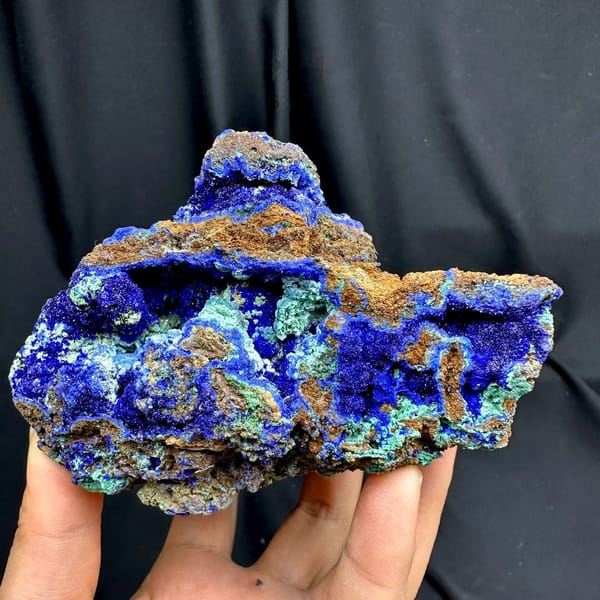
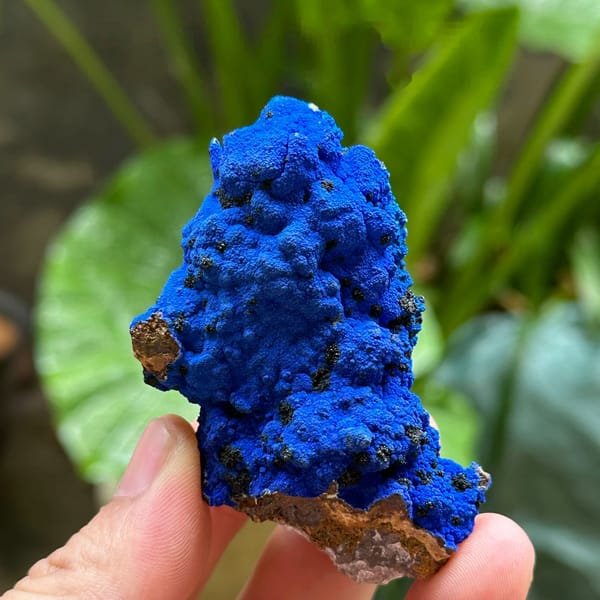
Azurite is the deep-blue companion to Malachite and one of the most visually iconic copper minerals. Like Malachite it is a copper carbonate, but with a different hydration ratio that gives it the diagnostic azure color. Azurite is the upper-oxidized-zone signal in copper deposits; over geological time it slowly weathers and pseudomorphs to Malachite, leaving square Azurite-shaped crystals colored green. Tsumeb (Namibia) produces celebrated crystals; Chessy in France is the historical type locality.
Notable varieties
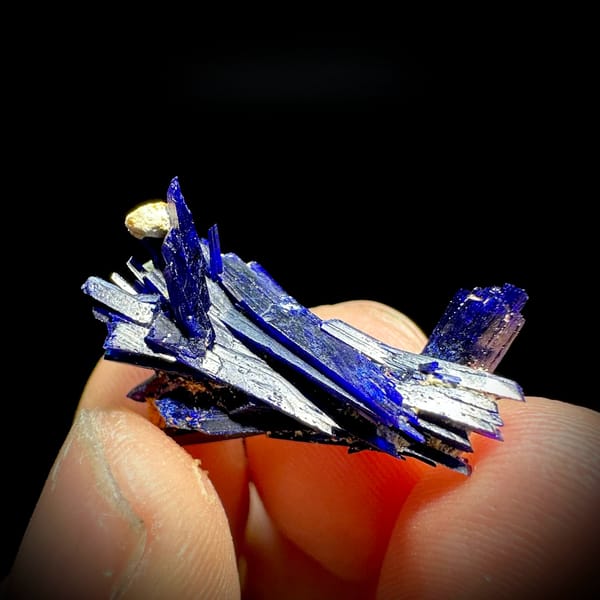
- Tabular crystals (Tsumeb, Touissit)
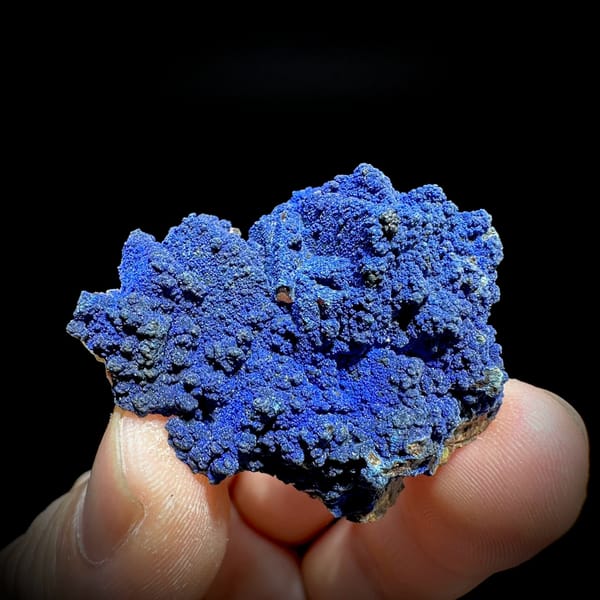
- Spherical aggregates ("balls" – Liufengshan, Anhui)
- Massive (carving stone)
- "Azurmalach" (Azurite + Malachite intergrowth)
- Pseudomorphed by Malachite (square shapes, green color)
The Chinese angle
Xitieshan in Qinghai produces fine Chinese azurite, often as deep-blue rosettes on matrix. Yunnan copper-skarn deposits yield azurite paired with malachite in classic combination specimens. Liufengshan (Anhui) is internationally noted for spherical "azurite balls." Combination Azurite-Malachite specimens from these districts are highly sought by collectors – the dual color (deep blue + bright green) is characteristic.