電氣石
Tourmaline is a silicate mineral valued for its hardness and gem potential, with several world-class Chinese localities.
基本資料
| 化學式 | AD₃G₆(T₆O₁₈)(BO₃)₃X₃Z (complex borosilicate supergroup) |
|---|---|
| IMA 代號 | Tur |
| 施特龍茨分類 | 9.CK |
| 晶系 | 三方晶系 |
| 點群 | 3m |
| 稀有度 | 常見 |
| 收藏級別 | 櫃藏經典 |
| 模式產地 | (general — Sinhalese "tōramalli"), Sri Lanka |
Tourmaline — one name, an entire crystal family
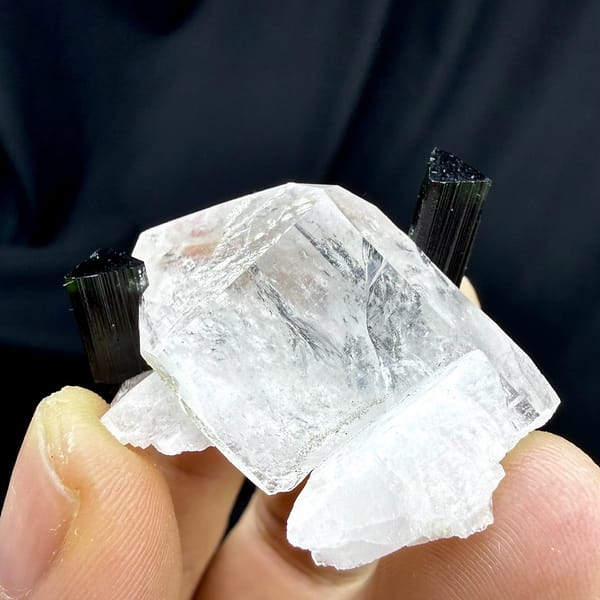
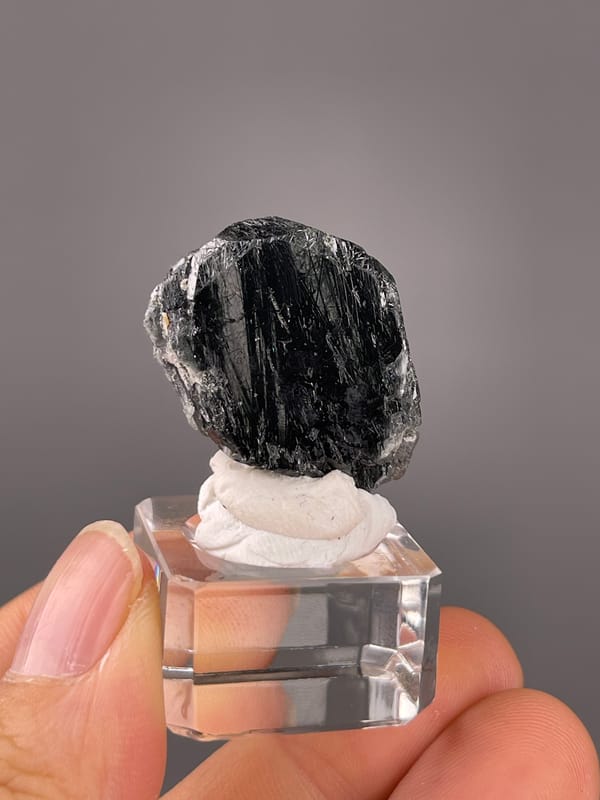
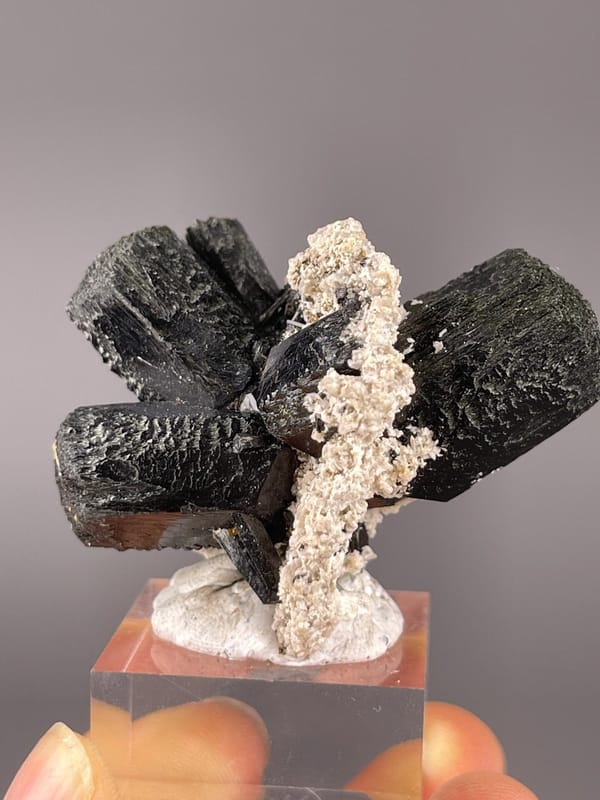
Tourmaline is not a single mineral but a boron-silicate group: jet-black schorl (iron-rich, by far the most common), gem-colored elbaite (lithium-bearing — the pinks, greens, and watermelons of the jewelry world), and brown magnesian dravite, among others. All share the same trigonal architecture: striated prisms with a rounded-triangular cross-section, strong dichroism, and the pyroelectric quirk that made Dutch traders call it the "ash drawer" — warm crystals attract dust.
Schorl — the collector workhorse
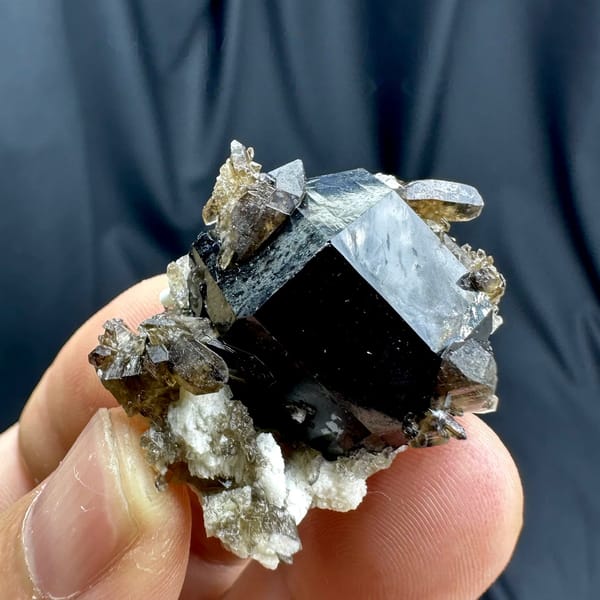
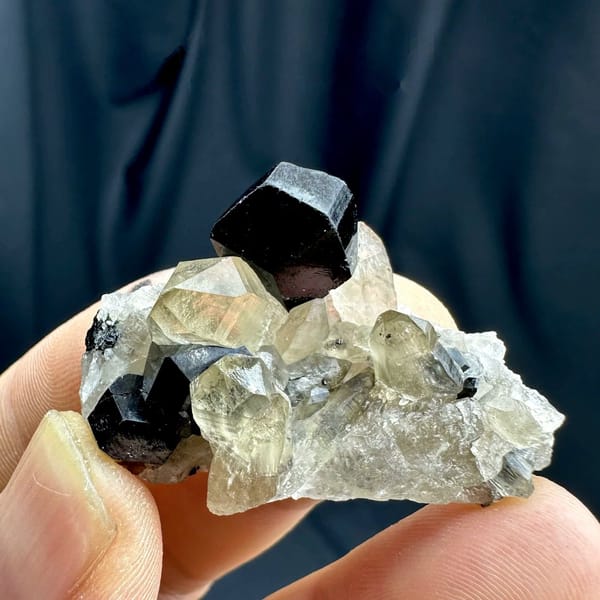
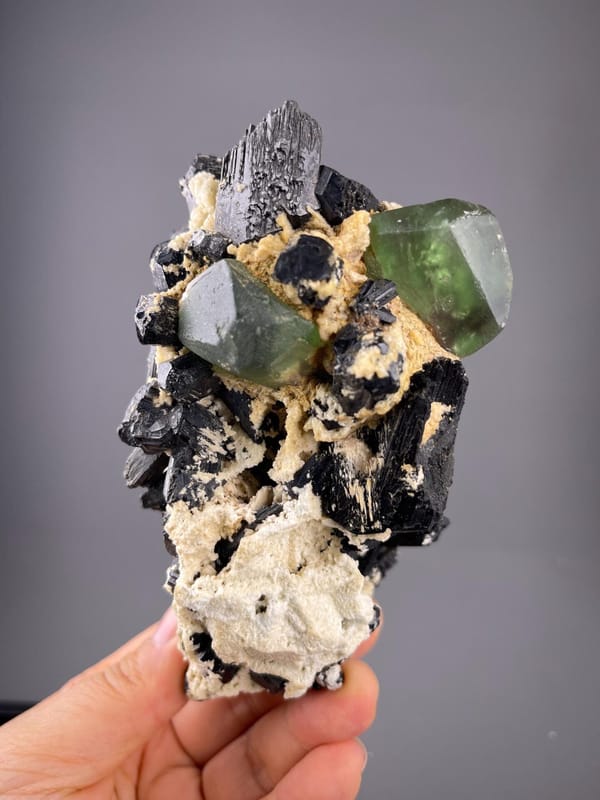
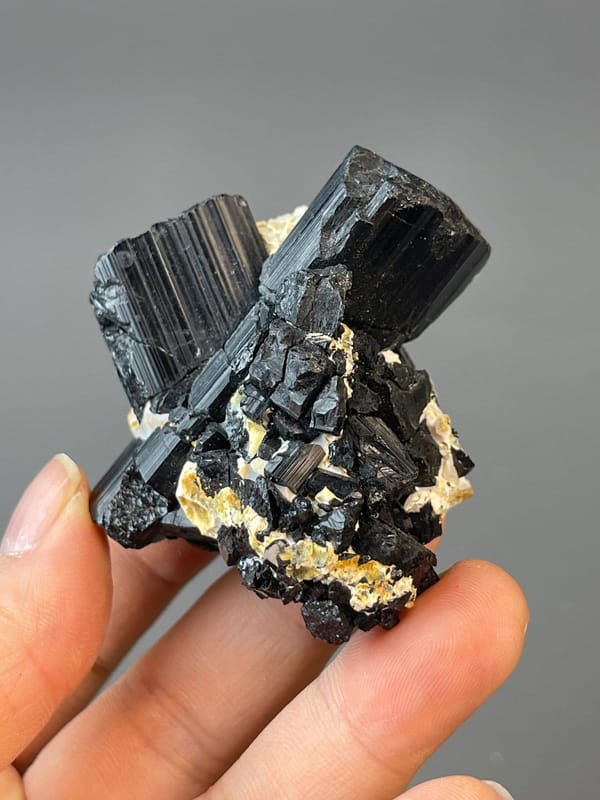
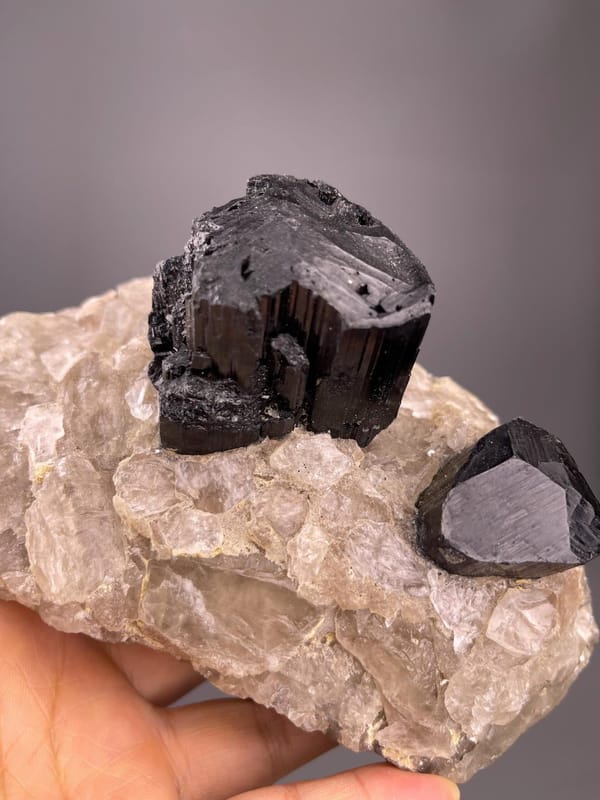
Black schorl forms some of the most architectural crystals in mineralogy: deeply striated columns with sharp trigonal terminations and a luster that reads metallic at arm's length. It is the tourmaline we stock most: lustrous prisms from the pegmatites of Namibia's Erongo Mountains — including the classic Erongo pairing of black tourmaline with green fluorite — prismatic crystals from Tsumeb, schorl in feldspar matrix, and raw single crystals from China.
What to look for
- Termination quality — a clean pyramidal or flat termination outranks a broken column
- Luster — the best schorl is glassy-bright along the striations
- Combinations — schorl with fluorite, smoky quartz, or feldspar carries a premium over loose single crystals
Related guides
See the fluorite guide for Erongo's companion species, and the quartz guide for the smoky-quartz matrix pieces.