江西省
Jiangxi, China
中國江西省——重晶石、螢石與鎢礦物的重要產地。
Jiangxi — China's barite and tungsten powerhouse
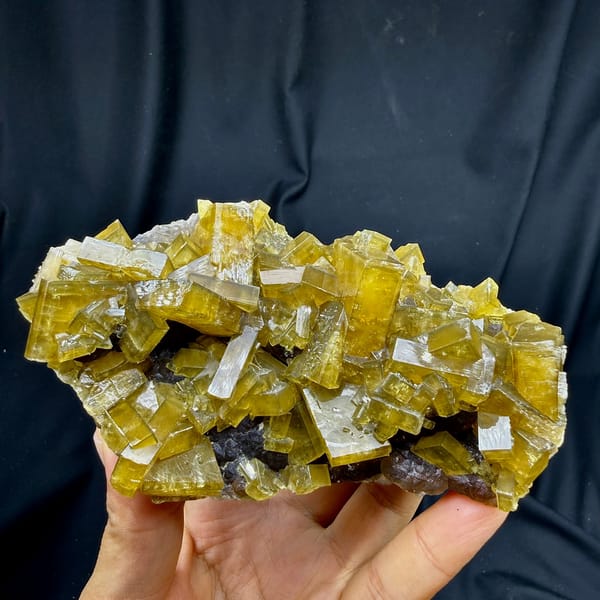
Jiangxi Province in southeastern China hosts two of the country's most important specimen sources: the Dexing porphyry copper district (a major source of golden barite, chalcopyrite, and quartz) and the Yichun Sn-Ta ore field (yellow prismatic barite, lepidolite, and rare tantalum species).
Geological setting
The Dexing area is a Jurassic-aged porphyry Cu-Mo system, the largest in eastern China. Late-stage hydrothermal activity at Dexing produced the saturated yellow-brown barite that has become the locality's specimen signature. Yichun, by contrast, is a granitic Sn-Ta system whose oxidation zone has yielded sharp barite crystals on quartz.
What Jiangxi is known for
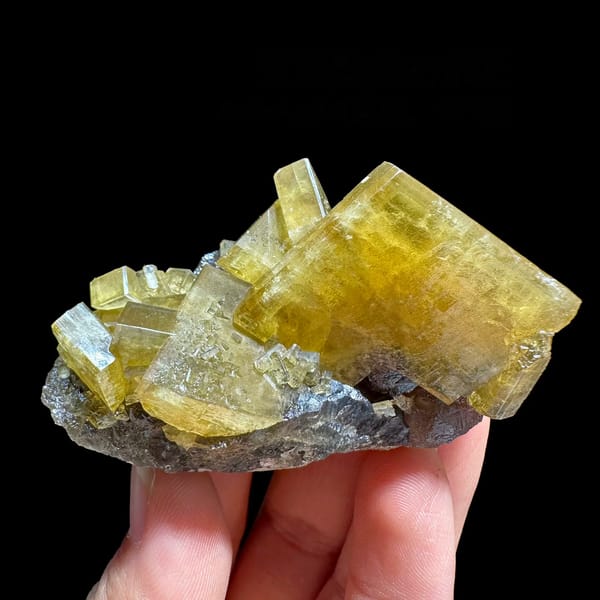
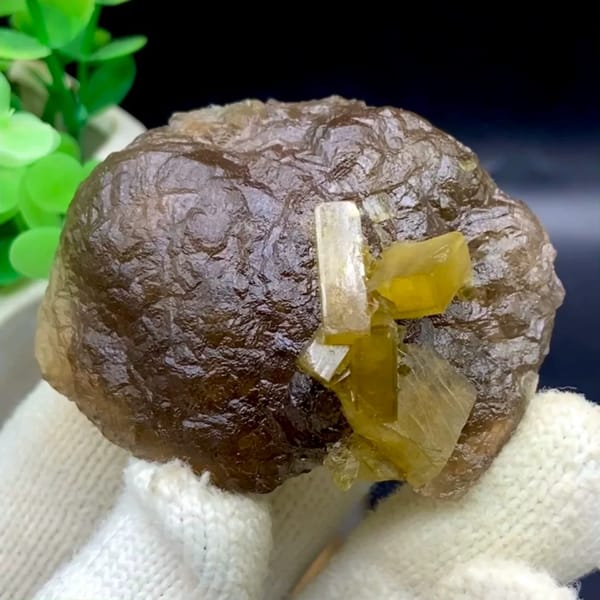
- Golden, honey-amber, and yellow-brown barite from Dexing Copper Mine
- Prismatic and tabular barite from Yichun Mine
- Chalcopyrite spheres and clusters from Dexing
- Manganoan / pink barite on calcite
Typical specimen style
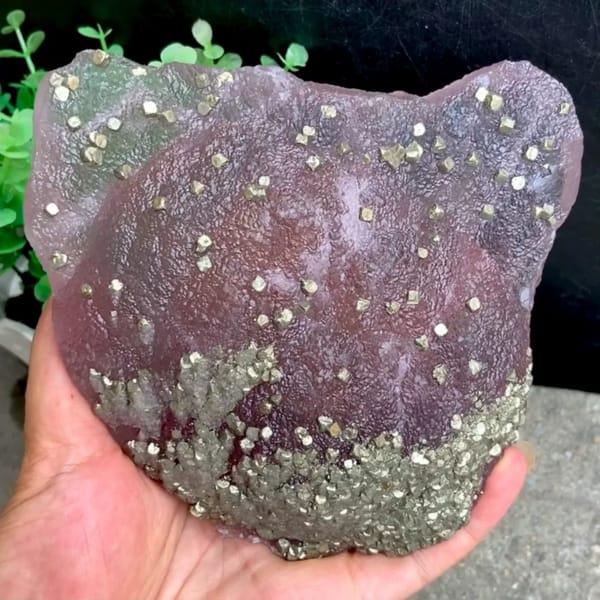
Dexing barite shows tabular and bladed habits, often in radiating clusters; coloration runs honey through orange-brown. Yichun barite is more prismatic, sometimes in epitaxial clusters on quartz or fluorite matrix.
Collector value
Pieces with strong color saturation, undamaged crystal edges, and intact matrix command the largest premiums. The 2010s pockets at Dexing produced some of the best honey-barite ever recovered; these are now in declining supply.
From our inventory
Browse all Jiangxi specimens or jump to our barite buying guide.
The tungsten heartland
Southern Jiangxi is also the heartland of the world's tungsten production. A cluster of vein-type deposits — Xihuashan, Piaotang, Maoping, Dajishan and others — carries black bladed wolframite in milky quartz veins with cassiterite, beryl and fluorite; the classic “five-storey” vertical zoning of these veins is a textbook model of tungsten mineralisation.