
GUIDE DE LA PROVINCE
La Mongolie-Intérieure et le phénomène Huanggang
Les mines de Huanggang en Mongolie-Intérieure produisent de la fluorite rose, de l'ilvaïte, de l'arsénopyrite et de la sphalérite gemme — la première localité chinoise « de l'ère internet », expliquée.
La première mine chinoise de l'ère internet
Puis Huanggang est arrivé.
Le gisement de fer-étain de Huanggang, dans la bannière de Hexigten (Keshiketeng), préfecture de Chifeng, est un ensemble de mines numérotées — les collectionneurs verront des étiquettes citant « Huanggang n° 1 » à « n° 5 » — exploitant l'un des plus grands systèmes de skarn d'Asie. Lorsque les spécimens ont finalement commencé à émerger fin 2007, quelque chose d'inédit s'est produit. L'apprentissage des mineurs, qui avait pris deux décennies dans des localités plus anciennes comme Yaogangxian, s'est compressé en quelques années ; les marchands ont fait passer des poches du sous-sol au marché international en quelques semaines. Huanggang est devenue la première localité chinoise de la véritable ère internet : meilleure qualité, plus grande quantité et livraison plus rapide que toute localité précédente. En cinq ans, elle a soutenu la comparaison avec Dalnegorsk en Russie et les grandes mines du Hunan.
Ce que donne le skarn
Les gisements de skarn — formés là où des fluides magmatiques chauds réagissent avec une roche carbonatée — produisent des suites minérales différentes des veines hydrothermales, et la liste des espèces de Huanggang ne ressemble à aucune autre en Chine :
Fluorite rose. Cristaux octaédriques délicats de couleur rose, souvent à faces étagées en gradins. Les premières trouvailles ont été largement détruites avant que les mineurs n'apprennent l'extraction ; les grands groupes survivants de 2010 sont déjà légendaires.
Ilvaïte. Cristaux prismatiques de silicate de calcium-fer noir de jais à l'éclat brillant — Huanggang produit sans doute les plus belles ilvaïtes jamais trouvées, certaines dépassant 15 cm, souvent associées à du quartz incolore.
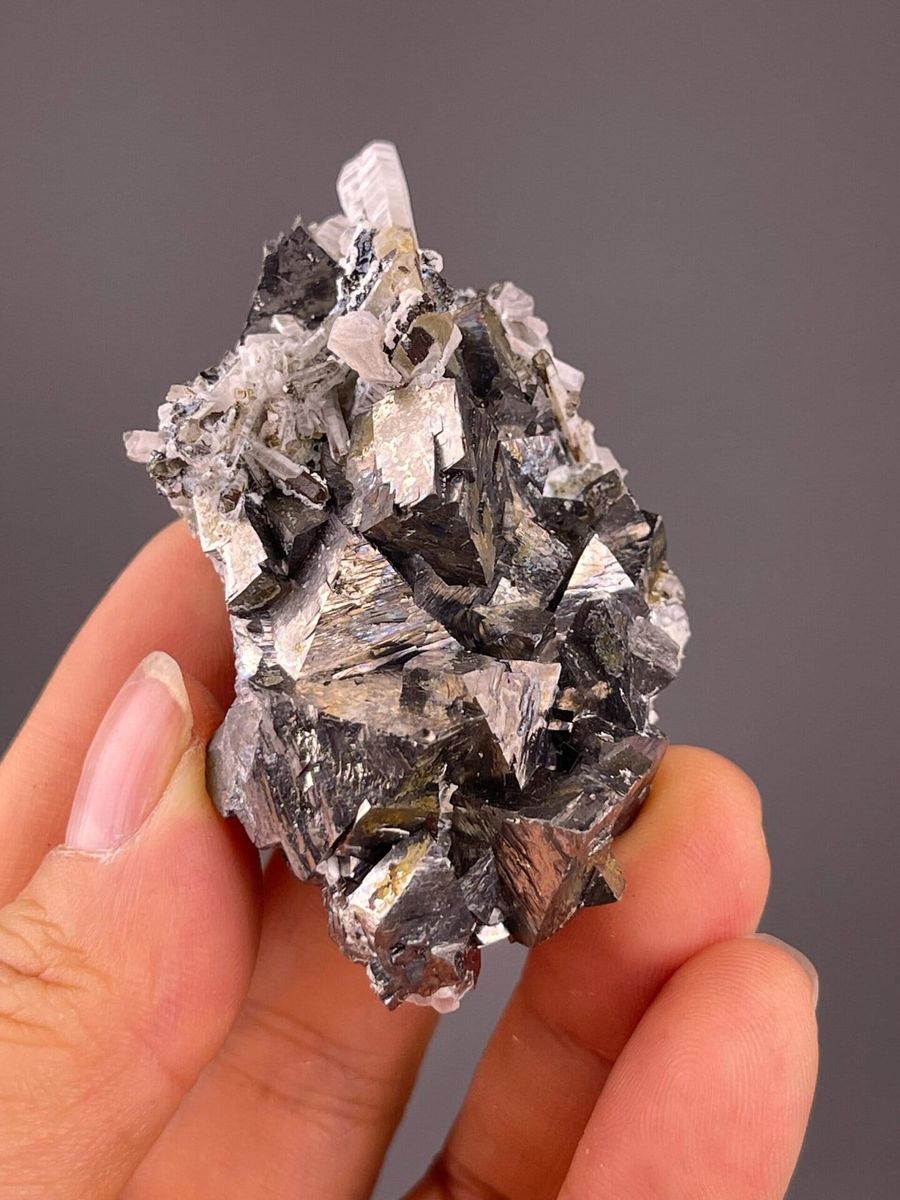
Arsénopyrite et löllingite. Cristaux métalliques argentés, nettement facettés, en groupes audacieux, parfois posés sur des lits d'ilvaïte — une combinaison de formes et de textures devenue une signature de Huanggang.
Sphalérite gemme, scheelite violette, borcarite et consorts. Sphalérite transparente sur fluorite incolore, rares cristaux de scheelite violette, et borates inhabituels comme la borcarite — une poche de borcarite de 2010 contenait de petits cristaux blancs de cahnite, la première nouvelle localité pour cette espèce en un siècle.
Calcite rose fluorescente. De grands groupes de calcite rose de la mine n° 5 fluorescent en rouge profond sous lumière ultraviolette — des pièces d'exposition spectaculaires pour les vitrines UV.
Une note sur les étiquettes : les spécimens d'apophyllite-(KF) de la mine de Chaobuleng à Dongwuzhumuqin, une localité distincte de Mongolie-Intérieure, sont fréquemment attribués à tort à Huanggang. Des données de localité précises comptent — elles font partie de ce que vous collectionnez.
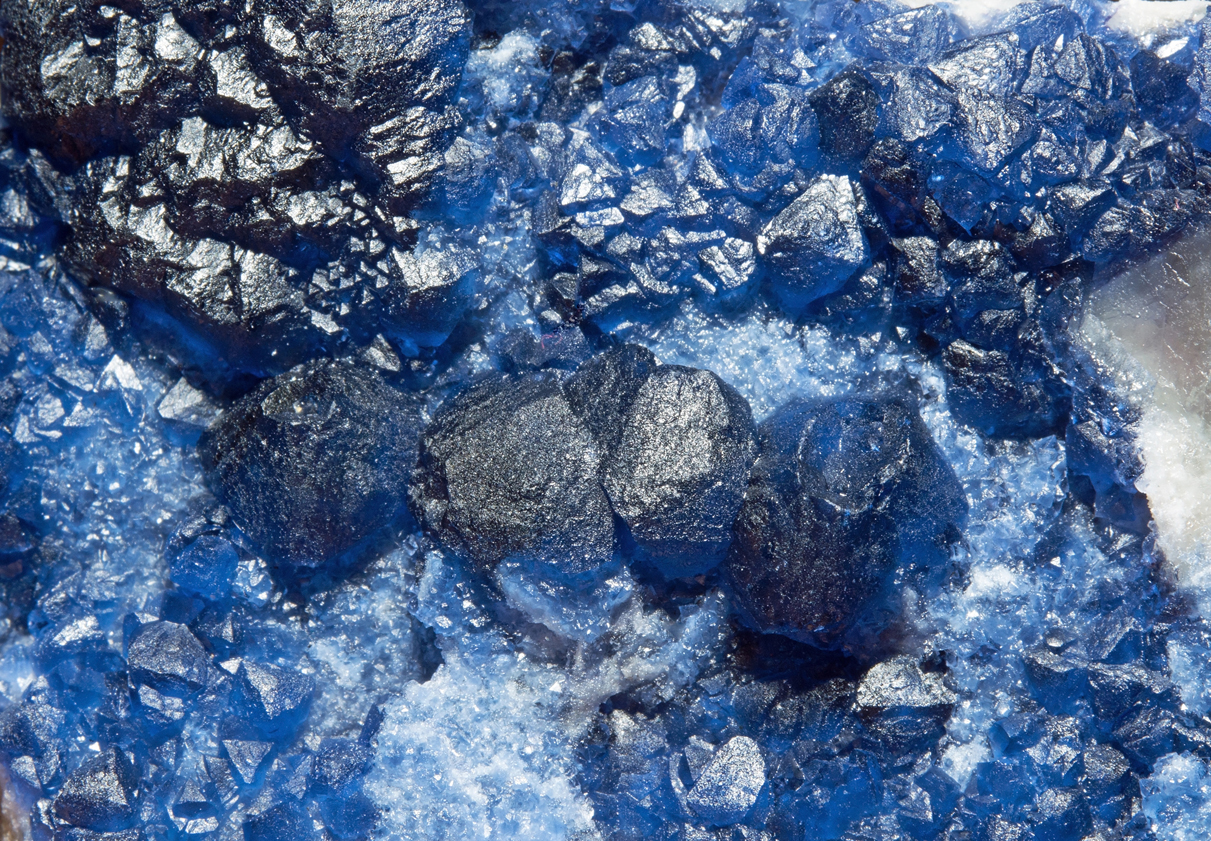
Photo : Géry PARENT, CC BY-SA 4.0, via Wikimedia Commons
Notes du collectionneur
La grande fenêtre de production de Huanggang (environ 2008-2014) a livré un matériel abondant, si bien que d'excellents spécimens restent accessibles — mais les plus belles fluorites roses, les grandes ilvaïtes et les espèces inhabituelles se sont appréciées régulièrement à mesure que la production déclinait. C'est une localité où acheter de la qualité tôt a toujours été récompensé. Comme la production a été rapide et bien documentée, une provenance datée par poche (« de la poche de fluorite rose de 2010 ») ajoute une réelle valeur.
Pour les collectionneurs constituant une série chinoise, Huanggang est incontournable : elle représente à la fois une géologie différente (skarn plutôt que veine) et une époque différente (l'ère internet) par rapport aux localités classiques du sud.
---
Développements récents (en 2026)
Huanggang reste la source moderne dominante de ses espèces signature — fluorite bleu-vert à générations multiples, ilvaïte noire brillante, arsénopyrite argentée, et la calcite manganésifère à macles en papillon devenue une marque de la localité —, du matériel frais atteignant encore les marchands jusqu'en 2023-2024. La production est toutefois désormais inégale selon les puits numérotés : la mine n° 4 serait presque épuisée, et des coups de filet miniers périodiques à travers la Mongolie-Intérieure ajoutent une incertitude d'accès, même si aucune fermeture complète n'a eu lieu. La leçon pratique pour les collectionneurs est d'acheter les habitus distinctifs (fluorite octaédrique rose, grande ilvaïte, calcite fluorescente) tant que le complexe les produit encore, car la production diminue clairement.
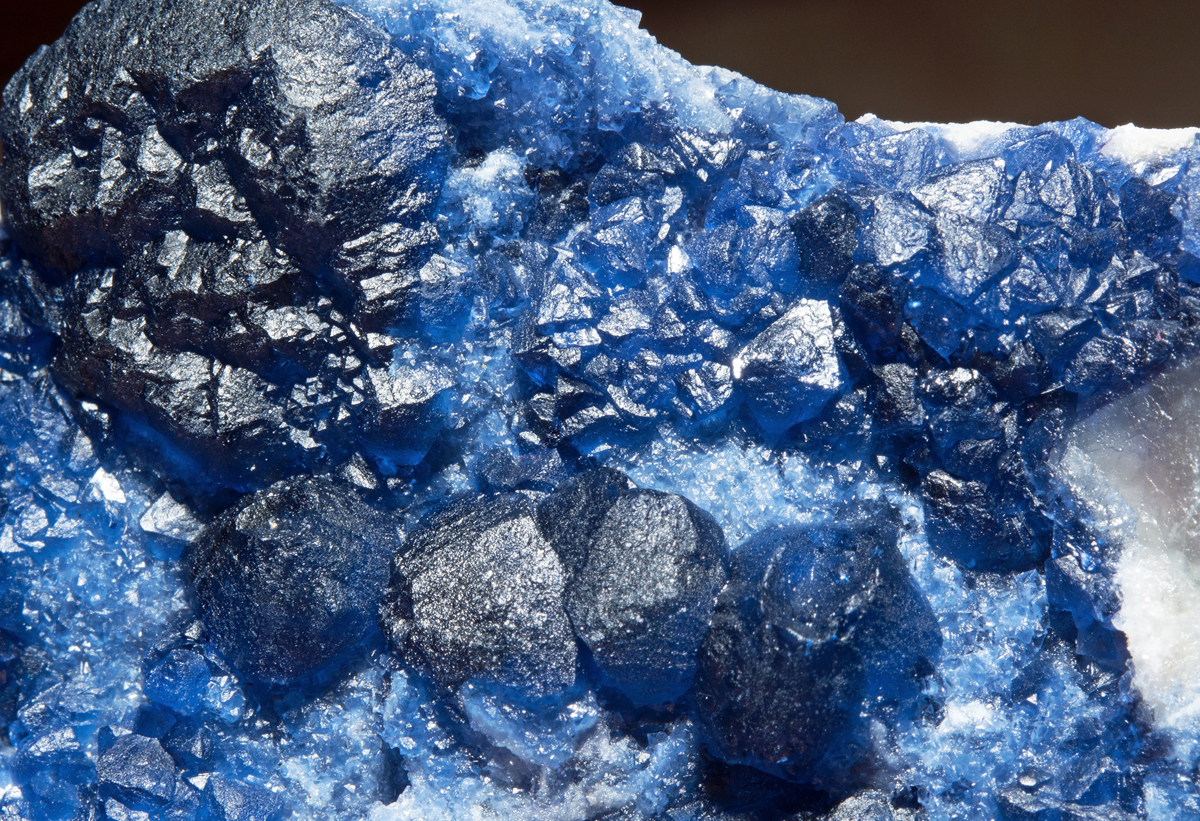
Photo : Géry PARENT, CC BY-SA 4.0, via Wikimedia Commons
Sources et lectures complémentaires
Le contexte factuel de cet article s'appuie sur Liu, G., Lavinsky, R.M., Meieran, E.S., Schmitt, H.H., Moore, T.P. & Wilson, W.E. (2013), Crystalline Treasures: The Mineral Heritage of China, un supplément à The Mineralogical Record, vol. 44, n° 1, ainsi que sur les notes de localité de MyMineralBox et les références minéralogiques standard. Les faits relatifs aux développements récents proviennent des sources datées liées dans l'encadré ci-dessus. L'ensemble du texte est original à MyMineralBox.
Questions fréquentes
Quels minéraux proviennent de la mine de Huanggang ?
Le skarn de Huanggang en Mongolie-Intérieure produit de la fluorite rose et bleu-vert, de l'ilvaïte noire lustrée, de l'arsénopyrite et de la löllingite argentées, de la sphalérite gemme, de la scheelite violette, et de la calcite rose fluorescente — y compris une calcite manganésifère caractéristique à macles en papillon.
Huanggang produit-elle encore des spécimens ?
Oui, mais de façon inégale. Du matériel frais atteignait encore les marchands jusqu'en 2023-2024, mais certains puits (comme le n° 4) seraient presque épuisés, et les coups de filet miniers en Mongolie-Intérieure ajoutent une incertitude d'accès, si bien que la production diminue.