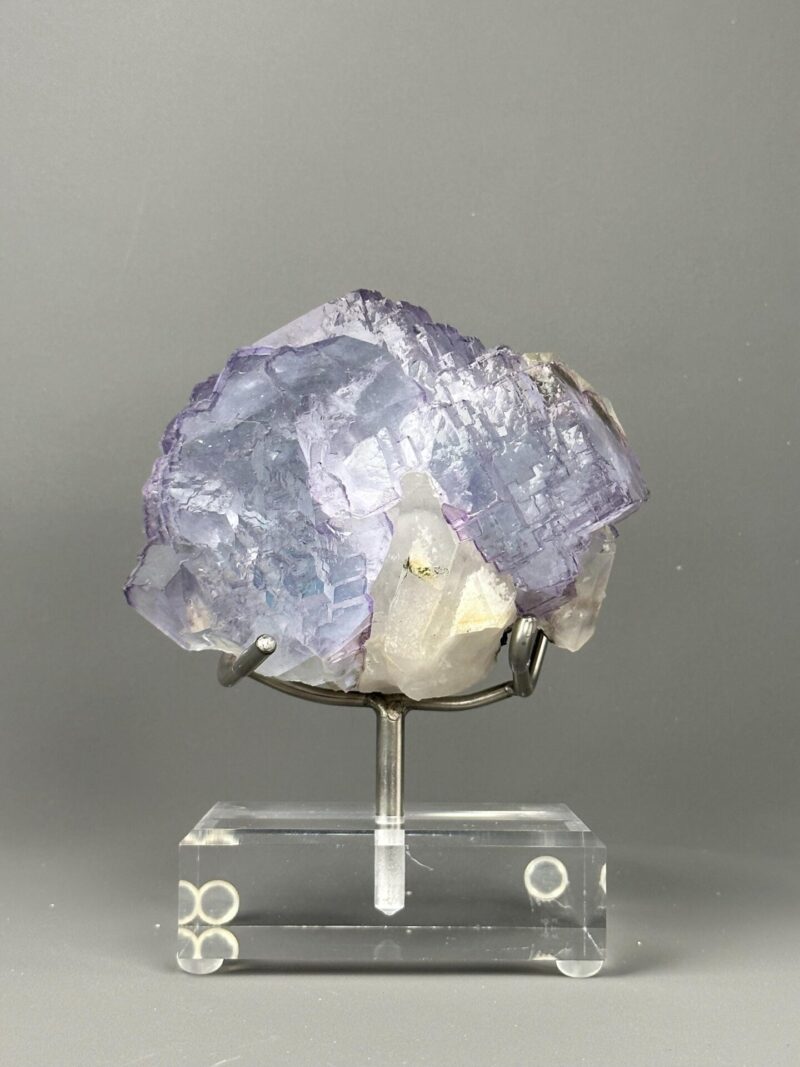
Selenite Crystal Guide: Properties, Uses and Collecting Tips
Selenite is one of the most recognizable minerals in the collecting world, known for its pearly translucence, blade-like crystal habit, and remarkable optical properties. A variety of gypsum (calcium sulfate dihydrate, CaSO4 2H2O), selenite forms transparent to translucent crystals that can grow to enormous sizes, with specimens from the Naica Mine in Mexico reaching over 11 meters long.
What is Selenite?
Selenite is the crystalline form of gypsum, rating just 2 on the Mohs hardness scale. The name comes from the Greek word “selene” meaning moon, referring to its soft, moon-like glow. Unlike many minerals, selenite crystals are water-soluble and should never be cleaned with water. The mineral forms in evaporite environments where saline water evaporates, leaving behind crystal deposits in sedimentary layers, caves, and clay beds.
How Selenite Forms
Selenite crystallizes from calcium sulfate-rich solutions, typically in low-temperature hydrothermal environments. When saline lakes or shallow seas evaporate, dissolved calcium and sulfate ions concentrate until gypsum crystals begin to nucleate. In caves like Naica, superheated groundwater saturated with calcium sulfate cooled very slowly over hundreds of thousands of years, allowing crystals to grow to extraordinary dimensions. Desert rose selenite forms when gypsum crystallizes in arid sandy environments, incorporating sand grains into rosette-shaped clusters.
Selenite Varieties and Forms
Selenite occurs in several distinct forms prized by collectors. Tabular selenite features flat, transparent blades that can be split into thin flexible sheets. Fishtail twins are V-shaped twinned crystals resembling a fishtail, commonly found in deposits across Morocco and Mexico. Desert rose selenite consists of rosette-shaped clusters with embedded sand grains, typically from the Sahara region. Satin spar is a fibrous variety with a silky chatoyant luster, often shaped into wands and towers. Ram’s horn selenite forms curved crystal aggregates that spiral like ram’s horns.
Notable Selenite Localities
The most famous selenite locality is the Cave of Crystals (Cueva de los Cristales) in Naica, Chihuahua, Mexico, where massive crystals up to 12 meters long have been found at depths of 300 meters. Morocco produces exceptional desert rose specimens and tabular crystals from sites near Erfoud and Midelt. Oklahoma and Kansas in the United States yield distinctive hourglass selenite with internal sand inclusions. The White Sands National Park in New Mexico features vast gypsum dune fields. Australia, particularly South Australia, produces excellent specimens from ancient lake beds.
Collecting Selenite Specimens
When collecting selenite, handle specimens with care due to their extreme softness. Even a fingernail can scratch the surface. Store selenite away from moisture and avoid stacking heavy objects on top of thin crystals. Display behind glass when possible to prevent dust accumulation, since water-cleaning is not recommended. Look for transparency, well-defined crystal faces, and interesting internal features like phantoms or hourglass patterns. Fishtail twins and large tabular crystals command the highest prices among collectors.
Shop Selenite and Gypsum Specimens
Browse our collection of gypsum and selenite mineral specimens, including tabular crystals, desert roses, and rare formations. Each piece is carefully selected for quality and shipped with protective packaging. You can also explore our clear and transparent crystals or browse white crystal specimens for similar aesthetic pieces.