霰石
Aragonite is a carbonate mineral prized by collectors for its exceptional color range, with notable Chinese occurrences.
基本資料
| 化學式 | CaCO3 |
|---|---|
| IMA 代號 | Arg |
| 施特龍茨分類 | 5.AB |
| 晶系 | 斜方晶系 |
| 點群 | mmm |
| 稀有度 | 常見 |
| 收藏級別 | 適合陳列 |
| 模式產地 | Molina de Aragón, Spain |
Aragonite (CaCO₃) is the orthorhombic polymorph of calcium carbonate, distinct from calcite by its denser packing and pseudo-hexagonal twinning. It forms acicular sprays, “flos ferri” branching coral-like masses, and pseudo-hexagonal twins. Famous worldwide from Molina de Aragón (Spain — the type locality) and Erzberg (Austria).
Forms and colors
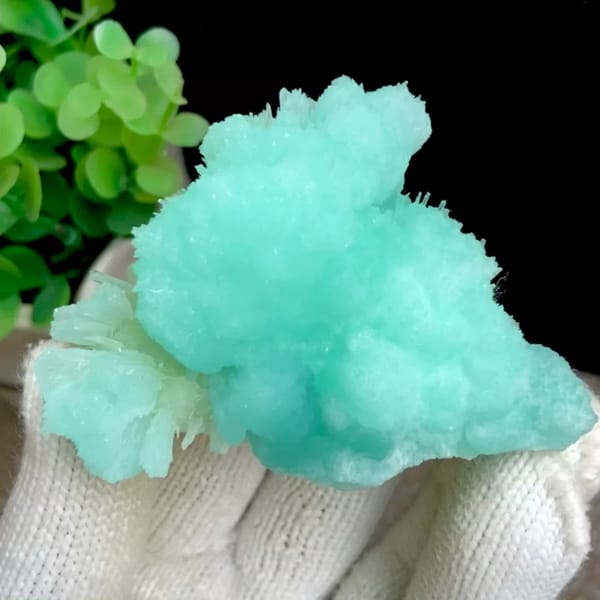
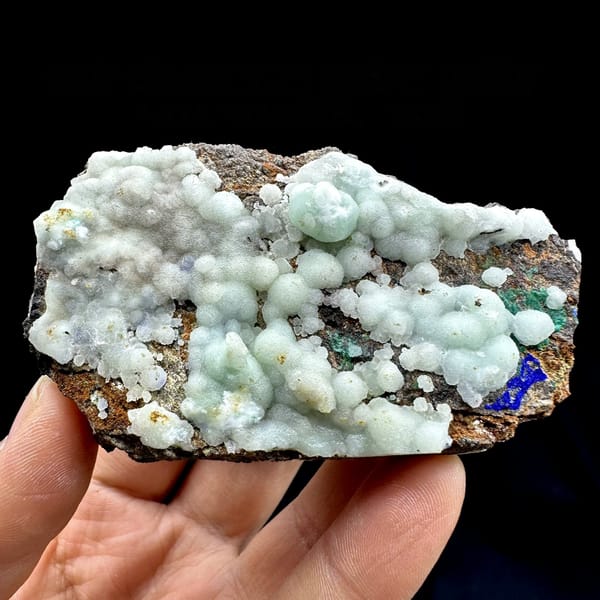
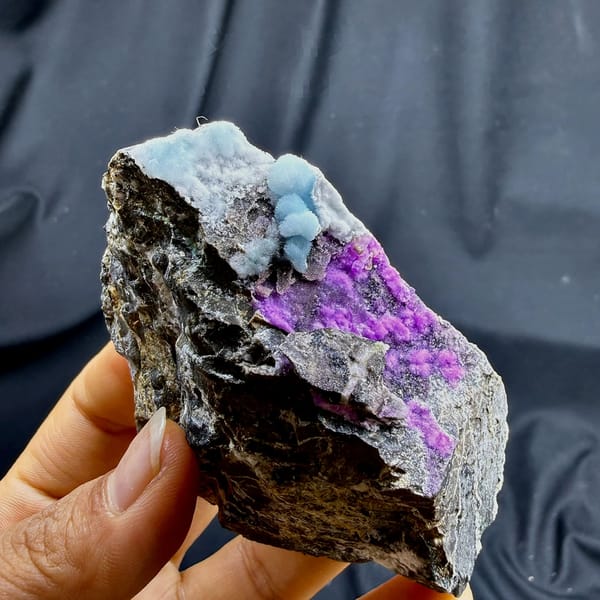
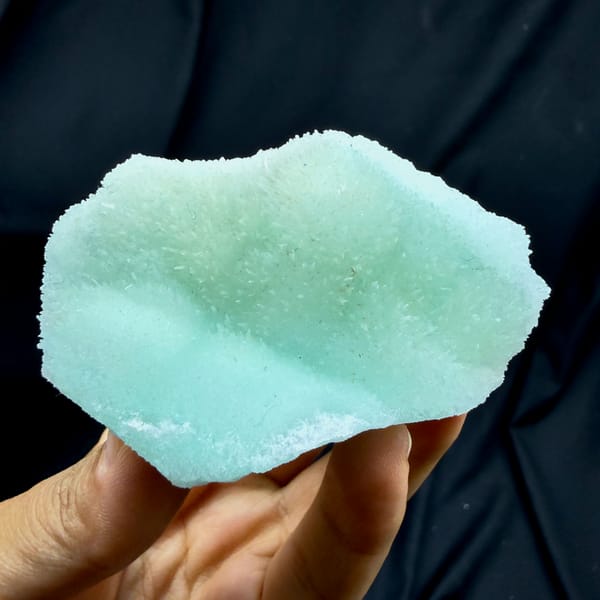
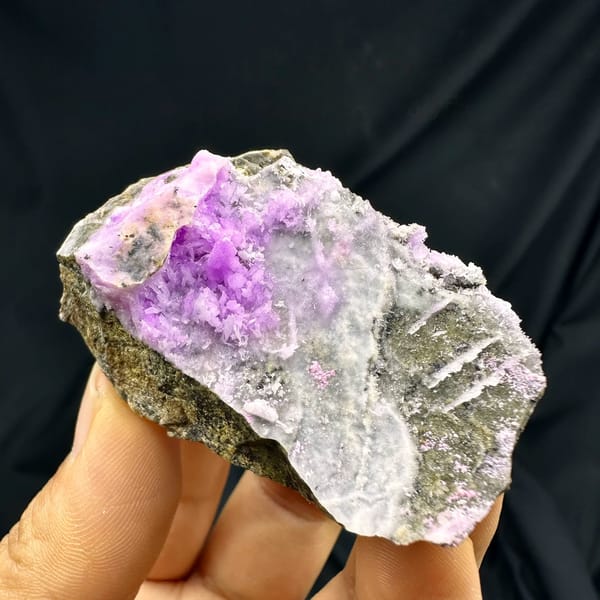
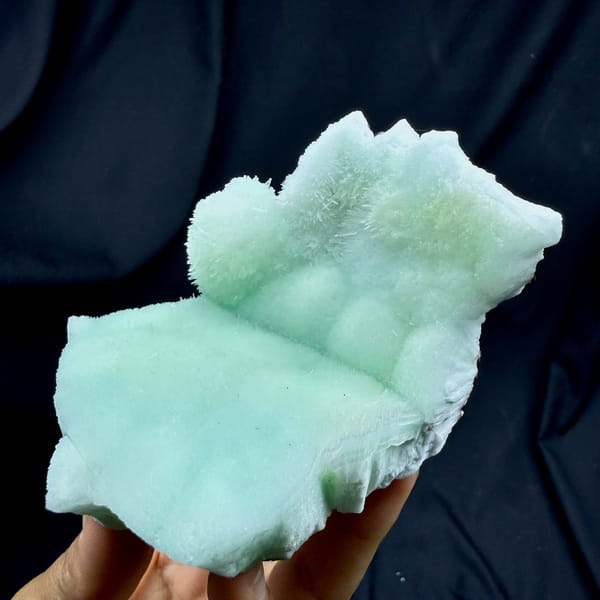
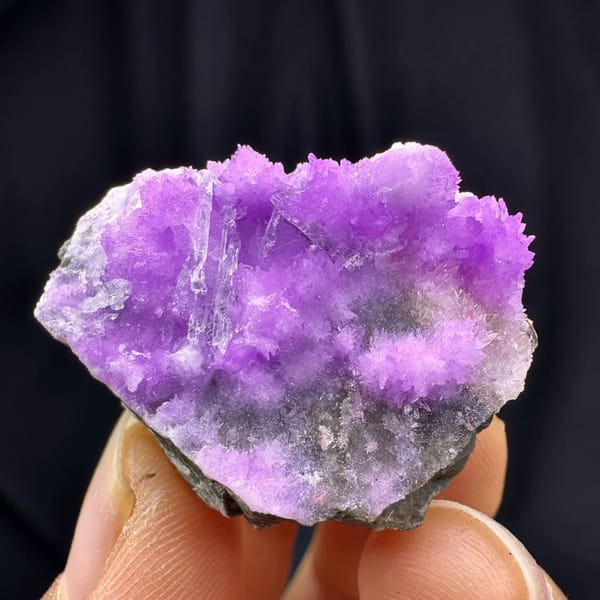
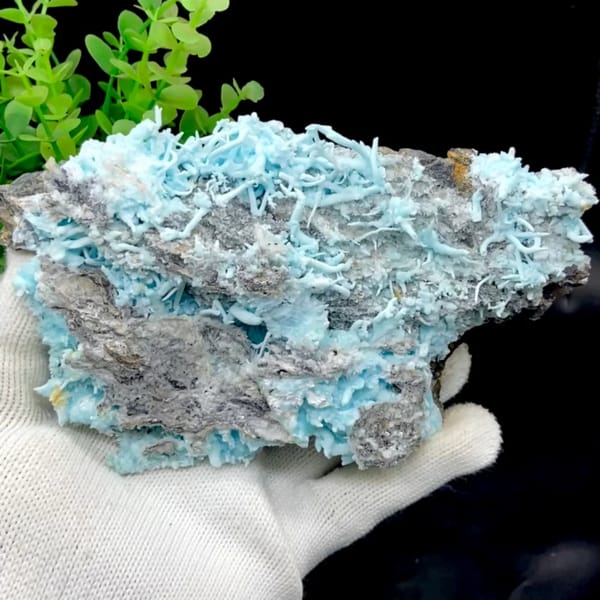
Aragonite's needle habit dominates our material: radiating white acicular sprays from Guizhou, sky-blue needle clusters and ribbed "goblet" forms from Yunnan, and the branching coral-like flos ferri from Austria's historic iron districts. The blue Yunnan material owes its color to trace copper — unusual for the species, which is most often white to cream.
Collector notes
At hardness 3.5–4 with brittle needles, aragonite is among the most fragile display minerals — dust with air, not cloth, and keep sprays where nothing can brush them. Chemically it is the same CaCO₃ as calcite; given geological time or heat it converts to its more stable cousin, which is why ancient aragonite is rare.
From our inventory
See Guizhou and Yunnan locality pages, or the calcite guide for the polymorph comparison.
Aragonite in China
Yunnan Province in south-west China is a notable source of collector aragonite, including delicate blue and white needle clusters and sprays from the zinc deposits of the Wenshan area, where it occurs alongside the region's famous copper-blue hemimorphite.