孔雀石
Malachite is a carbonate mineral recognized among collectors for its crystal form and distribution, with several world-class Chinese localities.
基本資料
| 化學式 | Cu₂(CO₃)(OH)₂ |
|---|---|
| IMA 代號 | Mlc |
| 施特龍茨分類 | 5.BA |
| 晶系 | 單斜晶系 |
| 點群 | 2/m |
| 稀有度 | 常見 |
| 收藏級別 | 櫃藏經典 |
| 模式產地 | (ancient — Greek "malache"), Mediterranean |
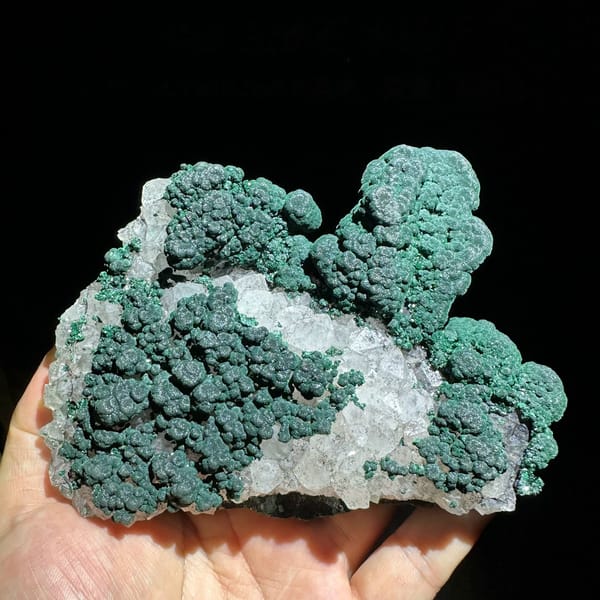
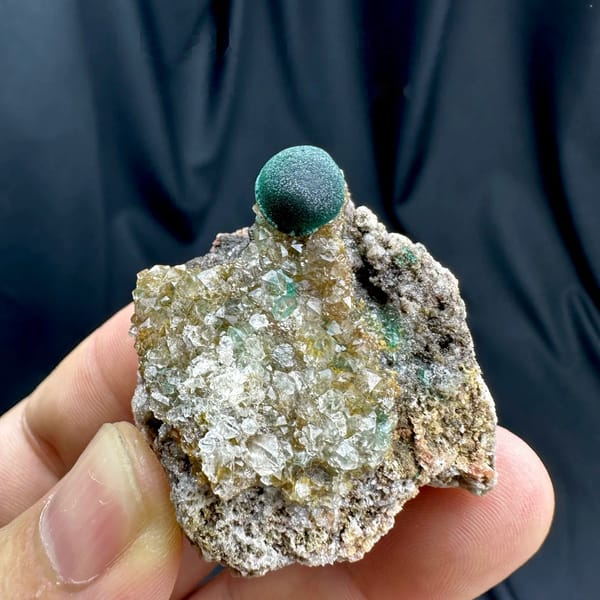
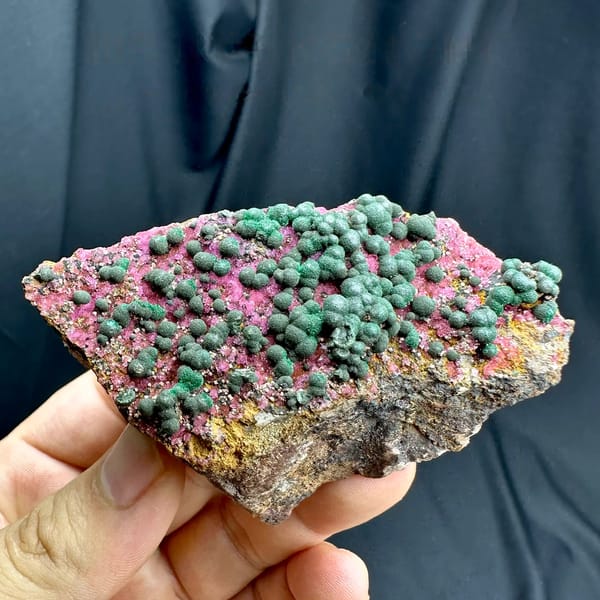
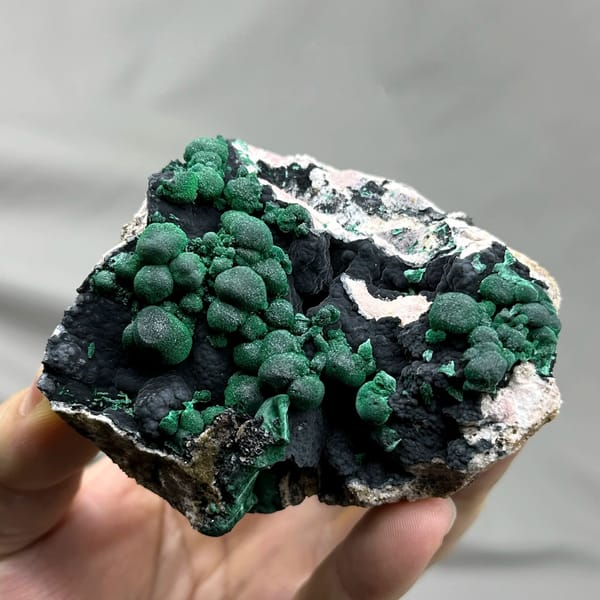
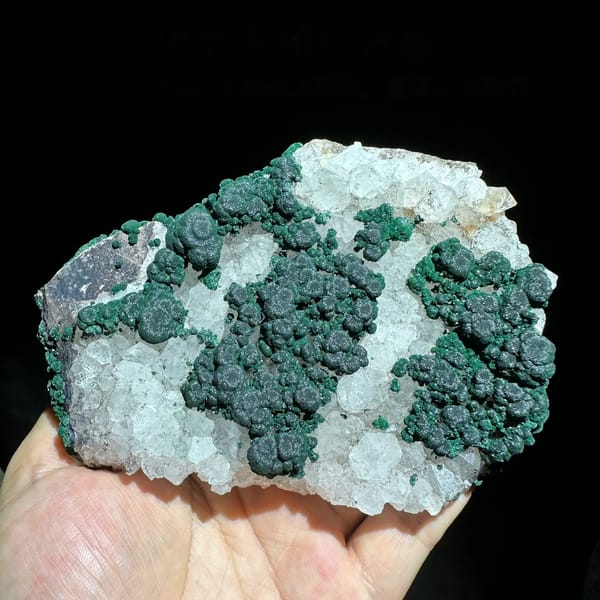
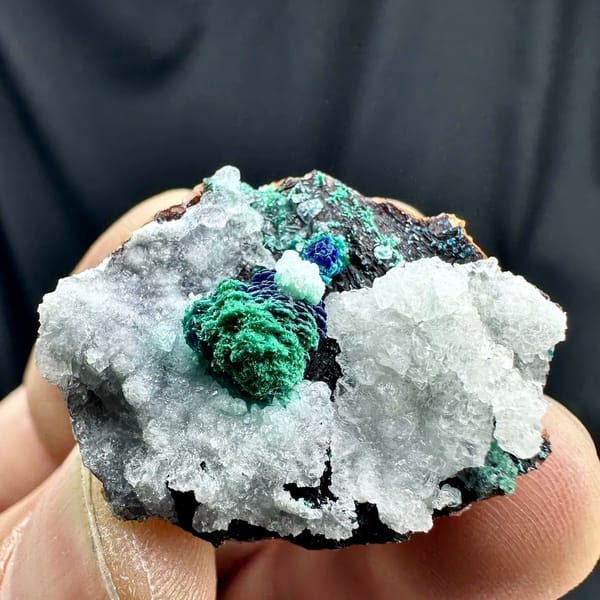
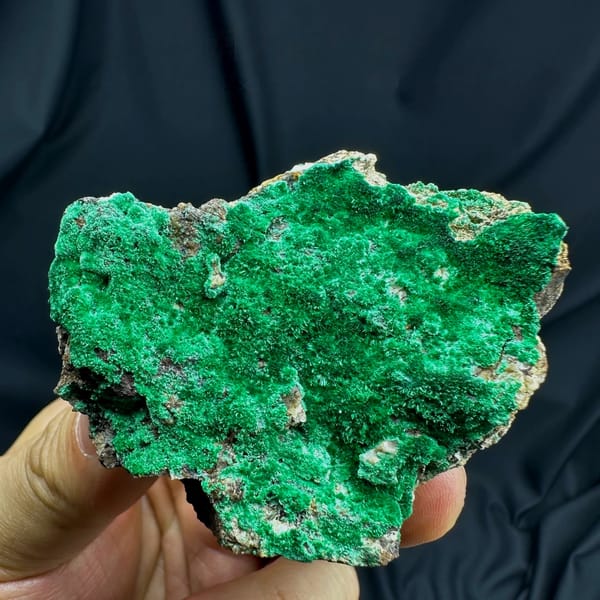
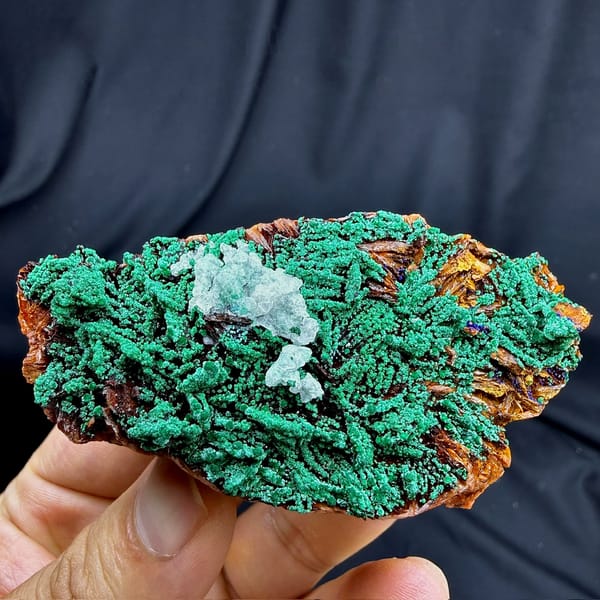
Malachite is a copper carbonate hydroxide and one of the most visually distinctive species in collecting – bright green botryoidal masses, banded slabs, and stalactitic clusters. It forms in the oxidized zone of copper deposits, almost always paired with its blue cousin Azurite (same elements, different hydration). Where Azurite is the upper-zone fresh signal, Malachite is the deeper-altered final phase. Russia's Tsar Hermitage carved entire columns from Ural malachite; ancient Egyptians ground it for green pigment.
Notable varieties
- Botryoidal (most common collector form; "grape" textures)
- Stalactitic (cave-formed columns and pendants)
- Pseudomorph after Azurite (square crystals replaced by green – Tsumeb, Bisbee)
- Plumose (fibrous radiating sprays)
- "Azurmalach" (intergrowth with Azurite – dual color)
The Chinese angle
Yangchun in Guangdong produces some of the finest botryoidal Chinese malachite, with deep saturated green and well-formed spherical structures. Hubei (the same Cu-Fe skarn districts that produce Daye galena and pyrite) also yields collector malachite. Both pair frequently with Azurite, and combination matrix specimens are characteristic. Outside China, Katanga (DRC) and Tsumeb (Namibia) remain the global references.