輝銻礦
Stibnite is a sulfide mineral known for its striking metallic crystals, with several world-class Chinese localities.
基本資料
| 化學式 | Sb2S3 |
|---|---|
| IMA 代號 | Stb |
| 施特龍茨分類 | 2.DB |
| 晶系 | 斜方晶系 |
| 點群 | mmm |
| 稀有度 | 較少見 |
| 收藏級別 | 櫃藏經典 |
| 模式產地 | (ancient — Latin "stibium"), Spain (Almadén) |
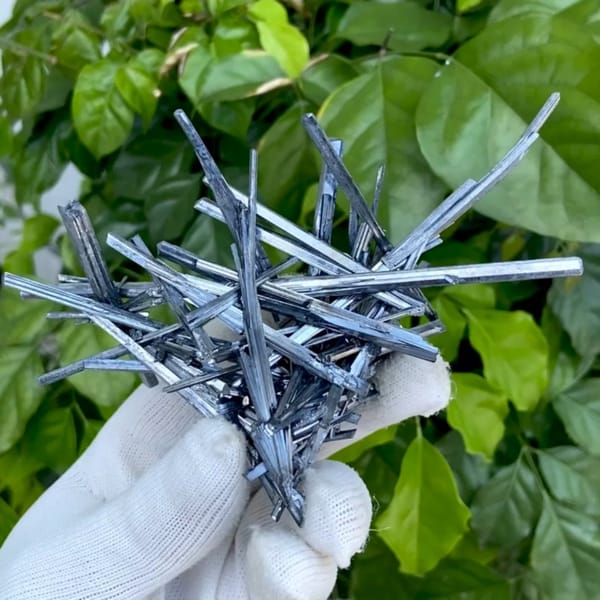
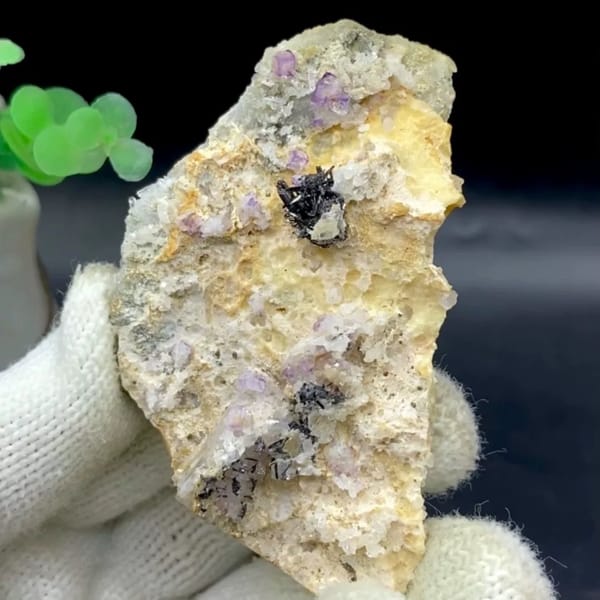
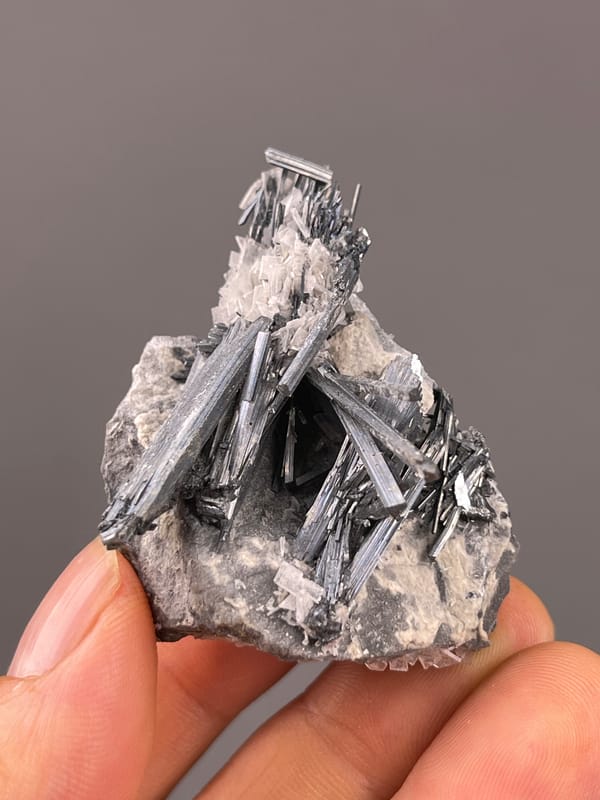
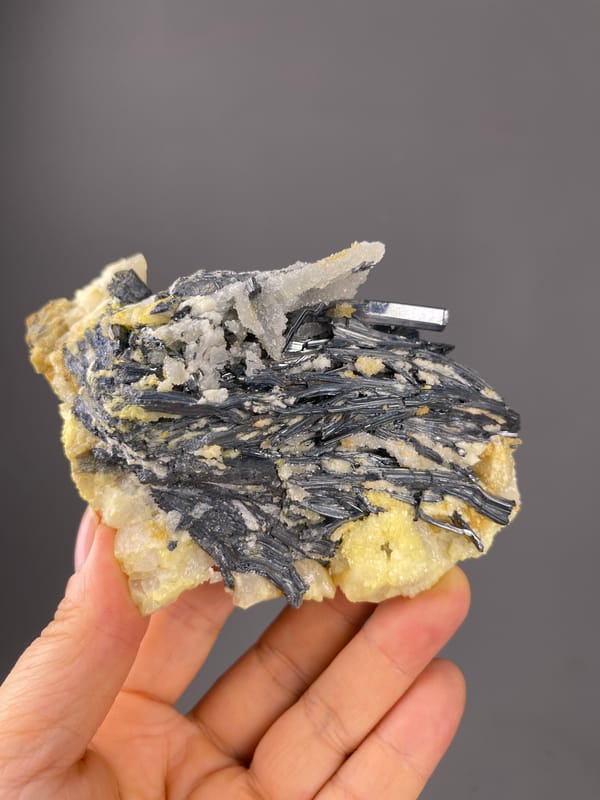
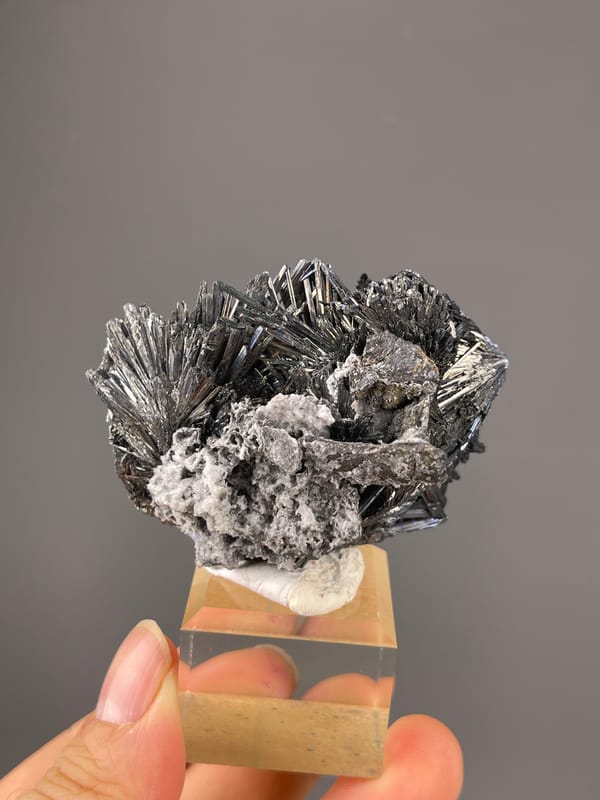
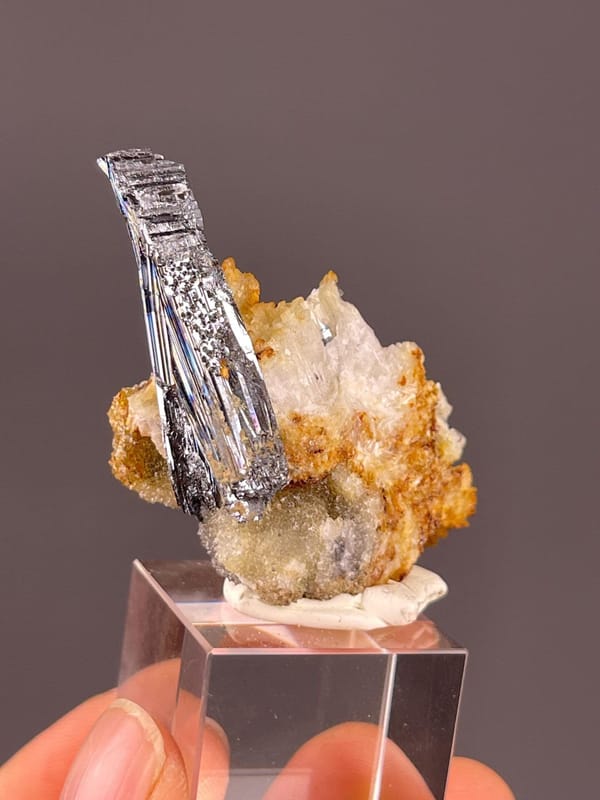
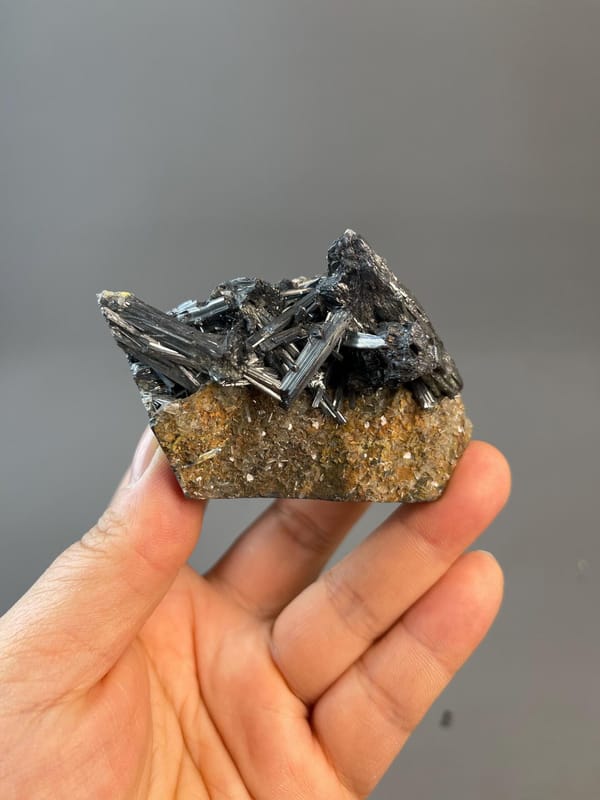
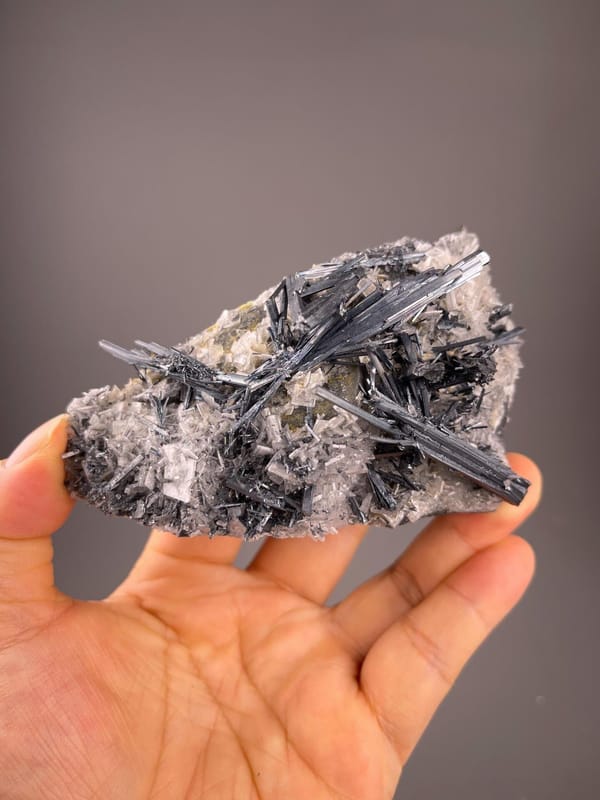
Stibnite — the principal ore of antimony — is one of the most distinctive sulfides in collecting. Its long silvery blades, radiating into starburst sprays, are a signature look of Chinese mineralogy. A published geological study describes the Xikuangshan deposit in Hunan as the world’s largest antimony deposit; it is also documented for bladed stibnite specimens.
The Chinese angle
The Xikuangshan and Wuning deposits yield individual stibnite crystals in excess of 30 cm — including the legendary Houluoping pocket whose blades resembled polished steel sabers. Chinese stibnite is the worldwide reference for the species; nothing else comes close in size or perfection.
Localities and the great pockets
Xikuangshan (Lengshuijiang) in central Hunan is the world’s largest antimony deposit and the reference source for the species — bladed and prismatic crystals with a bright metallic lustre, sometimes in radiating sprays, on crystalline calcite or with barite. The Wuning area of Jiangxi adds further fine material.
Judging quality, value, and care
Length, blade sharpness, metallic lustre, and freedom from cleavage damage — to which this soft, perfectly-cleaved sulfide is prone — all drive value; undamaged terminations and minimal tarnish are key. Stibnite tarnishes slowly in humid air, so store it with a desiccant in low light, keep it away from sulfur-laden materials, and never clean it with acids. See the Lengshuijiang page.