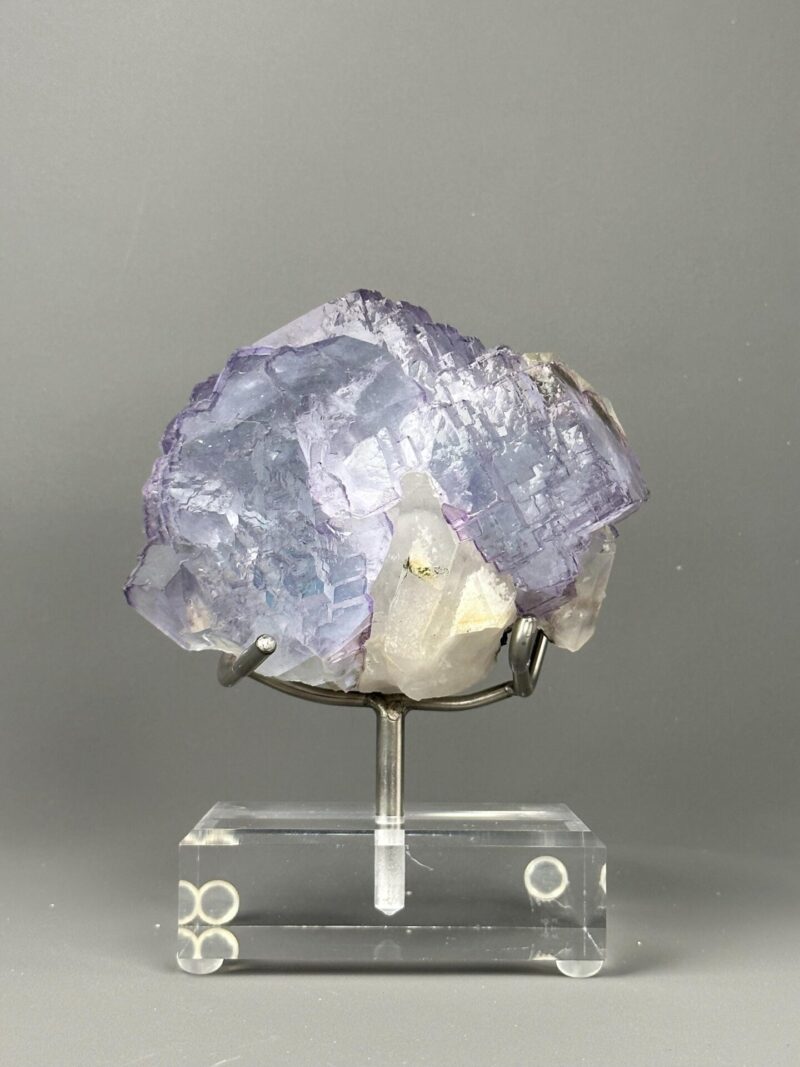
Azurite: The King of Blue Minerals
Azurite is widely regarded as the finest blue mineral in existence, producing crystals of such intense, saturated deep blue that they seem almost impossibly vivid. This copper carbonate mineral (Cu3(CO3)2(OH)2) has been prized since antiquity — the ancient Egyptians used it as a pigment, medieval Europeans ground it into the precious blue paint called azure, and modern mineral collectors consider fine azurite among the most desirable of all mineral specimens.
Why Azurite Commands Premium Collector Interest
No other mineral matches the depth and intensity of blue that azurite produces. While many minerals can be blue — aquamarine, celestite, lapis lazuli, blue fluorite — none achieve the pure, saturated azure that gives this mineral its name. Fine azurite crystals have an almost electric quality to their color that photographs struggle to capture — specimens are virtually always more vivid in person than in any image. This, combined with well-formed crystal habits and relative rarity of top-quality specimens, makes azurite one of the most sought-after minerals in the collector market.
Famous Azurite Localities
Tsumeb Mine in Namibia has produced what many consider the finest azurite crystals ever found — deeply saturated, perfectly formed prismatic crystals that set the standard for the species. Touissit in Morocco yielded impressive large crystal groups with complex habits. Bisbee, Arizona produced iconic dark blue azurite specimens often associated with malachite in the characteristic Bisbee blue-green combination. Chessy near Lyon, France is the type locality (azurite was originally called chessylite). Chinese azurite from Anhui Province has become increasingly important, producing magnificent crystal groups that rival historical specimens from any locality.
Azurite and Malachite: A Special Relationship
Azurite and malachite are intimately connected — both are copper carbonates that form in the oxidation zones of copper ore deposits. Azurite is less stable than malachite under surface conditions and slowly converts to malachite over geological time. This creates fascinating pseudomorphs where the crystal form of azurite is preserved but the mineral has partially or completely changed to green malachite. Specimens showing both minerals in vivid blue and green together are among the most visually striking objects in all of mineral collecting.
Caring for Azurite
Azurite requires careful storage to maintain its vivid blue color and crystal surfaces. The mineral is relatively soft (Mohs 3.5-4) and can slowly alter to malachite in humid conditions. Keep azurite specimens in dry display cases and avoid handling crystal faces with bare fingers, as skin oils can accelerate surface changes. Despite these care requirements, properly stored azurite maintains its spectacular color indefinitely.
Shop Azurite Specimens
Browse our collection of azurite mineral specimens for sale, featuring crystals selected for depth of color and crystal quality. See also our blue crystals collection and malachite guide for related content.