
Painite
Curated by Maggie Liu · Updated:
Painite is an oxide mineral recognized for its hardness and durability.
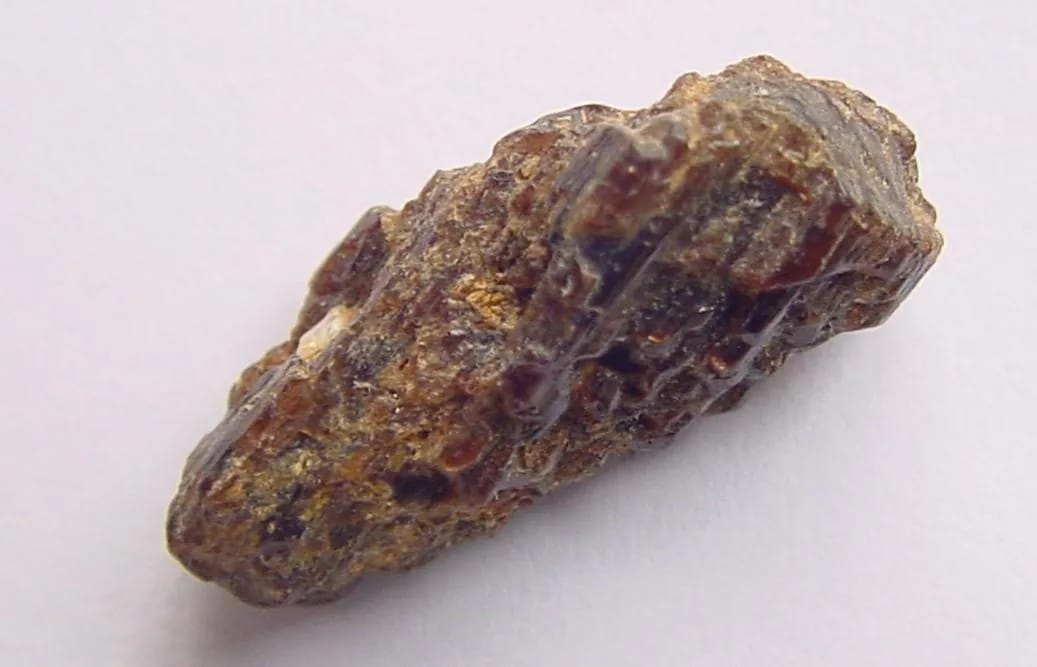
About Painite
Painite is classified as an oxide mineral in the painite group and has the chemical formula CaZrBAl9O18. It crystallizes in the hexagonal system and ranks among the harder species, with lasting durability. Its combination of structural character and global distribution make it a recognized species in both systematic and aesthetic collections.
Identification & care
Crystals commonly develop as prismatic hexagonal crystals. Its color is typically orange-red, brownish red and garnet-red. The luster is vitreous, the streak is white, and specimens are typically transparent. The cleavage is none observed. The fracture is conchoidal, which aids identification.
Collector context
How it forms
Painite forms in calc-silicate metamorphic rocks (marbles) associated with skarn; burma gem-bearing marbles. It is commonly found in association with ruby, spinel, sapphire, calcite.
Why collectors care
Painite is a frequently-sought species in serious collections because its habit is recognizable, its color often strong, and its best examples unmistakable even at a distance. Chinese material has driven much of the recent visual shift in the species — sharper crystals, deeper colors, cleaner matrix.
What affects value
Value in Painite is assessed, in typical order of weight, against: (1) locality provenance; (2) size relative to the species norm; (3) crystal form and termination sharpness; (4) color saturation and zoning; (5) transparency and internal clarity; (6) matrix quality and aesthetic balance; (7) condition (absence of damage, chips, or repair). Cleaning quality and verified locality documentation act as multipliers across the above.
Frequently asked questions
What is Painite?
Painite crystallises in the Hexagonal system. Painite is an oxide mineral recognized for its hardness and durability.
What crystal system does Painite belong to?
Painite crystallises in the Hexagonal crystal system.
Is Painite rare?
As a collector mineral, Painite is generally considered very rare.
Related minerals
Looking for a Painite specimen?
Our inventory is one-of-a-kind and turns over quickly. Tell us what you're after — species, size, budget — and we'll notify you when a matching Painite arrives from our sourcing network.
Request this mineralExternal references
Painite on Wikidata.