
Zircon
Curated by Maggie Liu · Updated:
Zircon is a silicate mineral valued for its hardness and gem potential, with several world-class Chinese localities.
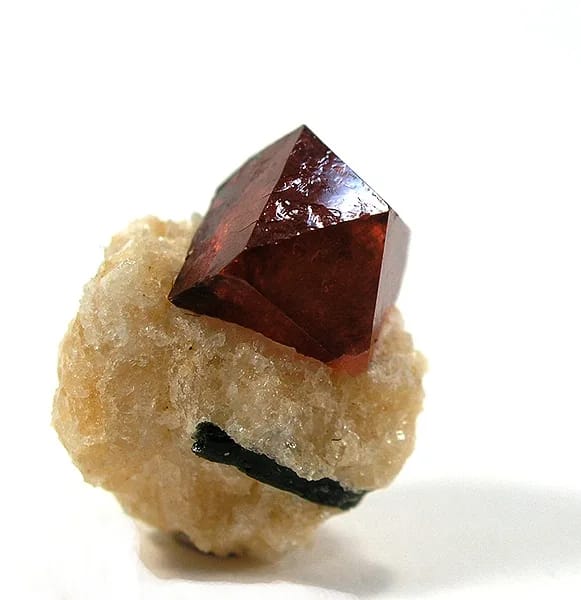
About Zircon
Zircon belongs to the silicate class in the zircon group and has the chemical formula Zr(SiO4). It crystallizes in the tetragonal system and is one of the most visually varied minerals in the collector market. Its combination of structural character and global distribution make it a recognized species in both systematic and aesthetic collections.
Identification & care
Zircon typically forms prismatic tetragonal crystals with pyramidal terminations; short to elongated; granular (as detrital grains). Its color range is broad, including colorless, yellow, brown, red, orange, green, blue (heat-treated), grey, and brownish metamict varieties. The luster is adamantine, vitreous, the streak is white, and specimens range from transparent to translucent; metamict varieties opaque. The cleavage is indistinct on {110}. The fracture is conchoidal, uneven, which aids identification.
Collector context
How it forms
The geological setting for Zircon is typically accessory mineral in granitic and syenitic igneous rocks, pegmatites; resistant to weathering — concentrated in alluvial gem gravels and beach sands (as detrital grains); also in metamorphic rocks. It is commonly found in association with corundum, spinel, tourmaline, chrysoberyl, feldspar, monazite, thorite.
Classic Chinese localities
Documented Chinese occurrences are recorded at Shangbao Mine, Jiama Cu-polymetallic deposit and Jinduicheng Mine, among others.
Why collectors care
Zircon occupies a rare position: it matters equally to specimen collectors and to the gem trade. Crisp natural crystals with saturated color and good clarity command premium pricing and are among the highest-prestige targets in any systematic collection.
What affects value
Value in Zircon is assessed, in typical order of weight, against: (1) locality provenance; (2) crystal size; (3) transparency and internal clarity; (4) color intensity and saturation; (5) crystal form and termination sharpness; (6) matrix and associated-species aesthetics; (7) gem-cutting potential. Verified locality documentation and cutting potential further elevate collector demand.
Frequently asked questions
What is Zircon?
Zircon has the chemical formula ZrSiO4, crystallises in the Tetragonal system, has a Mohs hardness of 6.5–7.5. Zircon is a silicate mineral valued for its hardness and gem potential, with several world-class Chinese localities.
What is the chemical formula of Zircon?
The chemical formula of Zircon is ZrSiO4.
What crystal system does Zircon belong to?
Zircon crystallises in the Tetragonal crystal system.
Where is Zircon found?
Notable localities for Zircon include Ratnapura.
Related minerals
Looking for a Zircon specimen?
Our inventory is one-of-a-kind and turns over quickly. Tell us what you're after — species, size, budget — and we'll notify you when a matching Zircon arrives from our sourcing network.
Request this mineralExternal references
Zircon on Wikidata.