Color Cause (Chromophore)
Chromophore:
Cu²⁺
Mechanism:
idiochromatic
Color produced:
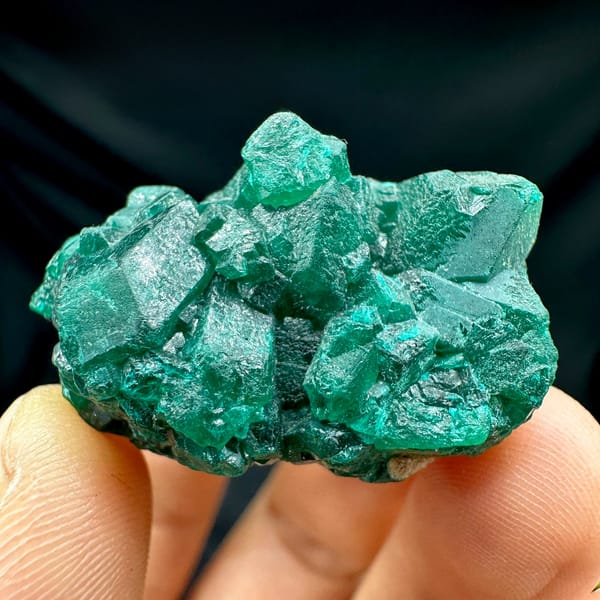
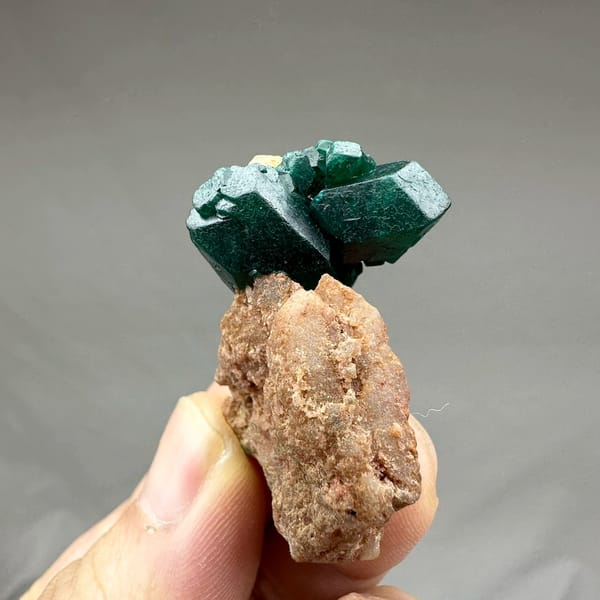
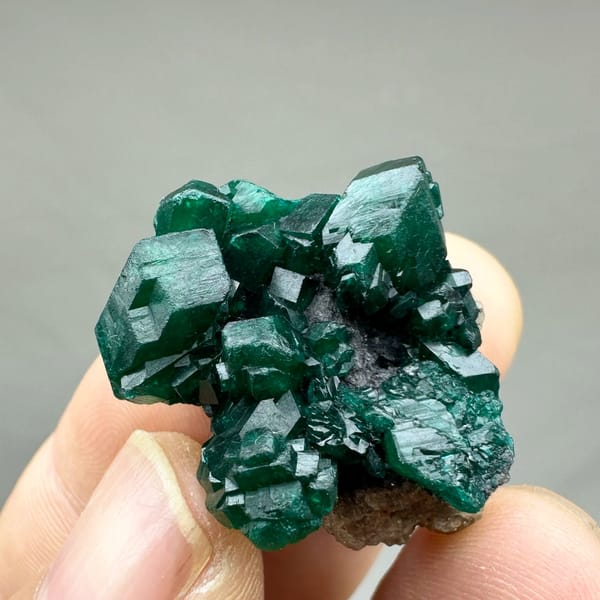
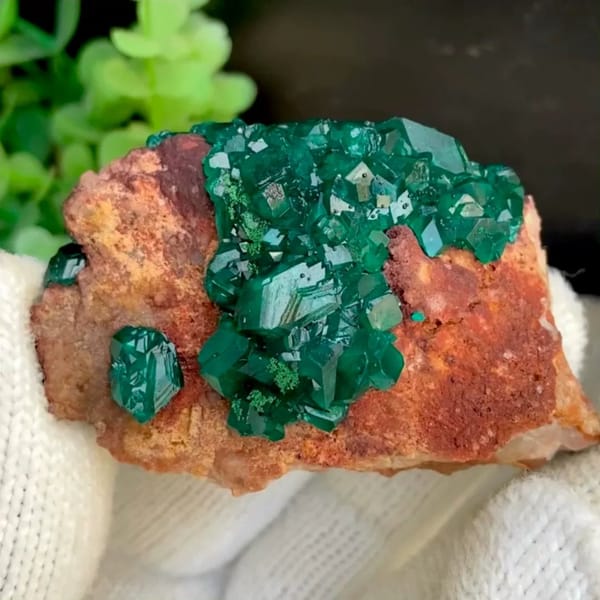
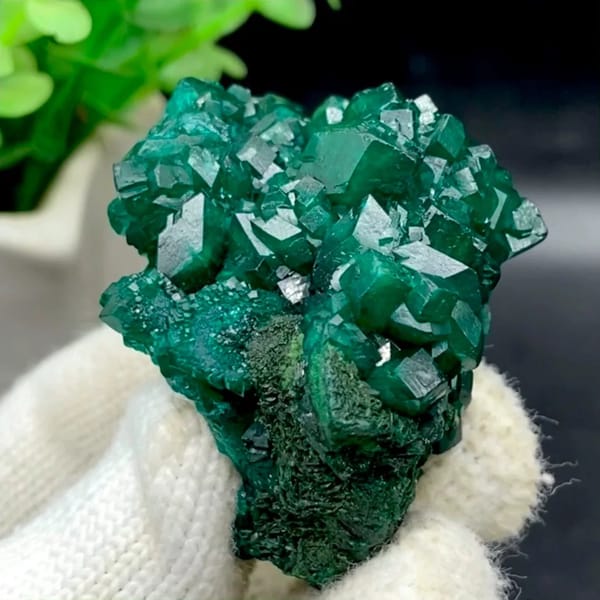
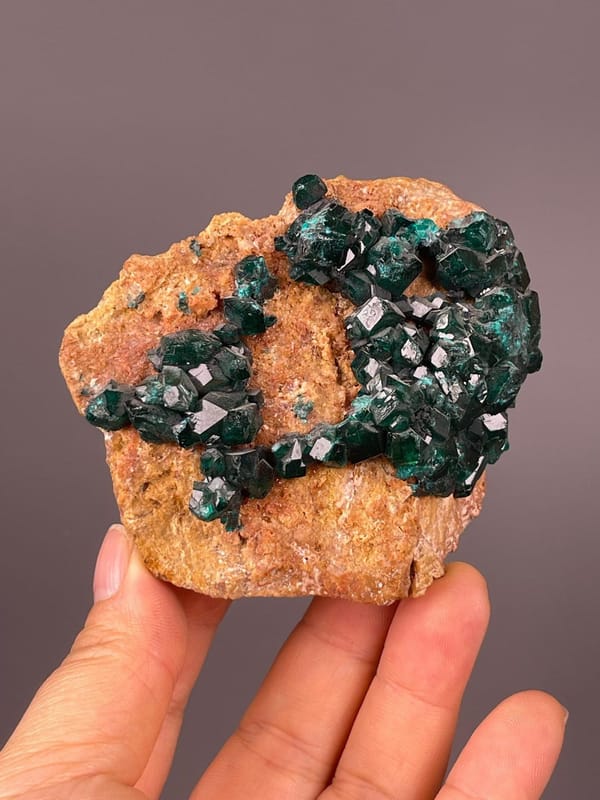
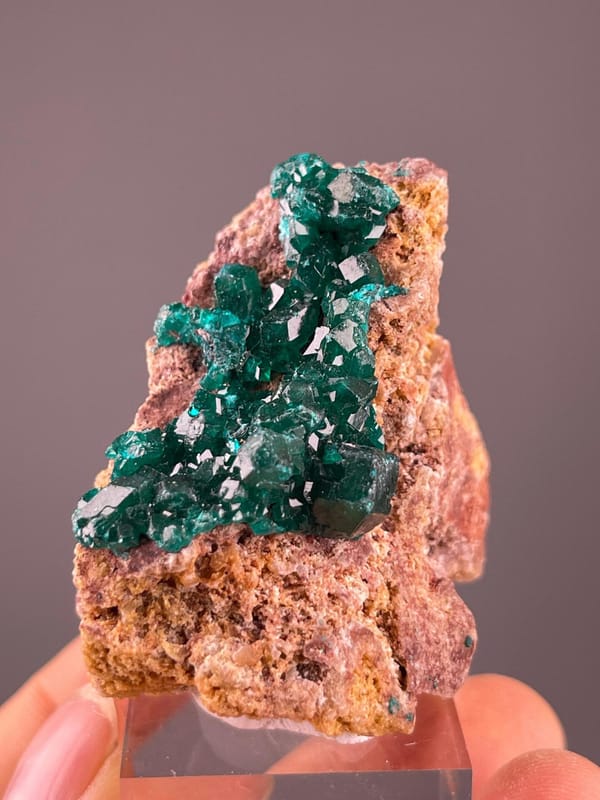
emerald green
Among the most intensely green Cu minerals.
Mohs 5
Vickers (~) 540 HV
Knoop (~) 620 HK
Element composition by mass
Formula: CuSiO₃·H₂O · molar mass: 157.64 g/mol
| O | 40.6% | |
| Cu | 40.31% | |
| Si | 17.82% | |
| H | 1.28% |
Computed from atomic weights (IUPAC 2021). Site-occupancy groups (Fe,Mn) split equally.
Mohs Hardness
5
Dioptase sits at 5 on the Mohs scale — can be scratched by a steel knife.
Colors:
Streak
Green
Green
Crystal system
Trigonal
Trigonal
SilicatesSilicates (Cyclosilicates)
TL;DR · 1 min read
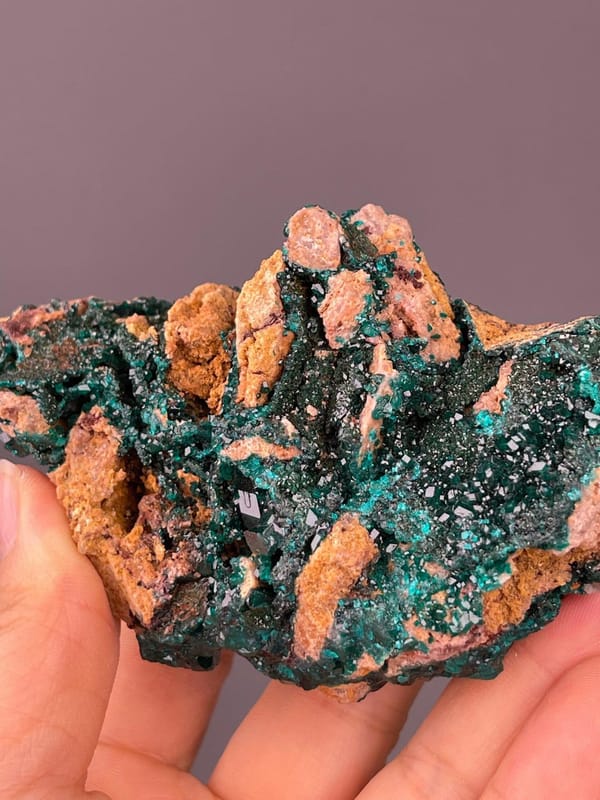
Dioptase (CuSiO₃·H₂O) is a vivid emerald-green copper silicate that ranks among the most visually striking minerals on Earth. Its color rivals gem emerald, and it forms sharp prismatic to rhombohedral crystals in the oxidized cap of copper deposits.
Dioptase (CuSiO₃·H₂O) is a vivid emerald-green copper silicate that ranks among the most visually striking minerals on Earth. Its color rivals gem emerald, and it forms sharp prismatic to rhombohedral crystals in the oxidized cap of copper deposits. Tsumeb (Namibia) and Mindouli/Mfouati (Republic of Congo) produce world-class specimens.
More minerals to explore
Beryl (绿柱石)
Hexagonal
Schorl (黑电气石)
Trigonal
Benitoite (蓝锥矿)
Hexagonal
Elbaite (锂电气石)
Trigonal
Dravite (镁电气石)
Trigonal
Sugilite (舒俱徕石)
Hexagonal