
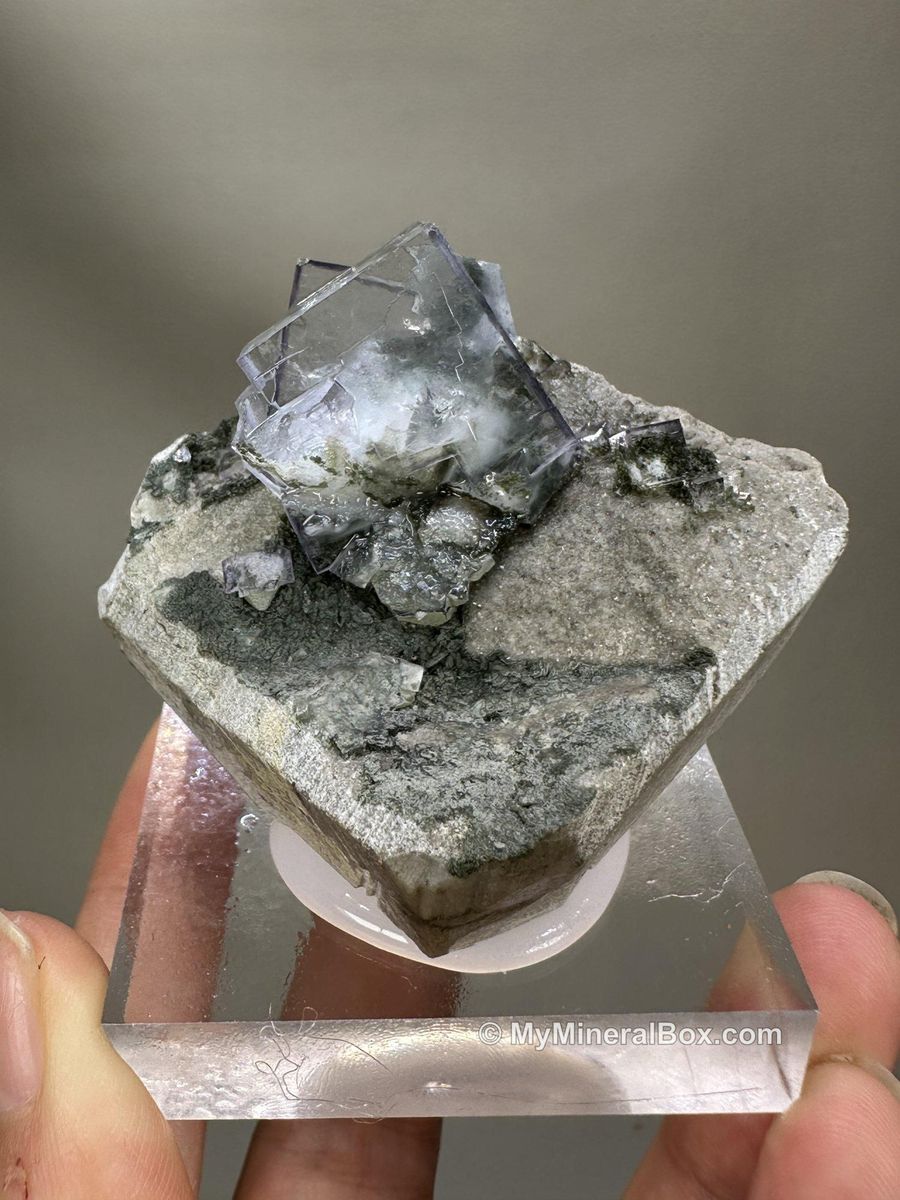
Yaogangxian: The Fluorite Benchmark
The Yaogangxian tungsten mine in Yizhang County, Chenzhou Prefecture, worked since the end of the Ming Dynasty, is one of China's best-documented specimen localities, with a dedicated Mineralogical Record monograph. Its hydrothermal veins produce fluorite in many colours — purple, green, blue, yellow — as sharp cubes and octahedra, often perched on sparkling white drusy quartz.
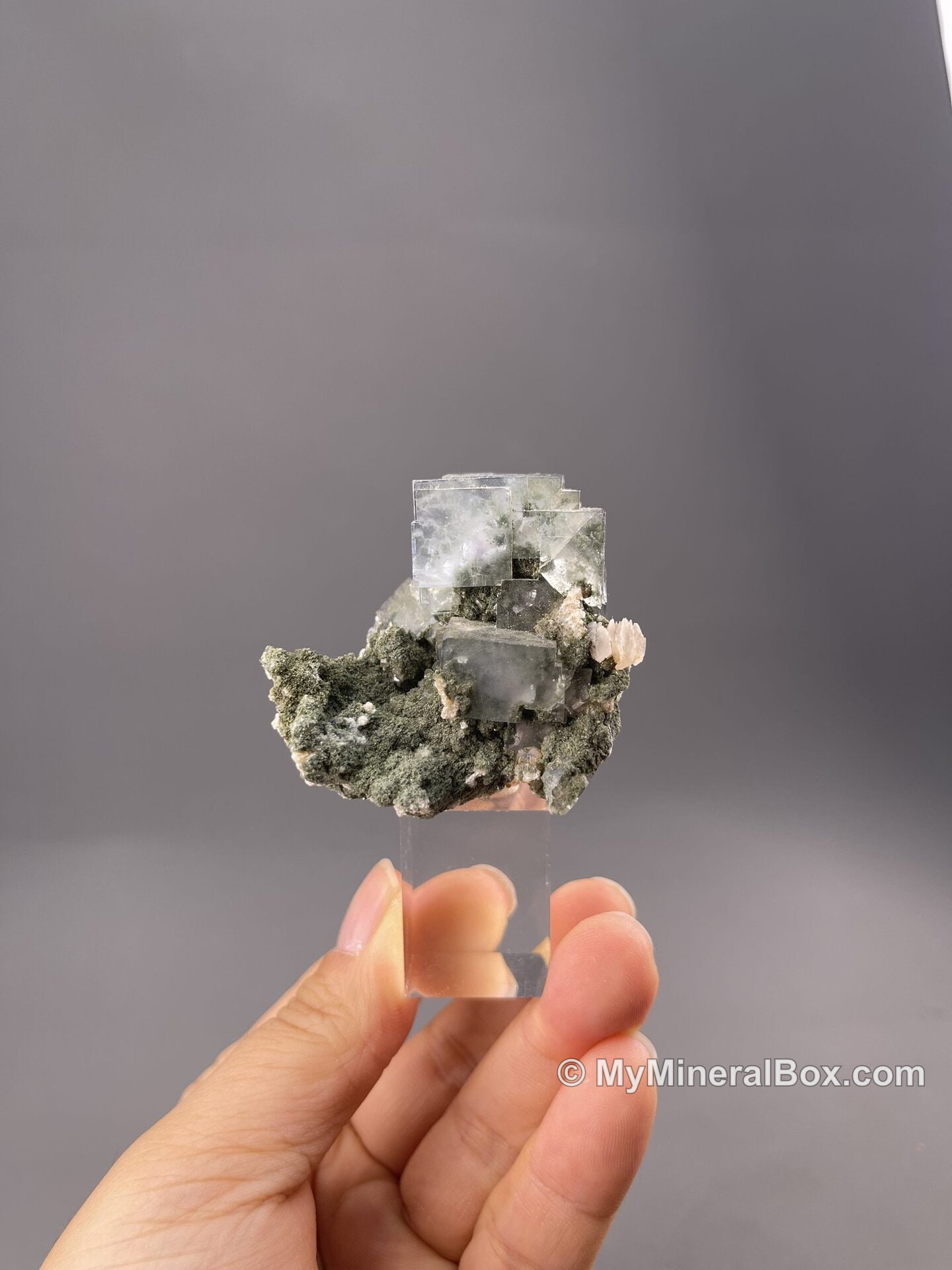
What makes Yaogangxian material special is character: spinel-law twins, phantom growth zones, inclusions of needle-like boulangerite, and associations with bournonite, arsenopyrite, ferberite, chalcopyrite and muscovite. Turquoise-blue fluorite on quartz is one of the locality's recognised collector styles.
Shangbao: Pyrite and Pastel Fluorite
The Shangbao mine in Leiyang County, Hengyang Prefecture, is Yaogangxian's great rival. Its signature combination: mirror-bright pyrite crystals with glassy fluorite in pastel greens, blues and pinks, often accompanied by quartz, dolomite and calcite. Pink Shangbao fluorite with dolomite is one of the prettiest associations in all of Chinese mineralogy, and the mine's large cubic pyrites on quartz are world-class in their own right.
Xianghualing and Xianghuapu: Twins, Giants and a New Species
The Xianghualing tin-tungsten district near Linwu County has produced enormous fluorite clusters — pieces to 39 cm and beyond — alongside green octahedral fluorite with striking color zoning. The district holds a special place in mineralogical science: it is the type locality of hsianghualite, a rare beryllium silicate first described from these skarns. Nearby Xianghuapu contributes tungsten minerals and scheelite.
Shimen: The World's Realgar Locality
The Jiepaiyu mine at Shimen, in northern Hunan, is to realgar what Yaogangxian is to fluorite: the world standard. Cherry-red, gemmy realgar crystals — sometimes free-standing, sometimes nestled with snow-white calcite — and golden bladed orpiment come from this ancient arsenic-mercury deposit. (A conservation note: realgar is light-sensitive and slowly alters to orange pararealgar with prolonged exposure — display these treasures away from strong light.)
Xikuangshan: Antimony's Throne
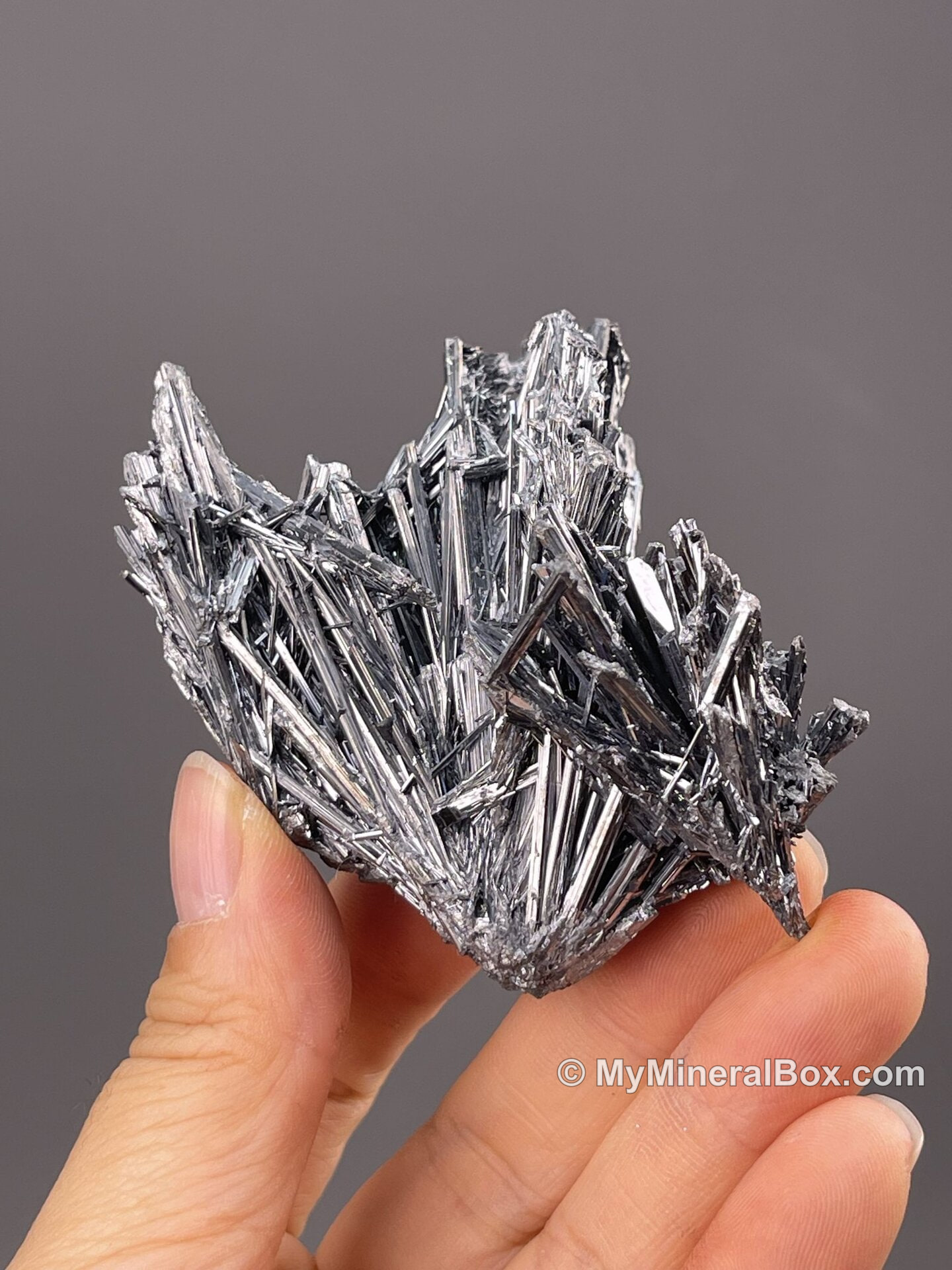
Lengshuijiang's Xikuangshan mine is the largest antimony deposit on Earth, and its stibnite dethroned the historic Japanese classics. Sword-like metallic crystals reaching 60 cm, in dramatic sprays and clusters, emerged from these workings in the 1990s. Stibiconite pseudomorphs after stibnite — ghost-gray replicas of entire crystal groups — add a surreal chapter to the locality's output.
More Hunan Highlights
The province's depth is astonishing. The 884 mine at Leiping and the Manaoshan and Chenzhong workings produce large calcite twins and calcites dusted with oriented pyrite microcrystals. Rucheng yields lustrous black sphalerite. The Taolin lead-zinc mine gave classic green fluorite on quartz in the early 1990s. Shuikoushan produces copper-tinted cuprian calcite, and northern Hunan's shale beds host the famous "chrysanthemum stones" — radiating celestine sprays beloved in both Chinese viewing-stone and Western mineral traditions.
Collector's Notes
Hunan specimens have been produced in quantity since the mid-1980s, so a healthy range exists at every price level — from affordable thumbnail fluorites to competition-level matrix pieces. Watch for oiled fluorite (wash-off luster enhancement) and irradiated "improved" colors on cheap material; buy from dealers who guarantee natural, untreated specimens. Older pieces with 1990s provenance are increasingly collectible in their own right.
---
Recent Developments (as of 2026)
Hunan's classic mines have diverged sharply. Yaogangxian remains the province's active flagship, still yielding color-zoned and phantom fluorite, and Chinese fluorite was a headline of the 2026 Tucson show. Xianghualing continues to produce glassy pastel-green cubes, though much of the "Xianghualing" green on the market actually comes from the nearby Xianghuapu beryllium workings.
Others have effectively closed. Shangbao has all but stopped producing, and top pyrite-and-fluorite matrix pieces are now scarce with prices climbing steadily. The Jiepaiyu (Shimen) realgar and orpiment that defined the species largely date to 1990s–2006 pockets; fresh gemmy material is now rare. The biggest shift is at Xikuangshan: China's 2024 antimony export licensing, followed by tighter global supply, pushed antimony prices to record highs through 2025 — making fine stibnite both scarcer and pricier. Rucheng is now essentially defunct, while Taolin still turns out fluorite-sphalerite-quartz combinations.
Sources and further reading
All text is original to MyMineralBox, based on our own sourcing experience and locality documentation. Image credits are shown with each photo.
Frequently asked questions
What is Yaogangxian fluorite?
Fluorite from the Yaogangxian tungsten mine in Chenzhou, Hunan — famed for glassy, transparent cubes in purple, green and blue, often on quartz, and for spinel-law twins. It is the modern benchmark for the species.
What is Hunan Province known for in minerals?
Hunan is China's richest specimen province: Yaogangxian and Shangbao fluorite, Xikuangshan stibnite (the world's largest antimony mine), Jiepaiyu (Shimen) realgar and orpiment, and Xianghualing green fluorite.
Is Shangbao fluorite still being mined?
Shangbao has effectively stopped producing, and its classic pyrite-with-pastel-fluorite matrix pieces are now scarce, with prices rising for undamaged examples.