
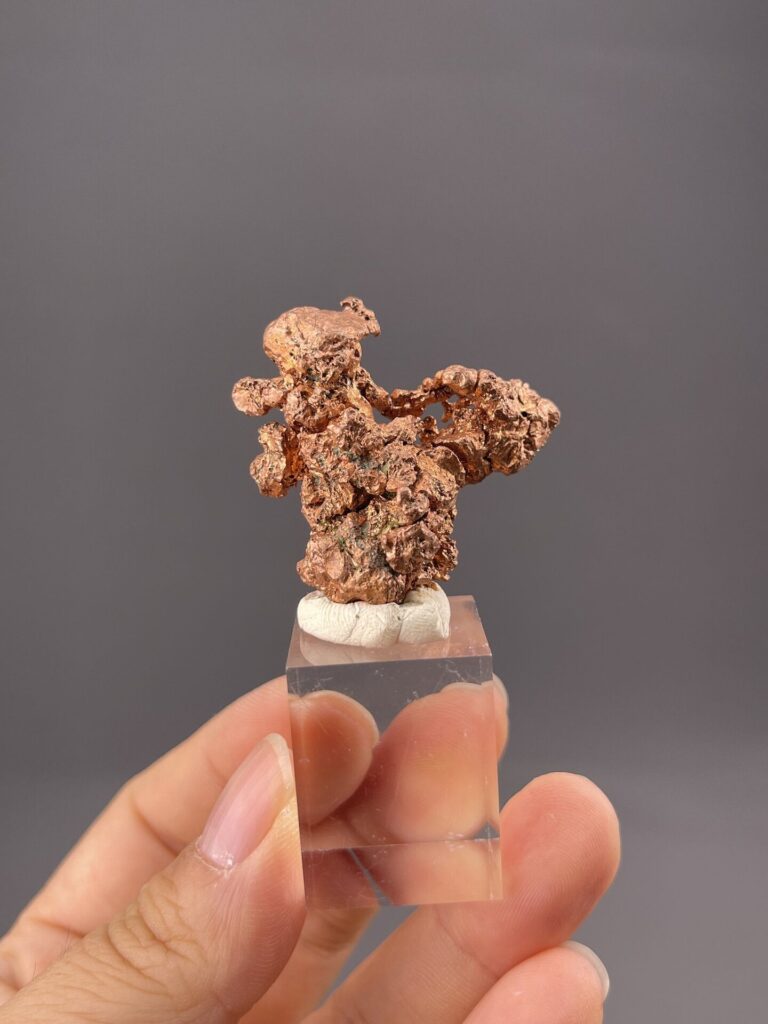
Luster
How a mineral surface reflects light. Metallic lusters (galena, pyrite, hematite, chalcopyrite) belong to the sulfides and native metals — the surface looks like polished iron. Sub-metallic is duller (some hematite, some manganese oxides). Non-metallic lusters branch out: vitreous (glass — quartz, calcite, fluorite), resinous (sphalerite, sulfur), pearly (talc, gypsum, micas), silky (asbestos, gypsum satin spar), greasy (nepheline, opal), adamantine (diamond, cerussite, anglesite), and dull / earthy (kaolinite, bauxite).
Streak
Drag the mineral across an unglazed white porcelain plate. The line of powder it leaves is the streak — the mineral's color in fine-grained form. Streak ignores body color and shows the true diagnostic. Hematite is silver-black externally but always leaves a brick-red streak. Pyrite is gold but streaks greenish-black. The streak plate is the most-underrated tool in a collector's kit.
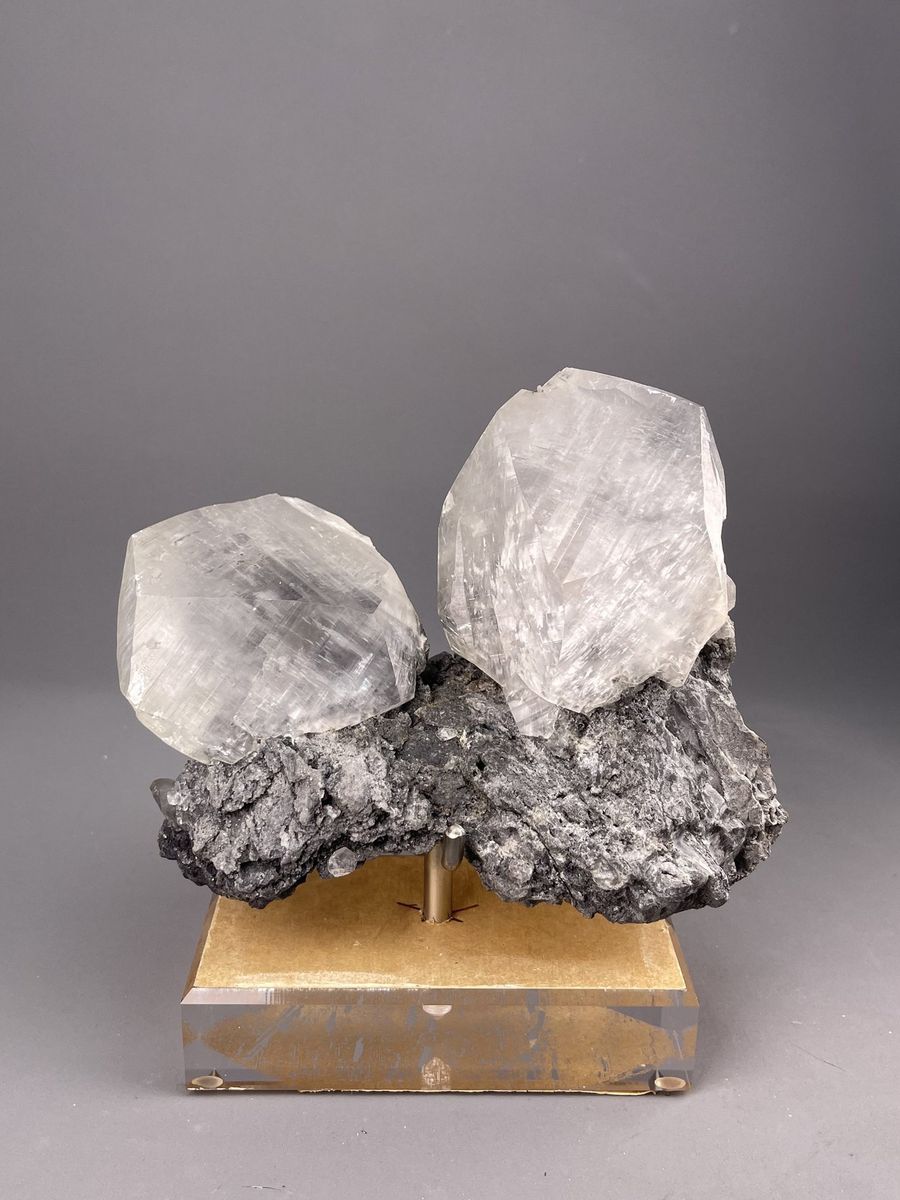
Cleavage and fracture
Cleavage is breakage along planes of atomic weakness — perfectly flat, repeatable, mirror-like. Calcite shows three cleavages at 75° / 105° — the classic rhomb. Micas have one perfect basal cleavage — they peel into sheets. Galena has three cleavages at right angles — perfect cubes. Where there's no cleavage, you get fracture: conchoidal (curved, shell-like — quartz, obsidian), splintery (asbestos), hackly (native copper), uneven (most everything else). Combined with hardness, cleavage usually nails the ID.
Reading cleavage quality and counting directions
Cleavage is described by how cleanly it breaks and how many directions it has. 'Perfect' cleavage yields glass-smooth, mirror-bright surfaces (mica, galena); 'good' and 'poor' grades give progressively rougher, more interrupted planes. The number of directions and the angles between them are often more diagnostic than the species' color.
To count directions, tilt the specimen under a light and watch for flat zones that flash all at once as you rotate it — each separate flashing set is one cleavage direction. Fluorite shows four directions (octahedral), galena three at right angles, calcite three that are not at right angles. Two minerals that look alike often part along completely different numbers of planes, which settles the identification.
Telling Chinese sulfides apart by luster and streak
Among Chinese specimens, several gold and grey sulfides look nearly identical until you check streak. Pyrite and chalcopyrite from Daye in Hubei are both brassy and metallic, but pyrite's streak is greenish-black while chalcopyrite's is darker and more clearly greenish; chalcopyrite is also softer and often tarnishes to peacock iridescence.
Galena from the Fankou belt in Guangdong reads instantly as metallic with a lead-grey streak and cleaves into bright cubes, separating it from sphalerite, whose resinous to adamantine luster and pale-to-brown streak give it away. Stibnite from the Lengshuijiang district in Hunan shows a distinctive steel-grey metallic luster on long bladed crystals with one perfect lengthwise cleavage — a combination no other common Chinese sulfide shares.
Common mistakes that ruin a reading
The most frequent error is judging luster on a weathered or coated surface; oxidation dulls a truly metallic mineral to something that looks earthy. Always assess a fresh, clean face in good diffuse light rather than direct glare, which washes out the distinction between vitreous and adamantine.
Another trap is confusing cleavage with crystal faces — a flat surface that is repeated and parallel inside the crystal is cleavage, while growth faces sit on the outside and need not repeat internally. Finally, do not call a single chipped surface 'fracture' before checking whether the mineral simply parted along a hidden cleavage plane; break a small test corner and watch how it goes.
Frequently asked questions
What's the difference between cleavage and fracture?
Cleavage is breakage along flat planes of atomic weakness, so it produces smooth, repeatable surfaces at consistent angles. Fracture is breakage where no such plane exists, giving irregular surfaces like the curved, shell-shaped conchoidal break seen in quartz.
Why does streak color differ from the mineral's visible color?
Body color comes from how light reflects off the whole crystal and is affected by surface, grain size, and trace impurities. Streak is the color of the powder, which strips away those surface effects and shows the mineral's intrinsic color — hematite looks silver-black but always streaks brick-red.
How do I tell pyrite from chalcopyrite?
Both are brassy and metallic, but pyrite is harder (about 6) and streaks greenish-black, while chalcopyrite is softer (about 3.5–4), often shows peacock-colored tarnish, and streaks a darker greenish-black. Hardness plus tarnish usually separates them at a glance.
What does 'metallic luster' actually mean?
A metallic luster reflects light like polished metal, opaque and bright, and is typical of sulfides and native metals such as galena, pyrite, and stibnite. If you can see into the mineral at all, or it shines like glass, it is non-metallic instead.