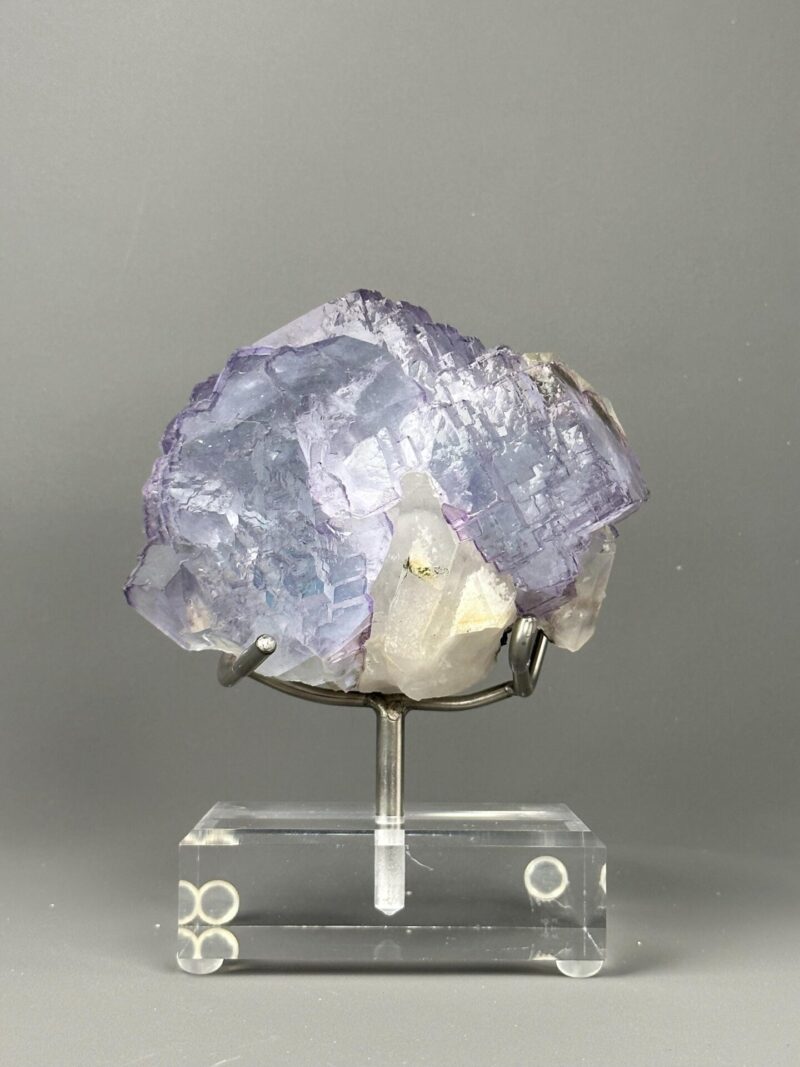
Augite ((Ca,Na)(Mg,Fe,Al,Ti)(Si,Al)₂O₆) is the most common pyroxene-group mineral and a primary constituent of basalt, gabbro, and mantle peridotite. Its name from Greek “auge” (luster) reflects the bright vitreous gleam on freshly broken faces. Augite forms short prismatic crystals with the characteristic ~87° pyroxene cleavage angles, distinguishing pyroxenes from amphiboles (which have ~60°/120°). Mt. Vesuvius (Italy) is the type locality, with classic black columnar Augite specimens from volcanic ejecta.
Key Facts
- Mohs hardness 5.5–6.
- Monoclinic; short stubby prismatic crystals.
- Diagnostic ~87° prismatic cleavage angles distinguish from amphiboles.
- Wide chemical variability — Ca, Na, Mg, Fe, Al, and Ti substitute in the tetrahedral and octahedral sites.
- Diopside-augite continuous solid solution series within the calcic clinopyroxene group.
Notable Localities
Mt. Vesuvius (Italy) is the type locality. Mt. Etna (Italy) and Hawaiian volcanic basalts supply collector material. Iceland and Faroe Islands yield large prismatic crystals in basalt.
Found at these Localities
- Labrador Coast (Tabor Island, Nain) (拉布拉多海岸(拉长石产地))
- Italian Volcanic Province (Vesuvius / Lipari / Etna) (意大利火山矿物产地)