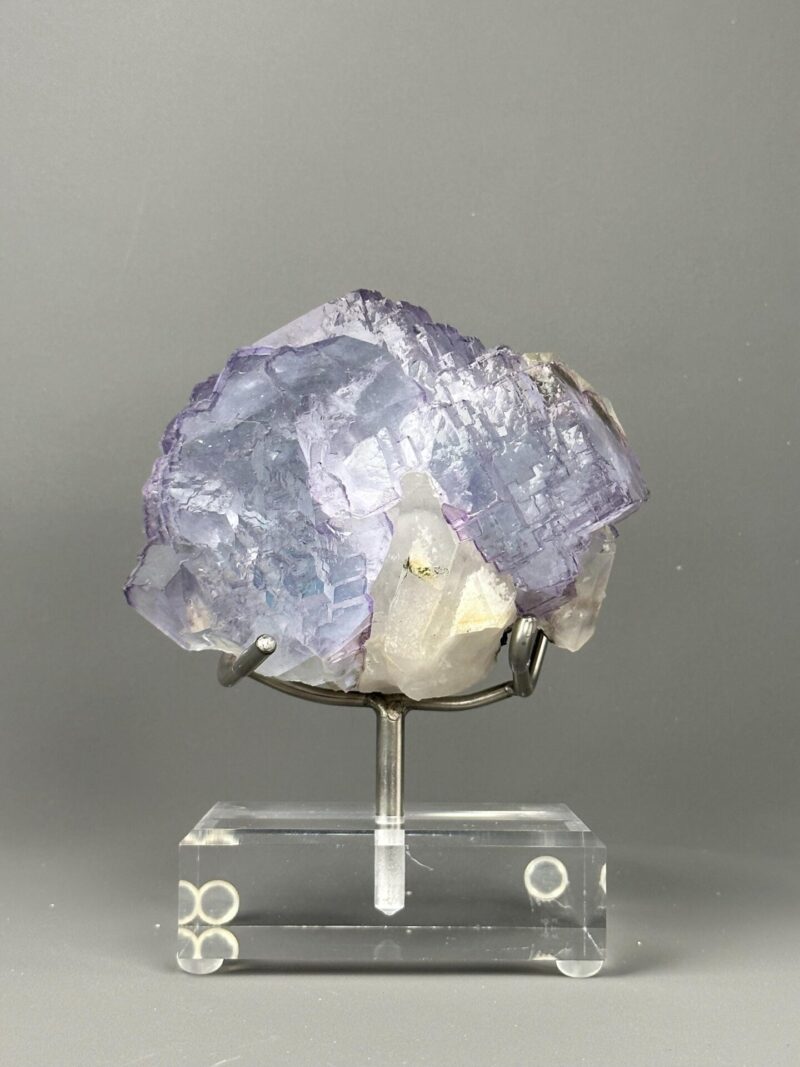
Talc (Mg₃Si₄O₁₀(OH)₂) is the softest mineral on the Mohs scale (1) — defining the bottom of the hardness reference. Its greasy feel and white color are diagnostic. Talc forms by hydrothermal alteration of magnesium-rich rocks (peridotite, dolomite). Massive talc (“steatite” or “soapstone”) has been carved since prehistory. Major industrial source for cosmetics, ceramics, paper.
Key Facts
- Mohs hardness 1 — softest mineral, scratched by fingernail.
- Monoclinic; perfect basal cleavage produces flexible flakes.
- Greasy soapy feel diagnostic.
- Forms by hydrothermal alteration of Mg-rich rocks.
- Major industrial use: ceramics, paper coatings, cosmetics, soapstone carvings.
Notable Localities
Mariposa County (California, USA) and Vermont yield massive soapstone. Liaoning (China) supplies Chinese industrial talc. Pyrenees (France) is a historical source.
Found at these Localities
- Trimouns Talc Mine (特里穆滑石矿(法国))