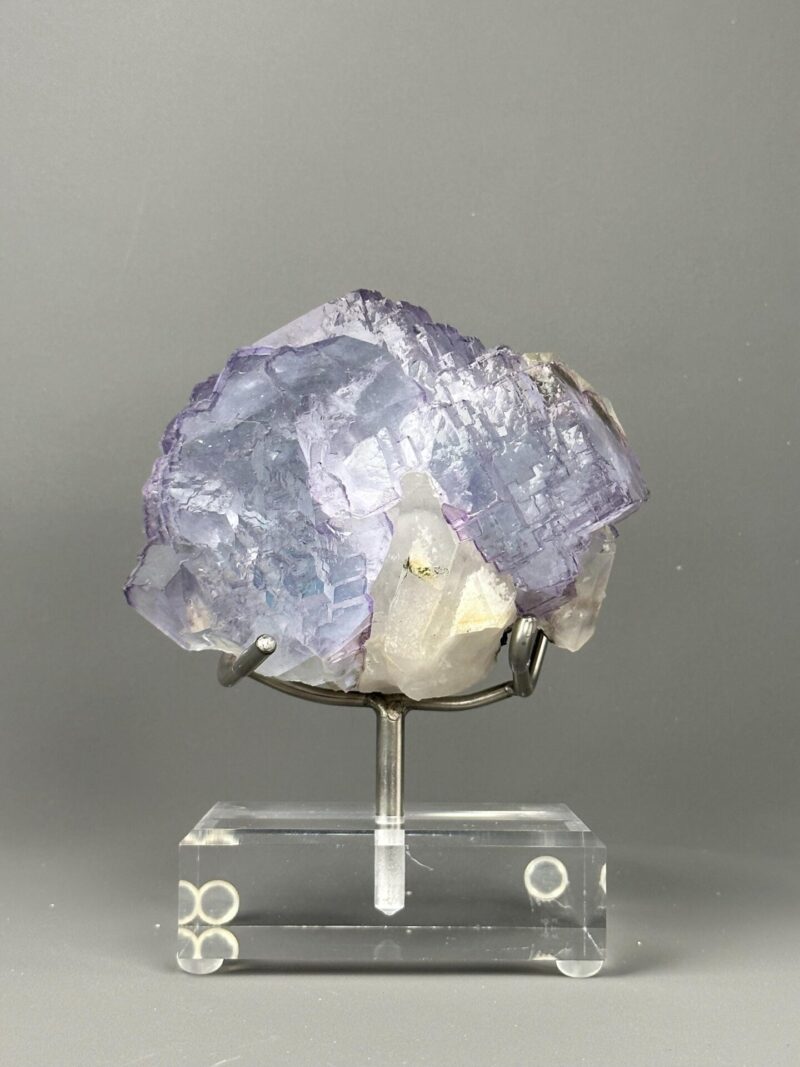
Wavellite (Al₃(PO₄)₂(OH,F)₃·5H₂O) is a hydrous aluminum phosphate famous for its diagnostic radiating spherical aggregates of acicular crystals — “wavellite balls” displaying internal radial color zoning when cut. Named after British physician William Wavell who discovered it. Mt. Ida (Arkansas) and Cornwall (England) supply iconic specimens.
Key Facts
- Mohs hardness 3.5–4.
- Orthorhombic; signature radiating spherical aggregates of acicular needles.
- Color zoning often visible when “balls” are cleaved/cut.
- Pale green to white color most common; rare yellow and brown varieties.
- Forms in low-temperature hydrothermal phosphate-rich environments.
Notable Localities
Mt. Ida (Arkansas, USA) yields iconic green radial spheres. Cornwall (England) supplies historic specimens. Fontainebleau (France) and Brazil yield additional collector material.
Found at these Localities
- Cornwall Mining District (康沃尔矿区)
- Eastern Brazilian Pegmatite Province (巴西东部伟晶岩省)