Elemental Composition (by mass)
| Element | Mass % | Visual |
|---|---|---|
| Fe Iron | 48.20% | |
| O Oxygen | 41.43% | |
| C Carbon | 10.37% |
Computed from simplified end-member formula. Solid-solution series, water content, and trace substitutions cause real-world variation.
IMA Abbreviation (Whitney-Evans 2010)
Sd
→ Siderite
Fe carbonate
Standard symbol from American Mineralogist (Whitney & Evans, 2010). Used in thin-section labeling, phase diagrams, and IMA-style species records.
⏳ Long-term Aging & Care Timeline
oxidation to limoniteyears to decades
Trigger: humidity
Intervention: Fe carbonate slowly weathers. Most affected on cleavage faces. Dry storage helps.
Pronunciation
/ˈsɪdəraɪt/
↔ SID-uh-rite
Greek "iron"
⚠ Safety & Handling
⚗acid-sensitivemoderate
Fe carbonate.
Handling: No acids; rust if washed.
Information provided in good faith. Consult local hazmat regulations for transport and disposal. Severely hazardous specimens may require special storage cabinets.
Pseudomorph Relationships
Replaced by — this mineral commonly becomes:
→ Limonite replacement
Siderite oxidizes to limonite/goethite retaining rhombohedral habit.
Worldwide.
A pseudomorph (Greek "false form") is a mineral with the external shape of another species — the chemistry has changed but the crystal habit is inherited.
Tenacity
Behavior:
brittle
Under stress:
Rhombohedral cleavage
Same family.
Diaphaneity (Transparency)
translucent
Iron-rich; brown body color.
Type Locality
(ancient — Greek "sideros" = iron) — Greece
Described 1845 by Haidinger
› Browse all type localities
Magnetism
Category:
weakly paramagnetic
Test result:
Slight pull on fresh specimens
FeCO₃; sometimes confused with sphalerite but magnetic response separates.
Test with rare-earth magnet (N42 or N52 neodymium). Suspend specimen on thread for sensitive paramagnetic detection. Diamagnetic minerals are weakly repelled (visible only with strong magnets like bismuth).
Diagnostic Field Tests
HCl test→ Slow fizz in cold HCl; vigorous when warmed
Like dolomite — warm/powdered test needed.
⚠ Use dilute HCl (~10%) only on inconspicuous spots; rinse promptly. Smell-tests should be brief and ventilated. Taste-test ONLY halite/sylvite — never lead, arsenic, or sulfur minerals.
Specific Gravity
3.96
g/cm³
medium
FeCO₃; heavy for a carbonate.
For comparison: water = 1.00, glass ≈ 2.5, quartz = 2.65, corundum ≈ 4.00, galena ≈ 7.50, gold ≈ 19.3.
Streak Test
white
White streak; tarnishes brown in air.
Streak = color of the powdered mineral. Drag specimen across unglazed white porcelain plate (Mohs 6.5). For minerals harder than the plate, crush a small flake into powder and observe color.
Market availability: Common
Widely available in most dealer stocks. Specimens span all price tiers.
Collector tier: Solid Display
Reliable mid-tier display species. Easy to find in well-formed examples; broad locality diversity.
Mohs 3.5–4.5
Vickers (~) 200 HV
Knoop (~) 220 HK
Nickel–Strunz
5.AB.05Dana
14.01.01.03Geological setting
HydrothermalSedimentaryBanded iron formation
Element composition by mass
Formula: FeCO₃ · molar mass: 115.85 g/mol
| Fe | 48.2% | |
| O | 41.43% | |
| C | 10.37% |
Computed from atomic weights (IUPAC 2021). Site-occupancy groups (Fe,Mn) split equally.
Mohs Hardness
3.5–4.5
Siderite sits at 3.5–4.5 on the Mohs scale — can be scratched by a steel knife.
Colors:
Streak
White
White
Crystal system
Trigonal
Trigonal
Type localityErzberg, Styria, Austria
CarbonatesCarbonates
TL;DR · 1 min read
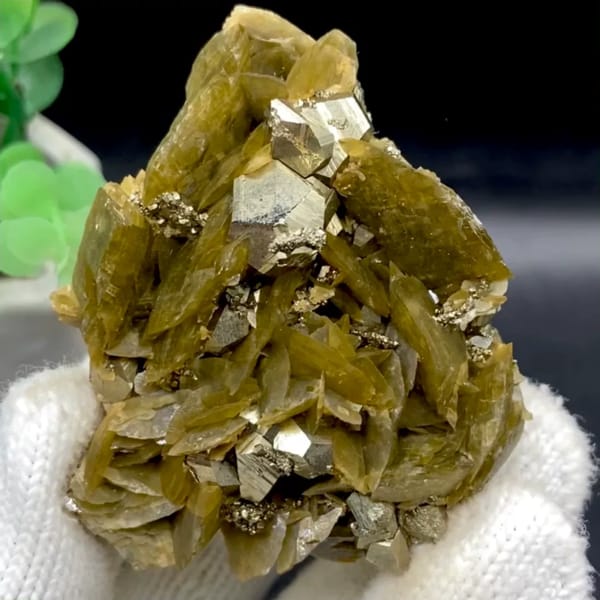
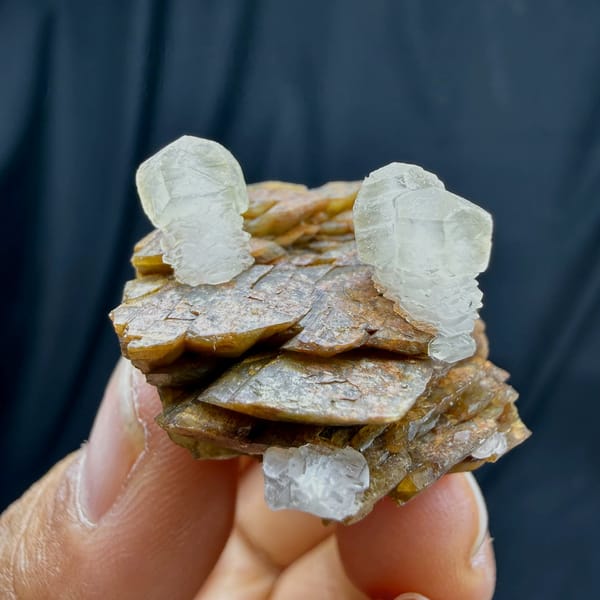
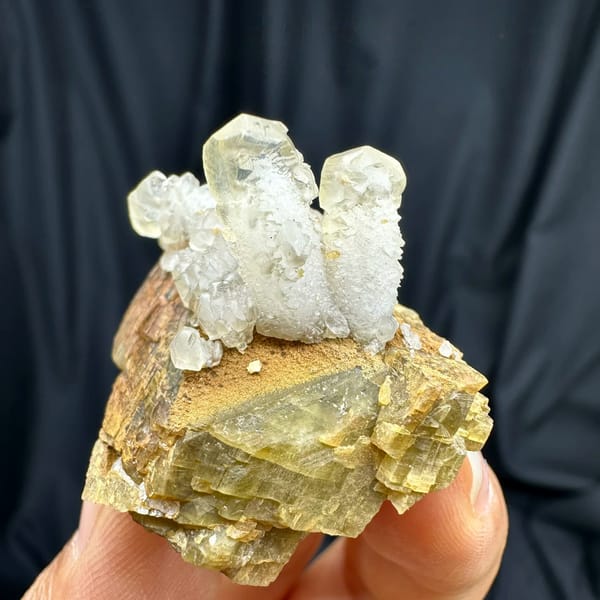
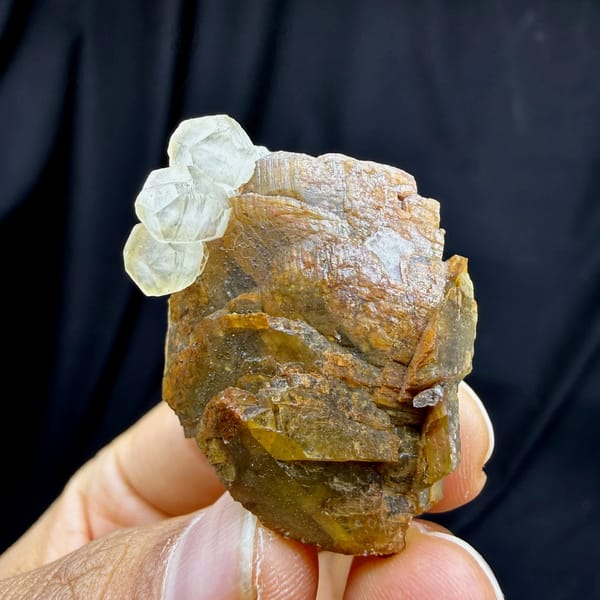
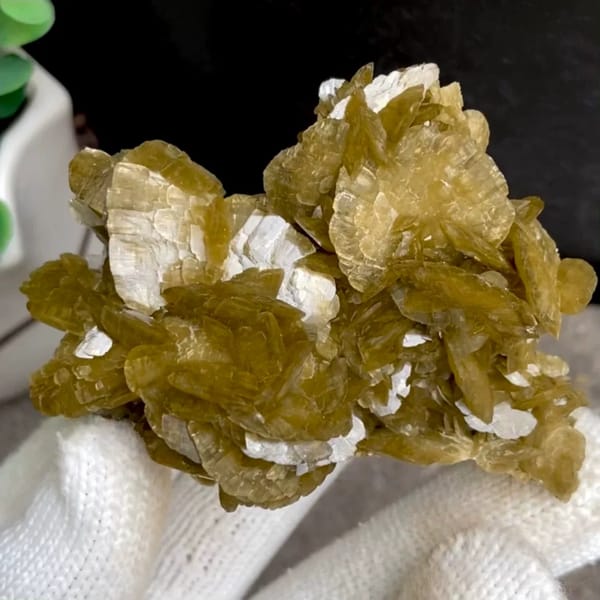
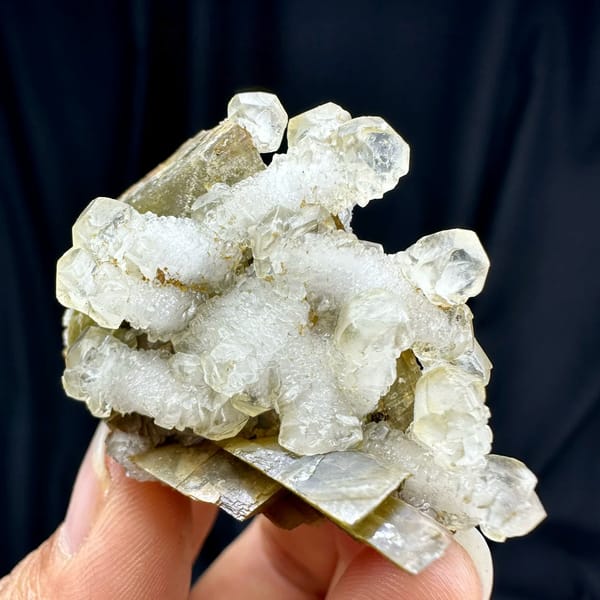
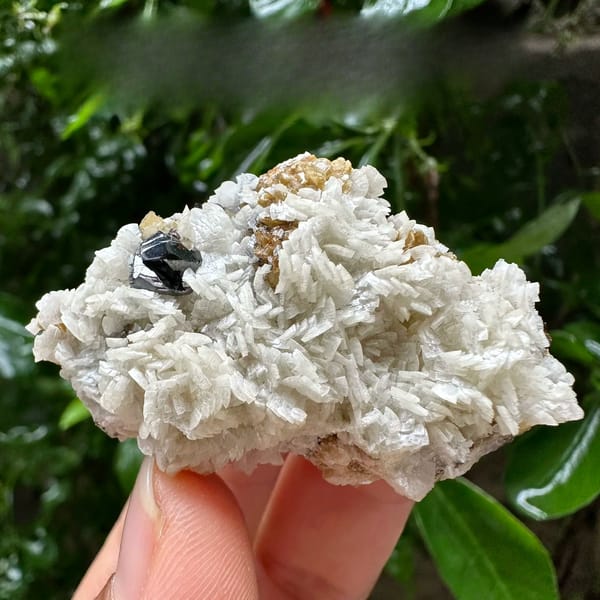
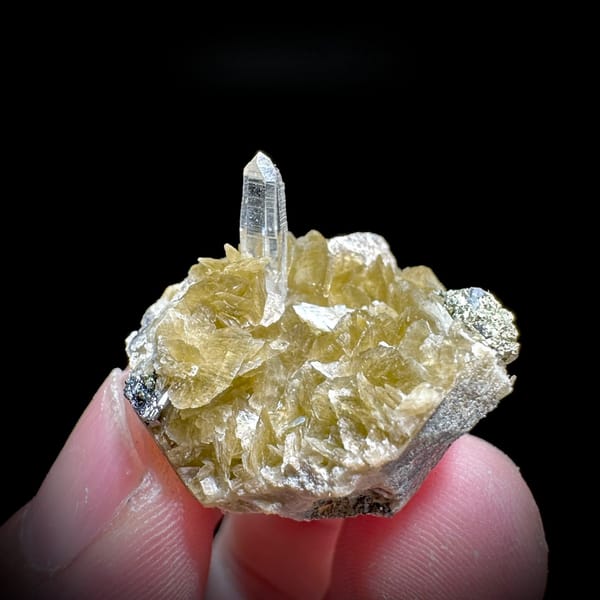
Siderite (FeCO₃) is the iron-rich member of the calcite-group carbonate trio (with calcite, magnesite, rhodochrosite). It forms in sedimentary banded iron formations, hydrothermal veins, and carbonate-replacement zones.
Siderite (FeCO₃) is the iron-rich member of the calcite-group carbonate trio (with calcite, magnesite, rhodochrosite). It forms in sedimentary banded iron formations, hydrothermal veins, and carbonate-replacement zones. Collector specimens favor sharp tan-to-honey rhombohedral crystals, often with iridescent oxidation rinds. The Mt. Saint-Hilaire (Quebec) and Panasqueira (Portugal) localities supply gem-grade material.