
The Setting
Anhui's mineral wealth is broader than its collector fame — 140 deposits discovered, 38 of them ranking among China's largest by reserves — with copper mining concentrated in the Chizhou and Lujiang areas along the middle-lower Yangtze metallogenic belt, one of China's great copper corridors.
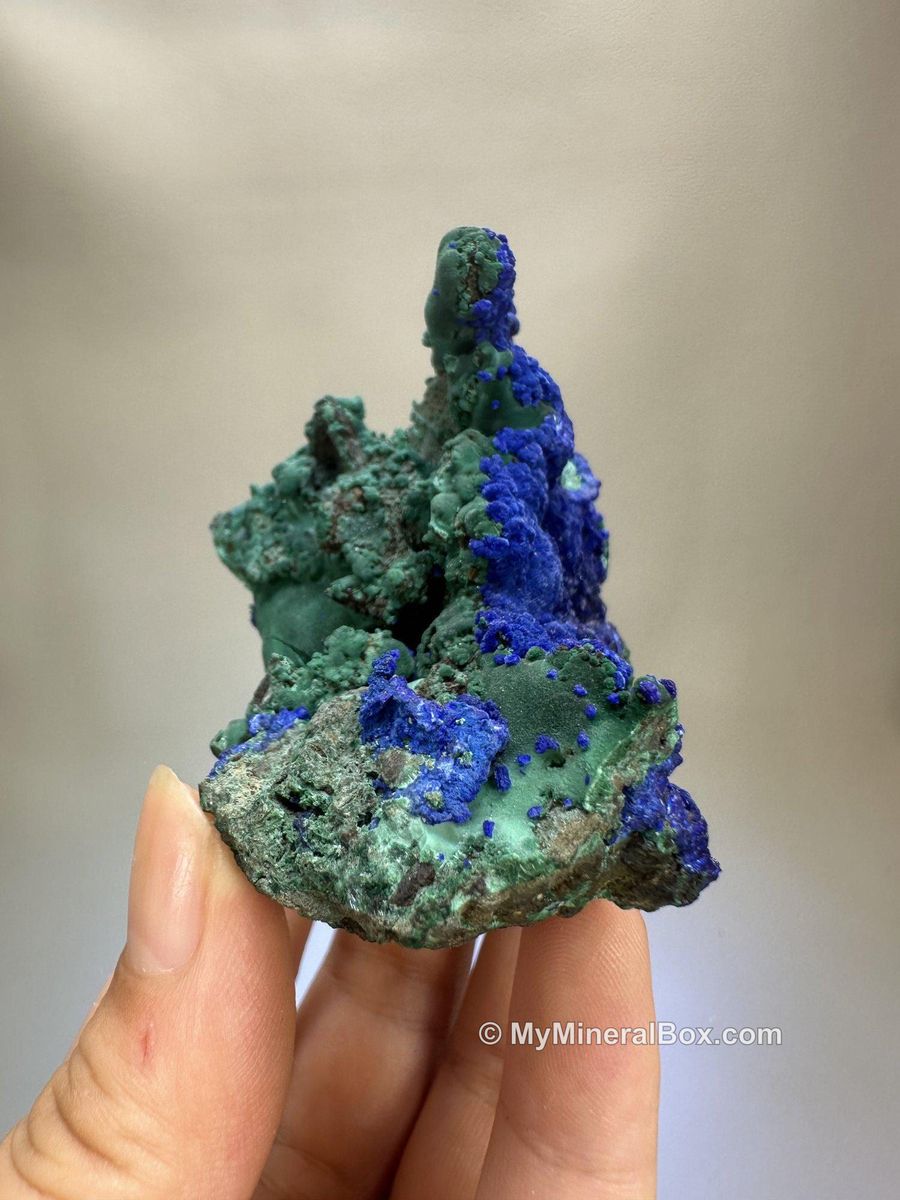
The Liufengshan copper mine in the Guichi district, Chizhou Prefecture, works a skarn-type copper deposit. In its oxidized zones, descending, carbonate-rich groundwater reacted with copper sulfides to bloom into the two classic secondary copper carbonates: azurite (blue) and malachite (green).
The Specimens
The Liufengshan locality record says the mine gained international mineral-market recognition around 2002 for collectible azurite and malachite. Its occurrence record and gallery document deep-blue azurite with associated green malachite; they do not establish a single finest pocket or a 30 cm size ceiling.
Chinese azurite has deep historical roots: azurite clusters were among the specimens the Beijing Geological Museum showed at Tucson in 1980, and one of those azurites was famously traded for a significant American gold specimen — an early transaction in what became the China mineral boom.
Collector's Notes
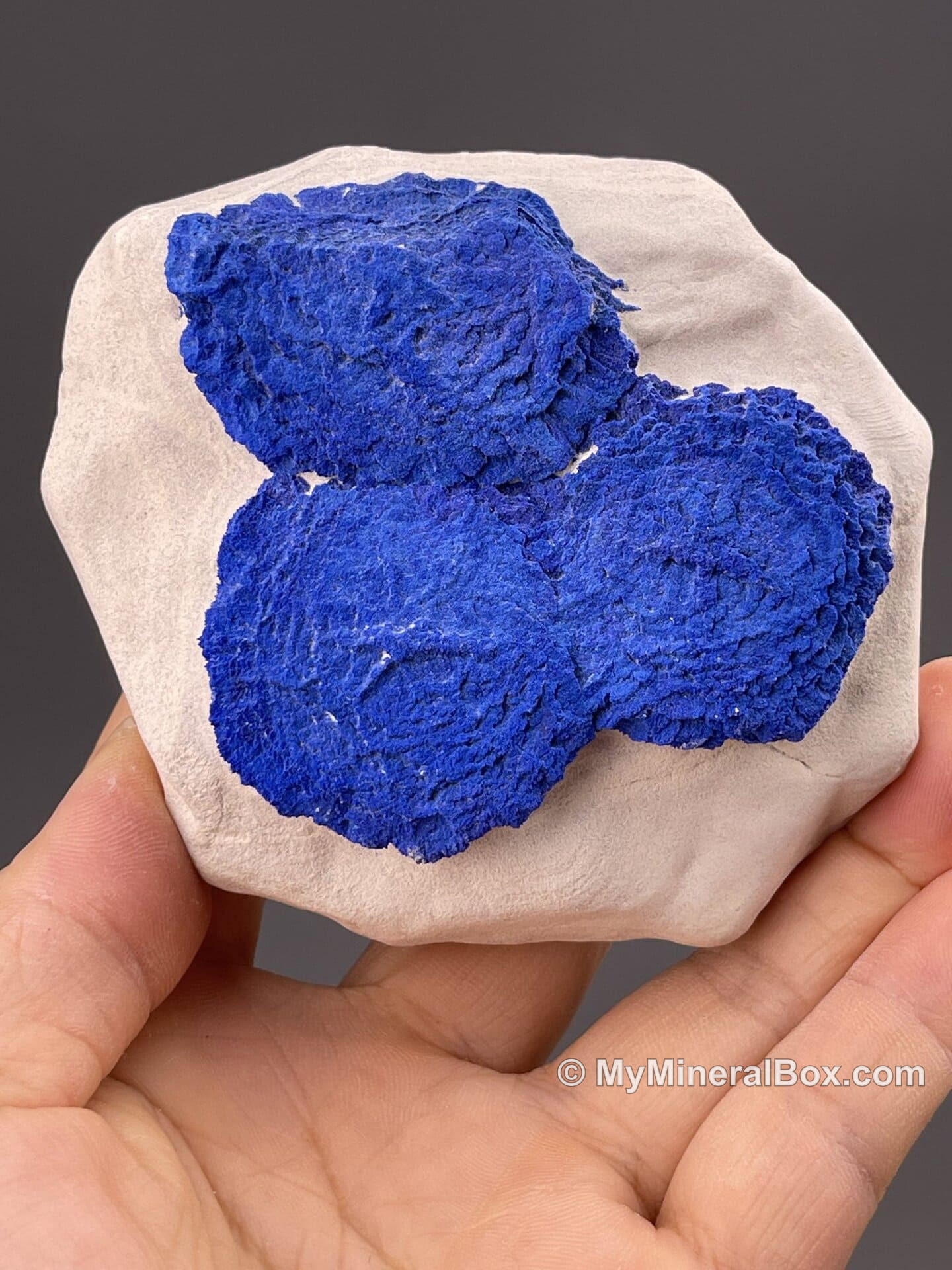
Azurite's enemies are light, heat and abrasion: prolonged strong light dulls the velvet luster, and the bladed crystals chip easily. Display away from direct sun and handle by matrix only. Since Liufengshan's main production window has passed, supply is finite; sharp, undamaged rosettes with rich color — especially with contrasting malachite — are the pieces to pursue. Compare against the world standards (Tsumeb, Chessy, Milpillas) and Liufengshan holds its head high; among Chinese localities it remains the benchmark.
---
Recent Developments (as of 2026)
Anhui's Liufengshan remains one of the more consistently available classic Chinese copper-carbonate localities. Its sword-shaped azurite rosettes with globular green malachite continue to appear through dealer and auction channels into the 2020s, and the mine is still well documented — but production is incremental rather than a fresh discovery, so there is no new-pocket windfall to wait for. The practical implication is simple: sharp, undamaged, richly colored rosettes — especially with contrasting malachite — are the pieces to prioritize while a steady supply of good material still exists.
Sources and further reading
All text is original to MyMineralBox, based on our own sourcing experience and locality documentation. Image credits are shown with each photo.
Frequently asked questions
What is Liufengshan azurite?
Deep royal-blue azurite in bladed rosettes, often with green malachite, comes from the Liufengshan copper mine in Chizhou, Anhui, a noted Chinese azurite locality.
How should azurite be stored?
Keep azurite out of prolonged strong light, which dulls its velvet luster, and handle it by the matrix, since the bladed crystals chip easily.