
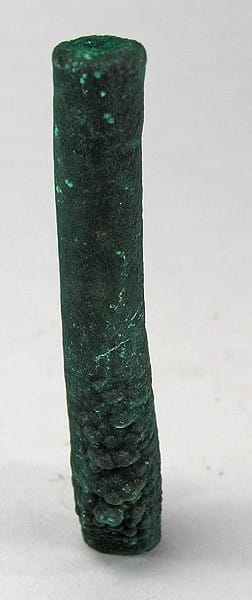
Shilu: The Classic 1980s Copper Minerals
The Shilu copper mine in Yangchun County was among the very first Chinese localities to reach Western collectors. Its velvety malachite — botryoidal, banded, sometimes in bold sculptural masses over 30 cm — and rich blue azurite came out primarily in the mid-1980s, the founding years of the Chinese specimen trade. A Shilu azurite was exhibited by the Beijing Geological Museum at the historic 1980 Tucson show, the event that introduced Chinese minerals to the world.
Because the great production window closed decades ago, Shilu pieces carry the "early Chinese classic" premium: they are documents of collecting history as much as mineral specimens.
Pingtouling: China's Mimetite Moment
In the early 2000s, the Pingtouling mine in Liannan County, Qingyuan Prefecture, delivered brilliant golden-yellow to orange mimetite in botryoidal crusts and crystal groups on dark limonite matrix. Contemporary Mineralogical Record coverage described the mimetite as world-class calibre. The lead-arsenate formed, like Guangxi's pyromorphite, in the oxidized zone of a lead deposit. Production was concentrated in the early-to-mid 2000s, making the material a defined, collectible chapter.
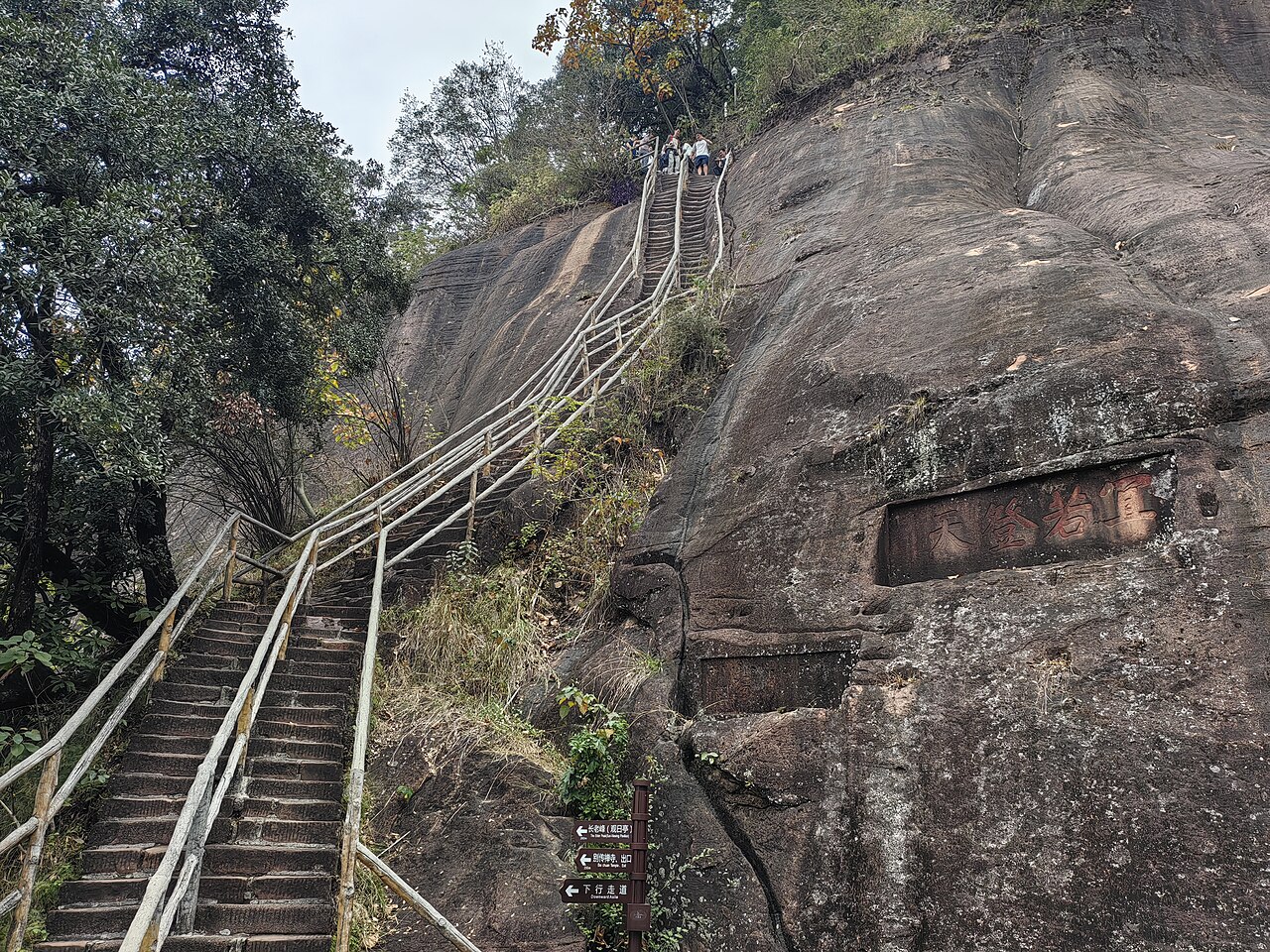
Jinlong Hill: Red Quartz
From Jinlong Hill in Longchuan County comes one of China's most distinctive quartzes: crystal clusters colored brick-red by microscopic hematite inclusions, often with separate hematite crystals on matrix. Discovered in the mid-1990s, these "red quartz" specimens offer collectors an unusual variation on the world's most common collectible mineral — color from within, not coating on the surface (though surface-coated examples exist too; the included material is the prize).
Also of Note
The Yangshan and Ruyuan districts have produced specimens for the market, and the province's Iceland spar (optical calcite) deposits rank among China's most significant. Guangdong's proximity to Hong Kong made it a natural early corridor for the specimen trade — many "first wave" Chinese minerals passed through here on their way west.
Collector's Notes
For Shilu material, provenance is the game: 1980s pieces with old labels or documented collection history command real premiums. Mimetite is soft and bruise-prone; check the crust surfaces under magnification. With red quartz, distinguish genuine hematite-included crystals from surface-stained or artificially dyed imitations — natural inclusion color is distributed within crystal growth zones, not concentrated in crevices.
---
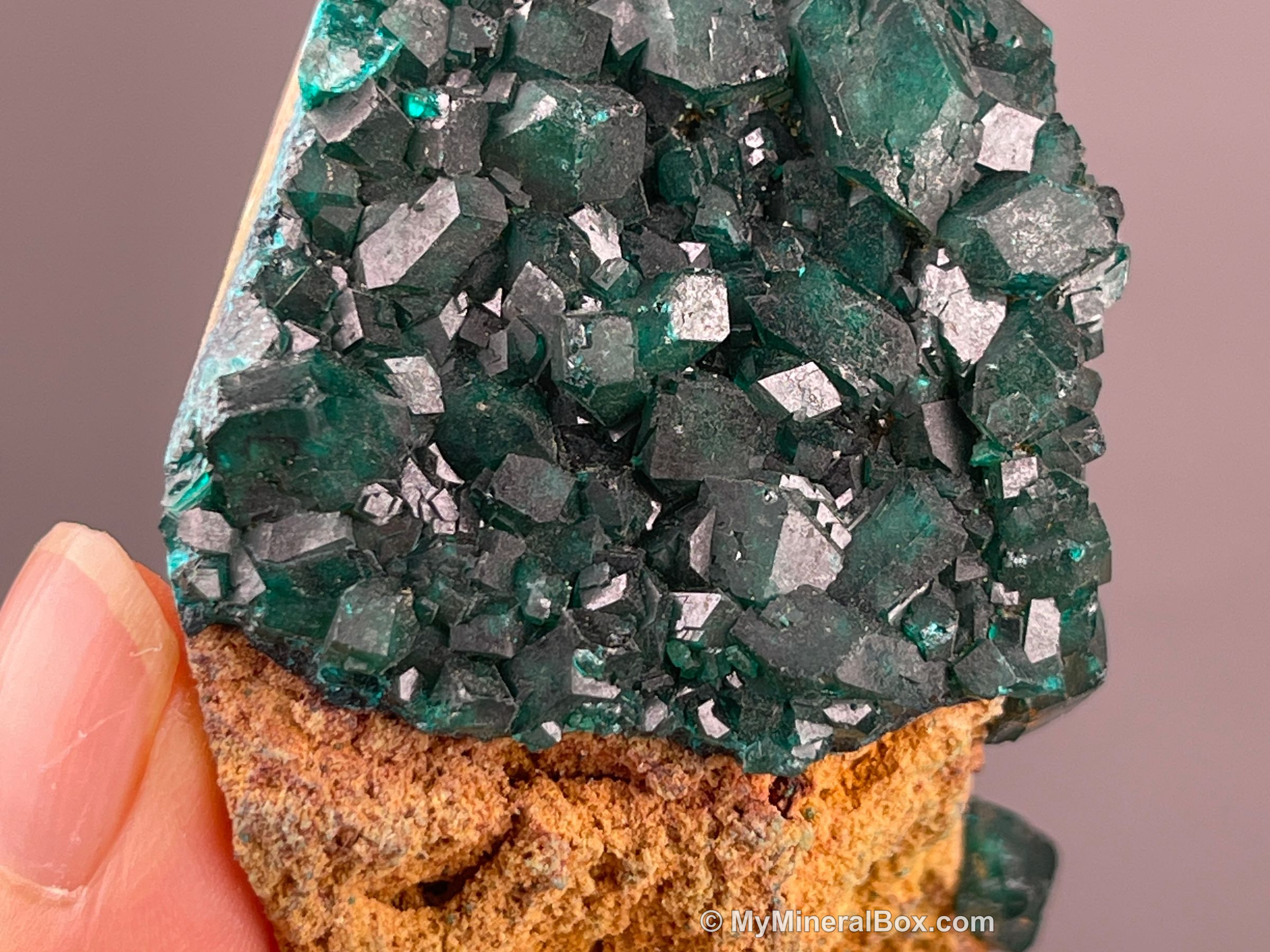
Recent Developments (as of 2026)
The Shilu locality record describes the open pit as flooded and abandoned in 1998 and documents azurite and malachite. Claims that a particular specimen is old stock still require its original label or collection history; appearance alone cannot date it. Pingtouling is regarded as exhausted, with current sales recirculating material from the early-2000s pockets. The Jinlong Hill red quartz remains the exception, still worked by local farmers from iron-rich veins and steadily, if quietly, available.
Sources and further reading
Pingtouling history and quality are checked against the Mineralogical Record's July 2005 report, which calls the mimetite world-class calibre, and the journal's 2007 Pingtouling mine article. Image credits are shown with each photo.
Frequently asked questions
What minerals come from Guangdong's Shilu mine?
The Shilu mine in Yangchun produced classic deep-blue azurite and velvety malachite, among the first Chinese minerals to reach the West in the mid-1980s. Since about 2019 it has been re-marketed for sculptural chatoyant malachite from old stock.
Is Pingtouling mimetite still found?
No new production — Pingtouling's golden mimetite dates to 2002–2004 pockets and is considered exhausted, so current sales recirculate classic pieces.