
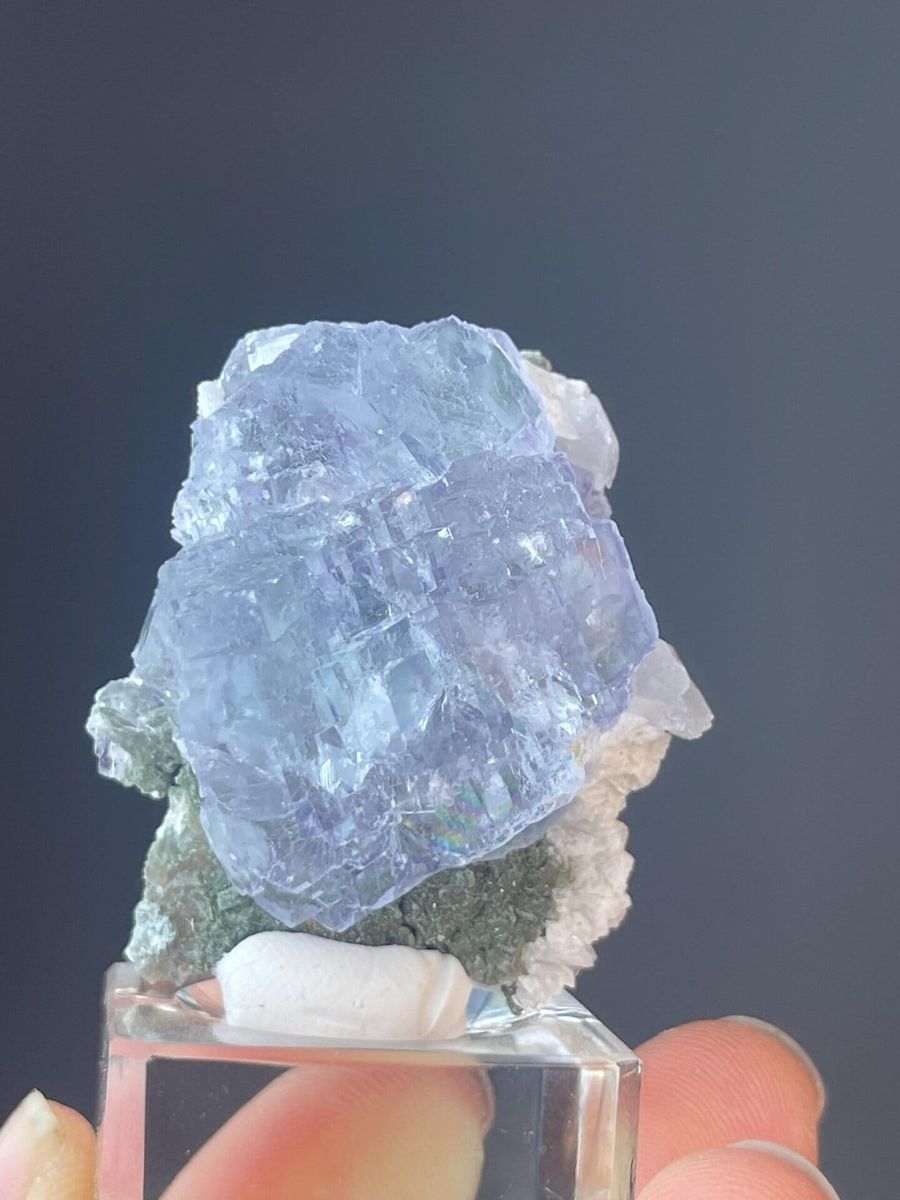
What Gives Fluorite Its Color
Pure fluorite — calcium fluoride — is colorless. Every shade you see comes from tiny imperfections in the crystal rather than a change in the basic recipe, which is why one pocket can produce cubes in several colors at once. Three mechanisms do most of the work:
- Color centers. Natural background radiation from uranium and thorium in the surrounding rock knocks fluoride ions out of the lattice, leaving electron traps that absorb certain wavelengths of light. These "F-centers" are the main reason fluorite turns purple.
- Rare earth elements. Trace amounts of elements such as yttrium, cerium, samarium, and erbium slip into the structure and tint it. Yttrium-linked centers push fluorite toward blue; cerium and samarium are tied to green.
- Fluid inclusions and other trace impurities, which can shift or muddy a color.
Because the coloring is so delicate, some of it is only skin-deep or arranged in layers — the color zoning and phantoms that Yaogangxian fluorite is famous for.
Purple Fluorite: The Classic, and the Most Common
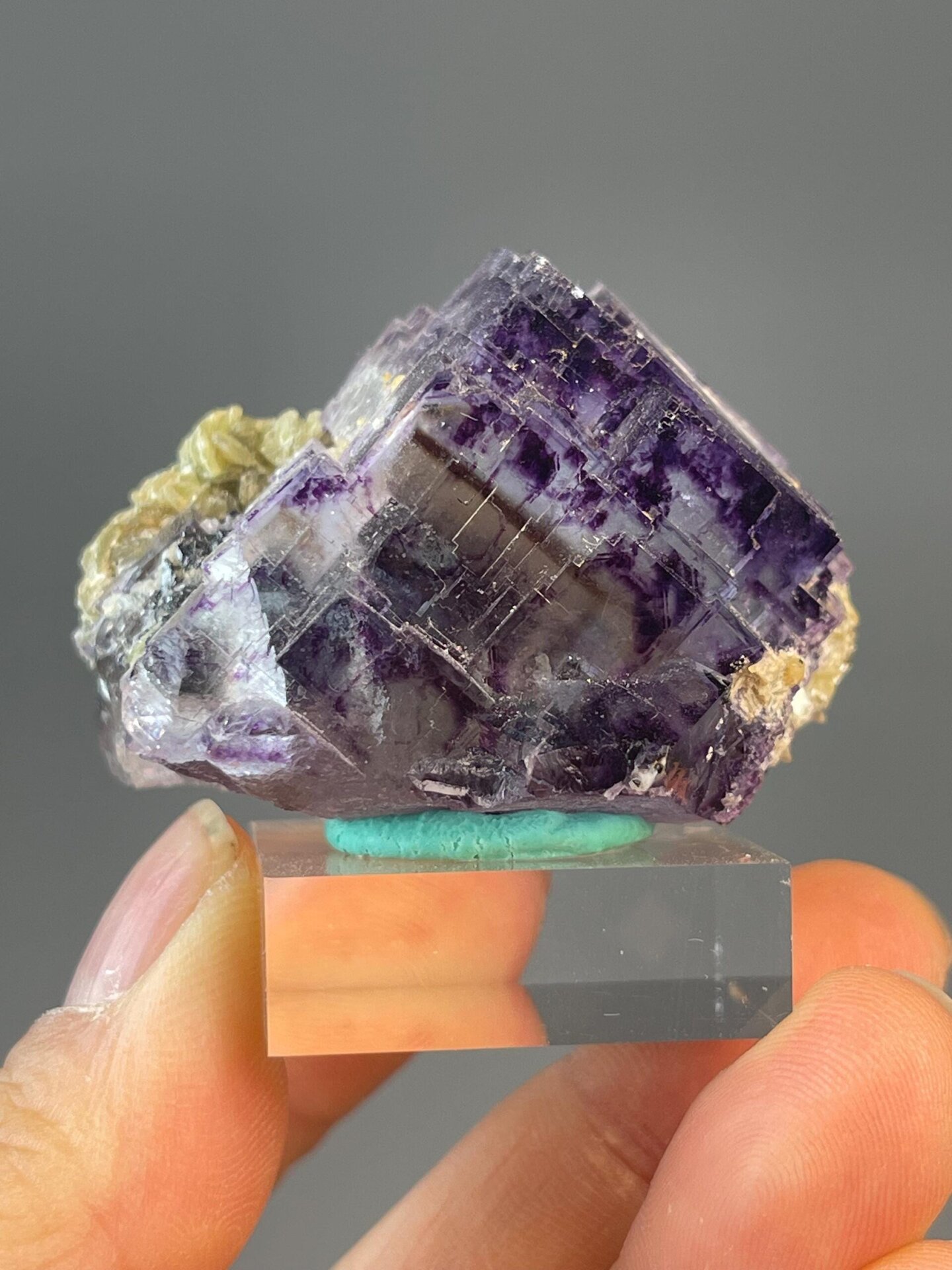
Purple is the color most people picture when they hear "fluorite," and for good reason: it is the most common color worldwide and the one that reaches the deepest, most amethyst-like saturation. The violet comes mainly from radiation-induced color centers, and classic purple fluorite shows up everywhere from Illinois in the United States to the Yaogangxian Mine in Hunan, China, where rich purple cubes perch on quartz and sulfides.
Common does not mean cheap. A purple fluorite with glassy clarity, sharp cube edges, and a well-defined phantom can be worth far more than a rare-colored but dull piece — with purple, quality does the heavy lifting on value. One caution: many purple fluorites are photosensitive and slowly fade in strong light, so we keep ours out of direct sun.
Green Fluorite: Common, but Quick to Fade
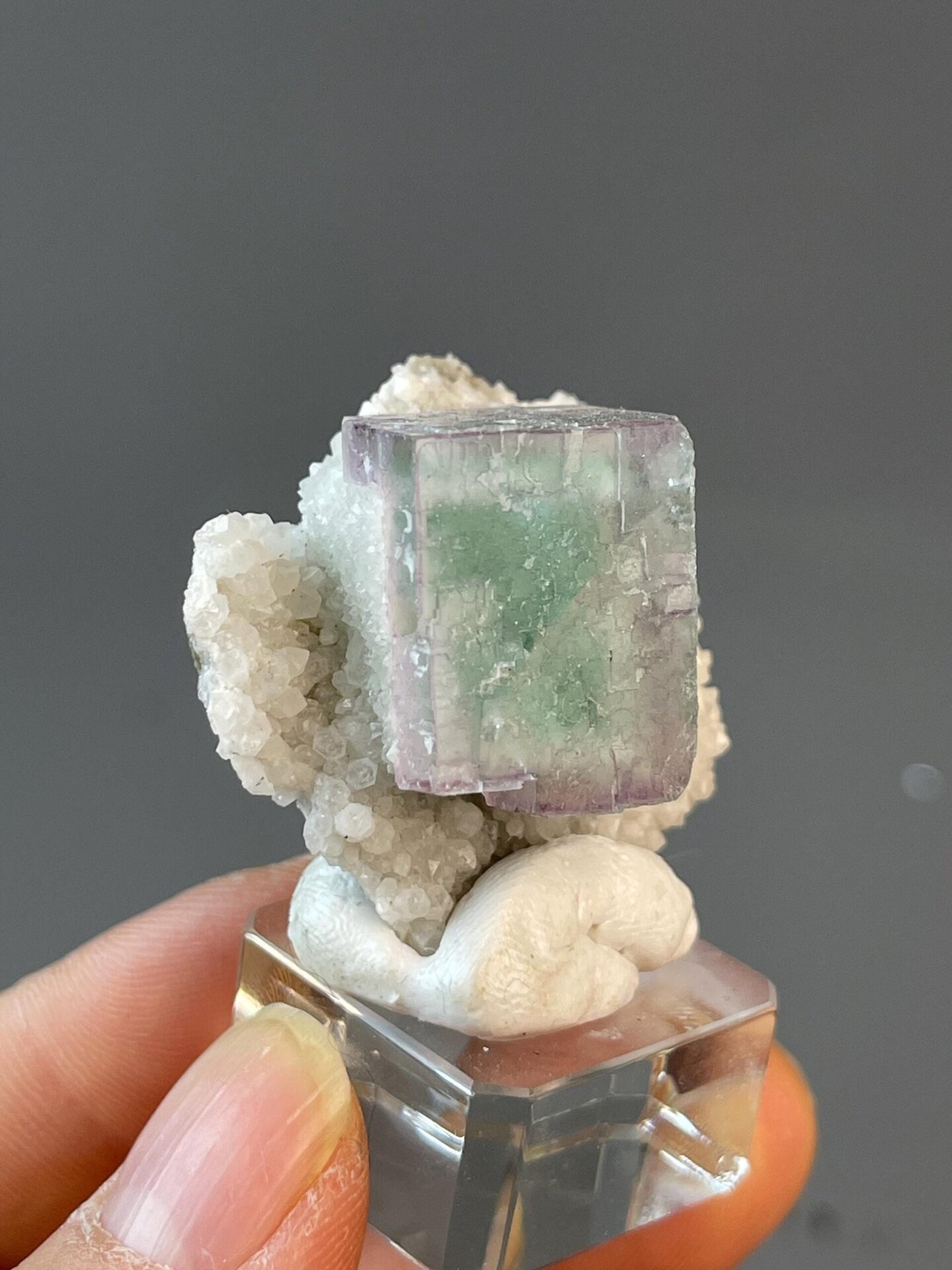
Green fluorite is also relatively common and, to many eyes, the most soothing of the three. Its color is linked to rare earth substitutions — cerium and samarium centers in particular. Green ranges from pale mint to deep forest, and it often appears alongside purple in the same specimen, giving the layered blue-green-purple "open window" fluorites that collectors prize.
The practical catch with green is stability. Green is among the most light-sensitive fluorite colors and can lose its punch after prolonged exposure to sun or UV — sometimes within weeks on a bright windowsill. It is common in the ground, but a vivid, well-kept green is less common on a shelf years later, which is worth remembering when you buy.
Blue Fluorite: The Rarest of the Three
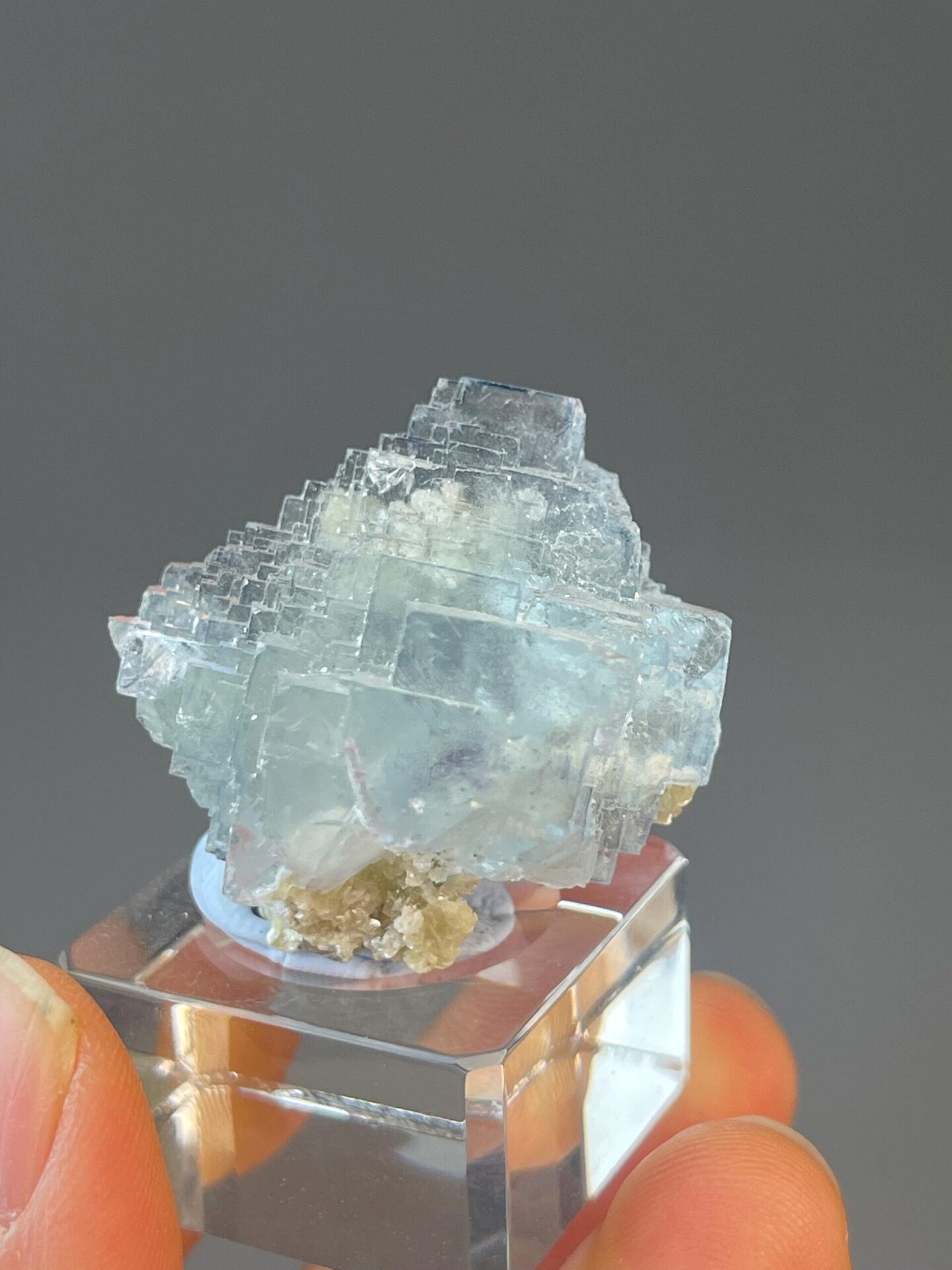
True blue fluorite — a clean sky-blue or deeper blue that is not just purple leaning cool — is genuinely the least common of the trio. The blue is generally tied to yttrium-associated color centers, and good examples are prized precisely because they turn up far less often than purple or green. At Yaogangxian, blue tends to appear as the outer zone or "window" of a phantom, wrapping a purple core, more often than as a solid blue crystal.
Be a little skeptical of intensely uniform, candy-bright blue. Some material on the market is dyed or coated, and blue is a favorite target for it. If a color looks too even and too saturated to be real, ask questions, and lean on trusted localities and dealers.
So Which Fluorite Is Actually Rarest?
Ranking these three by how often they occur, from most to least common: purple, then green, then blue. But two things complicate that tidy list.
First, the rarest fluorite colors overall are not on it. Pink (rose) fluorite from high Alpine pockets, along with black and truly water-clear colorless material, is scarcer than any of the three here, and strong yellow and color-change fluorite are uncommon too.
Second, hue is only one ingredient of rarity and value. A gem-clear, undamaged crystal with sharp form, striking color zoning, or a crisp phantom is "rare" in the way that actually moves prices — regardless of whether it is purple, green, or blue. The most sought-after Yaogangxian specimens are usually the multi-colored ones that show all three at once.
What This Means When You're Buying
A few takeaways we give collectors:
- Do not pay a premium for "blue" alone. Confirm it is natural, and judge the whole crystal — clarity, form, matrix, and condition — not just the color name.
- Multi-color phantoms (blue-to-purple, green-to-purple) usually offer the most visual interest per dollar and are a hallmark of top Yaogangxian material.
- Protect what you buy. Keep purple and especially green fluorite out of direct sunlight so the color you paid for is still there in a decade.
- Buy on locality and clarity. A well-documented piece from a classic mine holds interest and value better than a mystery specimen in a rare-sounding color.
Frequently asked questions
What is the rarest color of fluorite?
Pink (rose) fluorite is usually considered the rarest, along with black and truly colorless material. Among the three most-collected colors — purple, green, and blue — blue is the least common. Strong yellow and color-change fluorite are also uncommon.
Is blue fluorite rare?
Relatively, yes. A clean, genuinely blue fluorite is rarer than purple or green, which is part of why collectors seek it. Its blue usually comes from yttrium-related color centers. Watch out for dyed or coated stones sold as natural blue.
Why is some fluorite purple and some green?
Different causes. Purple comes mainly from radiation-induced color centers (F-centers), while green is tied to rare earth elements such as cerium and samarium. Because pure fluorite is colorless, a single crystal can even show both in zoned bands.
Does green fluorite fade in sunlight?
It can. Green is among the most light-sensitive fluorite colors, and prolonged sun or UV can dull it — sometimes noticeably within weeks. Display green (and purple) fluorite in indirect light to keep the color strong.