
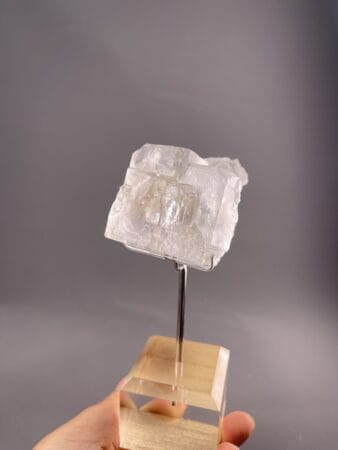
The safe defaults
Soft natural-bristle brush. Distilled water (tap water leaves mineral residue). A jeweler's loupe or USB microscope to inspect. Work over a soft towel. Brush gently in the natural direction of any fragile crystal faces. Air-dry; never towel-dry. This handles 80% of dust and clay without risking damage.
Ultrasonic cleaners
Useful for hard minerals (quartz, beryl, topaz, garnet, corundum) with NO cleavage and NO fluid inclusions. Fluorite, calcite, soft sulfides, soft phosphates, and anything brittle or cleavable should NEVER go in an ultrasonic. The vibration propagates through cleavage planes and shatters them from inside.
Acid cleaning — proceed with extreme caution
Oxalic acid (used dilute, in distilled water, at low temperature) removes iron-oxide staining from quartz and silicate matrices. NEVER use it on calcite, fluorite, dolomite, aragonite, malachite, azurite, scheelite, or any mineral containing carbonate or fluoride — they dissolve. HCl is reserved for professional preparators on quartz specimens. Acid mistakes are irreversible; if you're unsure, send the piece to a paid preparator.
Loosening clay and matrix dirt
Most field-fresh specimens carry packed red clay or carbonate mud rather than simple dust. Soak the piece in a bath of distilled water for several hours to a day so the clay softens before you touch it — patience here prevents the scratched faces that come from scrubbing dry grit. After soaking, lift loose mud with a soft brush, a wooden toothpick, or a gentle stream of water; never dig at crystals with metal tools, which scratch and leave iron stains. Stubborn clay in deep vugs often responds to repeated soaks rather than force. For delicate druzy or acicular crystals, let water do the work and accept that some matrix dirt is safer left in place than risked.
A common safe additive is a little dish soap in the soak water to break surface tension; rinse thoroughly in distilled water afterward so no film dries on the crystals.
Species-specific cautions
Match the method to the mineral, because one routine does not fit all. Halite, sylvite, and other soluble salts must never touch water — clean them dry with a soft brush only, or you will literally wash the specimen away. Gypsum (selenite), and soft sulfates dissolve slowly and scratch easily, so keep them dry and handle by the matrix. Fluorite's perfect octahedral cleavage means a sharp knock or ultrasonic energy can pop a cleavage step, so treat it gently. Light-sensitive species such as realgar and proustite degrade in bright light regardless of cleaning, so work fast and store them dark. Pyrite and marcasite should be dried completely after any wash, because trapped moisture feeds decay. When a piece combines several species, default to the gentlest method any one of them requires.
Iron-stain removal and when to call a preparator
Reddish iron-oxide staining on quartz and hard silicate matrix is the classic candidate for chemical cleaning, and oxalic acid is the standard hobby choice when used dilute, in distilled water, at low temperature, with patience over days. Work outdoors or in strong ventilation, wear nitrile gloves and eye protection, never heat the solution to boiling, and neutralize and dispose of spent acid responsibly rather than down a drain. Crucially, confirm there are no carbonate, fluoride, phosphate, or soft accessory minerals on the piece first — a single calcite crystal or a fluorite contact will be eaten. If the specimen is valuable, irreplaceable, or you are unsure what every mineral on it is, stop and send it to a professional preparator; a clean piece is worth far more than a damaged one.
Frequently asked questions
Can I clean mineral specimens with tap water?
Use distilled water instead of tap water, because tap water can leave a mineral film or spotting as it dries. For most specimens a distilled-water soak plus a soft brush is all you need. Avoid water entirely on soluble species like halite.
Is it safe to put minerals in an ultrasonic cleaner?
Only hard minerals with no cleavage and no fluid inclusions — quartz, beryl, topaz, garnet, corundum — are reasonably safe. Never ultrasonic fluorite, calcite, soft sulfides, soft phosphates, or anything brittle or cleavable, because the vibration travels through cleavage planes and can shatter the crystal from inside. When in doubt, clean by hand.
Which minerals will acid dissolve?
Acids dissolve carbonates and fluorides — calcite, dolomite, aragonite, fluorite, malachite, azurite, scheelite, and similar species — so never expose them to oxalic acid or HCl. Acid cleaning is mainly for removing iron stain from quartz and hard silicates, and only after you confirm no soluble accessory minerals are present. Acid mistakes are irreversible.
How do I clean clay off a specimen without scratching it?
Soak the piece in distilled water for several hours so the clay softens, then lift it away with a soft brush, wooden toothpick, or a gentle water stream. Never scrape dry grit with metal tools, which scratch faces and leave iron marks. Repeat soaks are safer than force for clay packed in deep vugs.