
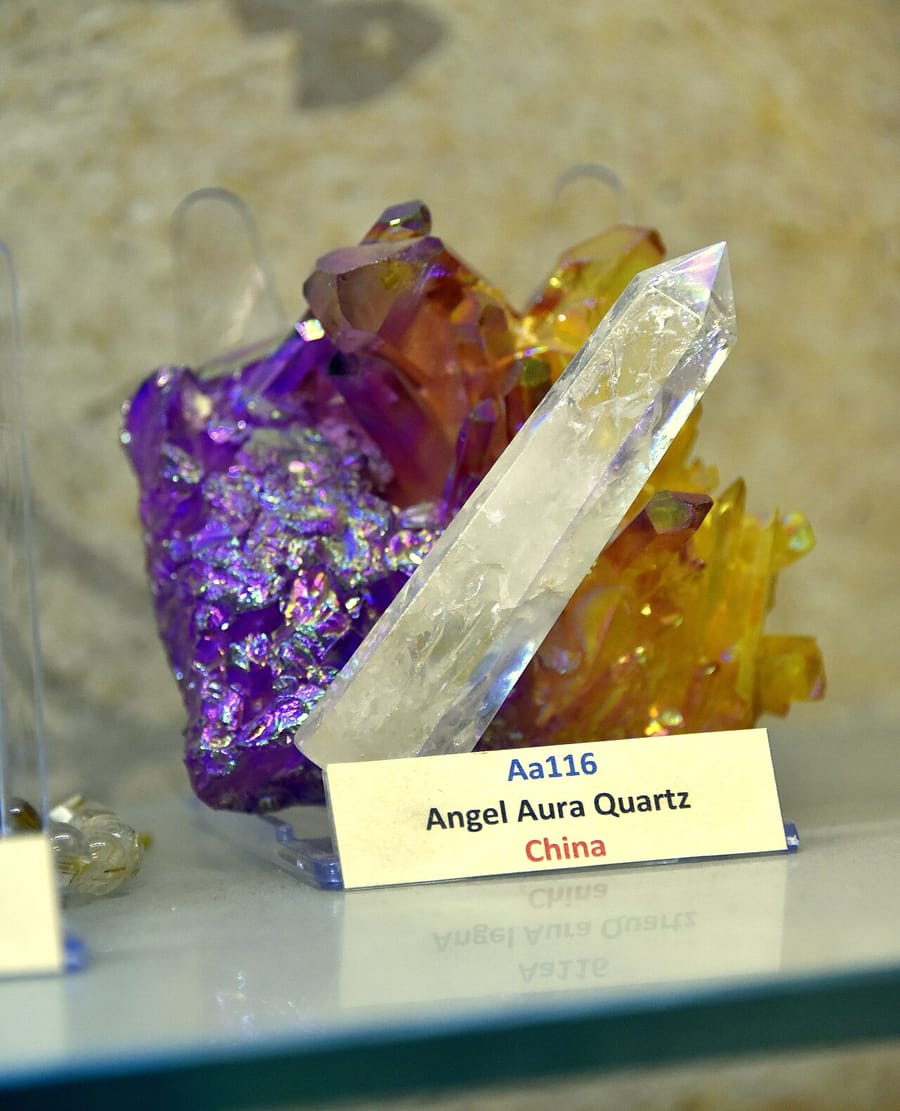
What "natural vs treated" really means
In mineral collecting, "natural" usually means the specimen formed in the ground and reaches you essentially as it came out, aside from ordinary cleaning. "Treated" or "enhanced" covers a range of human interventions — some completely routine and accepted, others that should always be disclosed.
The important point is that "treated" is not a single thing, and not all treatment is deception. Trimming a specimen to a better shape is normal practice; secretly dyeing a pale crystal to fake color is not. Knowing the difference is what lets you buy with confidence.
Routine, widely-accepted preparation
Cleaning: most specimens are washed, and many are cleaned with water, ultrasonic baths, or mild acids to remove clay, iron staining, or carbonate films. This is standard preparation and is not normally considered "treatment."
Trimming: reducing excess host rock so the specimen displays better. Routine and expected.
These steps are part of normal specimen preparation worldwide. They are not unique to Chinese material, and they do not make a specimen less natural in the way collectors care about.
Interventions that should always be disclosed
Repair and restoration: broken crystals reassembled, or missing pieces filled or rebuilt. Repair is common and acceptable when disclosed; undisclosed repair is the issue.
Stabilization: fragile or soft material consolidated with a resin or glue so it survives handling.
Coating, dyeing, or color treatment: applying a surface coating for shine or "flash," or altering color artificially.
Heat or irradiation: used on some gem materials to change color. Less common for display mineral specimens, but it exists in the broader trade.
None of these are unique to any one country. The right approach for a buyer is the same everywhere: ask, and expect a clear answer.
How to think about Chinese specimens specifically
Most Chinese mineral specimens on the collector market are natural pieces that have simply been cleaned and trimmed, like specimens from anywhere else. Chinese fluorite, scheelite, stibnite, and the other classic species are prized precisely for their natural color and form.
We do not make blanket claims — positive or negative — about treatment we cannot verify, and we would encourage you to be skeptical of anyone who does. The sensible stance is neither "all Chinese material is treated" (untrue) nor "treatment never happens" (also untrue), but simply: ask about the individual specimen in front of you.
Questions worth asking before you buy
Has this specimen been repaired or restored in any way?
Is the color natural, or has it been enhanced, coated, or dyed?
Has it been stabilized or consolidated with any resin or glue?
Is the locality as stated, and how confident is the seller in it?
A seller who answers these plainly — including saying "I'm not certain" where that's the honest answer — is giving you what you need. Evasiveness, not the existence of treatment, is the real warning sign.
Green flags and red flags
Green flags: photos of the actual specimen from multiple angles, a specific named locality, plain disclosure of any repair or cleaning, and reasonable, non-hyped descriptions.
Red flags: only stock or borrowed photos, color that looks too uniform or "painted," prices that seem far below the market for the claimed quality, and answers that dodge direct questions about repair or treatment.
None of these guarantee anything on their own, but together they tell you how much to trust a listing.
How we describe our specimens
We photograph the actual specimen you receive rather than using stock images, tie each piece to a locality page so you can read its regional context, and describe condition in plain language. Where we know a specimen has been cleaned, trimmed, or repaired, we aim to say so.
We use conservative language and avoid treatment claims we can't support. Our goal is simply to give you enough honest information to decide for yourself.
Learn the species — natural color and form
Reference pages for the classic Chinese species, prized for their natural appearance.
Read the localities
A specific, plausible locality is one sign of a well-documented natural specimen.
Frequently asked questions
Are most Chinese mineral specimens treated?
No. Most Chinese mineral specimens on the collector market are natural pieces that have simply been cleaned and trimmed, as is standard for specimens from any country. As anywhere, a minority of material may be repaired, stabilized, or color-treated, so it is always reasonable to ask about an individual specimen.
Is cleaning or trimming a specimen considered "treatment"?
Generally no. Washing, ultrasonic cleaning, mild acid cleaning to remove staining, and trimming excess host rock are routine specimen preparation worldwide and are not normally regarded as treatment. Repair, stabilization, coating, dyeing, heat, and irradiation are the interventions that should always be disclosed.
What should I ask a seller about treatment?
Ask whether the specimen has been repaired or restored, whether the color is natural or enhanced, whether it has been stabilized with resin or glue, and how confident the seller is in the stated locality. A clear, honest answer — including admitting uncertainty — is what you are looking for.
How does MyMineralBox describe treatment and condition?
We photograph the actual specimen you receive, tie it to a locality page, and describe condition in plain language. Where we know a piece has been cleaned, trimmed, or repaired, we aim to say so, and we avoid treatment claims we cannot support.