
Stibnite
Curated by Maggie Liu · Updated:
Stibnite is a sulfide mineral known for its striking metallic crystals, with several world-class Chinese localities.
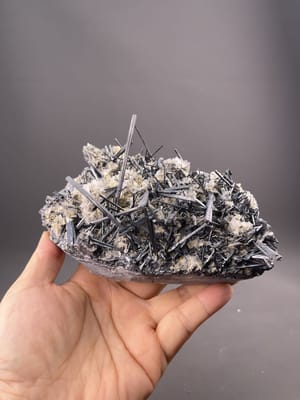
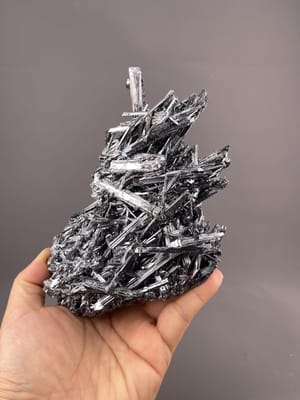
About Stibniteextended article
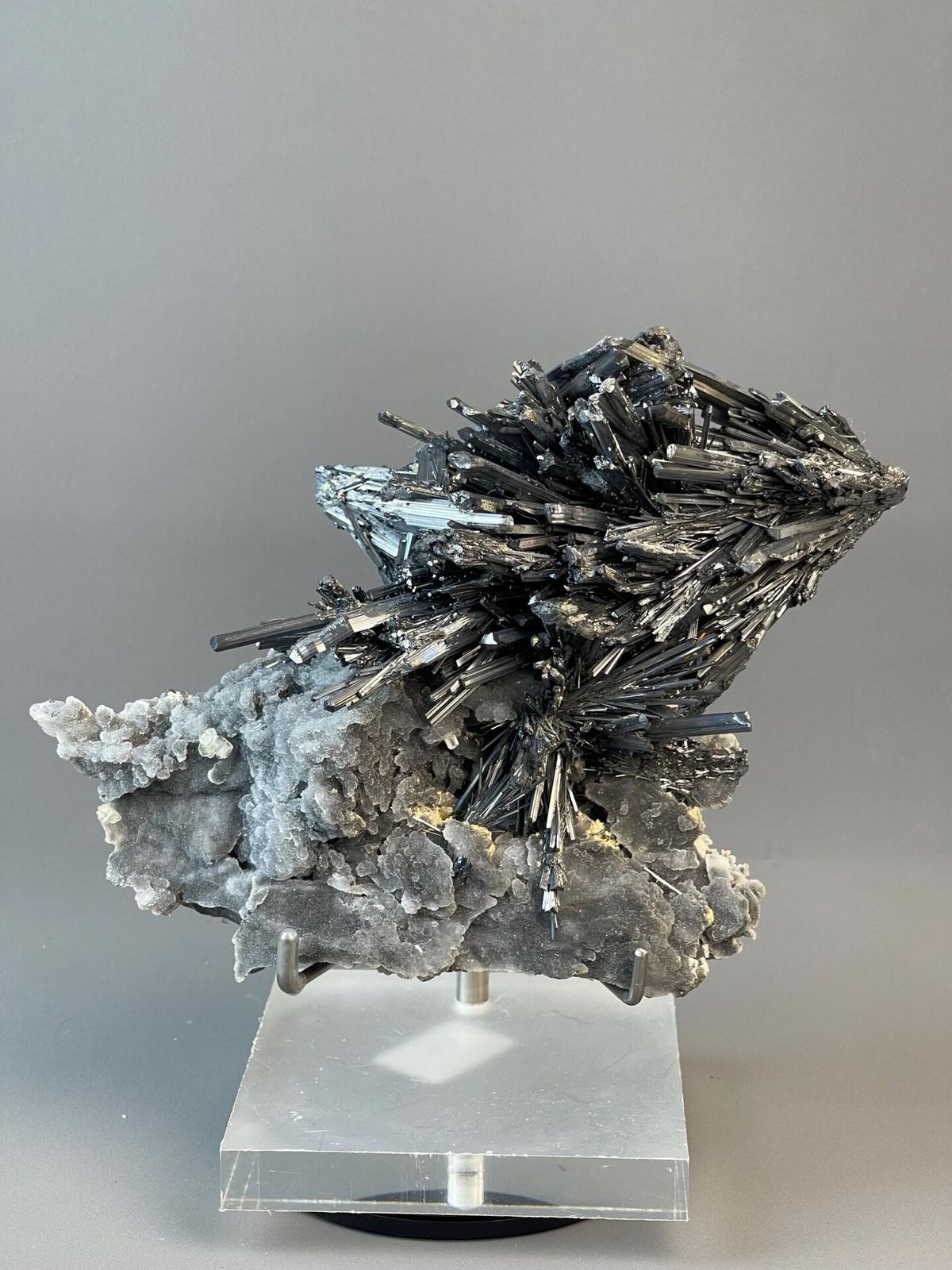
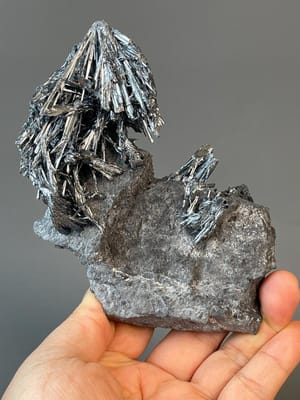
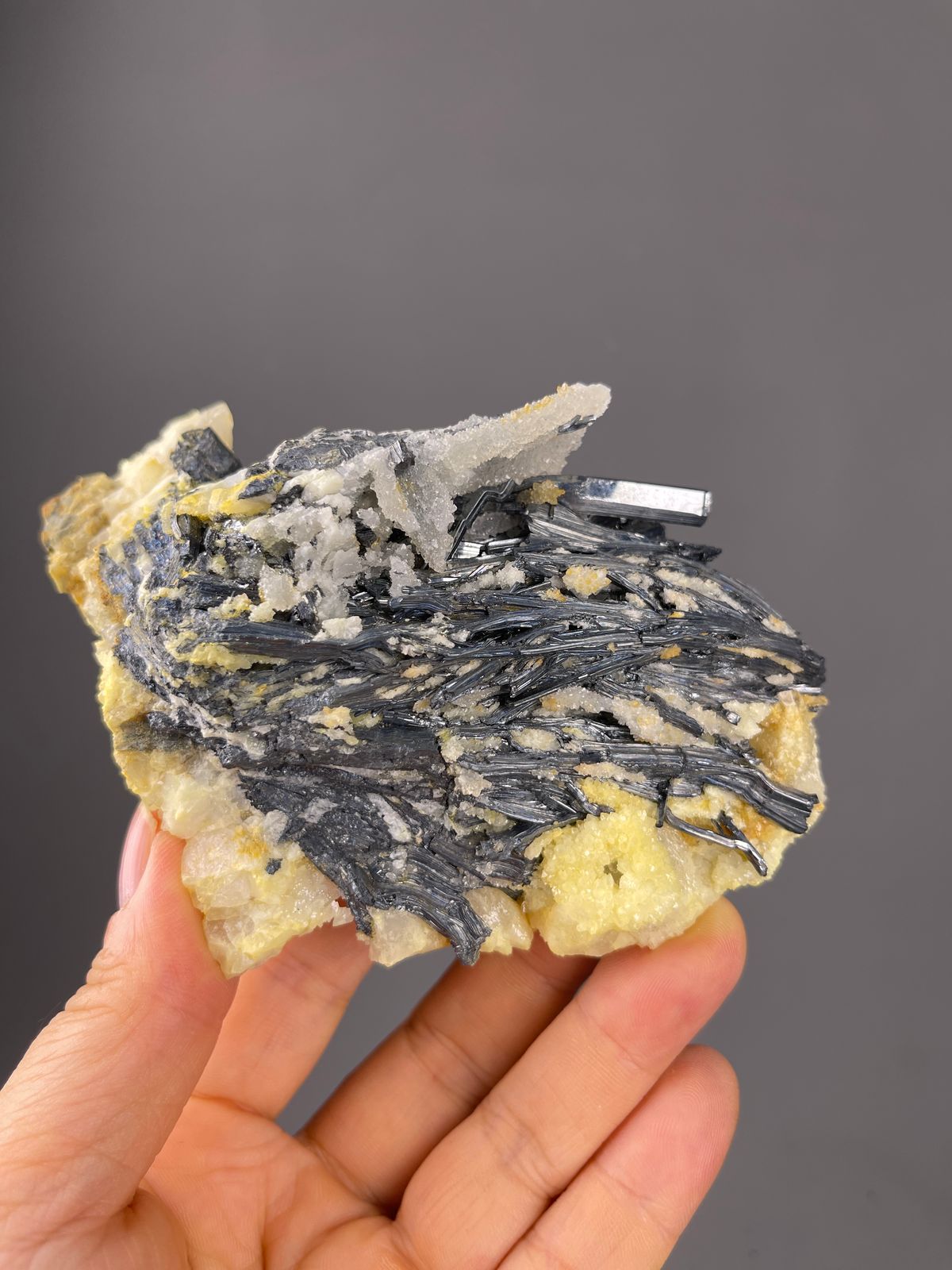
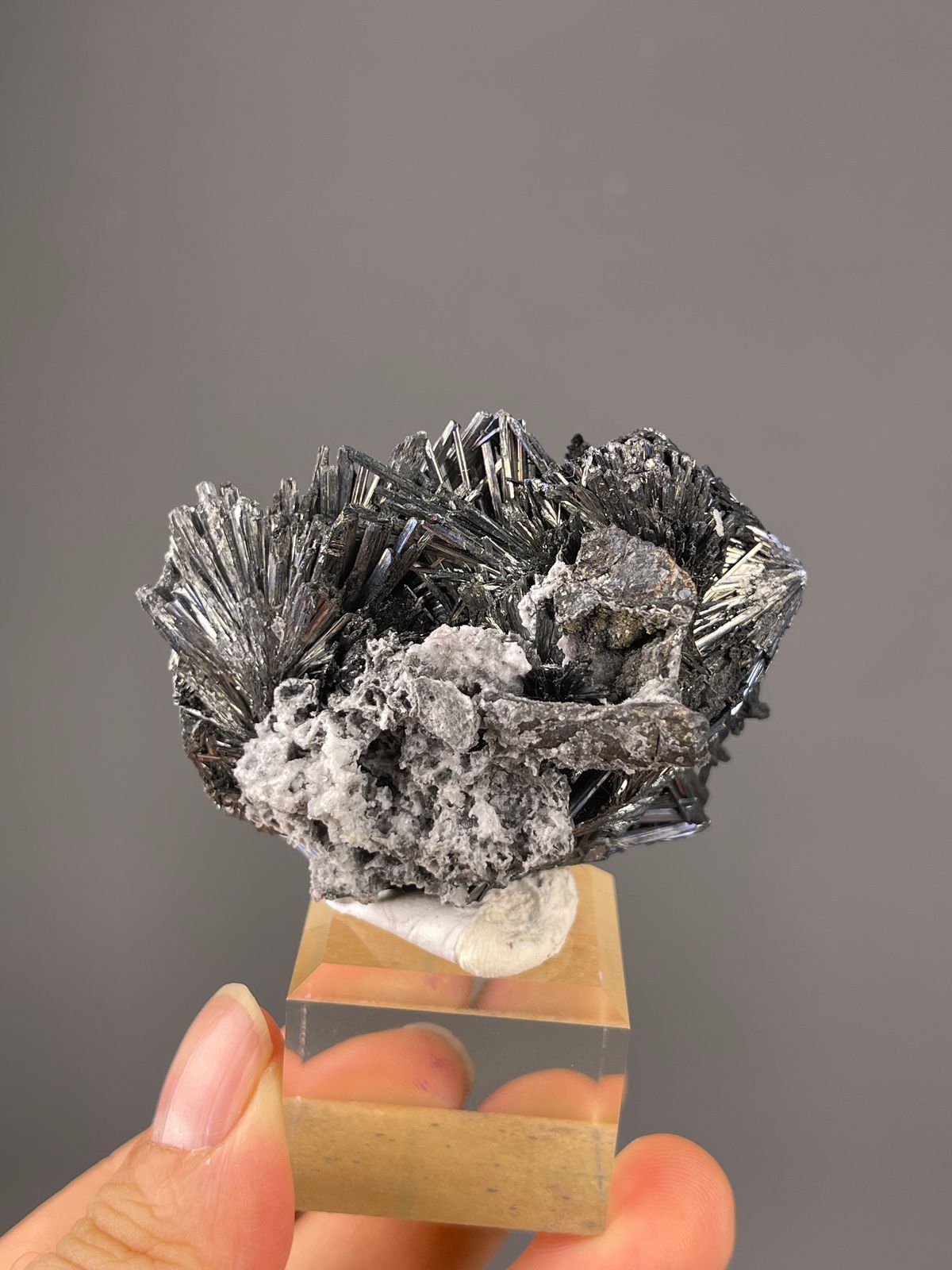
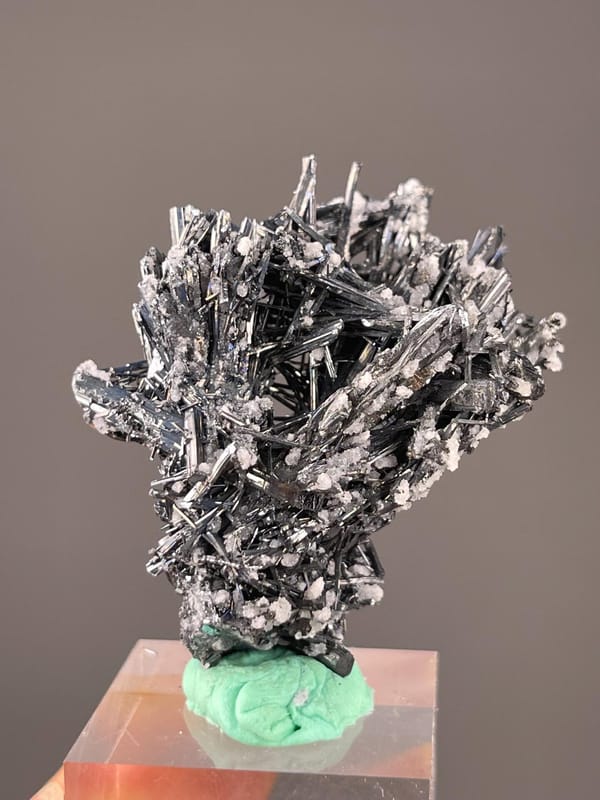
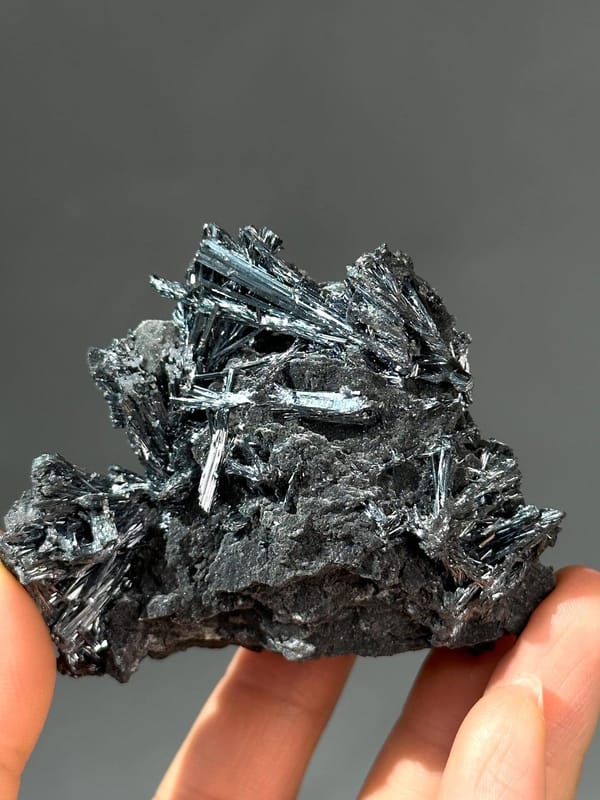
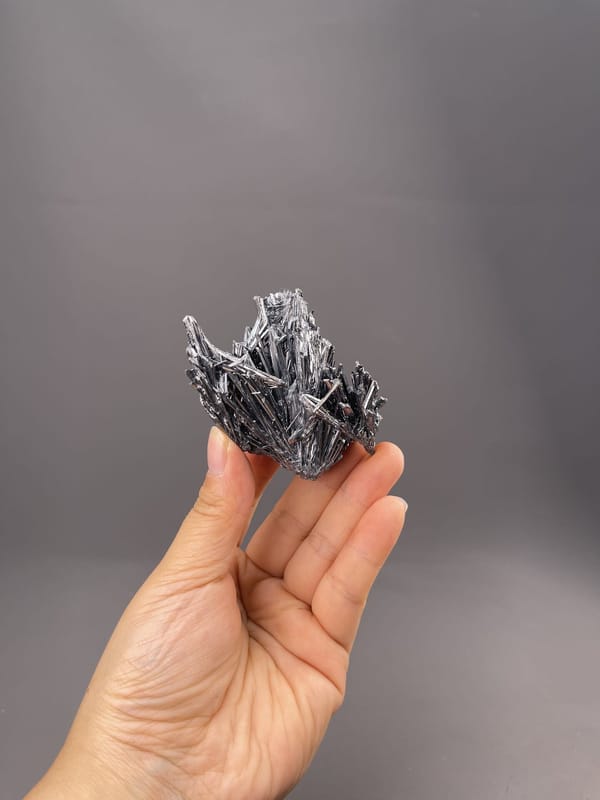
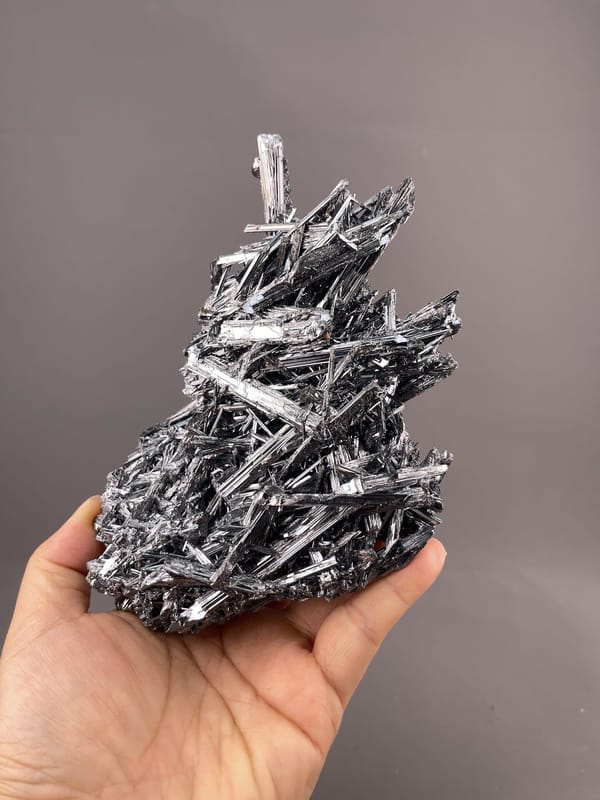
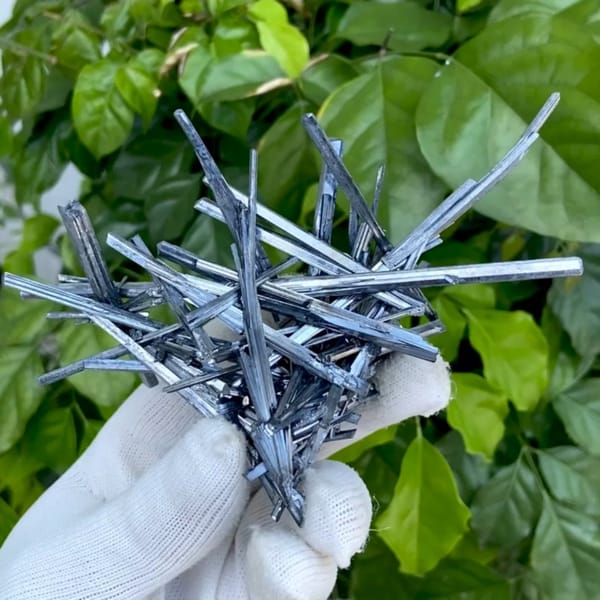
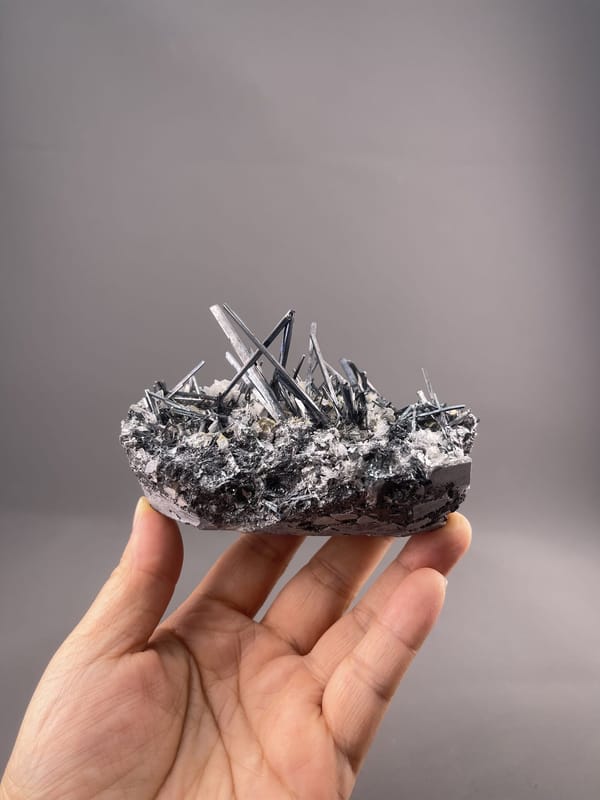
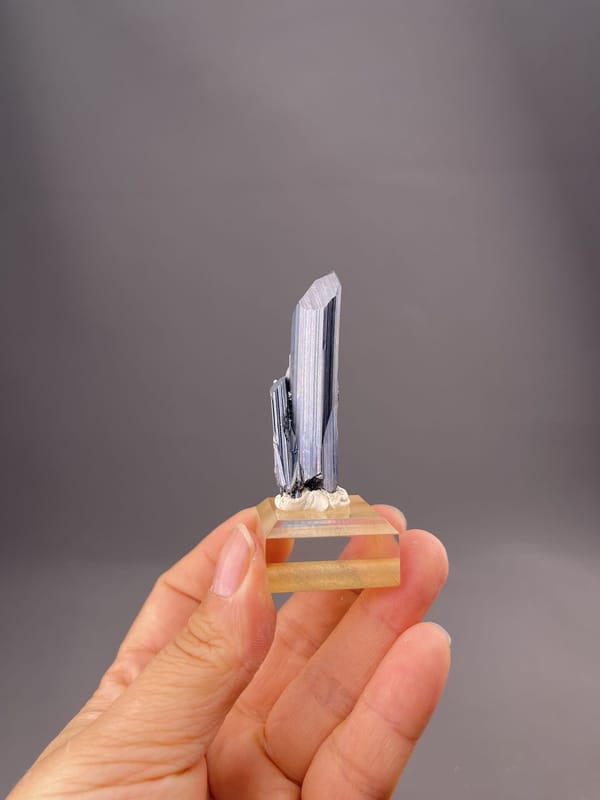
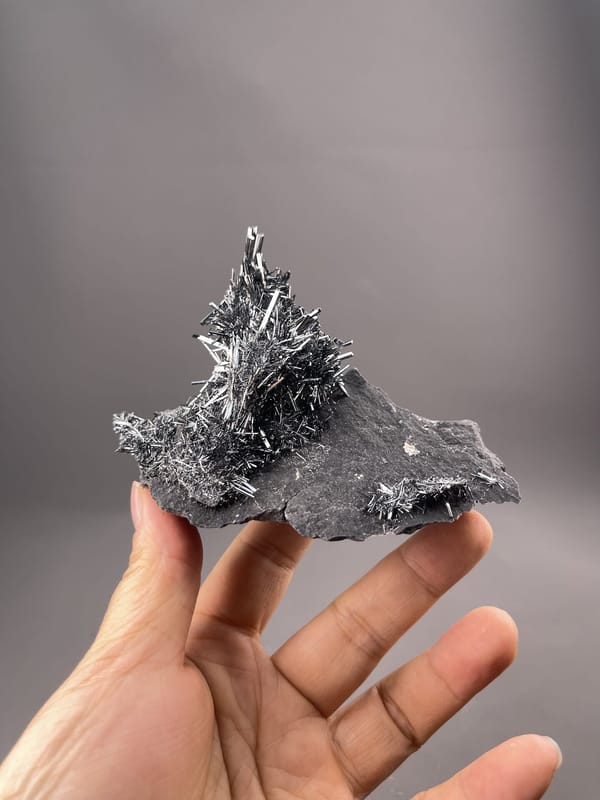
Stibnite — the principal ore of antimony — is one of the most distinctive sulfides in collecting. Its long silvery blades, radiating into starburst sprays, are a signature look of Chinese mineralogy. A published geological study describes the Xikuangshan deposit in Hunan as the world’s largest antimony deposit; it is also documented for bladed stibnite specimens.
The Chinese angle
The Xikuangshan and Wuning deposits yield individual stibnite crystals in excess of 30 cm — including the legendary Houluoping pocket whose blades resembled polished steel sabers. Chinese stibnite is the worldwide reference for the species; nothing else comes close in size or perfection.
Localities and the great pockets
Xikuangshan (Lengshuijiang) in central Hunan is the world’s largest antimony deposit and the reference source for the species — bladed and prismatic crystals with a bright metallic lustre, sometimes in radiating sprays, on crystalline calcite or with barite. The Wuning area of Jiangxi adds further fine material.
Judging quality, value, and care
Length, blade sharpness, metallic lustre, and freedom from cleavage damage — to which this soft, perfectly-cleaved sulfide is prone — all drive value; undamaged terminations and minimal tarnish are key. Stibnite tarnishes slowly in humid air, so store it with a desiccant in low light, keep it away from sulfur-laden materials, and never clean it with acids. See the Lengshuijiang page.
About Stibnite
Stibnite is classified as a sulfide mineral in the stibnite group and has the chemical formula Sb2S3. It crystallizes in the orthorhombic system and is relatively soft, requiring careful handling. Its combination of structural character and global distribution make it a recognized species in both systematic and aesthetic collections.
Identification & care
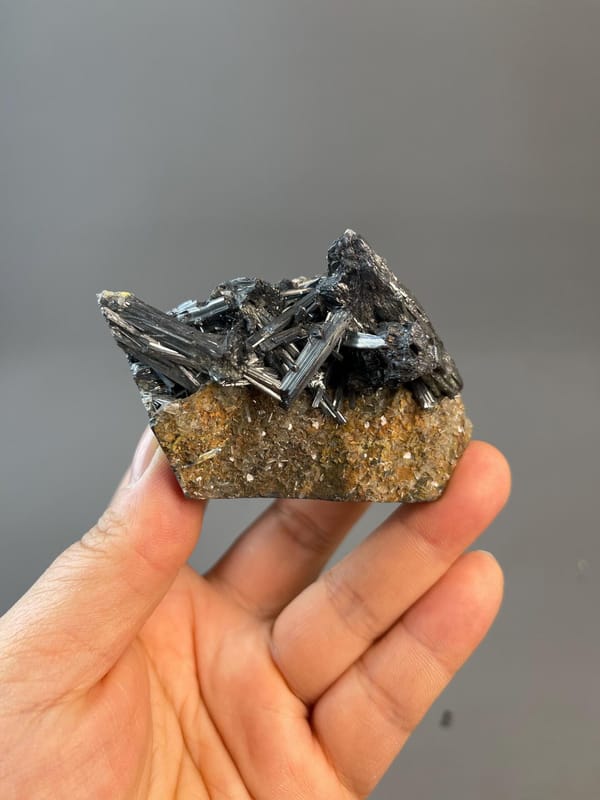
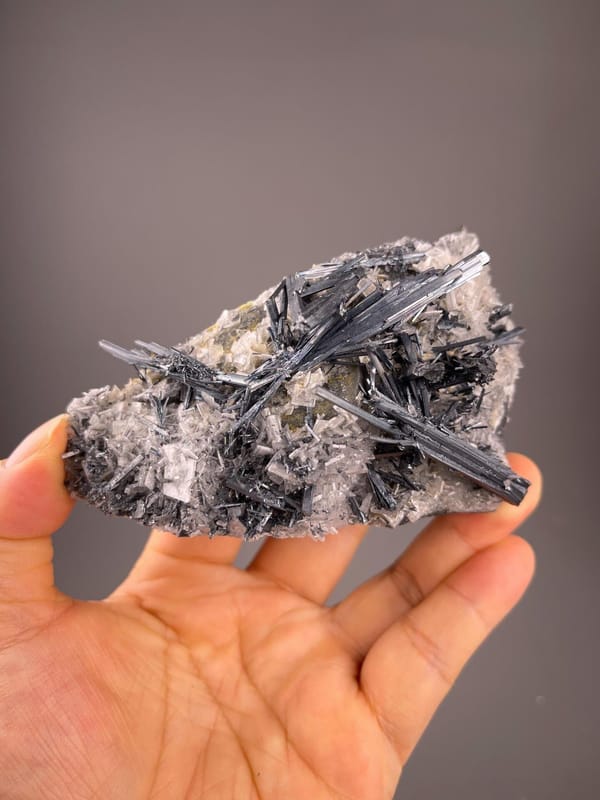
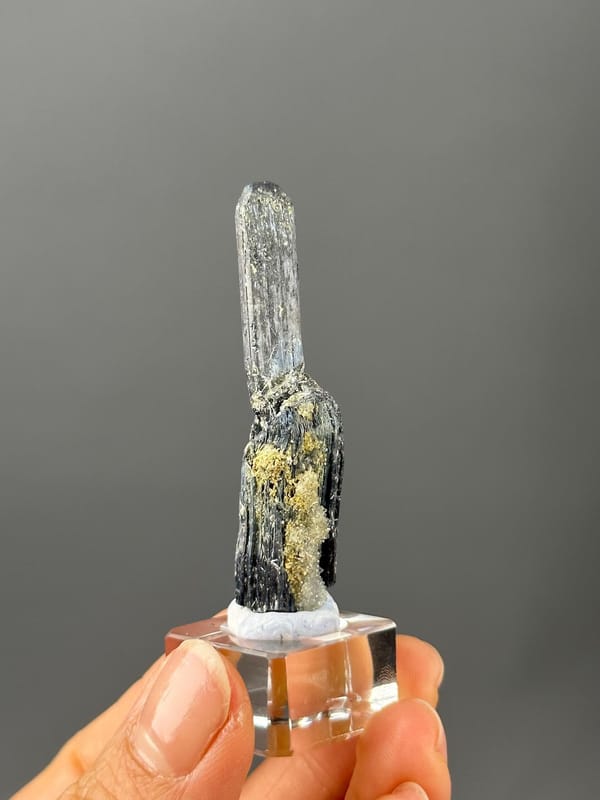
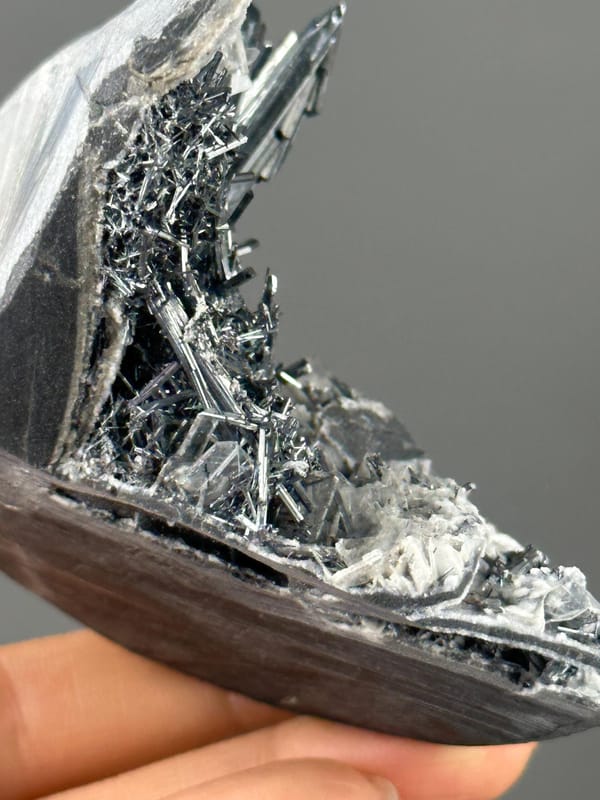
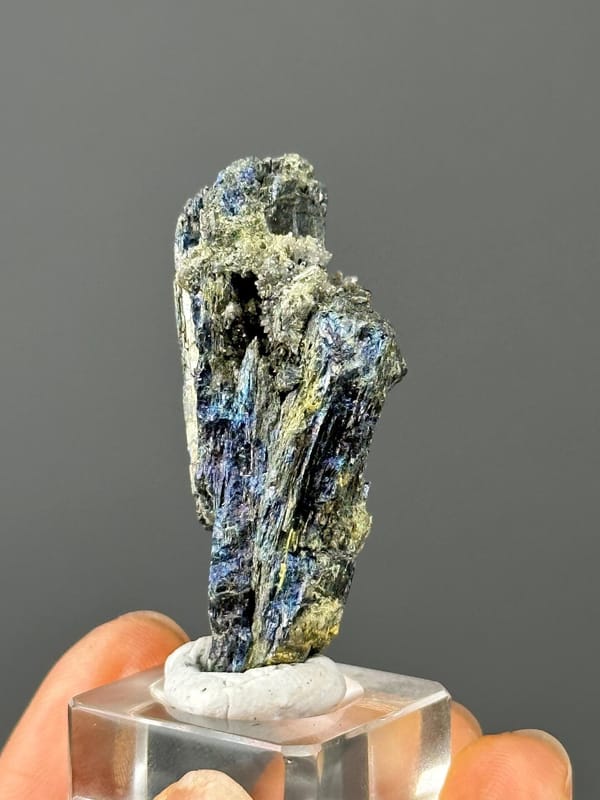
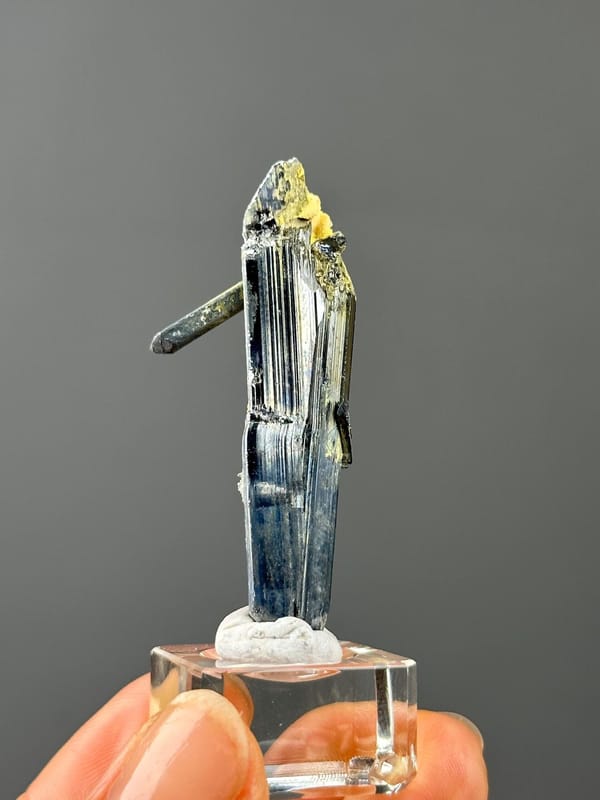
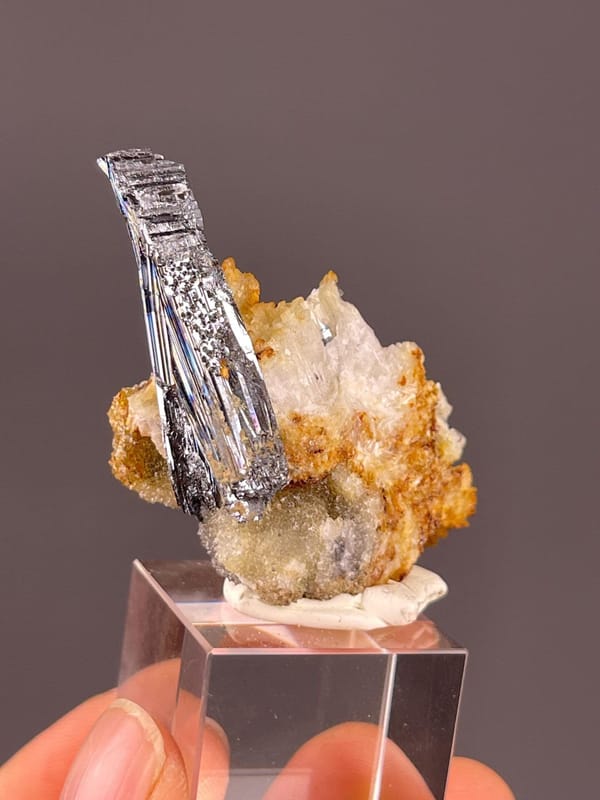
Crystals commonly develop as prismatic striated crystals, acicular clusters, massive; bent and curved crystals common. Its color is typically lead-grey with iridescent tarnish and sometimes golden-yellow coating. The luster is metallic, the streak is lead-grey, and specimens are typically opaque. The cleavage is perfect on {010}. The fracture is uneven, sub-conchoidal, which aids identification.
Collector context
How it forms
Stibnite forms in low- to medium-temperature hydrothermal veins; often associated with gold and quartz; also in hot-spring deposits. It is commonly found in association with realgar, orpiment, arsenopyrite, cinnabar, quartz, pyrite, gold, calcite, barite.
Classic Chinese localities
Xikuangshan Sb deposit (Xikuangshan antimony deposit) is a benchmark source for stibnite.
Why collectors care
Collectors gravitate to Stibnite for the drama of its metallic luster and the geometry of its crystals — long striated blades, parallel sprays, or radiating clusters depending on the specimen. A large terminated group of stibnite with intact luster is a centerpiece-level display object, and Chinese localities (where relevant) have produced some of the world's best-preserved material.
What affects value
Value in Stibnite is assessed, in typical order of weight, against: (1) locality provenance; (2) crystal size; (3) termination quality and crystal completeness; (4) metallic luster integrity (absence of tarnish); (5) crystal habit elegance (parallel, radiating, or bladed); (6) matrix contrast and aesthetic balance; (7) condition and absence of re-attached crystals. Verified locality documentation and absence of cleaning residue act as strong multipliers across the above.
Naming history
Stibnite carries the oldest cosmetic name in mineralogy. Latin stibium came from Greek stibi, itself borrowed from an Egyptian word for the powdered antimony sulfide used as kohl eyeliner in the ancient Nile valley. When Jöns Jacob Berzelius assigned chemical symbols, antimony kept its ancient identity: the symbol Sb is stibium, straight from the eye-paint. Hunan's Xikuangshan district is one of the world's largest antimony deposits and a classic source of major stibnite crystals.
Frequently asked questions
What is Stibnite?
Stibnite has the chemical formula Sb2S3, crystallises in the Orthorhombic system, has a Mohs hardness of 2. Stibnite is a sulfide mineral known for its striking metallic crystals, with several world-class Chinese localities.
What is the chemical formula of Stibnite?
The chemical formula of Stibnite is Sb2S3.
What crystal system does Stibnite belong to?
Stibnite crystallises in the Orthorhombic crystal system.
Where is Stibnite found?
Notable localities for Stibnite include Hunan Province, Xikuangshan, Lengshuijiang, China.
Is Stibnite rare?
As a collector mineral, Stibnite is generally considered uncommon.
Related minerals
Available Stibnite specimens
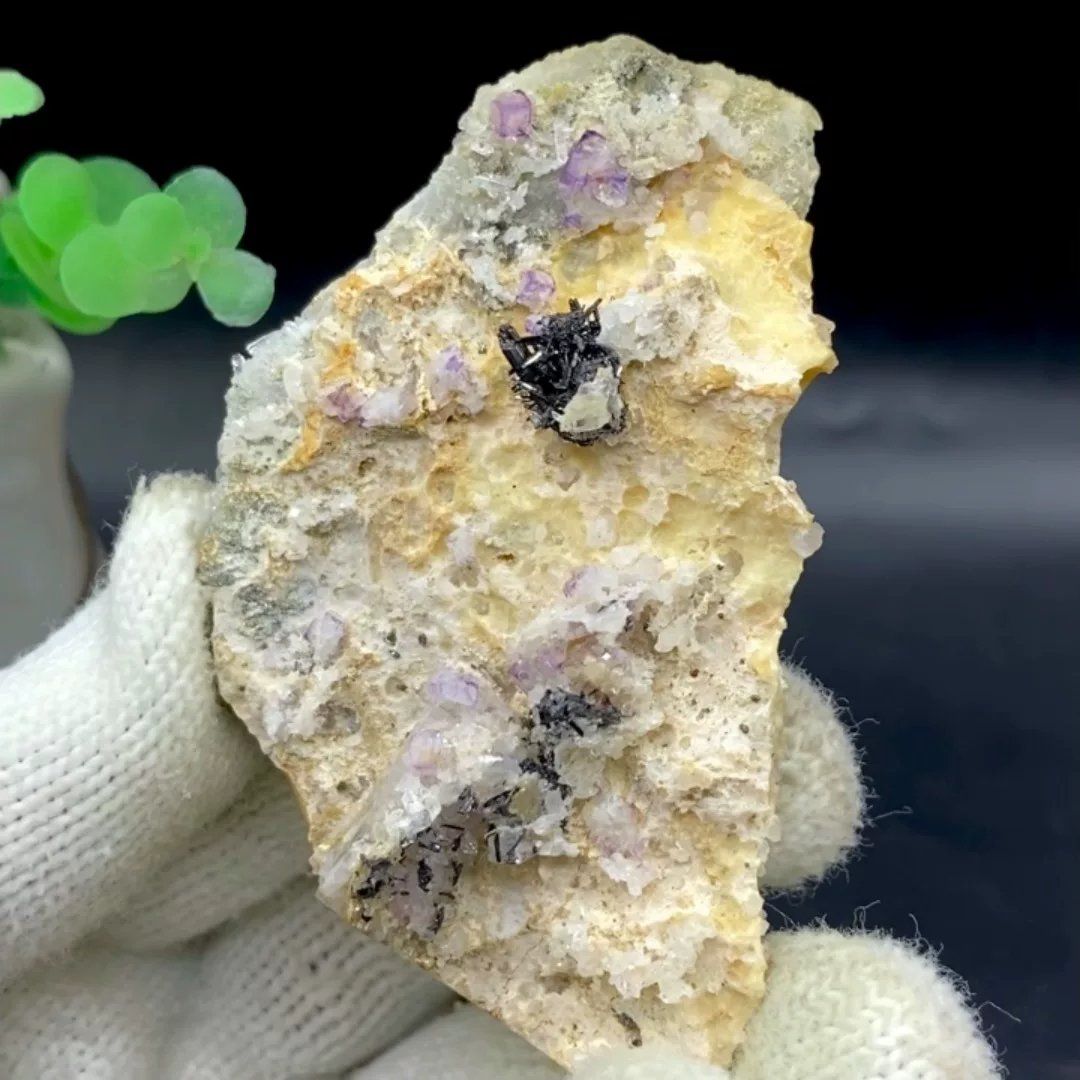
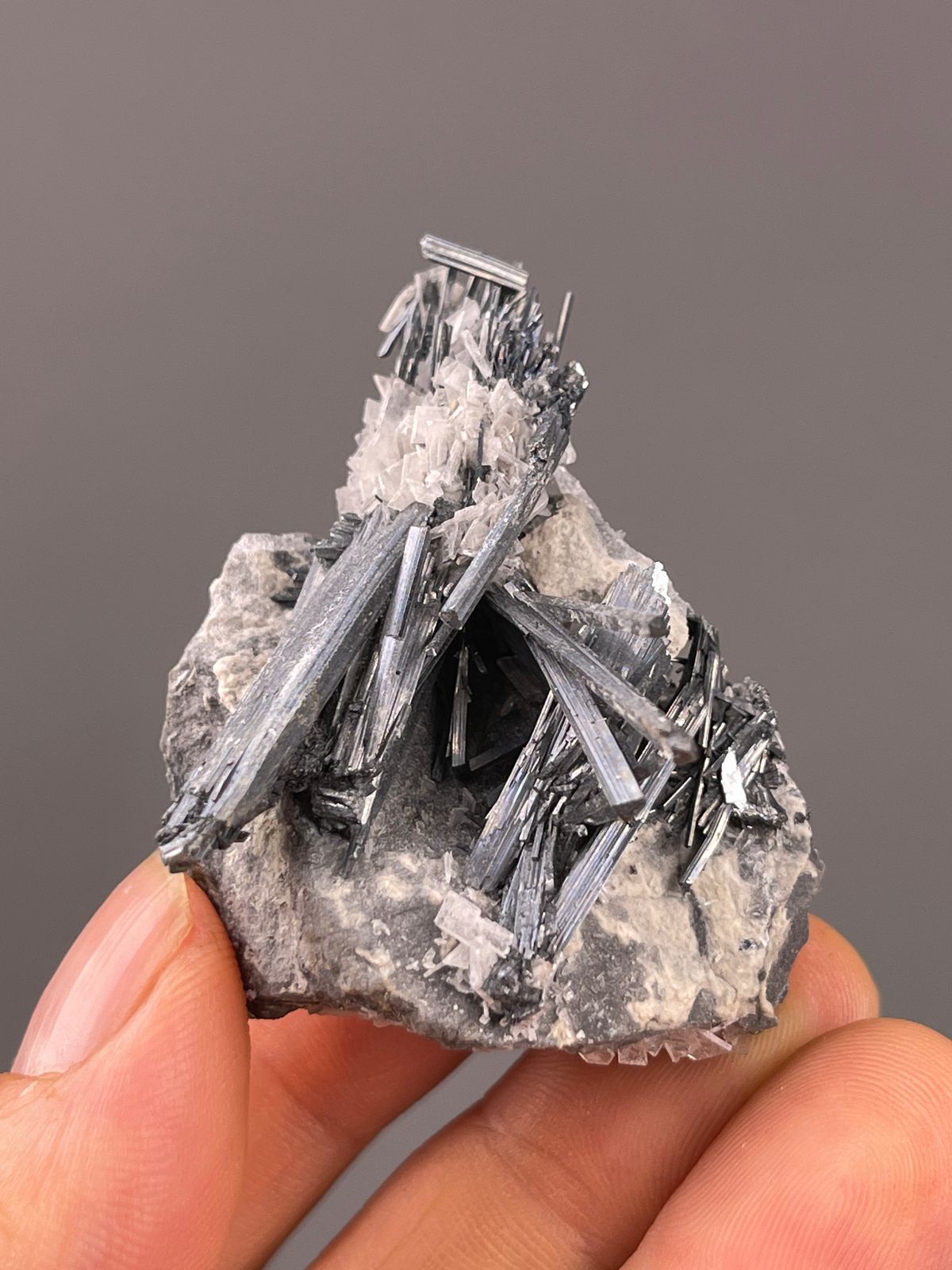
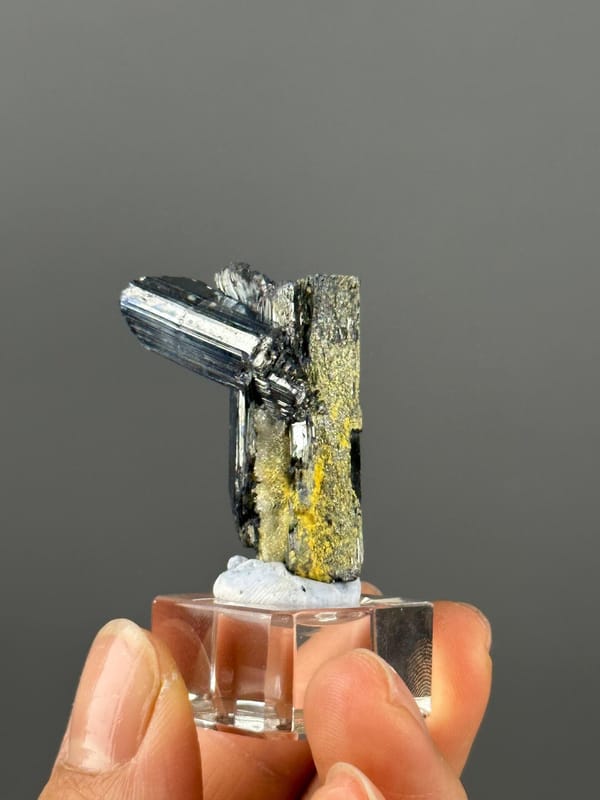
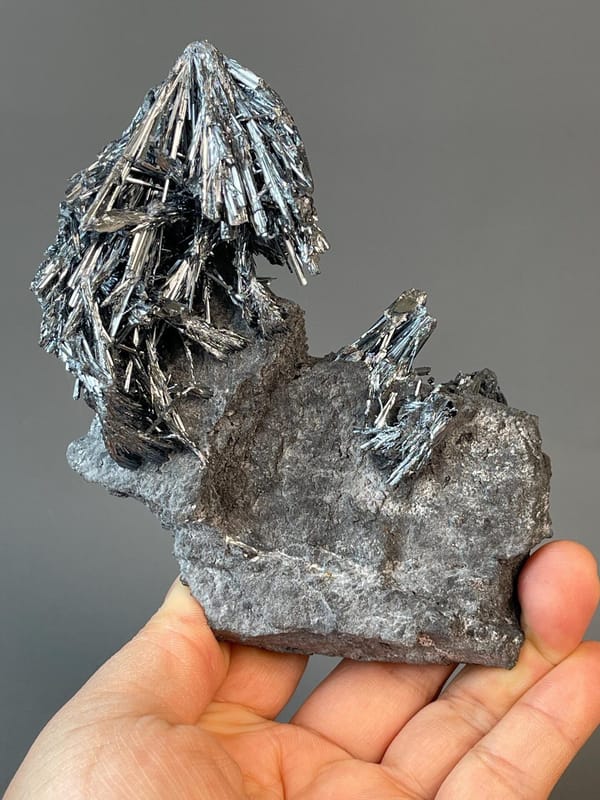
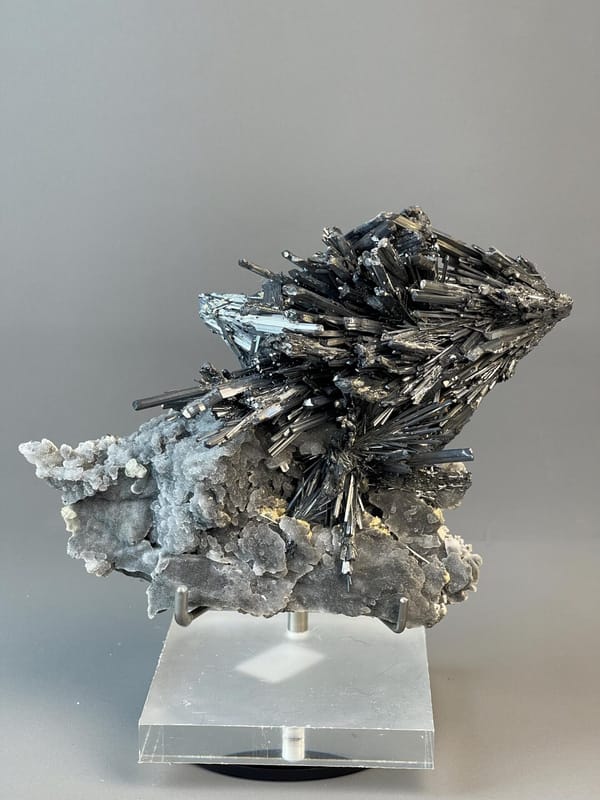
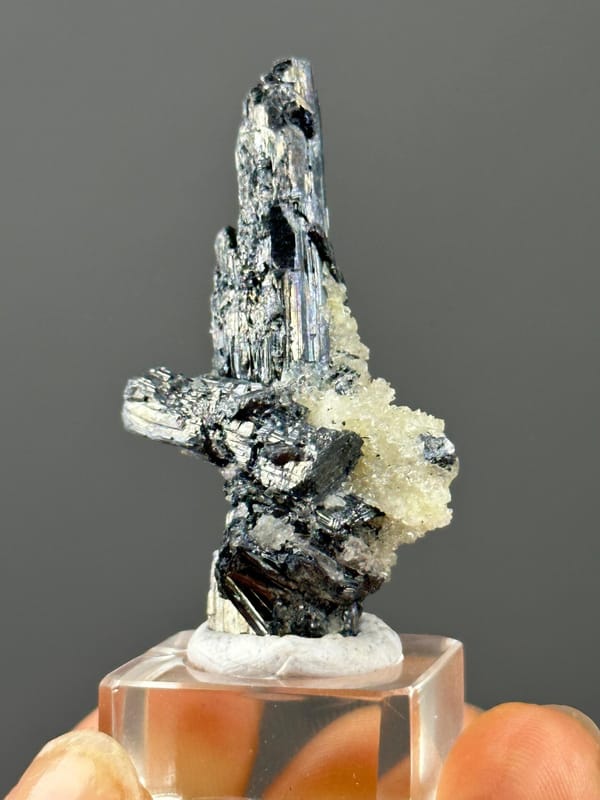
Recently sold Stibnite specimens
External references
Stibnite on Wikidata.