
Scheelite
Curated by Maggie Liu · Updated:
Scheelite is a tungstate mineral prized by collectors for its exceptional color range, with several world-class Chinese localities.
About Scheeliteextended article
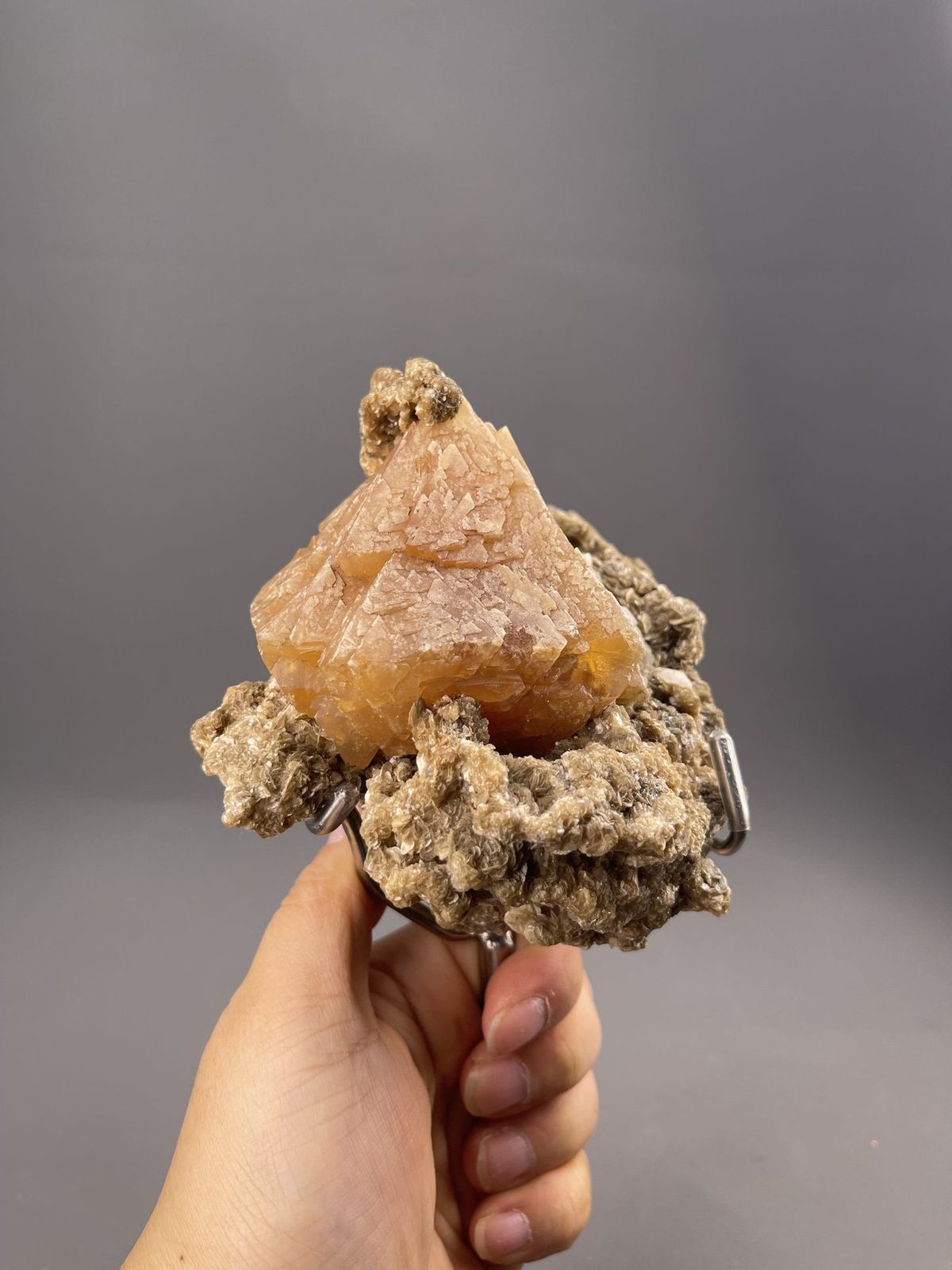
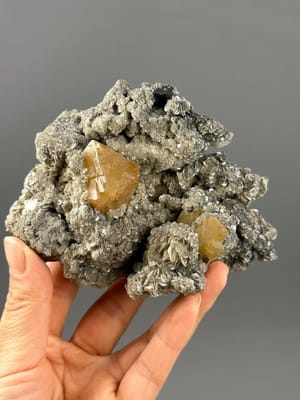
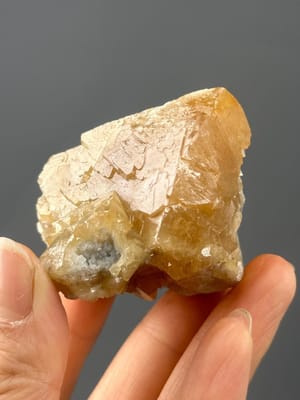
Scheelite is the second principal tungsten ore (after wolframite) and the source of some of China's most spectacular gem crystals. Pingwu and Xuebaoding in Sichuan have produced gem-orange scheelites that rank among the world's finest.
The Chinese angle
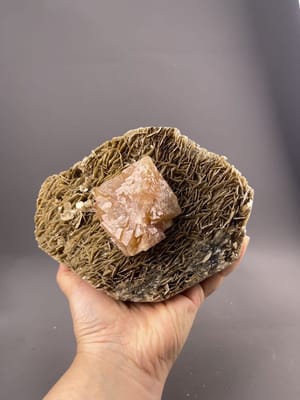
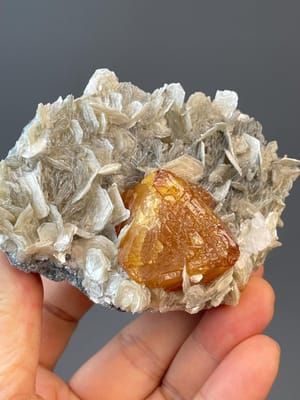
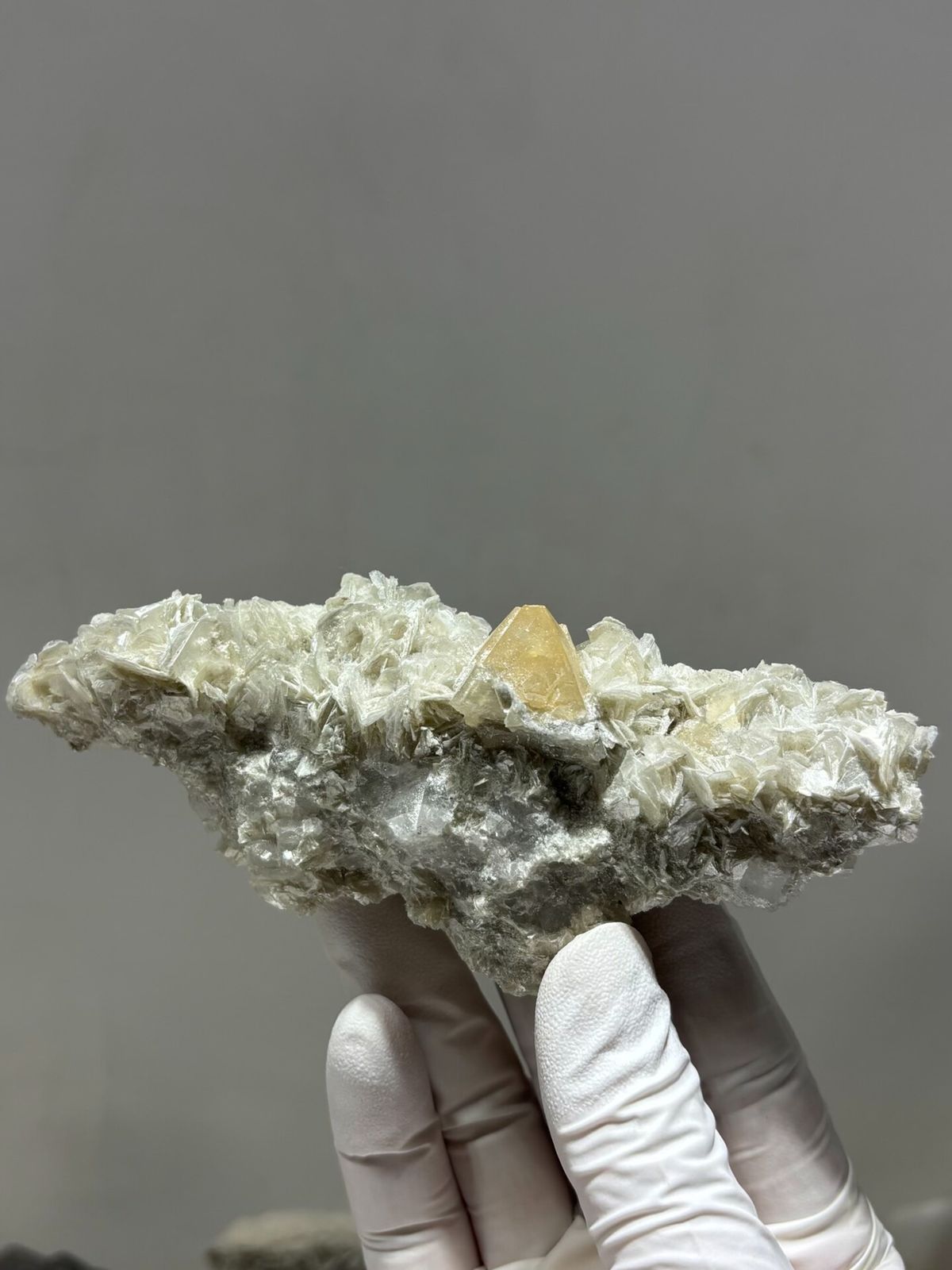
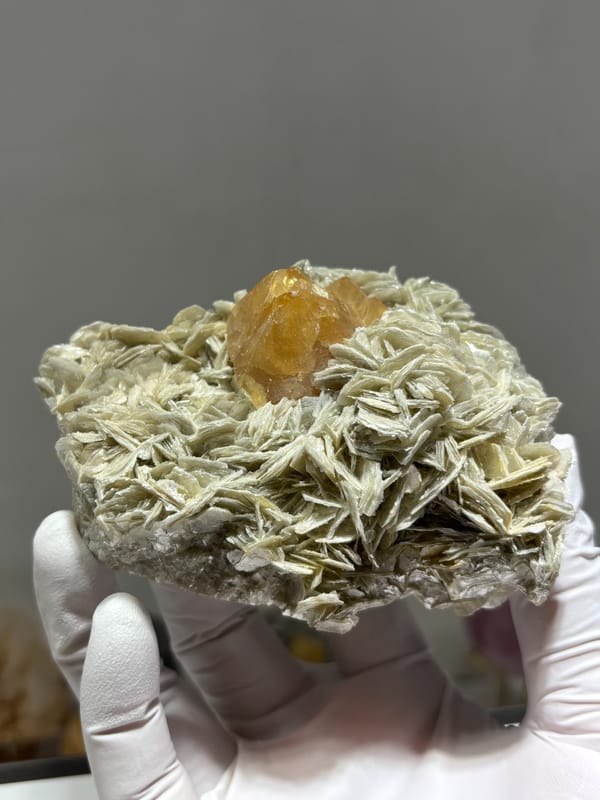
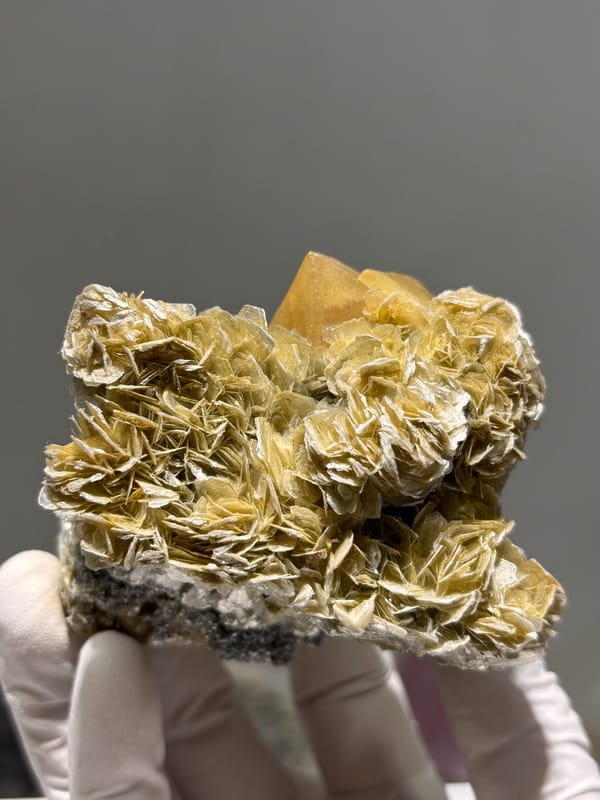
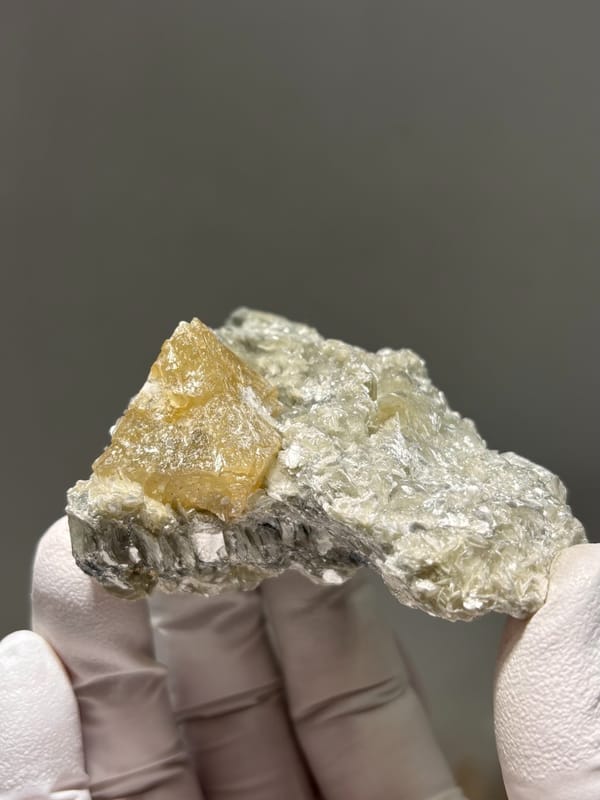
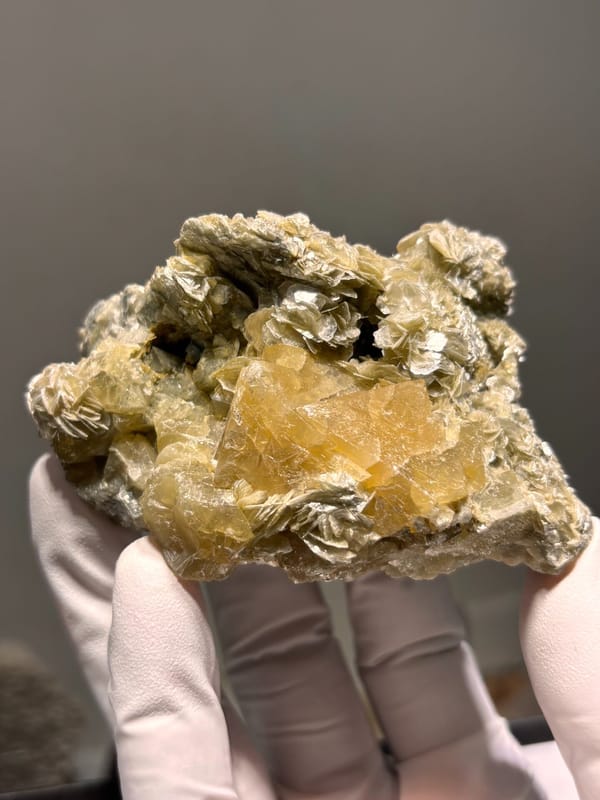
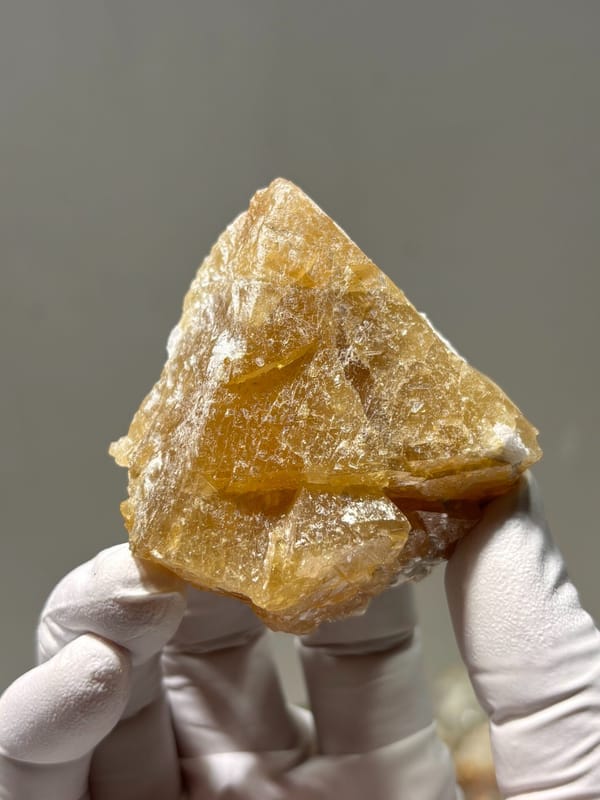
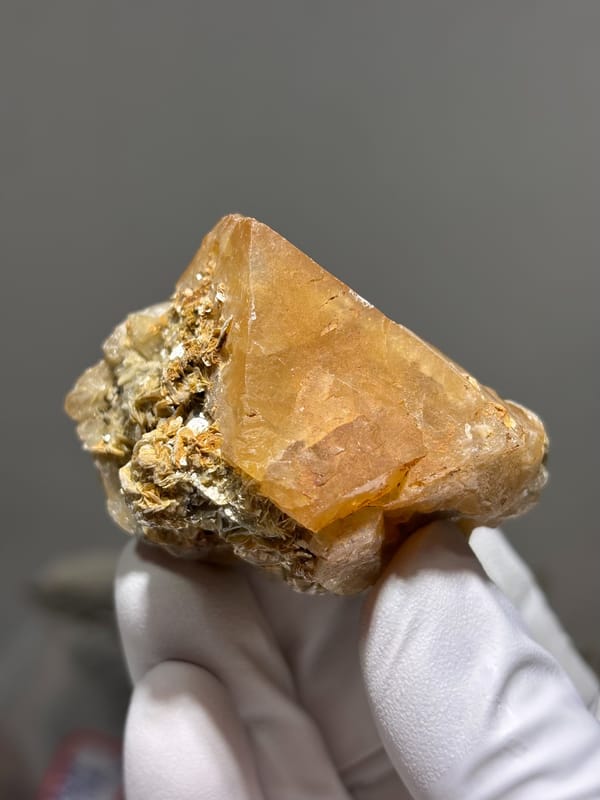
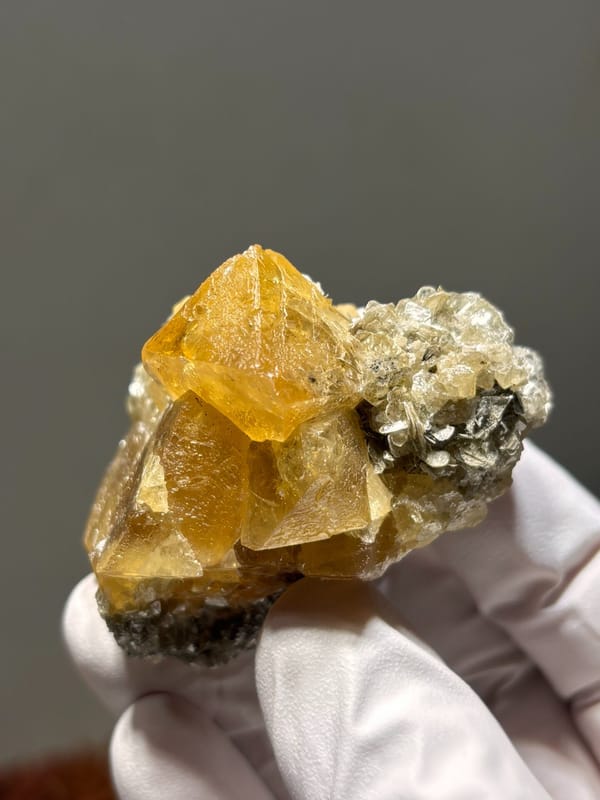
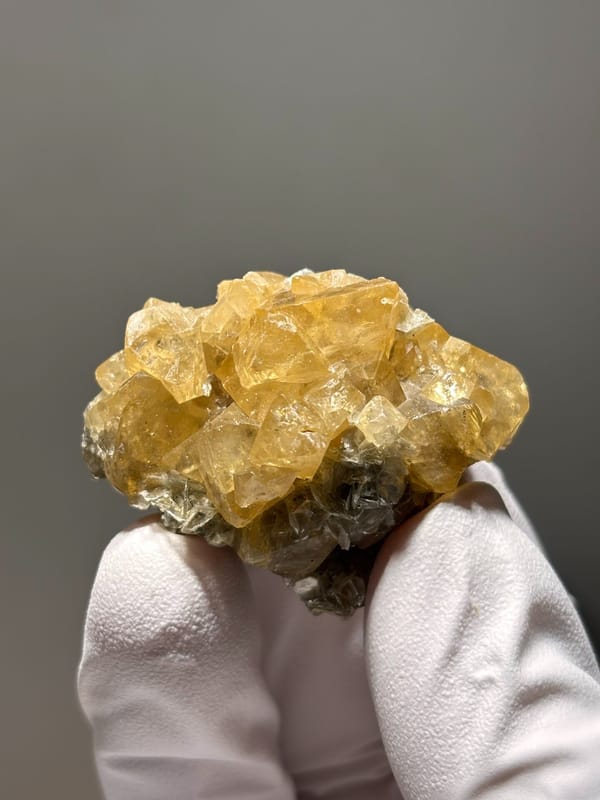
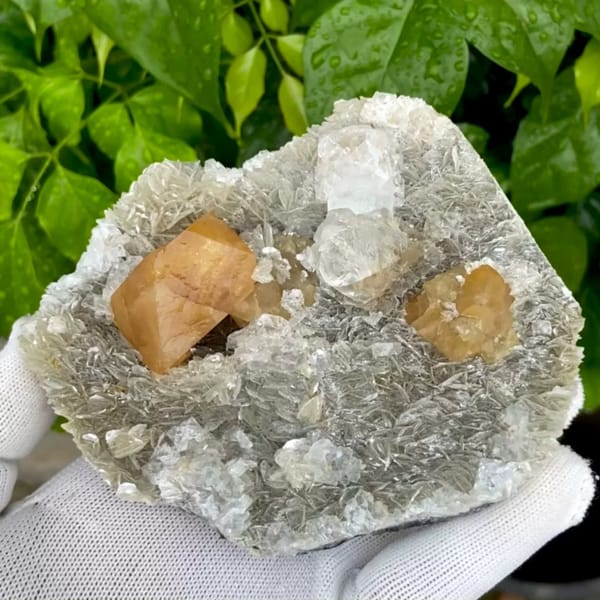
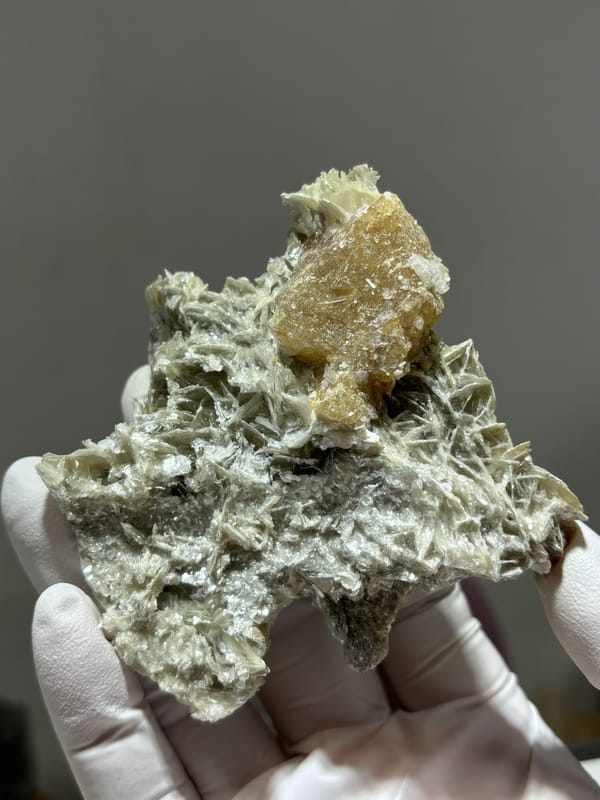
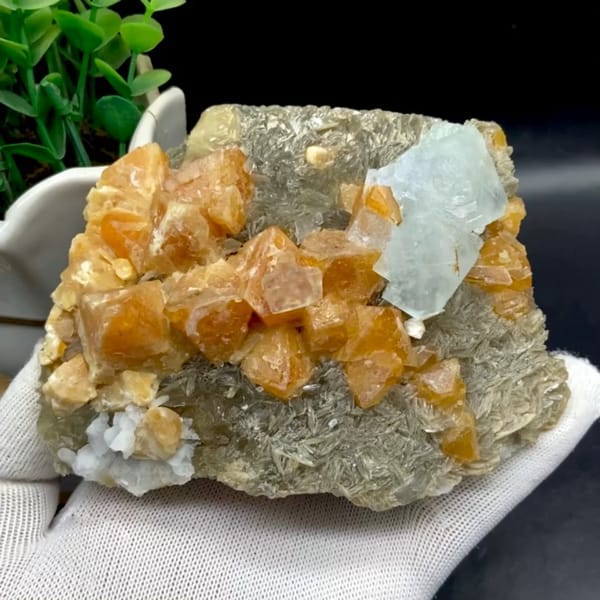
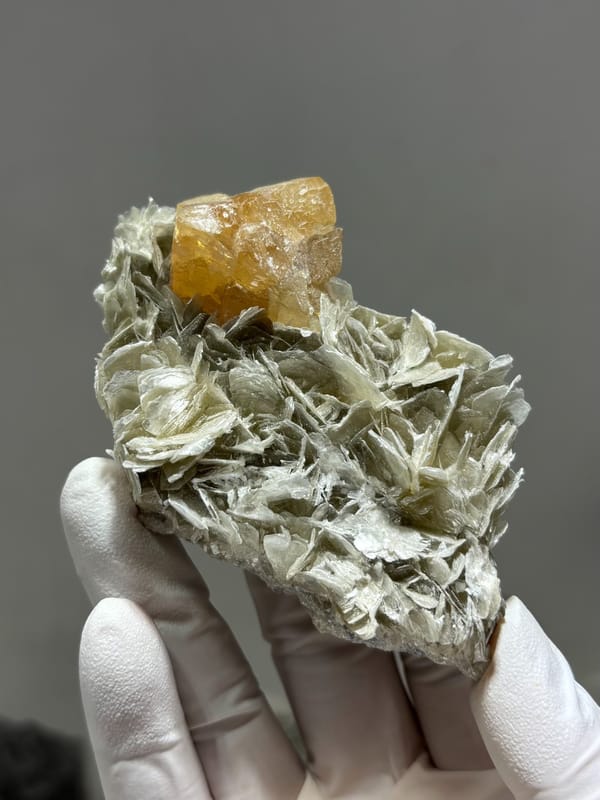
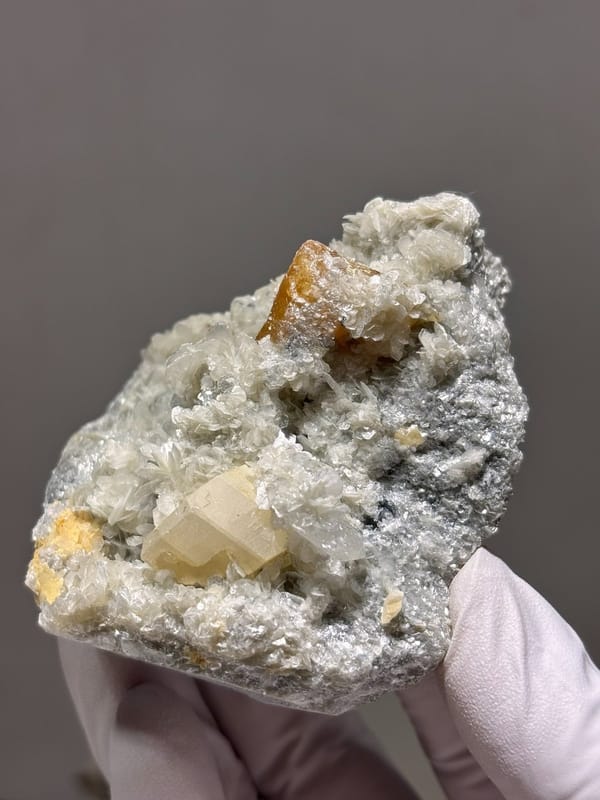
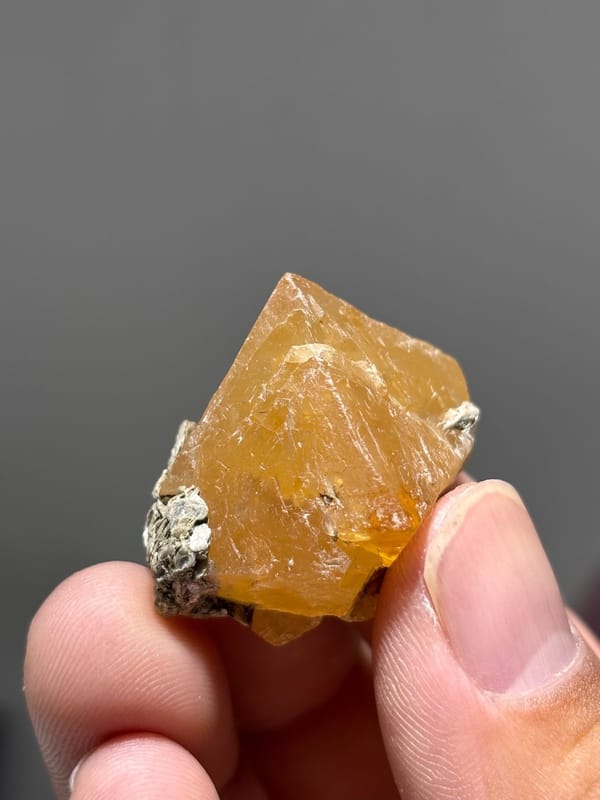
Pingwu County and the Xuebaoding deposit in Sichuan produce gem-orange scheelite crystals (often 3-10 cm) on muscovite-quartz matrix, frequently associated with cassiterite and pink beryl. These have been the international reference for collector-grade scheelite for two decades.
Xuebaoding and judging quality
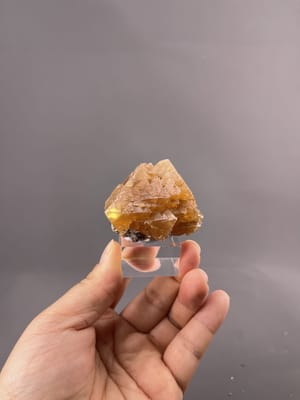
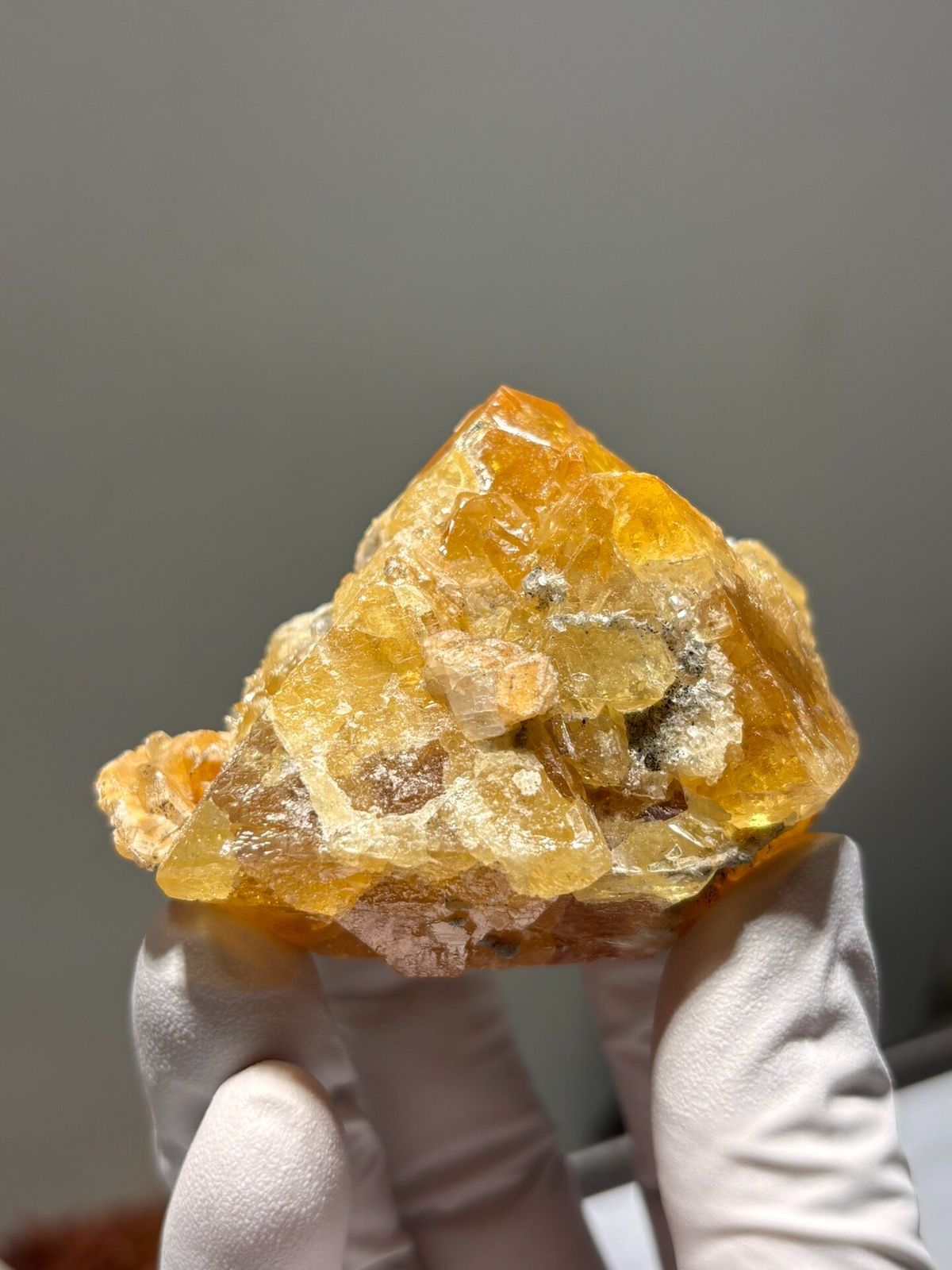
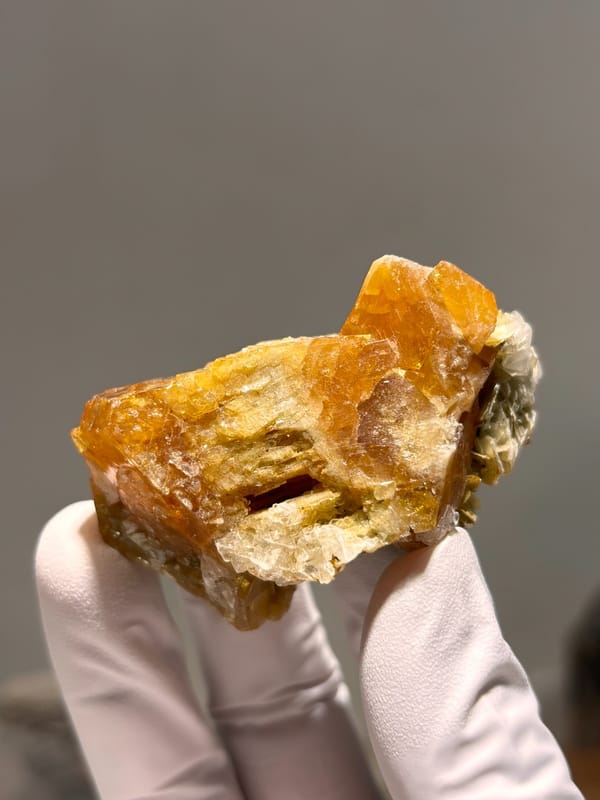
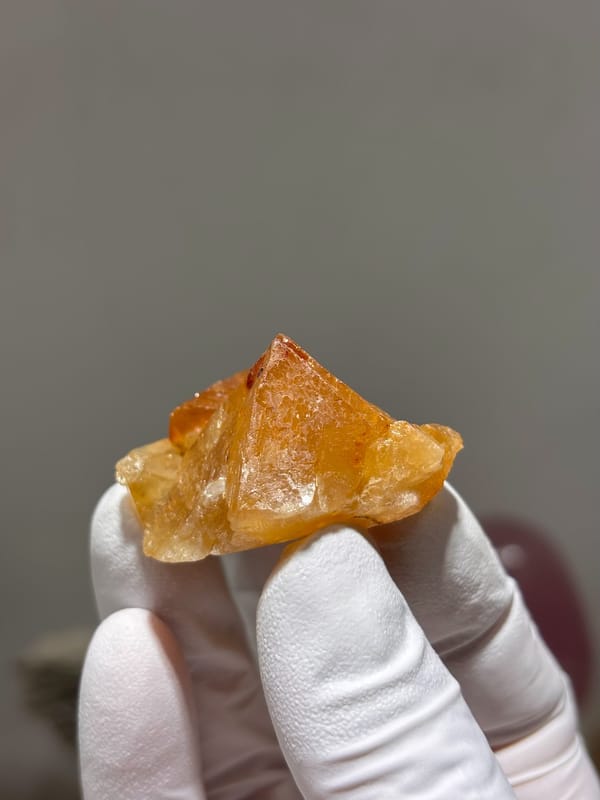
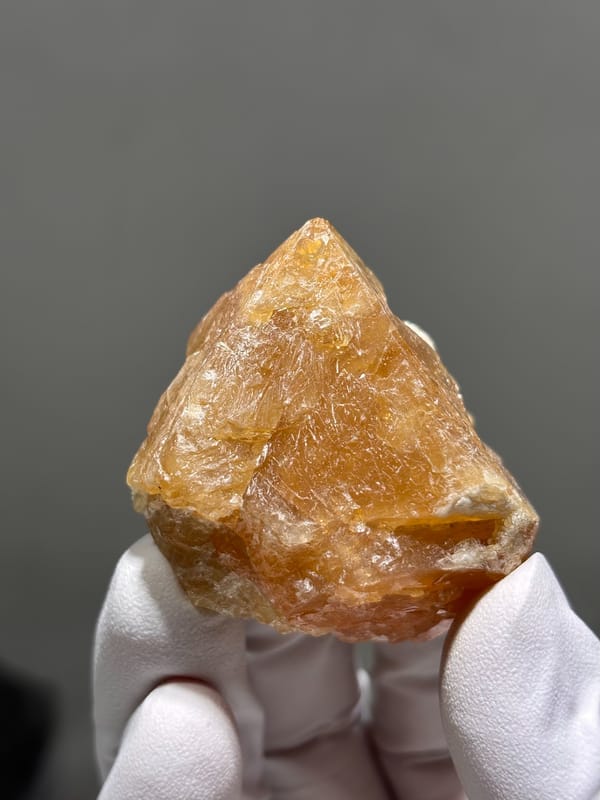
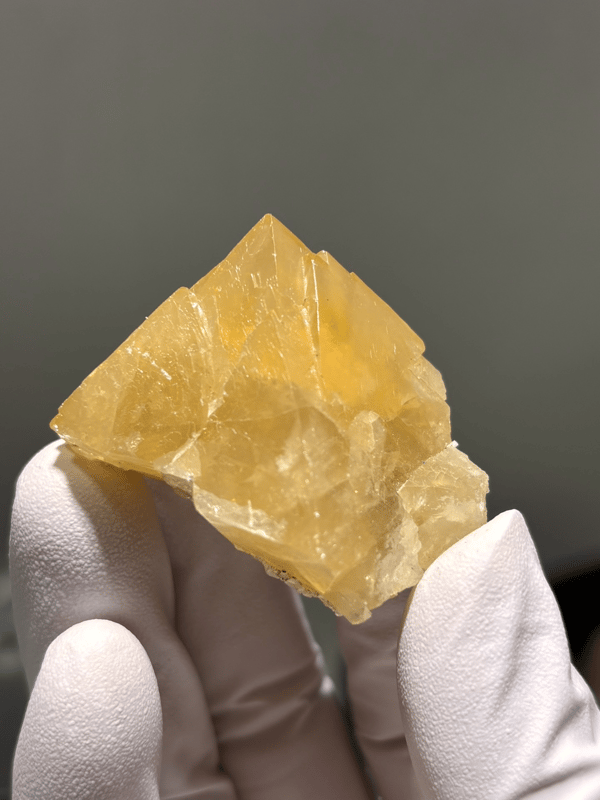
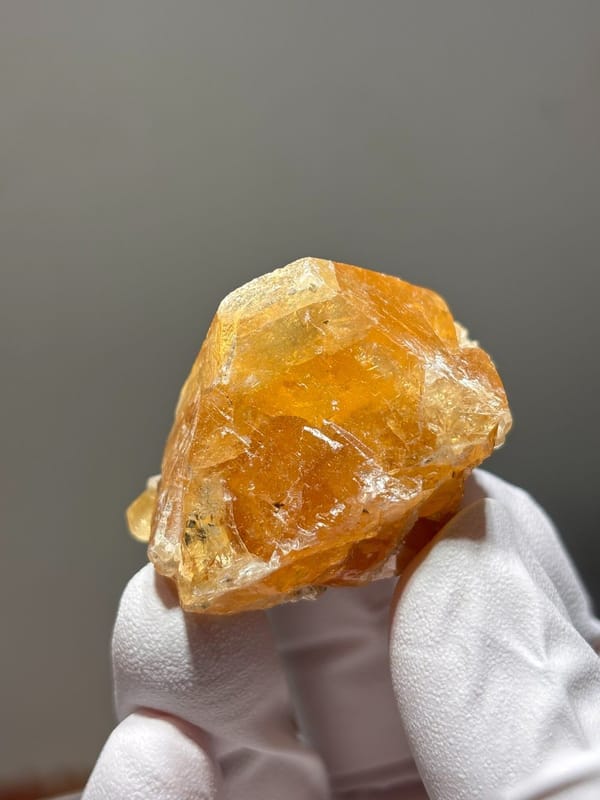
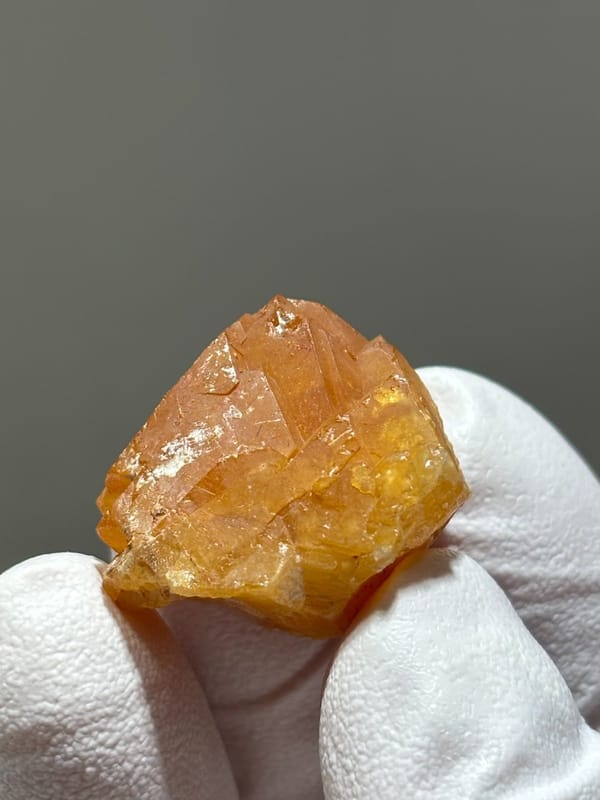
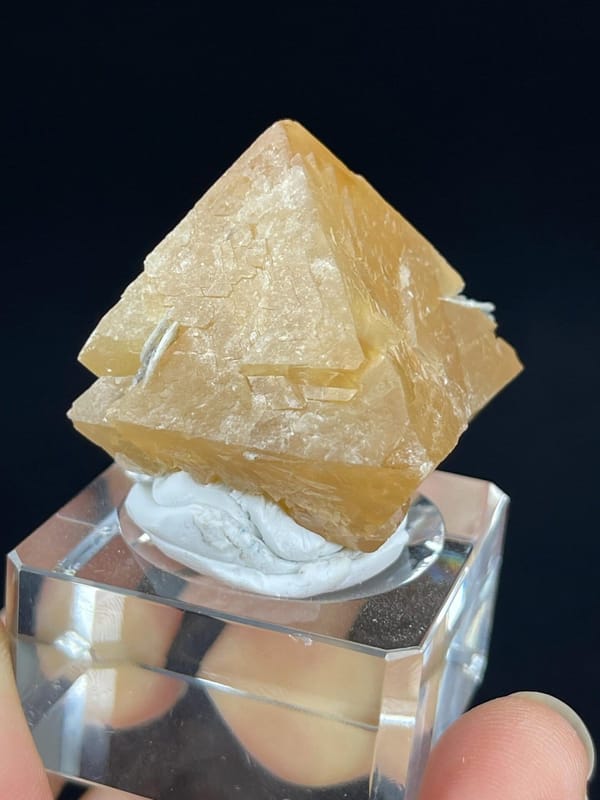
The Xuebaoding deposit (Mt Pingwu, Sichuan) is the world’s premier source of collectable scheelite: sharp dipyramidal and octahedral crystals in honey-yellow to saturated orange, perched on silvery muscovite and often accompanied by cassiterite and pink beryl. Value scales steeply with size, colour saturation, transparency, and matrix integrity; damage-free crystals above 3 cm command strong premiums. Under ultraviolet light scheelite fluoresces a vivid blue-white — a quick authenticity check. See the Xuebaoding Scheelite Buying Guide.
About Scheelite
Scheelite belongs to the tungstate class in the scheelite group and has the chemical formula CaWO4. It crystallizes in the tetragonal system and is one of the most visually varied minerals in the collector market. Its combination of structural character and global distribution make it a recognized species in both systematic and aesthetic collections.
Identification & care
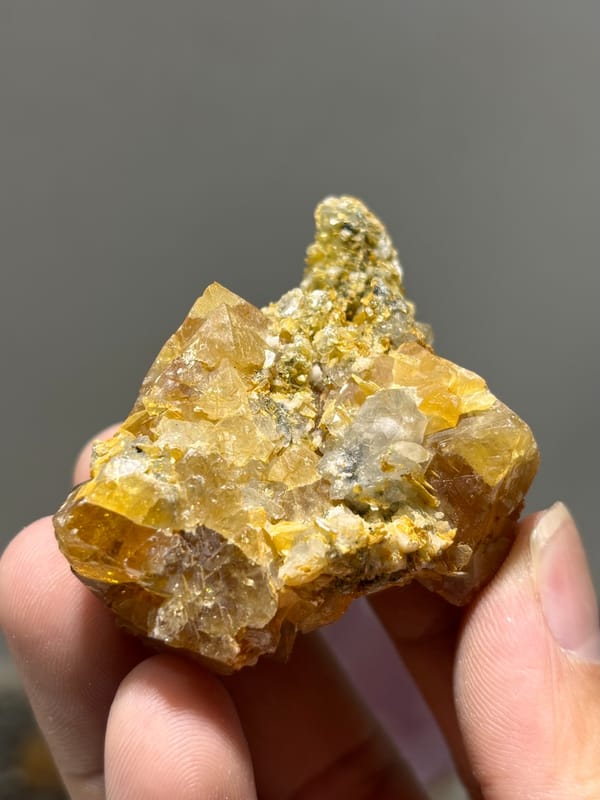
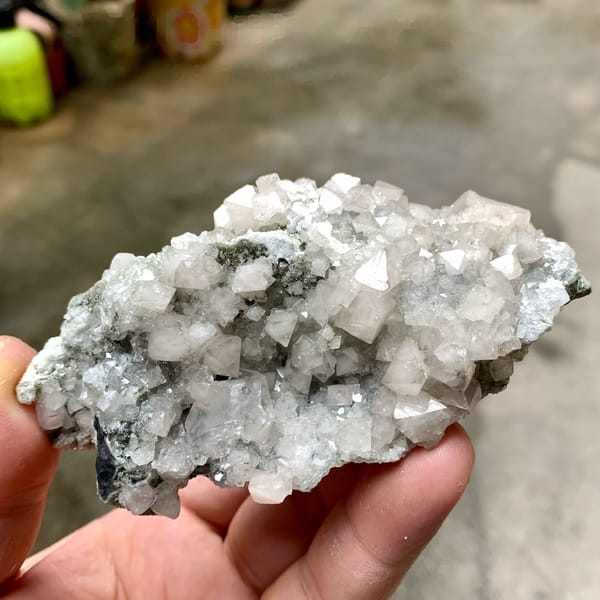
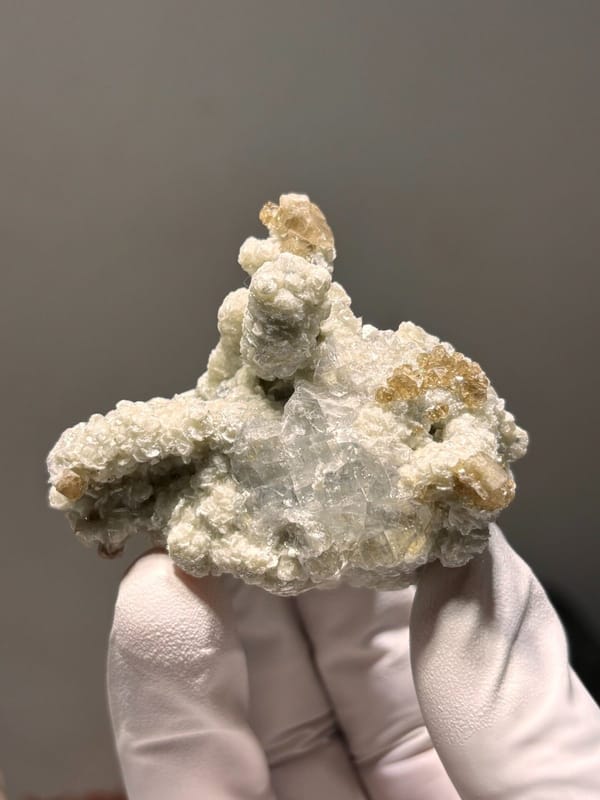
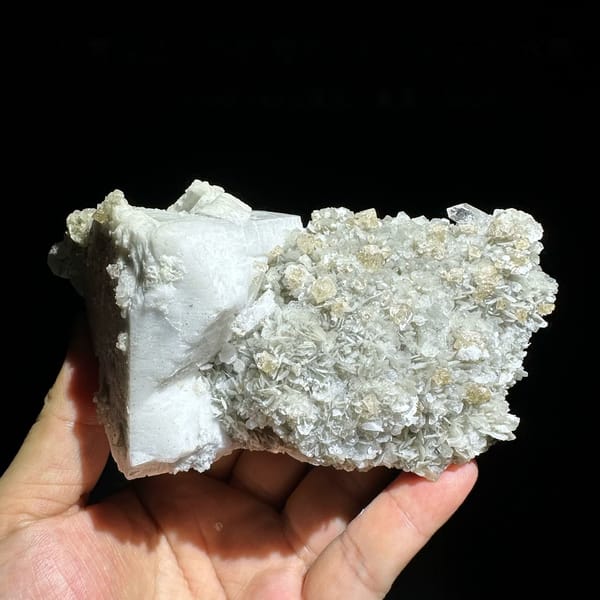
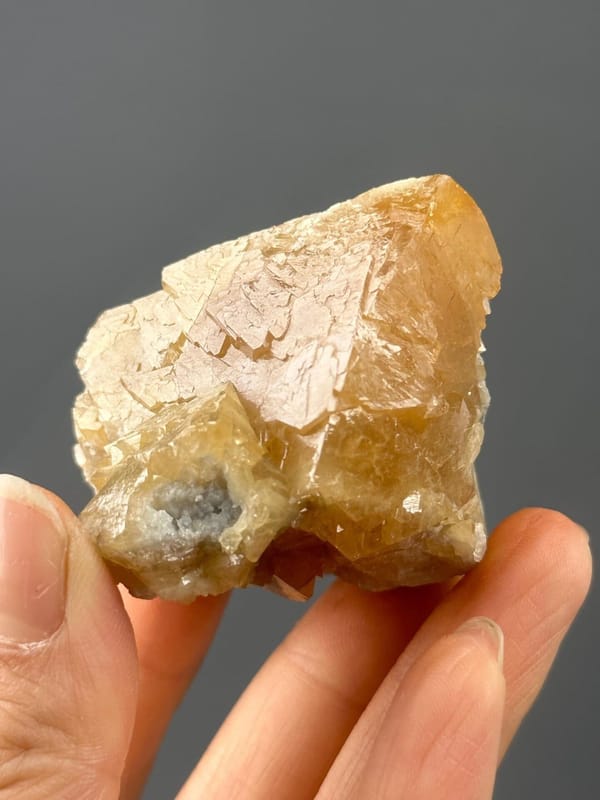
Specimens usually show pseudo-octahedral dipyramidal crystals (distinctive bipyramid shape); tabular; massive; granular. Its color range is broad, including white, colorless, pale yellow, orange, brown, greenish, and rarely blue or red. The luster is adamantine, vitreous, resinous, the streak is white, and specimens range from transparent to translucent. The cleavage is distinct on {101}. The fracture is subconchoidal to uneven, which aids identification.
Collector context
How it forms
In terms of geology, Scheelite forms in contact metamorphic skarns (calcium-rich); hydrothermal veins; granitic pegmatites; greisens. It is commonly found in association with wolframite, cassiterite, topaz, fluorite, molybdenite, calcite, grossular.
Classic Chinese localities
Shizhuyuan Mine is a benchmark source for scheelite. Dachang ore field and Yaogangxian W-Sn ore field are an important Chinese source for the species.
Why collectors care
Collectors pursue Scheelite for the clarity of its crystal form and, in good material, saturated color that reads instantly across a display case. A well-terminated scheelite on clean matrix photographs well, identifies quickly, and anchors a cabinet piece. Top Chinese specimens over the last two decades have reset the bar for what scheelite looks like at collector grade.
What affects value
Value in Scheelite is assessed, in typical order of weight, against: (1) locality provenance; (2) size relative to the species norm; (3) crystal form and termination sharpness; (4) color saturation and zoning; (5) transparency and internal clarity; (6) matrix quality and aesthetic balance; (7) condition (absence of damage, chips, or repair). Cleaning quality and verified locality documentation act as multipliers across the above.
Naming history
Scheelite honours Carl Wilhelm Scheele, the Swedish apothecary-chemist who in 1781 analysed a heavy Swedish ore and identified the new acid within it — tungstic acid, and with it the element tungsten. Scheele discovered oxygen, chlorine, manganese and barium too, and got credit for almost none of them in his lifetime; the mineral is one of the few things that carries his name. Xuebaoding in Sichuan produces its most sought-after crystals.
Frequently asked questions
What is Scheelite?
Scheelite has the chemical formula CaWO4, crystallises in the Tetragonal system. Scheelite is a tungstate mineral prized by collectors for its exceptional color range, with several world-class Chinese localities.
What is the chemical formula of Scheelite?
The chemical formula of Scheelite is CaWO4.
What crystal system does Scheelite belong to?
Scheelite crystallises in the Tetragonal crystal system.
Where is Scheelite found?
Notable localities for Scheelite include Xuebaoding, Pingwu, Sichuan Province, Dabaoshan Polymetallic Mine.
Is Scheelite rare?
As a collector mineral, Scheelite is generally considered uncommon.
Related minerals
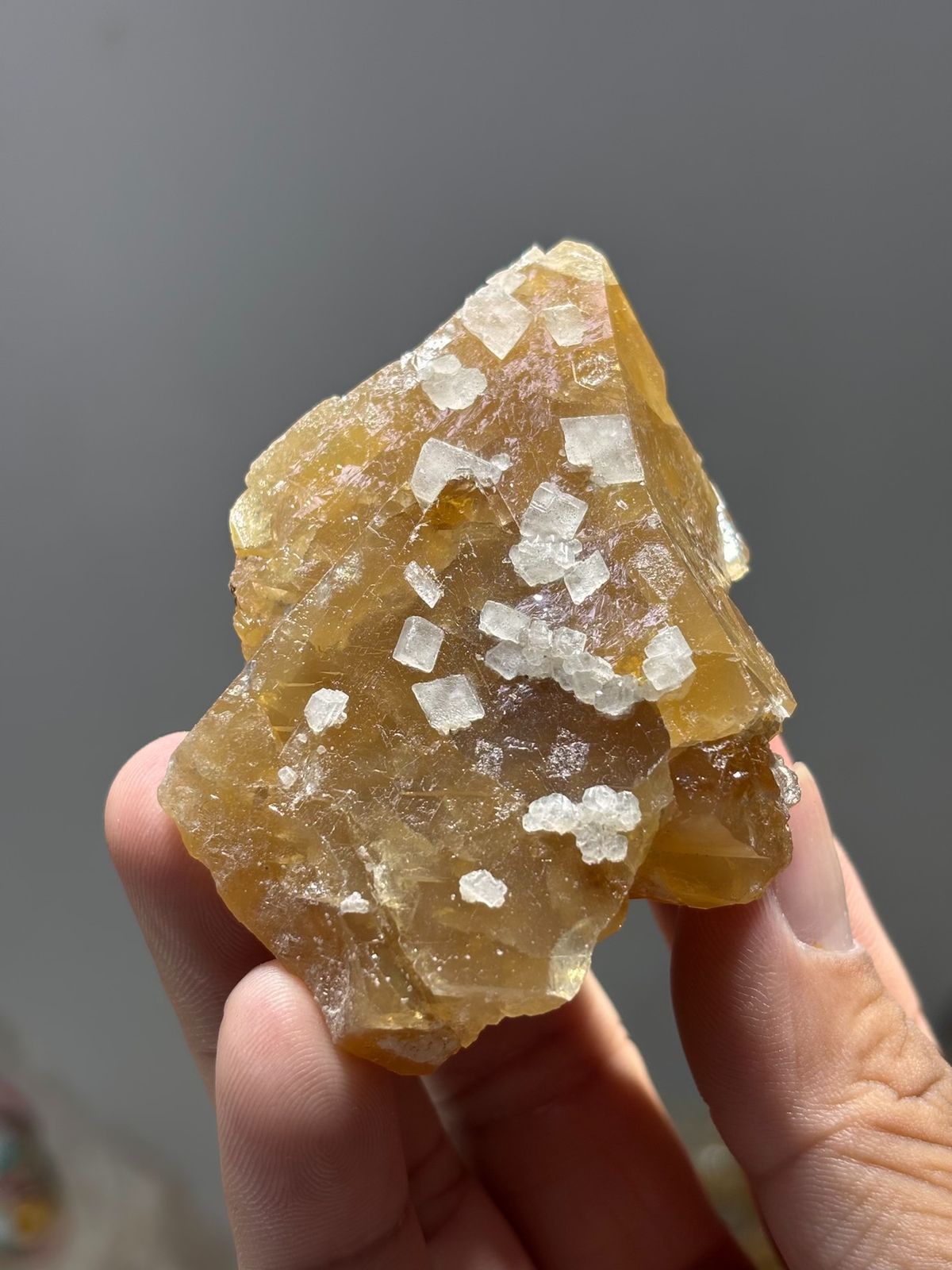
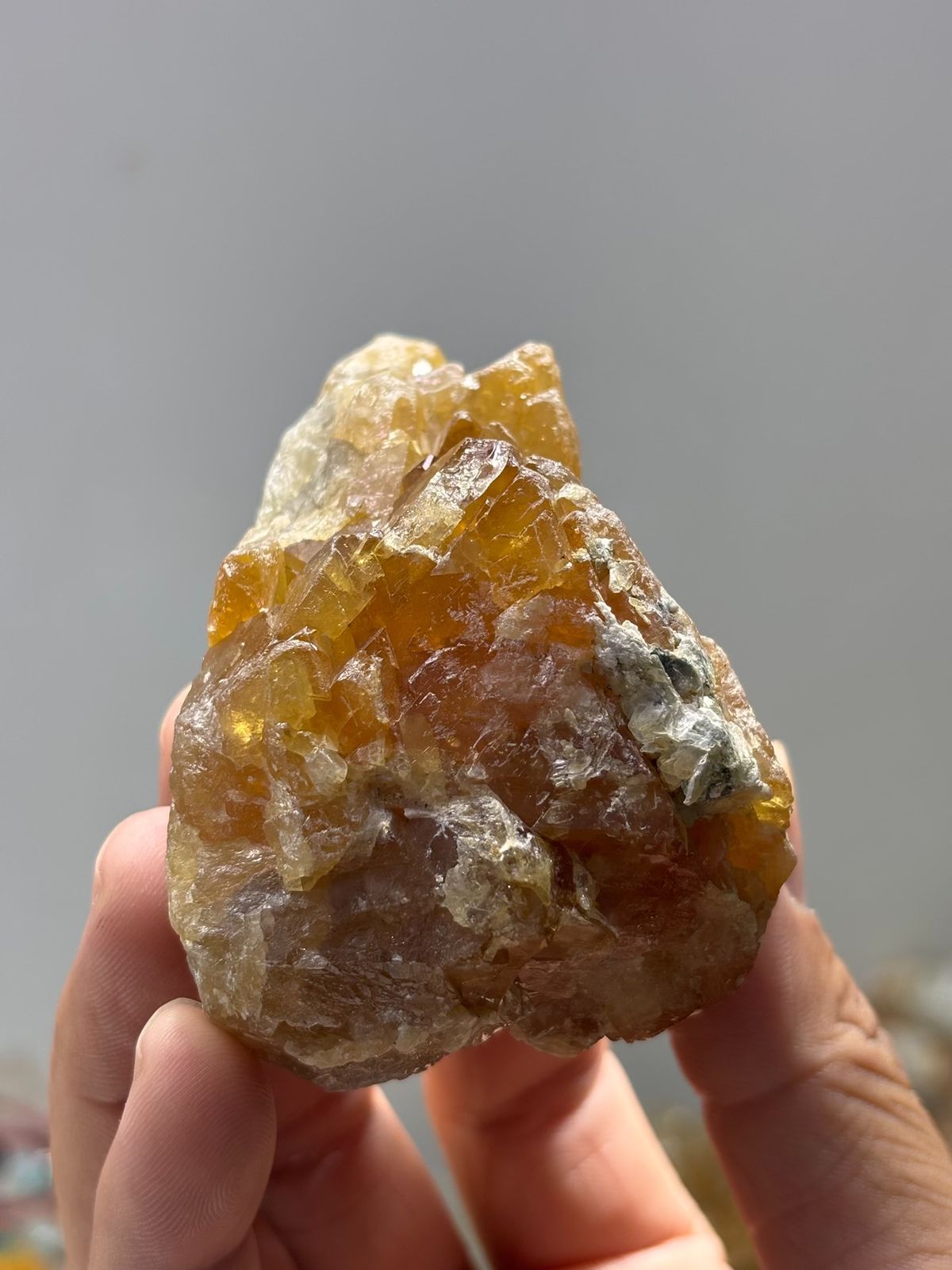
Available Scheelite specimens
Recently sold Scheelite specimens
External references
Scheelite on Wikidata.