
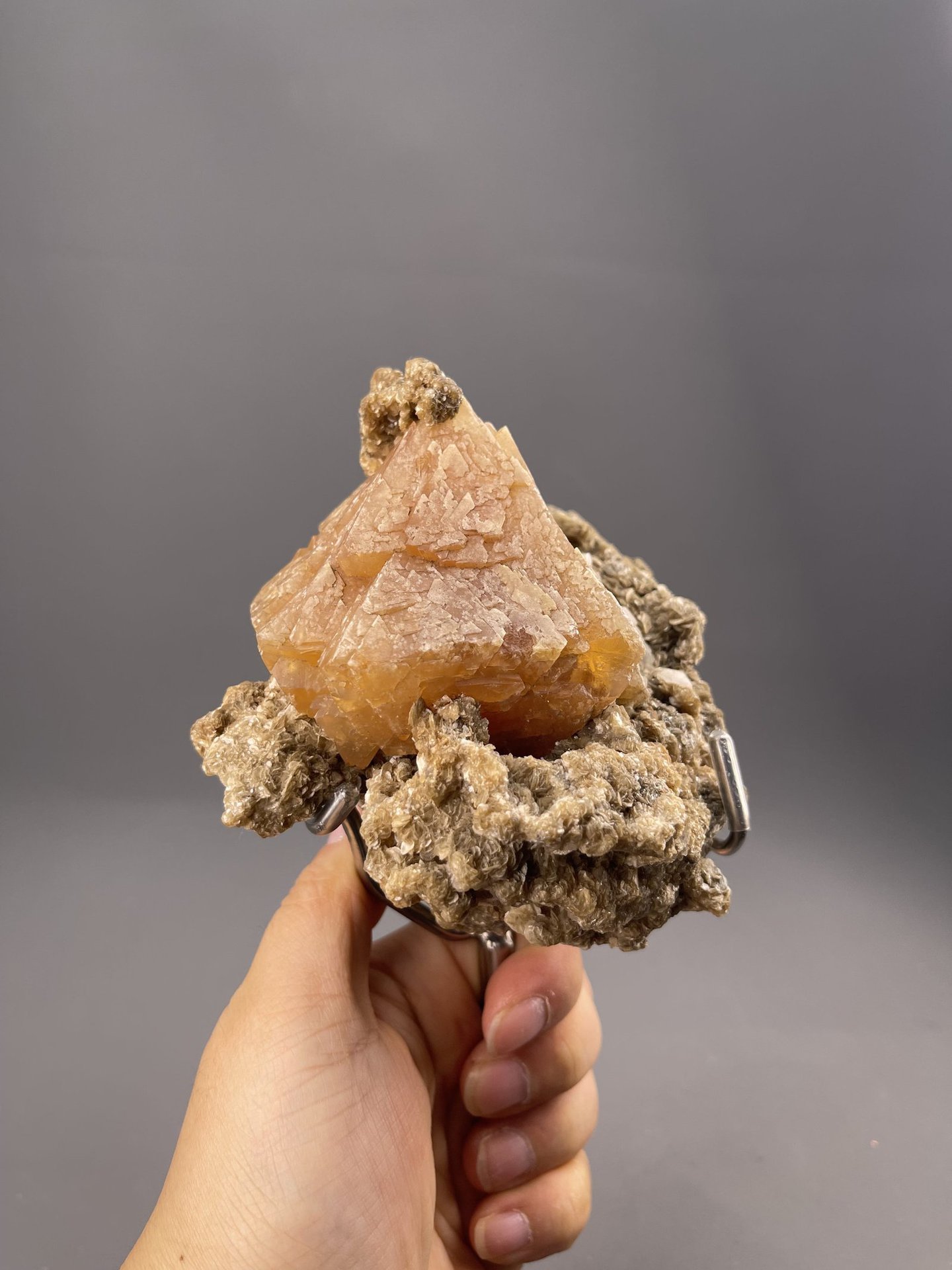
Why Xuebaoding scheelite is special
Xuebaoding (雪宝顶) is a high-altitude deposit in Sichuan that has produced the modern collector market’s benchmark scheelite — typically warm honey-to-orange octahedral crystals with a bright, almost resinous luster. Scheelite from here is prized for its color, gemmy faces, and sharp octahedral form.
The locality is also famous for the company scheelite keeps: cassiterite and pink "beryl var. morganite" often occur alongside it on the same pale matrix, and multi-species Xuebaoding plates are among the most sought-after Chinese specimens.
What Xuebaoding scheelite looks like
The classic crystal is an octahedron (or a pseudo-octahedral bipyramid) in shades from pale yellow through honey to deep orange-brown. The best crystals are translucent to gemmy, with bright faces that catch the light.
Scheelite at Xuebaoding frequently sits on a light-colored matrix of muscovite, feldspar, and quartz, often with black cassiterite crystals and/or pink beryl nearby. That pale-matrix-with-warm-crystals contrast is the signature Xuebaoding look, and recognizing it helps you judge whether a specimen fits its stated locality.
What to look for — quality factors
Color: warm, saturated honey-to-orange tones are generally most desirable; very pale or muddy crystals less so.
Transparency and luster: the finest scheelite is translucent and bright. Tilt the specimen to see how the faces gleam.
Crystal form and size: sharp, complete octahedra read as quality; a large, well-formed single crystal or a balanced cluster commands more interest.
Association and aesthetics: cassiterite or pink beryl alongside scheelite on a clean pale matrix adds significantly to a piece. How the crystals are arranged and how well the matrix sets them off matters as much as any single crystal.
Condition and what to check
Scheelite is moderately hard (about 4.5–5 on the Mohs scale) but, like many showy specimens, the value is concentrated in undamaged display faces. Check the main crystals closely for chips, contacts, or repairs — especially on the front.
Because Xuebaoding plates are often delicate matrix pieces with several crystals, also look at whether key crystals are securely attached and ask about any restoration. A small contact on the matrix edge is minor; damage to the principal scheelite crystal is not. Confirm the piece will be packed carefully, as matrix specimens travel less forgivingly than solid single crystals.
Sizes and what drives price
Xuebaoding specimens range from small single crystals and thumbnails to large multi-species cabinet plates. Price is driven by scheelite color and gemminess, crystal size and sharpness, the quality of any cassiterite or beryl association, matrix aesthetics, and condition — not by size alone.
A single gemmy, richly-colored, undamaged scheelite can outrank a larger but pale or chipped piece, and a well-composed plate combining scheelite with cassiterite and pink beryl can be the most valuable of all. Decide whether you want a fine single crystal or a multi-species plate, and buy the best condition within your budget.
Verifying locality and associations
Xuebaoding is a famous name, so it is worth checking that a specimen’s appearance — warm octahedral scheelite on a pale mica/feldspar matrix, often with cassiterite or pink beryl — fits the locality’s known style.
Look for a specific locality (Xuebaoding / Pingwu, Sichuan), photos of the actual specimen, and a seller who is clear about which species are present and how confident they are in the source. Honest disclosure of any uncertainty is the right answer.
How to start buying
Compare a few specimens side by side — scheelite color, transparency, crystal sharpness, the quality of associated cassiterite or beryl, and condition all become clearer in comparison. Read the locality page for context, keep the locality and species information with the specimen, and prioritize condition and color over sheer size.
The links below take you to the Xuebaoding locality page, the scheelite reference page, and the specimens we currently have in stock.
Is Xuebaoding still producing?
The question we hear most from Xuebaoding buyers: is the mine closed? The short answer as of 2026: organized specimen recovery has largely halted. Xuebaoding is a high-altitude locality in an environmentally sensitive area of Sichuan, and mining there has been progressively restricted; the flow of fresh pockets that defined the 2000s market has slowed to almost nothing. Most specimens sold today — ours included — come from material recovered years ago and held in collections or dealer stock.
For buyers this changes the calculus in two ways. First, condition matters more than ever, because a damaged piece can no longer be replaced by next season's find. Second, honest older material is quietly appreciating — Xuebaoding is following the same arc as Tongbei spessartine: a beloved locality whose supply story flipped from abundant to finite.
Beyond scheelite: aquamarine and friends
Scheelite may headline, but Xuebaoding's supporting minerals are collectible in their own right. The beryl here spans colorless goshenite to pale-blue aquamarine and pink morganite — flat, tabular crystals quite unlike the prismatic aquamarine of Pakistan or Brazil, and instantly recognizable to specialists. Black twinned cassiterite and silvery muscovite complete the classic paragenesis.
A plate carrying scheelite, beryl and cassiterite together is the full Xuebaoding statement piece, and competition for good ones is strong.
Go deeper on Xuebaoding and scheelite
Read the broader buyer guides
Frequently asked questions
What color is Xuebaoding scheelite?
Xuebaoding scheelite is typically warm yellow to honey-orange, ranging from pale to deep, and the best crystals are translucent to gemmy with bright octahedral faces. It commonly sits on a pale matrix, often with cassiterite or pink beryl.
What minerals occur with scheelite at Xuebaoding?
Scheelite at Xuebaoding is classically associated with black cassiterite and pink beryl (morganite) on a light-colored matrix of muscovite, feldspar, and quartz. Multi-species plates combining these are among the most prized Chinese specimens.
What makes one Xuebaoding scheelite better than another?
Color and gemminess, crystal size and sharpness, the quality of any cassiterite or beryl association, matrix aesthetics, and condition together determine quality. A small gemmy crystal can outrank a larger pale one, and a well-composed multi-species plate can be the most valuable of all.
Is Xuebaoding scheelite fragile?
Scheelite is moderately hard (about 4.5–5 on the Mohs scale), but many Xuebaoding pieces are delicate matrix plates with several crystals. Check that key crystals are undamaged and securely attached, ask about any repair, and make sure the specimen will be packed carefully for shipping.
Is the Xuebaoding mine closed?
Effectively, yes for new specimen production: as of 2026, mining at Xuebaoding has been heavily restricted for environmental protection, and fresh specimen recovery has largely stopped. Specimens on the market today are predominantly older material from dealer and collector stock, which is why well-preserved pieces are appreciating.
Does Xuebaoding produce aquamarine?
Yes — Xuebaoding beryl ranges from colorless goshenite to pale-blue aquamarine and pink morganite, typically as distinctive flat tabular crystals on muscovite, often alongside scheelite and cassiterite.
Why are Xuebaoding scheelite prices rising?
Supply ended while demand didn't. With specimen mining halted, the market runs on a finite pool of older material, and the best-condition pieces are being absorbed into permanent collections.