
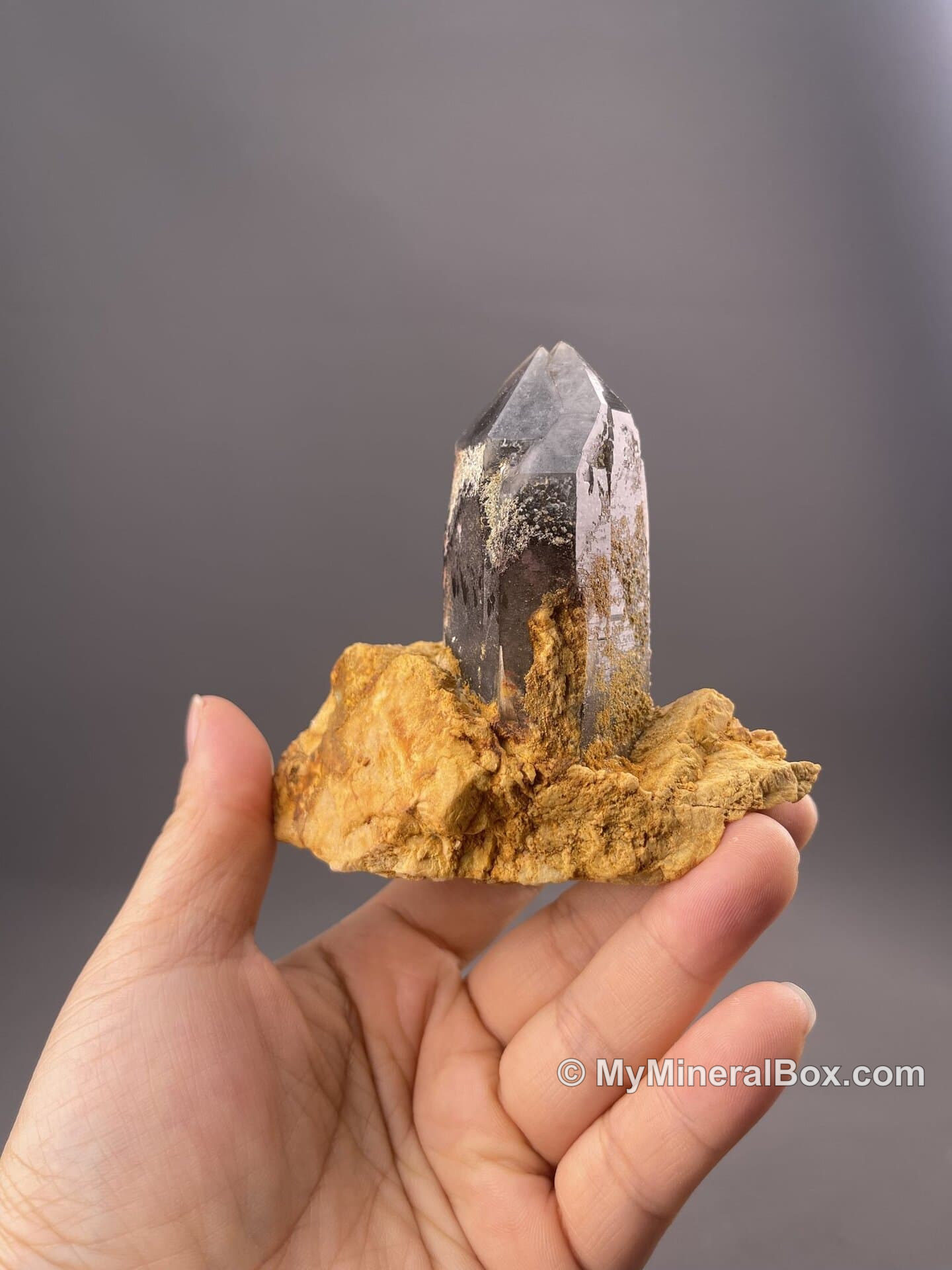
The Locality
The specimen-producing area centers on workings near Tongbei, Yunxiao County, Zhangzhou Prefecture, with related occurrences at Zhangpu. The locality record notes that the familiar Chinese garnet–smoky-quartz material appeared on the market in 1998 and explains that "Wushan Spessartine Mine" is collector shorthand for several small workings. Geologically, the garnets grew in granitic pockets with smoky quartz and feldspar.
A published collection record documents a 46 cm Wushan–Tongbei plate collected circa 2005. That dated example supports the size and period; it does not make every plate from that interval the finest.
Why Collectors Love It
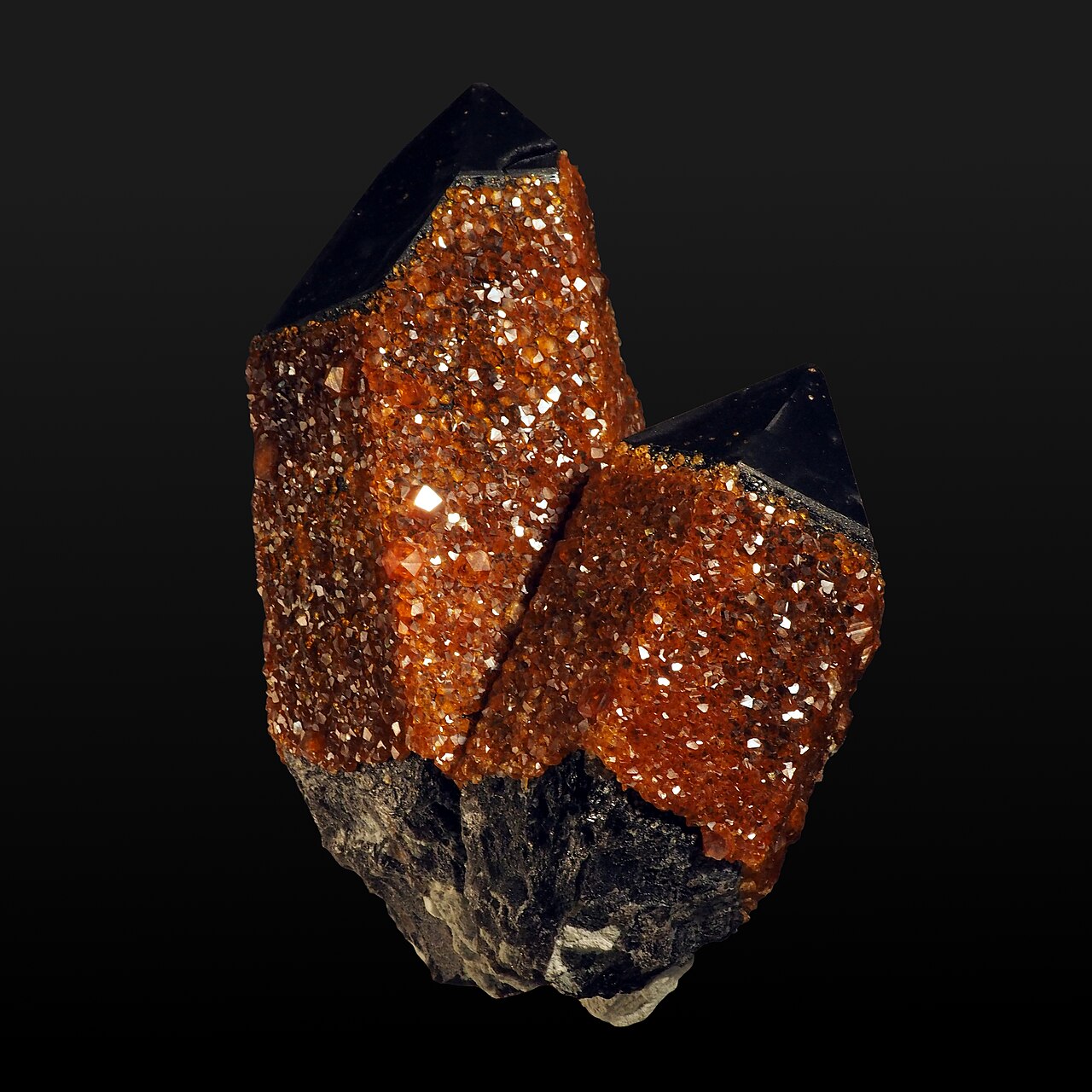
Color and contrast. Spessartine at Tongbei runs from bright mandarin orange to deep red-orange, and the crystals — sharp dodecahedra, typically a few millimeters to a centimeter — light up against dark smoky quartz or pale decomposed granite. The contrast principle that governs specimen aesthetics is on full display.
Composition. The best pieces read like miniature landscapes: a bold smoky quartz prism rising from a field of orange garnets. Cabinet-sized plates carpeted edge-to-edge with garnet, punctuated by quartz crystals, became signature display pieces in collections worldwide.
Accessibility. Tongbei produced generously, so honest, attractive specimens exist at every price point — one of the best "first Chinese mineral" purchases a new collector can make, while exceptional plates hold their own in advanced collections.
Beyond Garnet
Fujian's broader mineral endowment is substantial — geological surveys count dozens of metallic and non-metallic deposit types, with nationally significant reserves of pyrophyllite, kaolin, alunite, granite, fluorite and tungsten. For specimen collectors, though, quartz and garnet from the Yunxiao–Zhangpu district remain the province's calling card.
Collector's Notes
Two quality checks matter most. First, garnet coverage and freshness: the dodecahedra should be glassy and unbruised, not dull or abraded. Second, honest assembly: as with any plate-style material, examine contacts to ensure crystals haven't been glued onto matrix — genuine Tongbei plates show garnets growing with the quartz and feldspar, often partially embedded. Repaired smoky quartz prisms are common on large pieces and acceptable only with disclosure.
Prices for top plates have appreciated as production has waned, but mid-range Tongbei remains one of the great values in Chinese minerals — maximum visual drama per dollar.
---
Recent Developments (as of 2026)
The key change at Tongbei is access. Production has slowed to a trickle, many of the area mines have closed, and the Wushan workings now sit within a protected national park where collecting the exposed granite is prohibited. As a result, top spessartine-on-smoky-quartz plates are treated as modern classics and have appeared at major auctions, including Sotheby's natural-history sales — the market is now supply-constrained older stock rather than a stream of new plates, so condition and coverage on the pieces you can still find matter more than ever.
Sources and further reading
All text is original to MyMineralBox, based on our own sourcing experience and locality documentation. Image credits are shown with each photo.
Is it really spessartine? A note on garnet chemistry
A point worth knowing as a buyer: garnets form blended families, not pure species. Spessartine (the manganese garnet) grades continuously into almandine (the iron garnet), and many garnets sold worldwide as spessartine — especially from granite pegmatites — are actually almandine-rich intermediates. True, strongly manganese-dominant spessartine with the vivid orange color the name evokes is less common than dealer labels suggest.
This is precisely what makes Tongbei material special: its garnets formed in manganese-enriched pockets that produced genuinely spessartine-dominant crystals with the bright mandarin color the species is famous for. When you buy a fiery orange Tongbei plate, the label and the chemistry agree — which is not something every spessartine on the market can claim.
Tongbei among the world's spessartines
Modern fine spessartine is a story of a handful of localities, each with a distinct personality: the Loliondo-area finds of Tanzania and Namibia's Kunene region produce gemmy standalone crystals; Pakistan's Shigar Valley yields pegmatite garnets on feldspar; Nigeria supplies much of the faceting rough behind mandarin-garnet jewelry.
Tongbei's claim is different — no other locality ever matched its composition: hundreds of small blazing crystals scattered across smoky quartz, sold not as single stones but as landscapes. That is why Tongbei plates occupy their own niche in collections worldwide, and why the closure of the district turned existing plates into a closed edition.
Frequently asked questions
What is Tongbei spessartine?
Fiery orange spessartine garnet on smoky quartz and feldspar from the Wushan mine near Tongbei, Fujian — one of the most recognizable modern mineral associations, produced mainly from the late 1990s to mid-2000s.
Can you still collect at Tongbei?
Production has slowed to a trickle and the Wushan workings now sit inside a protected national park where collecting is prohibited, so top garnet plates are treated as supply-constrained modern classics.
What is mandarin spessartine?
Mandarin describes the pure vivid-orange color of the finest manganese-rich spessartine. In jewelry the term usually refers to Nigerian and Namibian gem material; among specimen collectors, Tongbei's garnets show the same mandarin color in natural crystal plates.
How is spessartine different from other garnets?
Spessartine is the manganese end-member of the garnet family. It blends chemically with almandine (iron garnet), so many labeled spessartines are intermediates — the vivid orange of manganese-dominant crystals, as at Tongbei, is the signature of the true species.
Is Tongbei still producing spessartine?
No — production wound down as the workings closed and the area came under protection. Today's supply is existing plates changing hands, which is why quality Tongbei material has been appreciating steadily.