
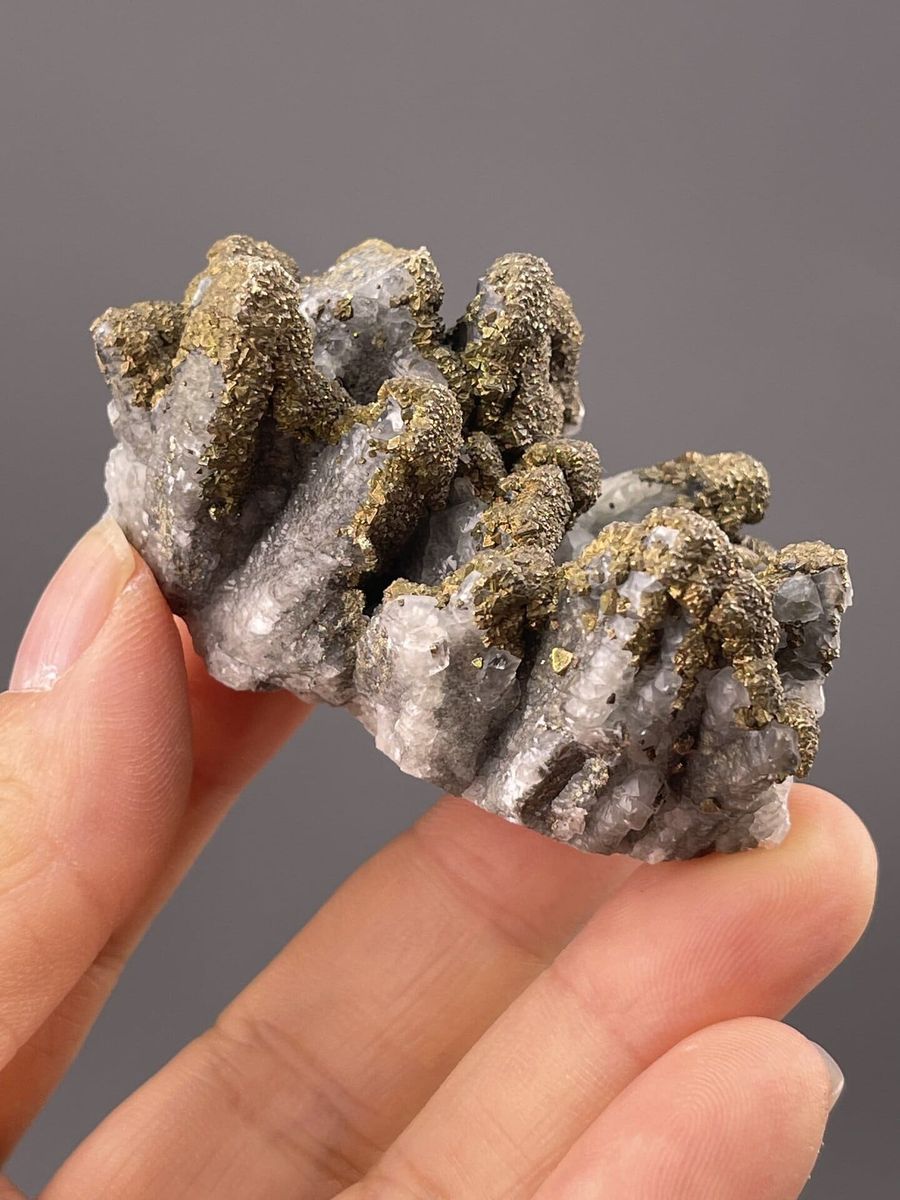
Color
Bright, saturated color wins. Red, orange, yellow, green, blue and purple minerals are, all else equal, more desirable than brown, gray, black or white ones. There are two interesting bonuses. First, when a normally colorless species appears in vivid color thanks to trace elements or inclusions — pink fluorite, red quartz, golden calcite — value jumps. Second, color contrast counts: purple fluorite perched on snow-white quartz is worth more than the same fluorite on gray rock, because the eye reads the whole specimen as a composition.
Crystal Size and Form
Bigger crystals are generally better — but only relative to the species. A 3 cm scheelite is enormous; a 3 cm quartz is nothing. You must know what "large" means for each mineral before you can judge a specimen against it. Form matters just as much: sharp edges, smooth natural faces, and the ideal "textbook" shape of the species. Rare crystal forms and visible twinning — fluorite spinel twins, calcite heart twins, Japan-law quartz — carry a real premium.
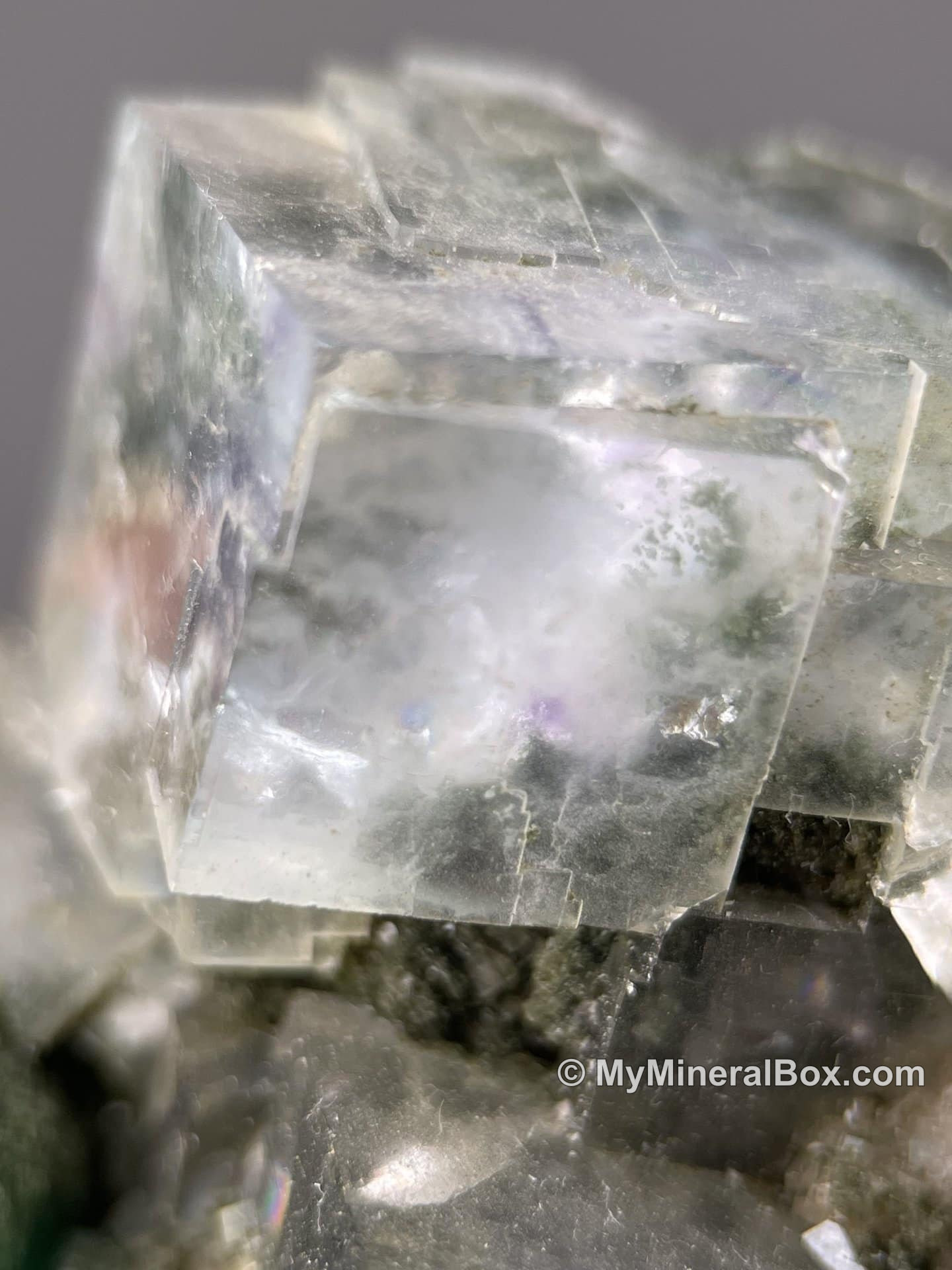
Transparency
Most non-metallic minerals can be translucent; fewer achieve full transparency. The more light passes through, the better. Fully transparent crystals are called "gemmy," and when a rare species like scheelite occurs in gemmy, richly colored crystals, specimen value and gem value reinforce each other dramatically.
Luster
Miners call it "shine," and it can make or break a piece. For non-metallic species you want glassy brilliance; for metallic species like stibnite, bournonite or acanthite, mirror-bright metallic luster is everything — a superbly lustrous metallic crystal can rival an emerald in price. Crucially, the luster must be natural: not enhanced by polishing, oiling or chemical treatment.
Aesthetics: The Composition
Three configurations dominate the market. Loose single crystals ("floaters") are prized when complete all around, with no point of former attachment. Crystal clusters are judged by "dominant crystal aesthetics": one or two focal-point crystals distinctly larger than the rest, well centered, draw the eye and elevate the piece above an even carpet of same-sized crystals. Matrix specimens — crystals on host rock — are the classic ideal. Look for balance: the crystal or cluster should be at least half the size of the matrix, with pleasing color harmony between crystal and host. Trimming matrix to an aesthetic shape is accepted practice, so long as the edges look natural.
Condition: The Unforgiving Criterion
Experienced collectors tolerate almost no visible damage. A tiny bruise on the tip of the focal-point crystal can destroy most of a specimen's value even if everything else is perfect. Repairs and restorations exist in the market and can be acceptable — but only with full, honest disclosure by the seller.
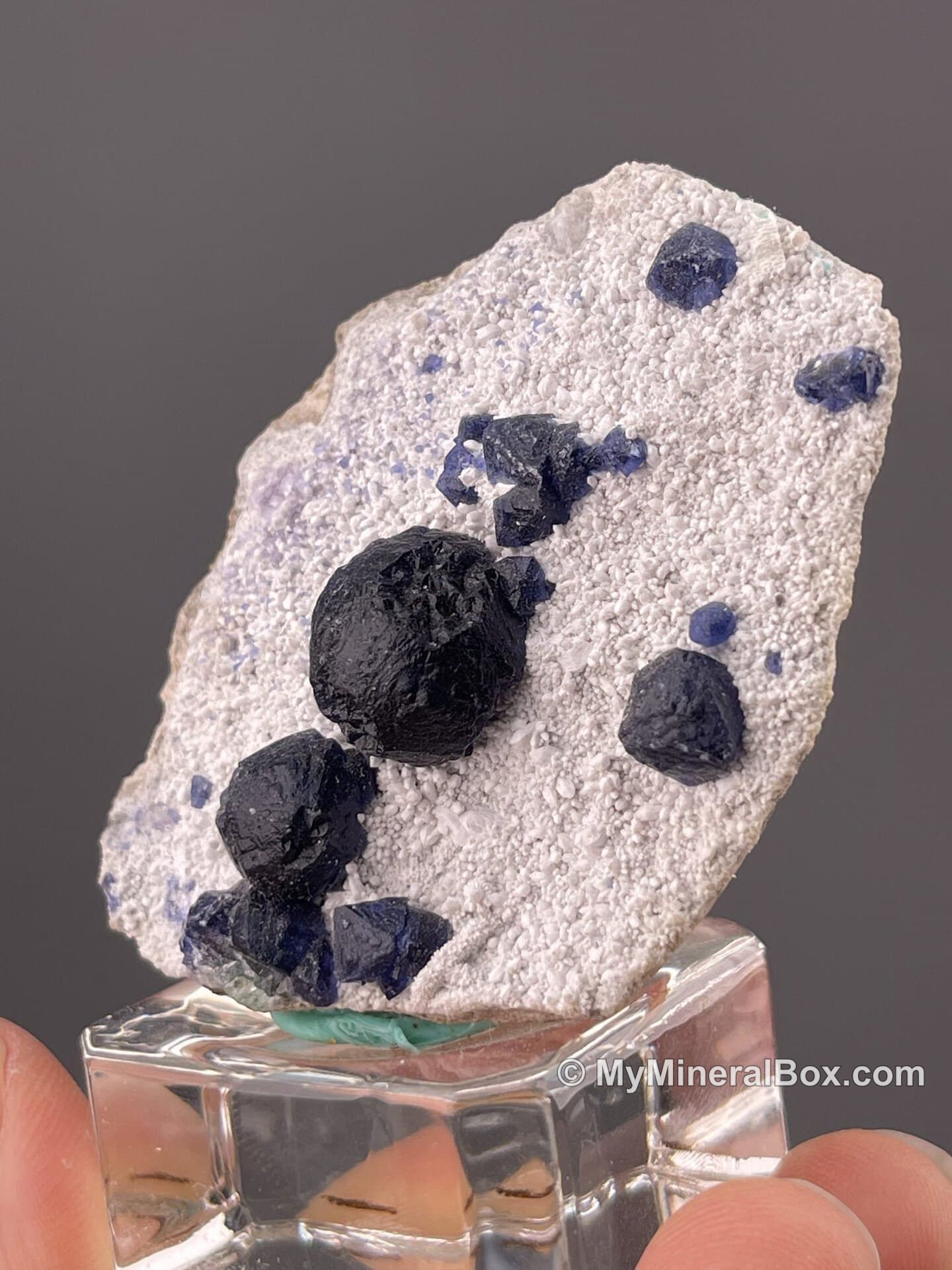
Treatments and Fakes: What to Watch For
Buyer education is part of quality judgment, and Chinese material has had its share of problems worth knowing about:
Oiling. Fluorite is sometimes wiped with oil to boost luster. Relatively harmless and washable, but oil penetrating cracks can fake transparency — and by Western standards, undisclosed oiling is unethical.
Irradiation. Pale fluorite can be irradiated to intense green or blue, and colorless quartz turned into jet-black "morion." Dealers may sincerely call these "natural." A suspiciously dark smoky quartz from a locality known for pale material deserves questions.
Assembled fakes. Glued-on crystals have appeared in waves — cinnabar suffered a market-wide reputation crash years ago because of glued specimens. Check crystal-matrix contacts carefully.
The defense is simple: buy from dealers who guarantee their material is natural and disclose any repair or treatment, and who stand behind locality data. Provenance and honesty are worth more than any single specimen.
Historic and Cultural Value
Finally, age and story add value. "Old classic" specimens from famous exhausted localities, with old labels documenting their history, command strong premiums. Chinese specimens collected before about 1990 are already entering this category — so little was preserved before then that early pieces are witnesses to the very beginning of China's collecting history.
Every MyMineralBox specimen is sold with accurate locality information and honest condition notes — the way it should be.
---
Sources and further reading
All text is original to MyMineralBox, based on our own sourcing experience and locality documentation. Image credits are shown with each photo.
Frequently asked questions
How do you judge the quality of a mineral specimen?
Collectors weigh color, crystal size and form, transparency, luster, aesthetic composition (how crystals sit on matrix), condition (no damage or hidden repair), and locality. No single factor decides value; a small flawless piece can beat a large damaged one.
How can you tell if a Chinese mineral is natural or treated?
Watch for irradiated fluorite (unnaturally intense green or blue) and quartz turned jet-black, oiled fluorite (artificial shine that fills cracks), and glued-on or assembled crystals. Buy from dealers who guarantee natural material and disclose any repair.
Does damage really lower a specimen's value?
Yes — a bruise or chip on the tip of a focal crystal can destroy most of a specimen's value even if the rest is perfect. Experienced collectors tolerate very little visible damage.