
Get the Environment Right First
Before you think about cabinets or stands, think about the room. Three environmental factors do almost all the damage collectors worry about: light, humidity, and temperature.
Light. Sunlight is the quiet destroyer of color. Many minerals hold their color through delicate radiation-related color centers in the crystal, and ultraviolet light slowly bleaches them. Amethyst, rose quartz, and much purple and green fluorite can visibly fade in a sunny window, sometimes within weeks. A few minerals go further and change chemically: realgar breaks down into an orange-yellow powder under prolonged light, and silver minerals such as proustite darken. Display sensitive pieces in indirect light, and keep the most fragile ones in a closed cabinet.
Humidity. A moderate, steady relative humidity of about 45-55% suits almost every collection. Problems appear at the extremes. Above roughly 60% you invite pyrite decay and let water-soluble species dissolve; below about 35% some hydrated minerals lose structural water, powder, and crack. It is the swings, not any one reading, that do the harm.
Temperature. Aim for stable rather than cool. Rapid temperature changes stress crystals, and minerals with strong cleavage like fluorite and calcite can pop a cleavage flake under thermal shock. Keep specimens off radiators, out of hot cars and attics, and away from drafty vents.
Minerals That Need Special Care in Storage
Most minerals are happy in any reasonable room. A minority are genuinely fussy, and knowing which is which saves heartbreak.
- Light-sensitive species. Realgar, proustite and pyrargyrite, and strongly colored fluorite and amethyst keep their color best in the dark. Store them in a closed drawer or cabinet and bring them out to enjoy rather than leaving them in the sun.
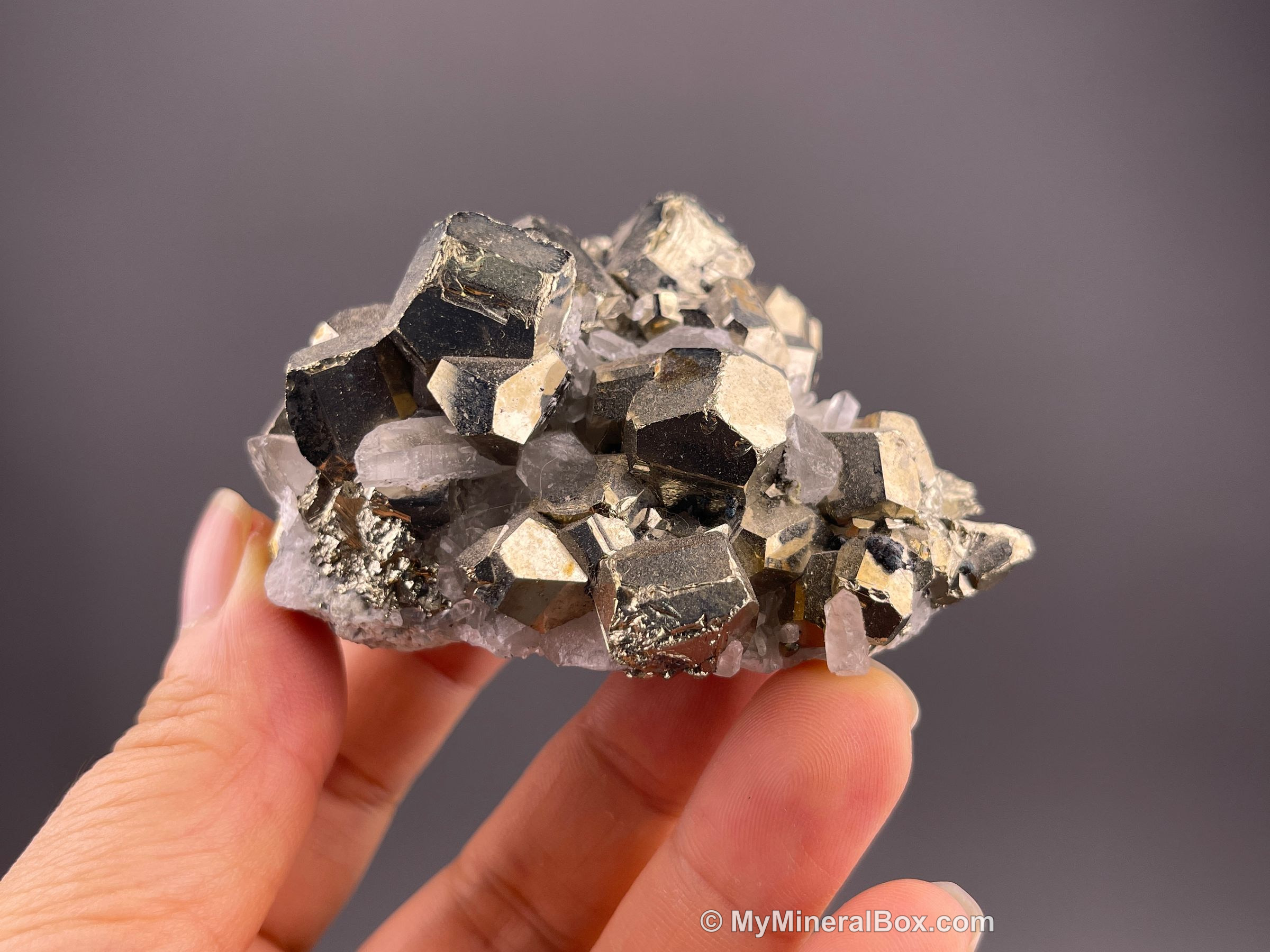
- Pyrite and marcasite. These iron sulfides are prone to "pyrite disease," a crumbling decay driven by humidity that leaves a sulfurous, powdery mess. Keep them dry, ideally below 45% humidity, and tuck a small packet of silica gel desiccant into their box or case.
- Water-soluble and deliquescent minerals. Halite, chalcanthite, and borax literally absorb moisture from humid air and can dissolve into a puddle. Seal them in an airtight container with desiccant.
- Toxic minerals. Cinnabar, realgar, and lead and copper minerals are safe as solid display pieces but should be kept whole, dry, and away from children and pets. We cover the details in our guide to toxic minerals you can keep at home.
When in doubt, a closed case with a silica gel pack is the safest home for anything you are unsure about.
Choosing a Display Case or Cabinet
The single best upgrade for most collections is an enclosed glass cabinet. A closed case keeps dust off your specimens, buffers them from swings in room humidity, and lets you control the lighting.
A few things to look for and to do:
- Enclosed glass beats open shelving. Dust is abrasive and endless; glass doors mean you clean the case, not every crystal.
- Use cool LED lighting. Modern LEDs give bright, true-color light with almost no heat and no ultraviolet, so they show minerals off without fading them. Avoid halogen and incandescent bulbs, which run hot.
- Mind the placement. Keep the cabinet away from bright windows, heating vents, and exterior walls that swing in temperature. An interior wall in a room you keep at a steady temperature is ideal.
- Add risers and stands. Tiered acrylic risers and small stands lift back-row pieces into view and let each specimen sit at its best angle.
If you live in an earthquake-prone area, a closed cabinet also lets you secure both the furniture and the specimens inside it.
Mounting and Handling Specimens Safely
How a specimen sits on the shelf matters as much as the shelf itself. The goal is to hold each piece securely at a flattering angle without gluing it down or letting it touch a harder neighbor.
- Museum putty is your friend. A pea of removable mineral tack or museum putty under a specimen stops it sliding, tipping, or walking toward the edge, and peels off cleanly later. It is far better than permanent adhesive, which can stain a base or damage a crystal when forced off.
- Respect the hardness scale. A soft mineral like fluorite (Mohs 4) or calcite (Mohs 3) will be scratched by a quartz or garnet sitting against it. Give each piece its own space so harder and softer minerals never rub.
- Cushion the fragile ones. For delicate sprays and fine crystals, a small pad of acid-free tissue or inert foam takes the pressure off contact points.
- Handle by the matrix, over a towel. Pick specimens up by their base rather than their crystals, and work over a folded towel so a slip lands softly. Bare hands leave oils and acids on the surface, so many collectors wear cotton or nitrile gloves for their better pieces.
Storing the Rest of the Collection
Few of us display everything we own. The overflow deserves as much thought as the showcase, because badly stored specimens quietly degrade in the dark.
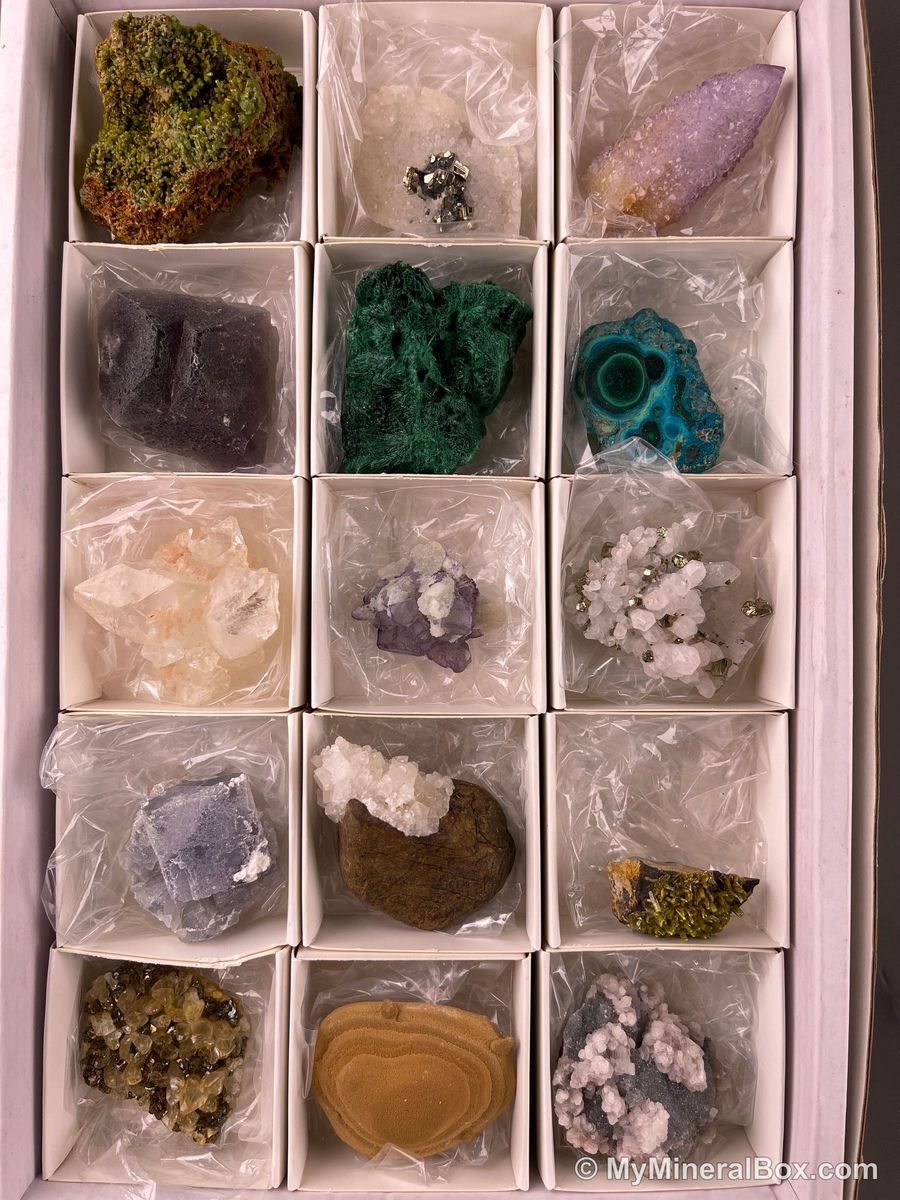
- Use proper boxes and flats. Cardboard flats with individual compartments, clear polystyrene lidded boxes, or micromount boxes keep pieces from rolling into one another. Nest each specimen in acid-free tissue or cut-out inert foam.
- Avoid acidic materials. Ordinary newspaper and low-grade cardboard can give off acids over years; acid-free tissue and archival trays are worth the small extra cost.
- Add desiccant where needed. A silica gel packet in drawers or boxes holding pyrite, marcasite, or soluble minerals holds the humidity down.
- Label and catalogue everything. A specimen without its locality label loses much of its value and meaning. Keep a number with each piece and a matching catalogue entry; our guide to labeling and cataloguing walks through a simple system.
Storing a collection this way also makes it a pleasure to rotate pieces in and out of the display, so the whole collection gets its turn in the light without any one specimen overstaying in the sun.
Frequently asked questions
How should you store a mineral collection long term?
Keep specimens in stable, moderate conditions: out of direct sunlight, at a steady 45-55% humidity, and away from temperature swings and heat sources. Store display overflow in acid-free flats or lidded boxes with each piece cushioned so it cannot knock against a harder neighbor, add a silica gel packet for pyrite or soluble minerals, and label every specimen with its locality.
What minerals fade or change color in light?
Amethyst, rose quartz, and many purple and green fluorites fade in direct sunlight because ultraviolet light bleaches the color centers in the crystal. Some minerals change chemically too: realgar breaks down into a powder under prolonged light, and silver minerals such as proustite darken. Keep these in indirect light or a closed cabinet.
How do I stop pyrite specimens from crumbling?
Pyrite crumbles through "pyrite disease," a humidity-driven decay. Keep pyrite and marcasite dry, ideally below 45% relative humidity, store them in a closed box or case, and add a packet of silica gel desiccant. Once a specimen is actively decaying it is hard to reverse, so prevention through dry storage is the key.
What is the ideal humidity for storing minerals?
A steady relative humidity of about 45-55% suits almost every collection. Above roughly 60% you risk pyrite decay and can dissolve water-soluble minerals; below about 35% some hydrated minerals lose water and crack. Stability matters more than hitting an exact number, so avoid rooms with large humidity swings.