
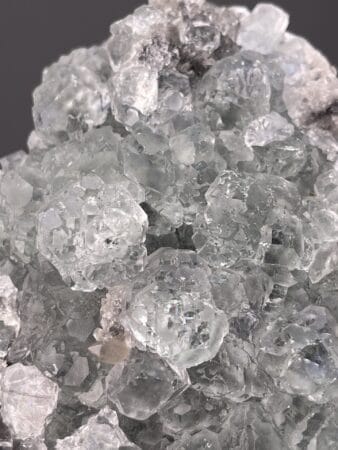
What fluorescence is
Fluorescence is the trick of absorbing invisible ultraviolet light and instantly re-emitting it as visible light. The glow usually depends on tiny amounts of "activator" elements — manganese, lead, tungsten, uranium or rare earths — built into the crystal; the same mineral can glow brightly from one locality and not at all from another.
If the glow stops the instant the lamp goes off, that is fluorescence. If it keeps shining for seconds or minutes afterward, that lingering afterglow is called phosphorescence.
Shortwave vs longwave UV
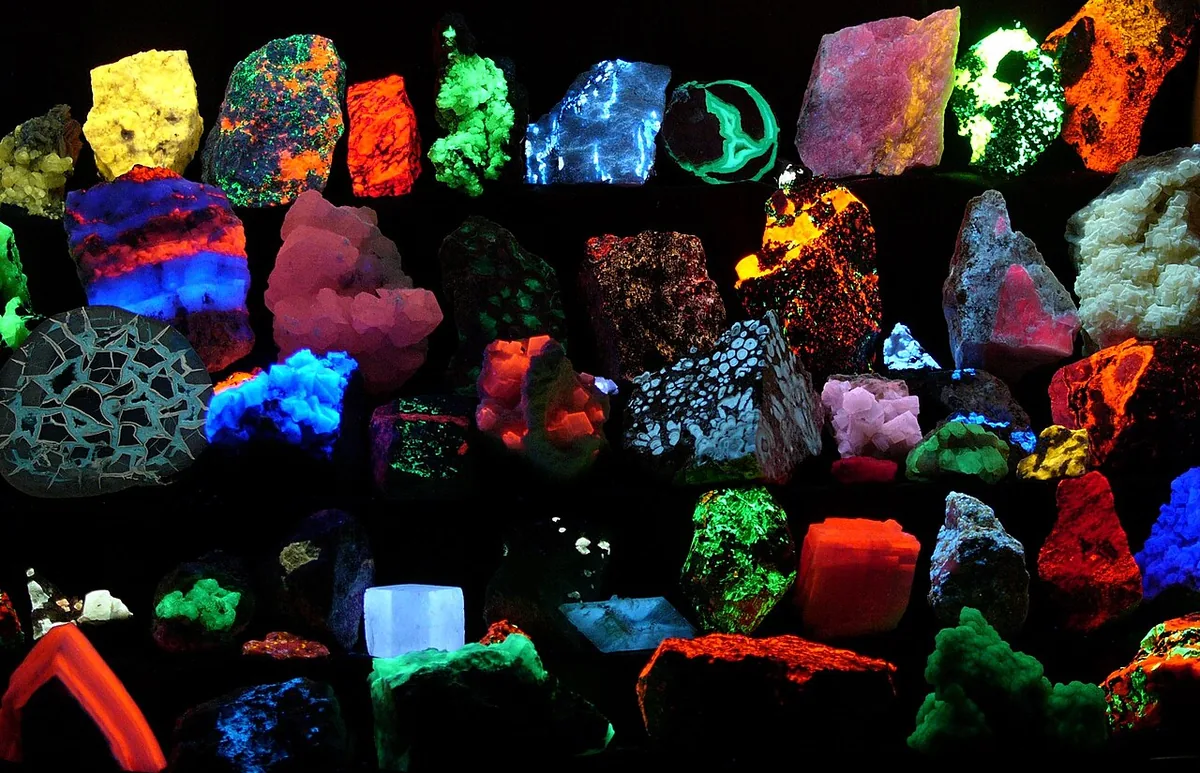
Ultraviolet comes in bands, and minerals are fussy about which they answer to. Longwave (around 365 nm) is the cheap "black light" found in most UV flashlights; shortwave (around 254 nm) needs a special filtered lamp and is what makes the famous Franklin minerals blaze.
Many species respond to only one band, so serious fluorescent collectors use a lamp that offers both. The same rock can look completely different under shortwave and longwave.
The classic glowing species
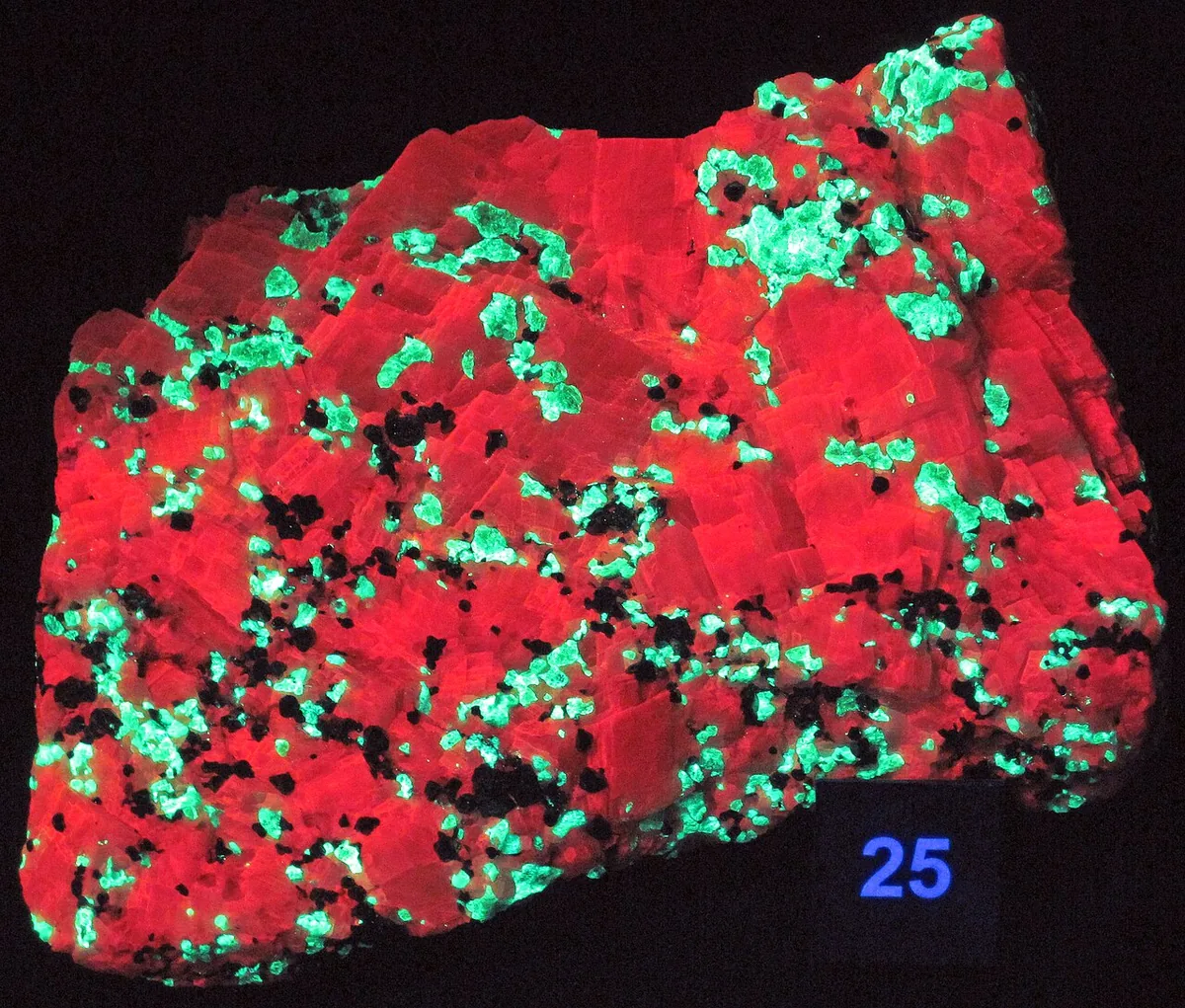
A short list shows up again and again: calcite (often glowing red or pink), willemite (green), fluorite (blue to violet — the word "fluorescence" was actually coined after fluorite), scheelite (a vivid blue-white under shortwave), and sphalerite, hyalite opal and hackmanite.
The combination of red calcite and green willemite from Franklin, New Jersey is the single most famous fluorescent pairing in the hobby.
A Chinese angle: scheelite that glows
Fluorescent collecting is not only a Western story. Scheelite — calcium tungstate — fluoresces a bright ice-blue under shortwave UV, and the gemmy orange scheelite of Xuebaoding in Sichuan is world-class collector material documented in a dedicated deposit study. The same crystal can look warm orange by day and electric blue under the lamp.
Many Chinese fluorites and calcites also respond to UV, so a UV light is a genuinely useful tool when examining Chinese specimens, not just a novelty.
Choosing a UV lamp — safely
For real fluorescent collecting, buy a proper filtered lamp that offers both shortwave and longwave; an unfiltered or cheap bulb leaks visible light and washes out the glow. Shortwave is the more rewarding band but also the more hazardous.
Ultraviolet light can burn eyes and skin like an arc welder, so always wear UV-blocking glasses, never look directly at the lamp or shine it at anyone, keep exposure short, and work in a ventilated space. Treat a shortwave lamp with respect.
Building a fluorescent collection on a budget
Fluorescence is the great equalizer: a plain grey lump worth a few dollars by daylight can blaze more brilliantly than a specimen costing a hundred times more. That makes it an ideal way to start collecting.
Label each piece with the band it responds to (shortwave, longwave or both) and its glow color, and display the collection in a dark cabinet or a drawer you can darken — the reveal when the lamp comes on is half the fun.
Frequently asked questions
Why do some minerals glow under UV light?
They absorb ultraviolet light and re-emit it as visible light, usually because of trace "activator" elements in the crystal. The same species can glow from one locality and stay dark from another.
What's the difference between shortwave and longwave UV?
Longwave (~365 nm) is the common, inexpensive 'black light'; shortwave (~254 nm) needs a special filtered lamp and triggers many of the most famous fluorescent minerals. Many species respond to only one band.
Is a cheap UV flashlight good enough?
A longwave UV flashlight will reveal some fluorescence and is a fine, safe start. To see the full range — especially the Franklin classics — you need a filtered shortwave lamp and proper eye protection.
Do Chinese minerals fluoresce?
Yes — scheelite from Xuebaoding glows bright blue under shortwave UV, and many Chinese fluorites and calcites also respond. A UV light is a useful tool for examining Chinese specimens.