
The First Internet-Age Chinese Mine
Then Huanggang happened.
The Huanggang iron-tin deposit in Hexigten (Keshiketeng) Banner, Chifeng Prefecture, is a cluster of numbered mines — collectors will see labels citing "Huanggang No. 1" through "No. 5" — working one of the largest skarn systems in Asia. When specimens finally began emerging in late 2007, something unprecedented occurred. The miners' education, which had taken two decades at older localities like Yaogangxian, compressed into a couple of years; dealers moved pockets from underground to the international market within weeks. Huanggang became the first Chinese locality of the true internet age: better quality, greater quantity, and faster delivery than any locality before it. Within five years it stood comparison with Dalnegorsk in Russia and the great Hunan mines.
What the Skarn Gives
Skarn deposits — formed where hot magmatic fluids react with carbonate rock — produce mineral suites unlike hydrothermal veins, and Huanggang's species list reads like nowhere else in China:
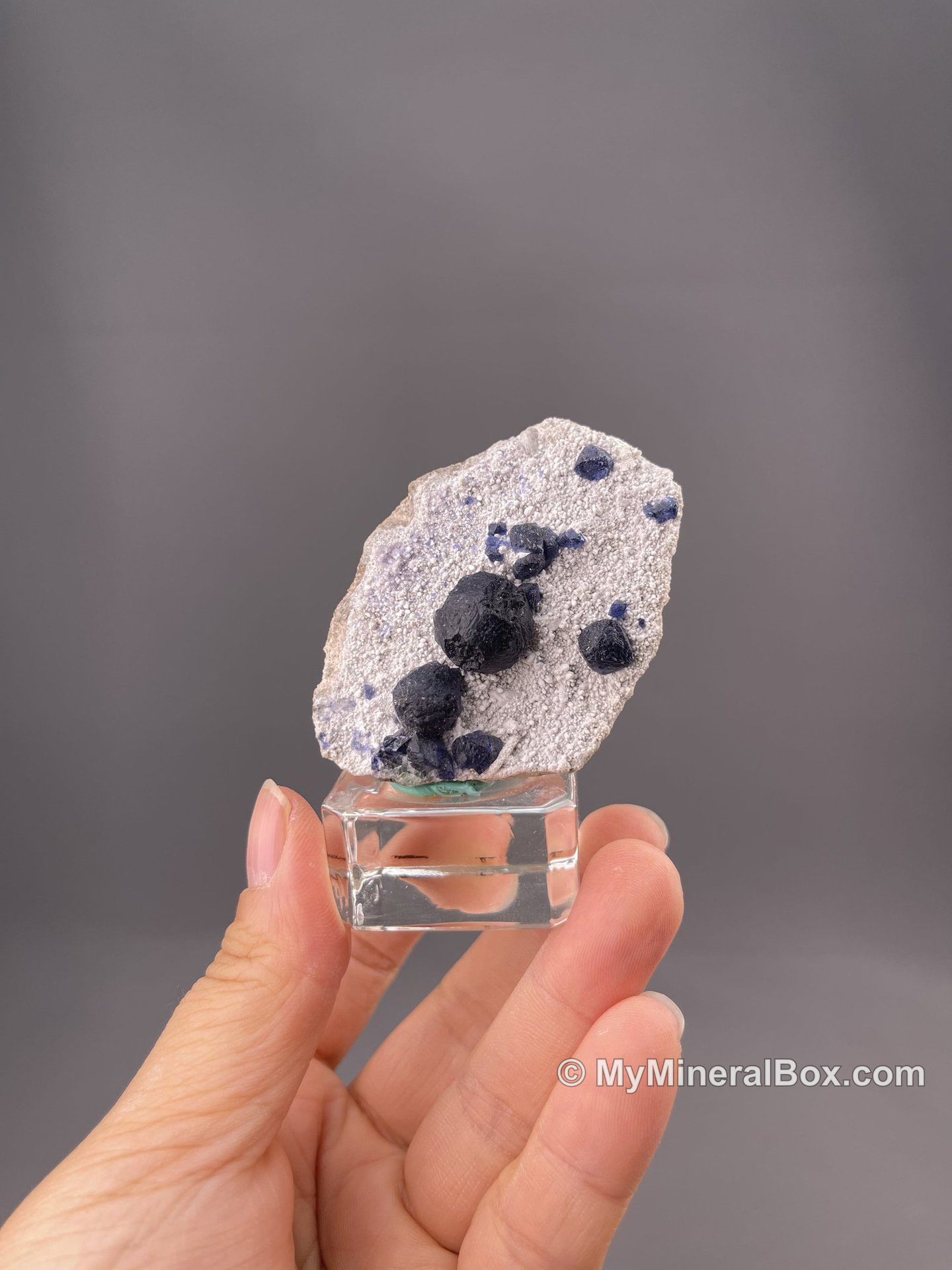
Pink fluorite. Delicate rose-colored octahedral crystals, often with stepped, hoppered faces. Early finds were largely destroyed before miners learned extraction; surviving large clusters from 2010 are notable modern material.
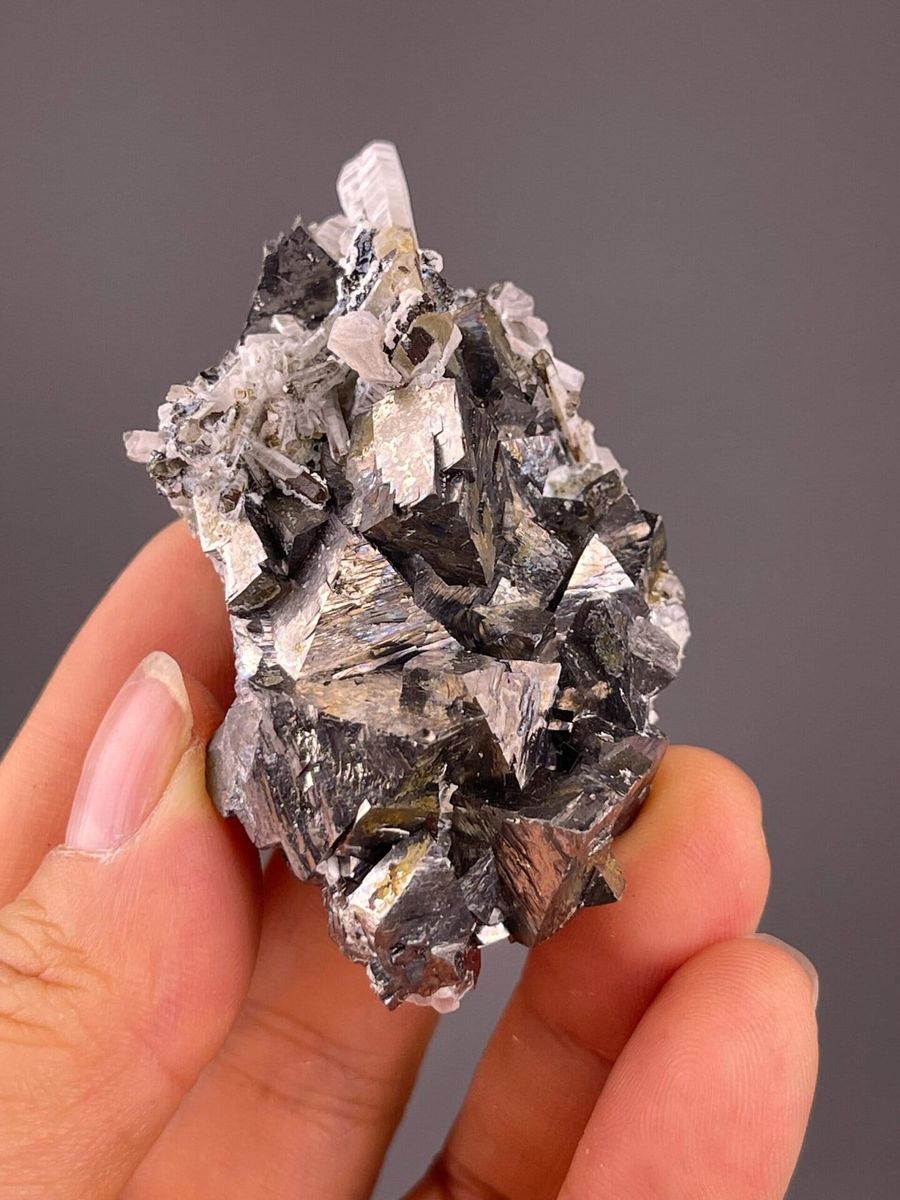
Ilvaite. Jet-black, prismatic calcium-iron silicate crystals with brilliant luster. A dedicated 2012 Mineralogical Record monograph documents Huanggang after fine ilvaite specimens reached collectors in 2010, establishing it as a major modern source without requiring an objective finest-ever ranking.
Arsenopyrite and löllingite. Silvery, sharply faceted metallic crystals in bold groups, sometimes sitting on beds of ilvaite — a combination of forms and textures that has become a Huanggang signature.
Gem sphalerite, purple scheelite, borcarite and friends. Transparent sphalerite on colorless fluorite, rare purple scheelite crystals, and unusual borates like borcarite extend the locality's collector range.
Fluorescent pink calcite. Pink calcite groups from Mine No. 5 fluoresce deep red under ultraviolet light.
A note on labels: apophyllite-(KF) specimens from the Chaobuleng mine in Dongwuzhumuqin, a separate Inner Mongolian locality, are frequently misattributed to Huanggang. Accurate locality data matters — it is part of what you are collecting.
Collector's Notes
Huanggang's great production window (roughly 2008–2014) delivered abundant material, so excellent specimens remain accessible — but high-grade pink fluorites, large ilvaites, and unusual species are encountered less often as production declines. Because output was fast and well-documented, pocket-dated provenance ("from the 2010 pink fluorite pocket") adds real value.
For collectors building a China suite, Huanggang is essential: it represents both a different geology (skarn versus vein) and a different era (the internet age) from the classic southern localities.
---
Mine numbers are separate localities, not decoration
Huanggang is recorded as a parent deposit — Huanggang Fe-Sn deposit, Hexigten Banner (Keshiketeng Co.), Chifeng City, Inner Mongolia — with the individually numbered mines (No. 1 through No. 6) as distinct localities, tracked at the numbered-mine level. Two rules keep a collection honest.
A sub-mine number ("Huanggang No. 3") belongs on a label only when the original label or ownership trail states it — most market specimens are labeled simply "Huanggang," and that is the honest attribution level. And never infer a mine number from species, habit or color: if a label says only "Huanggang" or "Inner Mongolia," record exactly that level and no more. This locality structure follows the Huanggang deposit and its numbered mines, such as No. 1 Mine.
Recent Developments (as of 2026)
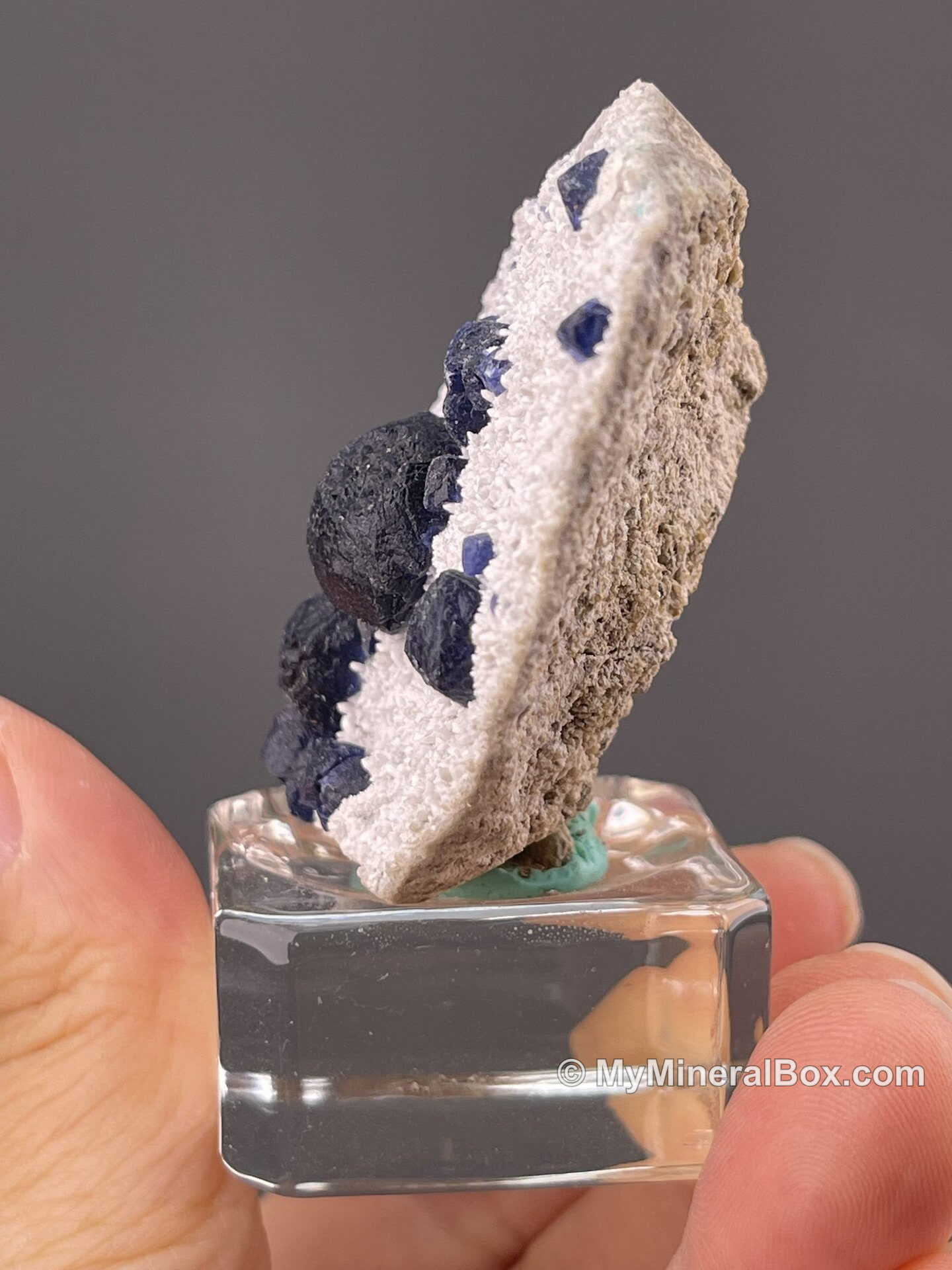
Huanggang remains the dominant modern source of its signature species — multi-generation blue-green fluorite, glossy black ilvaite, silvery arsenopyrite, and the butterfly-twinned manganoan calcite that has become a locality trademark — with fresh material still reaching dealers through 2023–2024. Production is now uneven across the numbered pits, however: Mine No. 4 is reported nearly depleted, and periodic mining crackdowns across Inner Mongolia add access uncertainty even though no full closure has occurred. The practical lesson for collectors is to buy the distinctive habits (pink octahedral fluorite, large ilvaite, fluorescent calcite) while the complex is still yielding them, since output is clearly tapering.
Sources and further reading
All text is original to MyMineralBox, based on our own sourcing experience and locality documentation. Image credits are shown with each photo.
Frequently asked questions
What minerals come from the Huanggang mine?
The Huanggang skarn in Inner Mongolia produces pink and blue-green fluorite, lustrous black ilvaite, silvery arsenopyrite and löllingite, gem sphalerite, purple scheelite, and fluorescent pink calcite — including a distinctive butterfly-twinned manganoan calcite.
Is Huanggang still producing specimens?
Yes, though unevenly. Fresh material still reached dealers through 2023–2024, but some pits (such as No. 4) are reported near depletion and Inner Mongolian mining crackdowns add access uncertainty, so output is tapering.