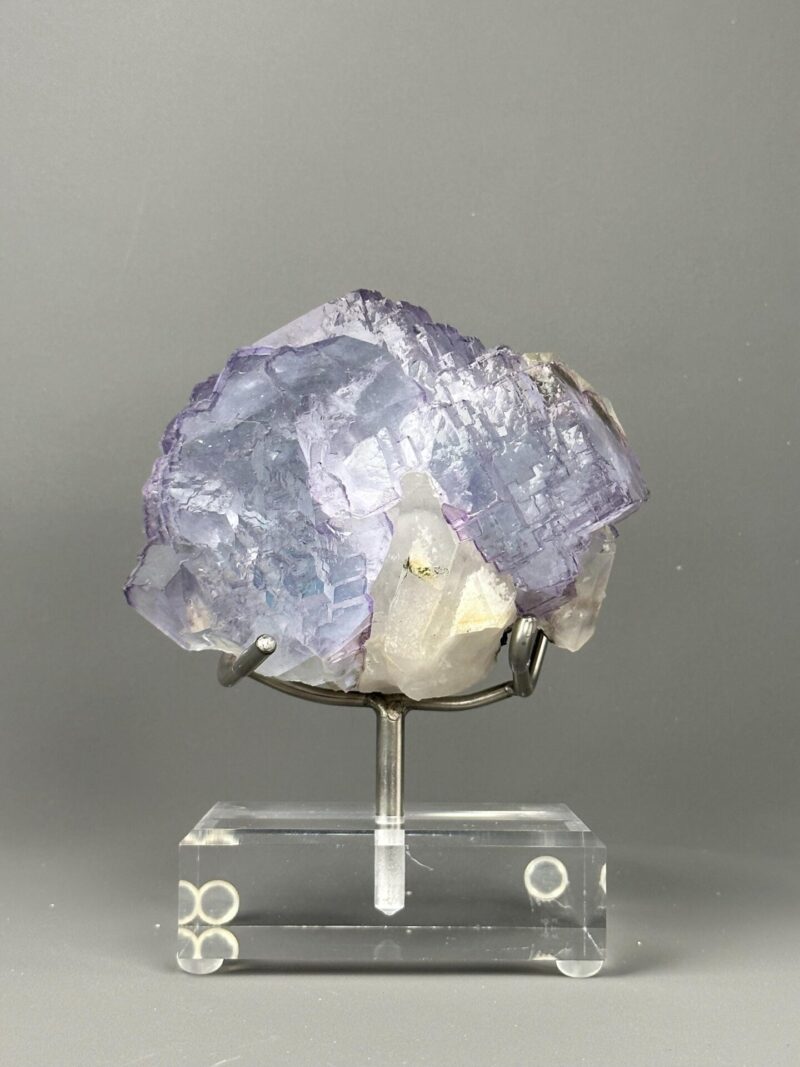
Obsidian is a naturally occurring volcanic glass formed by the rapid cooling of felsic lava. Despite being technically a “mineraloid” (lacking crystal structure), it is mineralogically classified within the silicates and is one of the most culturally significant rocks in human history — used for tools and weapons since the Paleolithic.
Properties
- Formula: Approximately 70-75% SiO2 + Al, Na, K, Fe, Mg oxides
- Crystal system: Amorphous (volcanic glass)
- Hardness: 5 – 5.5
- Color: Black; varieties: snowflake, mahogany, rainbow, sheen, golden
- Streak: White
- Luster: Vitreous (glassy)
- Cleavage: None (conchoidal fracture, razor-sharp edges)
- Density: 2.3 – 2.6 g/cm³
Occurrence in China
Obsidian forms at felsic volcanic centers worldwide. Major Chinese occurrences in Tengchong (Yunnan), Sichuan Cenozoic volcanics, Inner Mongolia, and Heilongjiang. Globally famous from Glass Buttes (Oregon), Lipari (Italy), Iceland, Mexico and Armenia.
Identification
Black glass + conchoidal fracture + razor-sharp cutting edges + vitreous luster. “Rainbow obsidian” shows iridescent layers due to magnetite microcrystal alignment; “snowflake” has cristobalite spherulites.
Collector Notes
Modern Chinese obsidian (天然黑曜石) is widely worked as beads and carvings, particularly the “rainbow” and “ice” sheen varieties from Tengchong. Affordable, abundant, and good for educational collections.
Found at these Localities
- Tengchong Volcanic Field (腾冲火山区)
- Inner Mongolia (内蒙古)
- Yunnan (云南)
- Sichuan (四川)
- Italian Volcanic Province (Vesuvius / Lipari / Etna) (意大利火山矿物产地)