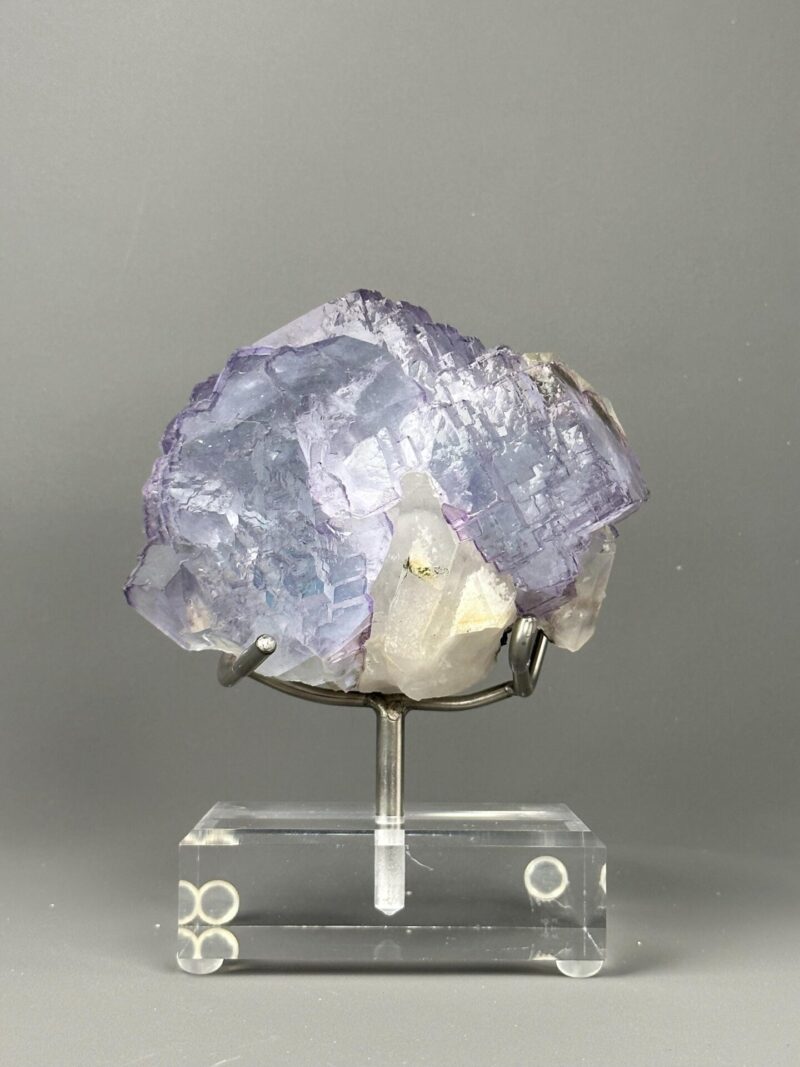
Vesuvianite (Ca₁₀(Mg,Fe)₂Al₄(SiO₄)₅(Si₂O₇)₂(OH)₄), historically called “idocrase,” is a calcium-magnesium-aluminum sorosilicate that forms in contact-metamorphic skarns. It was first described in 1795 from blocks ejected by Mount Vesuvius, hence the name. Color ranges from common olive-green and brown through rare blue (“cyprine,” with copper) and green-yellow gem material — the “californite” jade-substitute variety from California, and the cyprine variety from Norway are particular collector targets.
Key Facts
- Mohs hardness 6.5.
- Tetragonal; prismatic with pyramidal terminations.
- Forms in contact-metamorphic skarns — typically in carbonate-igneous intrusion contacts.
- “Cyprine” variety is rare blue, colored by copper substitution.
- “Californite” is massive green idocrase used as jade substitute.
Notable Localities
Mount Somma (Vesuvius, Italy) is the type locality. Asbestos and Jeffrey Mine (Quebec) produce world-class material. Crestmore (California) yields californite. Sichuan skarn deposits host minor occurrences.
Found at these Localities
- Italian Volcanic Province (Vesuvius / Lipari / Etna) (意大利火山矿物产地)
- Magnet Cove (马格尼特湾碱性杂岩)
- Sichuan (四川)