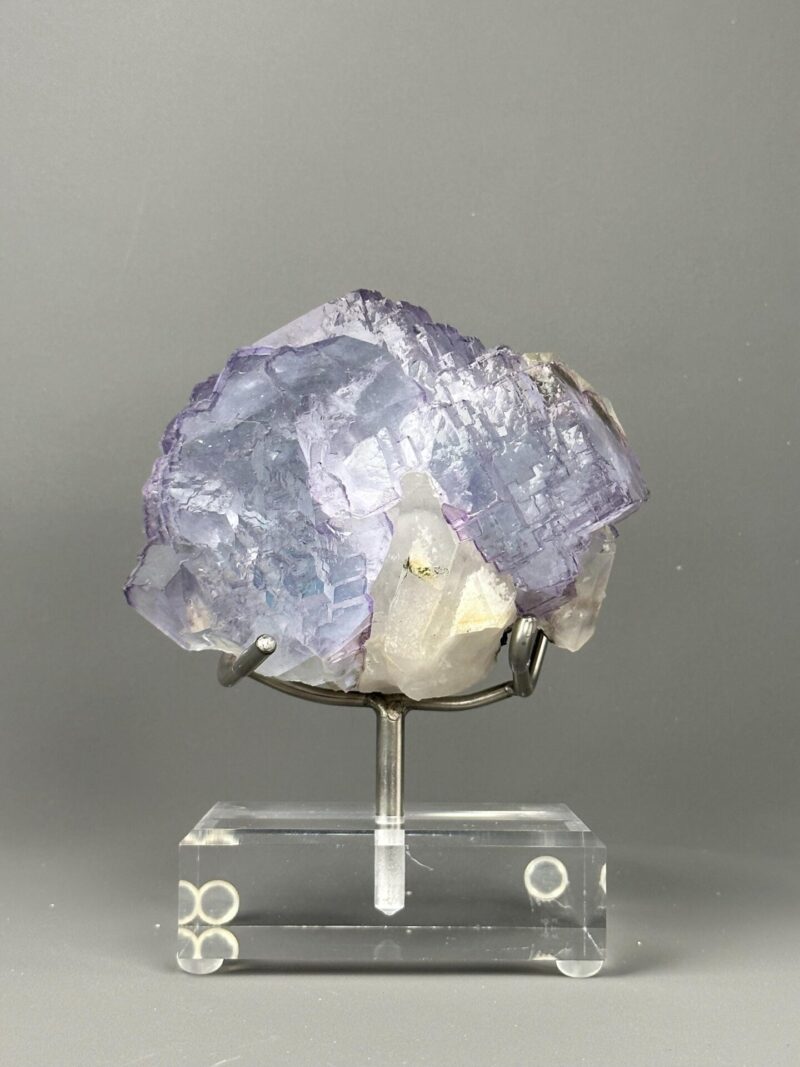
Epidote (Ca₂(Al,Fe)₃(SiO₄)₃(OH)) is a calcium-aluminum-iron sorosilicate famous for its distinctive pistachio-green to dark-green color and long striated prismatic crystals. It is the namesake of the epidote group and a widespread metamorphic indicator mineral. The Knappenwand locality in Austria is the historical world standard, producing meter-long prismatic crystals; modern collector specimens come from Alaska, Pakistan, and the Sichuan basin in China.
Key Facts
- Mohs hardness 6–7.
- Monoclinic; long prismatic crystals with deeply striated faces along the c-axis.
- Diagnostic pistachio-green color from Fe³⁺ substitution.
- Forms in regional metamorphic rocks, hydrothermal veins, and skarn assemblages.
- Often associated with quartz, calcite, prehnite, and actinolite.
Notable Localities
Knappenwand (Austria) is the type-locality benchmark. Sulzer Bay (Alaska, USA) and Prince of Wales Island (Alaska) produce gem-quality crystals. Sichuan skarn deposits yield collector material.
Found at these Localities
- Swiss Alps (Alpine-Cleft Province) (瑞士阿尔卑斯高山裂隙矿物产地)
- Trimouns Talc Mine (特里穆滑石矿(法国))
- Skardu / Shigar Valley (斯卡都/希加尔峡谷)
- Sichuan (四川)