History · Geology
About Swiss Alps (Alpine-Cleft Province)
The Swiss Alps host one of the world’s most refined alpine-cleft mineral collecting traditions, dating to the 18th century. Famous areas include the Gotthard massif, Binntal, Maderanertal, Val Cristallina, Furka, Lukmanier and Grimsel — each preserving a distinct alpine paragenesis. (Cavradi, separately recorded, is one of the most legendary individual sites.)
Geology
Alpine clefts (Klüfte) form during late Alpine deformation as fluid-filled fissures within metamorphic gneisses, micaschists and amphibolites. Late-stage hydrothermal fluids at 250-450°C precipitate quartz, fluorite, adularia, kyanite, staurolite, hematite, rutile and titanite into open clefts.
Notable Minerals
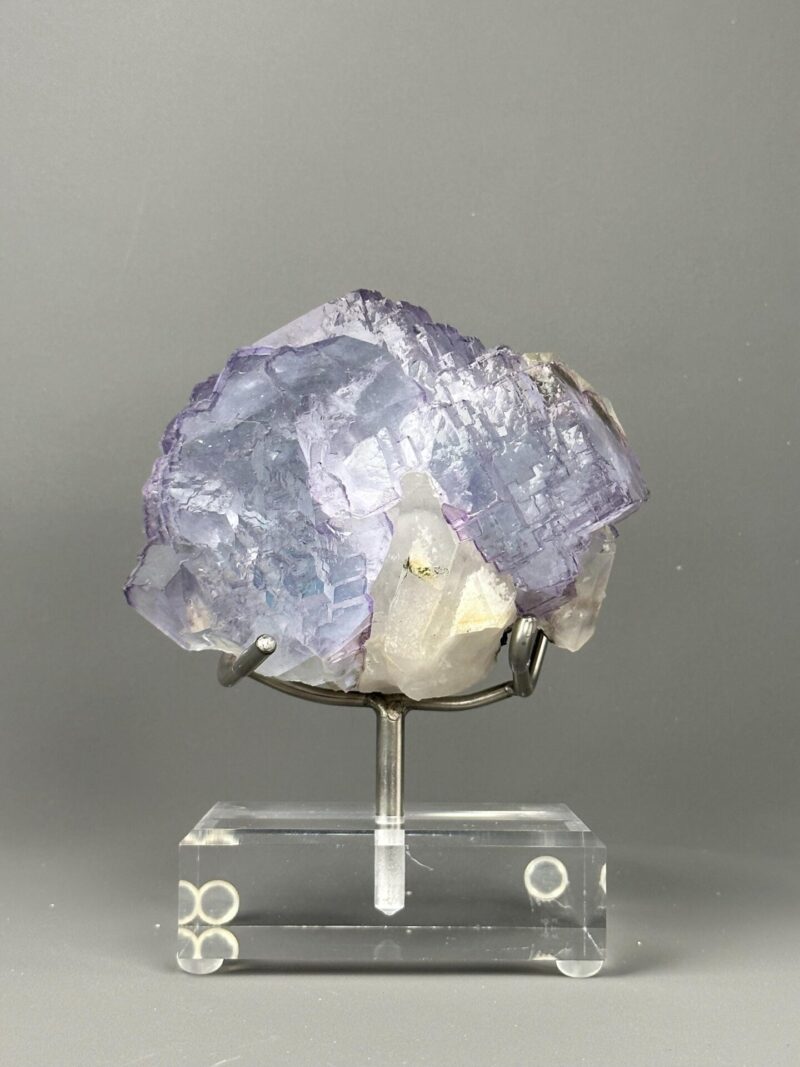
Kyanite (sky-blue blades — Pizzo Forno is the type-quality global standard), staurolite (cruciform-twin Russian-cross crystals, also notable French Brittany), andalusite (chiastolite — variety with carbonaceous cross), quartz (smoky and gwindel-twisted varieties), adularia (white K-feldspar prisms — type locality), fluorite (pink octahedral — Mont Blanc), hematite (specularite roses), rutile, titanite, epidote, clinozoisite (Knappenwand classic — Austria but adjacent), garnet, muscovite.
Collector Notes
Swiss alpine specimens carry premium provenance value. The “Strahler” (alpine collector) tradition is one of European mineralogy’s living heritages.
Minerals Produced Here
- Agate (玛瑙)
- Amethyst (紫水晶)
- Anatase (锐钛矿)
- Andalusite (红柱石)
- Brookite (板钛矿)
- Calcite (方解石)
- Chalcedony (玉髓)
- Citrine (黄水晶)
- Clinozoisite (斜黝帘石)
- Epidote (绿帘石)
- Euclase (蓝柱石)
- Fluorite (萤石)
- Hematite (赤铁矿)
- Jasper (碧玉)
- Kyanite (蓝晶石)
- Muscovite (白云母)
- Orthoclase (正长石)
- Phenakite (似晶石)
- Pyrite (黄铁矿)
- Quartz (石英 / 水晶)
- Rose Quartz (玫瑰石英)
- Rutile (金红石)
- Staurolite (十字石)
- Titanite (Sphene) (榍石)